

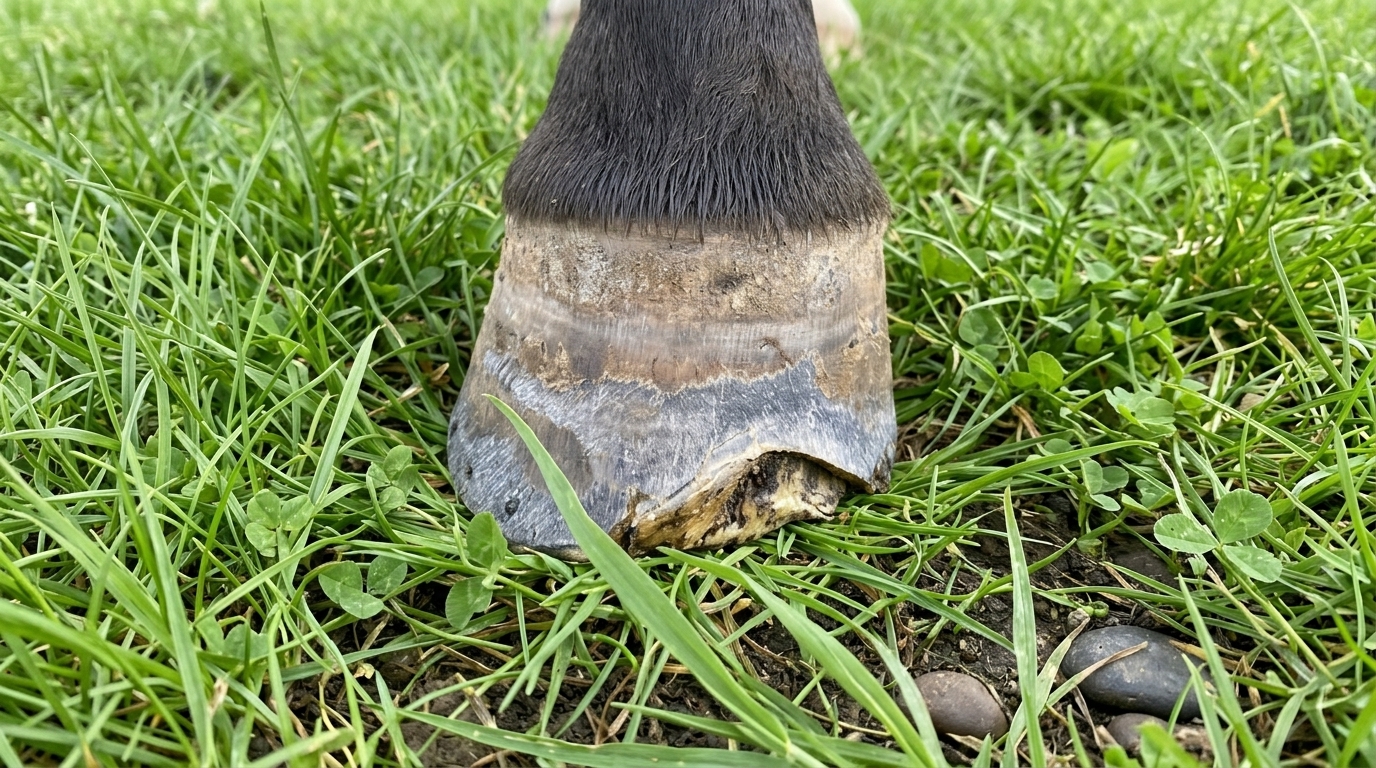
How to Treat White Line Disease in Horses (Complete Guide from First Signs to Full Recovery)
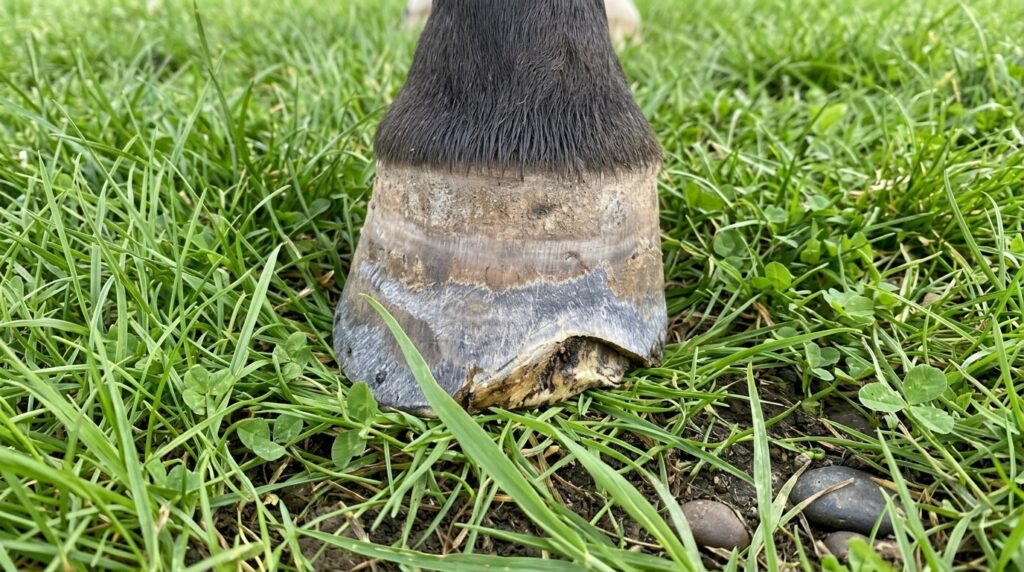
Then it slowly opens up.
If you’re wondering how to treat white line disease in horses, the process is simple but needs to be done correctly from the start.
By the time most owners start looking for white line disease treatment in horses, the infection has already worked its way inside the hoof wall. That’s when simple mistakes start making things worse.
The good part? If you understand what’s actually happening and follow the right steps, most cases improve steadily.
Quick Answer:
White line disease in horses is treated by removing infected hoof wall, keeping the hoof dry, and applying consistent topical treatment.
Early Signs of White Line Disease (Catch It Early, Save Time)
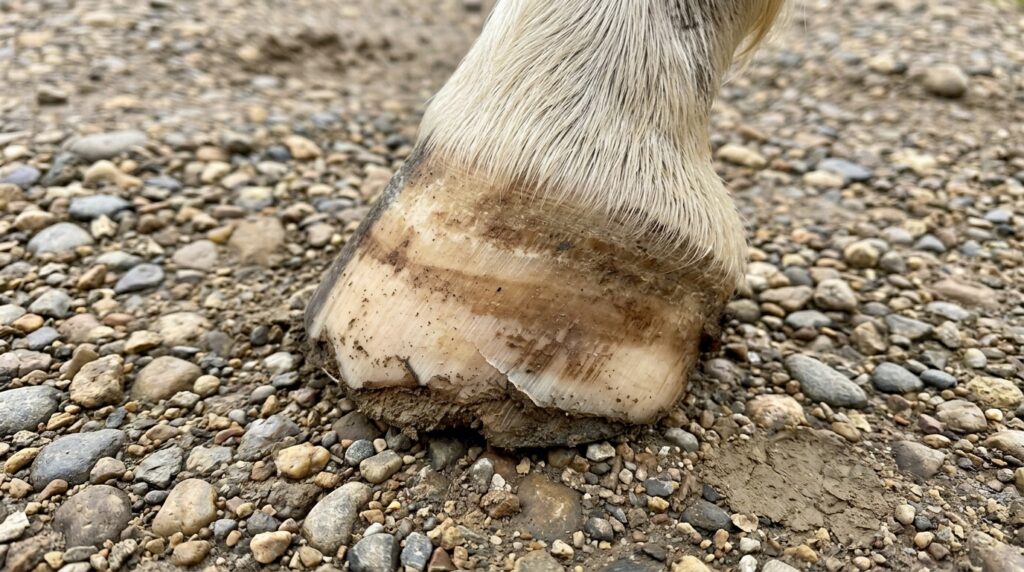
Look for:
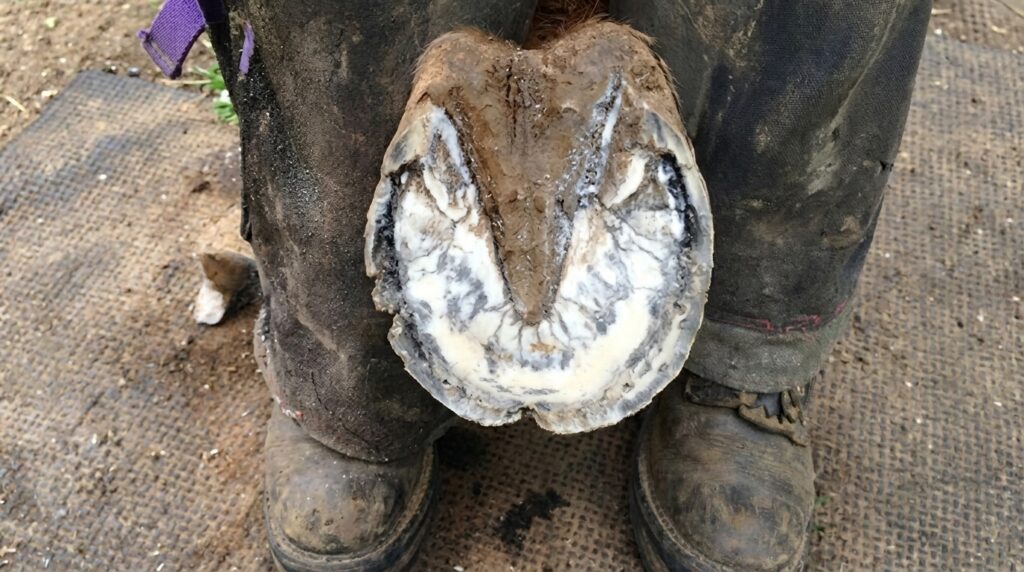
- Fine cracks along the white line
- Powdery or chalky material when cleaning
- Slight separation at the toe
- A hollow sound when tapping the hoof
If you catch it here, treatment is quick and much easier.
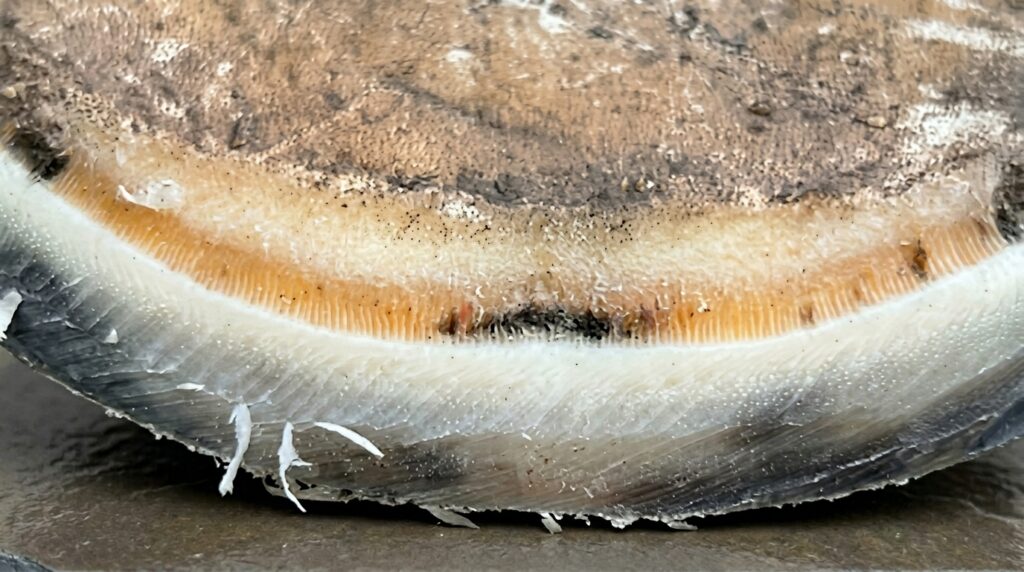
White Line Disease vs Healthy Hoof
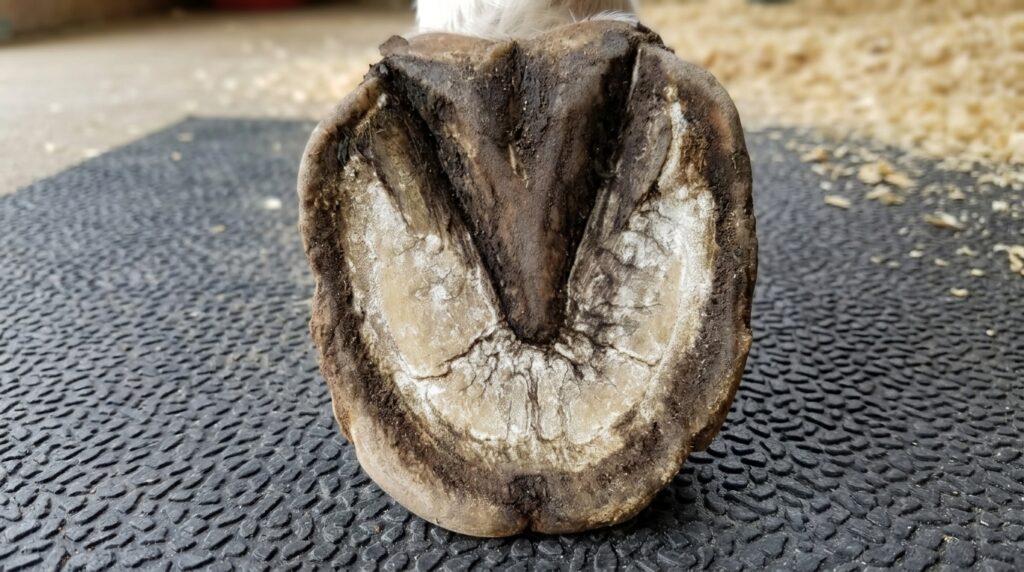
At a glance, the difference between a healthy hoof and one affected by white line disease comes down to connection, strength, and cleanliness.
In a healthy hoof, the white line is tight, narrow, and well-defined. It forms a solid bond between the hoof wall and the sole. When you pick the foot, everything feels firm and smooth. There’s no crumbling, no gaps, and no trapped debris. The sole is clean, the frog is healthy, and the hoof holds its shape under pressure.
With white line disease, that connection starts to break down. The white line becomes wider, chalky, and uneven. Instead of being tight and solid, it turns soft or crumbly. You’ll often notice small gaps where dirt gets packed in. Over time, those gaps deepen into cavities, and the hoof wall begins to lose its support.
Another key difference is feel. A healthy hoof feels solid when you press or clean it. A diseased area often feels hollow or weak.
In simple terms:
- Healthy hoof = tight, strong, clean
- White line disease = separated, weak, and contaminated
Catching that change early is what makes the biggest difference in recovery.
Symptoms of White Line Disease in Horses
As the condition progresses, signs become more obvious:
- Visible hoof wall separation
- Crumbly or soft inner hoof material
- A widening cavity
- Mild to moderate lameness (in advanced cases)
- Sometimes a foul smell
Not every case shows all symptoms, but once the wall starts separating, it won’t fix itself.
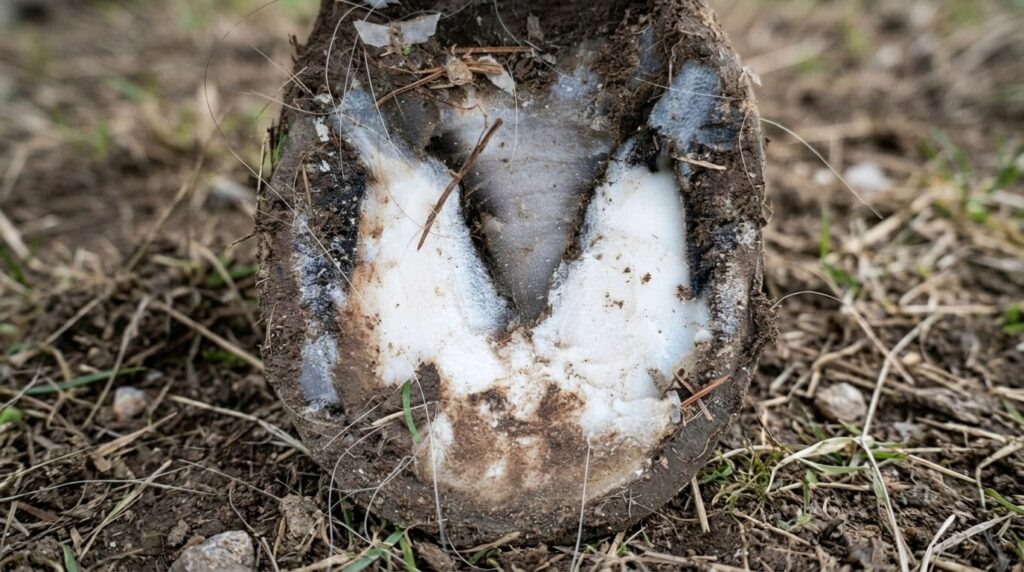
What’s Actually Happening Inside the Hoof
White line disease isn’t just a surface infection.
It starts when the bond between the hoof wall and sole weakens. Once that connection opens, it creates a small space. That space traps moisture and debris, which allows bacteria and fungi to grow.
From there, the infection slowly travels upward inside the hoof wall.
That’s why it’s not enough to treat the surface-you have to reach the source.
Equine white line disease treatment focuses not only on infection control but also on restoring hoof structure.
What Causes White Line Disease in Horses
Most cases come down to a mix of mechanical stress and environment:
- Long toes creating leverage
- Hoof flares pulling the wall apart
- Wet or muddy conditions softening the hoof
- Infrequent trimming
- Small cracks letting infection in
When the hoof structure weakens, infection follows. Understanding the cause is key to proper white line disease treatment in horses.
This condition is often approached as a form of hoof wall separation treatment, since the structural gap is what allows infection to develop.
Where White Line Disease Is More Common
White line disease can show up anywhere, but some environments make it much more likely to develop and spread.
The biggest factor isn’t the horse-it’s the conditions the hoof is exposed to day after day.
Wet and Humid Climates
Horses kept in consistently wet or humid regions are at higher risk.
Moisture softens the hoof wall over time, making it easier for small separations to form. Once that separation opens, bacteria and fungi have the perfect environment to settle in.
In these conditions:
- Hooves don’t fully dry out between exposures
- The white line becomes softer and weaker
- Small cracks are more likely to expand
This is why white line disease is often seen more frequently in areas with regular rainfall or high humidity.
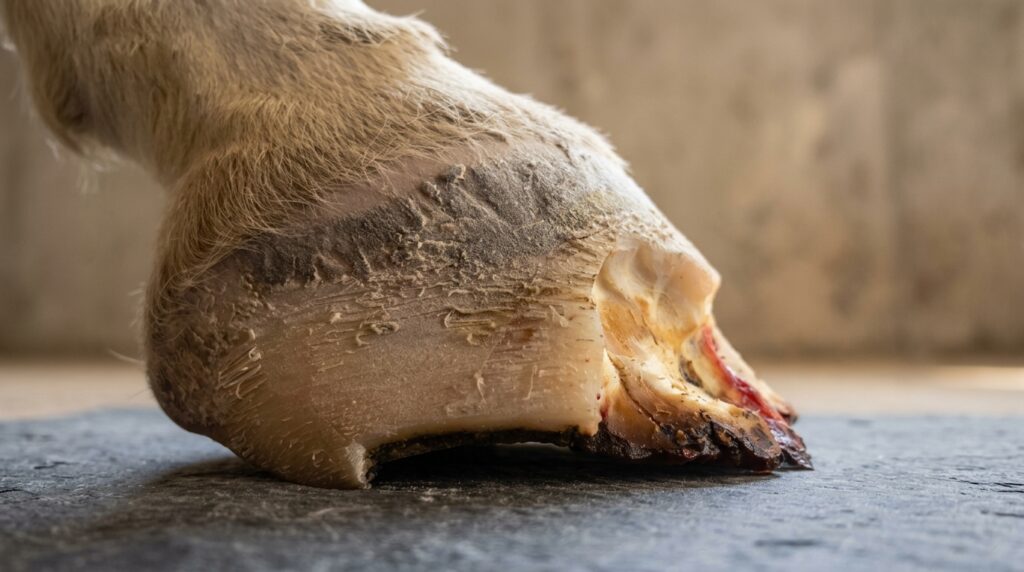
Muddy Paddocks and Poor Drainage
Even in otherwise dry regions, local conditions can create the same problem.
Muddy paddocks, wet turnout areas, and poorly drained stalls can keep hooves constantly damp.
Common risk setups include:
- Horses standing in wet soil for long periods
- Water collecting in feeding or resting areas
- Bedding that stays damp instead of dry
When hooves are repeatedly exposed to moisture without enough time to dry, the structure weakens-and separation becomes more likely.
Seasonal Risk (Why It Appears at Certain Times)
White line disease often shows up more during specific times of the year.
The most common periods include:
- Rainy seasons
- Spring transitions (wet ground + hoof growth changes)
- Times when pastures stay soft and saturated
During these periods, hooves are exposed to:
- Frequent moisture cycles
- Changing ground conditions
- Increased stress from uneven footing
That combination can trigger or worsen existing separation.
Dry Conditions Can Still Be a Risk
It’s worth noting that extremely dry conditions can also contribute-but in a different way.
Dry hooves can become brittle and crack more easily. Those cracks can then allow infection to enter, especially if moisture is introduced later.
So while moisture is the main driver, sudden changes between dry and wet conditions can also play a role.
Practical Takeaway
White line disease isn’t just about trimming or treatment-it’s heavily influenced by environment.
Higher risk situations include:
- Wet, humid climates
- Muddy or poorly drained turnout areas
- Seasonal changes with frequent moisture
Managing these factors-especially keeping hooves as dry as possible-can make a big difference in both treatment and prevention.
How to Confirm White Line Disease (Before You Treat)
Before you start treatment, make sure you’re dealing with the right problem.
Quick checks:
- Tap the hoof wall → hollow sound suggests separation
- Inspect inside → powdery or crumbly material
- Watch progression → slow, spreading cavity
If there’s sudden pain or pressure, it may be an abscess instead.
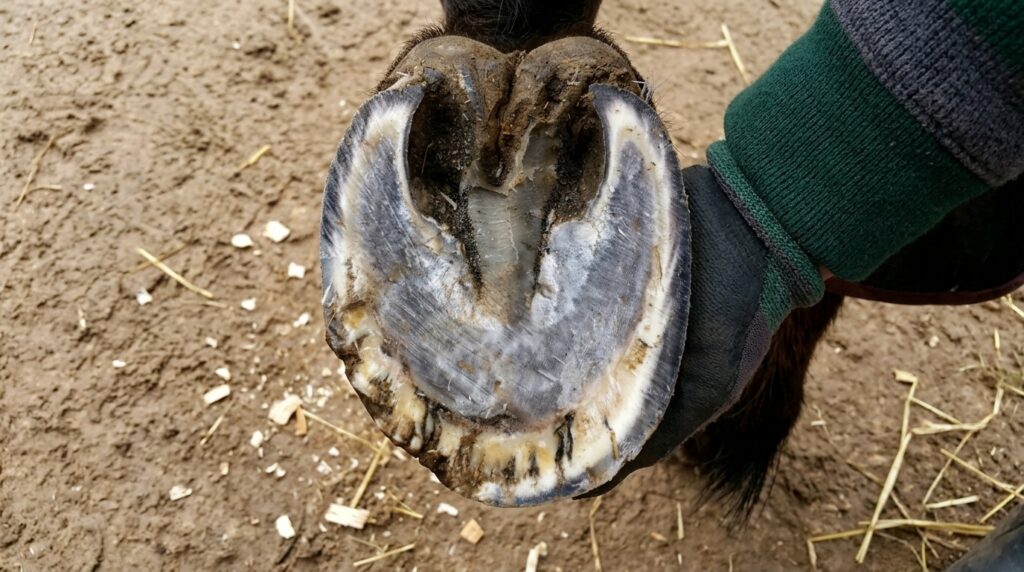
Stages of White Line Disease
| Stage | What You’ll See | What It Means |
|---|---|---|
| Mild | Small separation, no pain | Easy to manage early |
| Moderate | Visible cavity, crumbly wall | Needs trimming + treatment |
| Severe | Deep separation, lameness possible | Professional care required |
Knowing the stage helps you choose the right approach.
Severe White Line Disease (Advanced Cases)
In more advanced cases, white line disease is no longer just a surface issue. What starts as a small separation can gradually move deeper into the hoof wall, creating a larger cavity and weakening the overall structure.
At this stage, the problem becomes more than just an infection-it turns into a mechanical and structural concern.
You’ll usually notice:
- A deeper, wider separation in the hoof wall
- Large sections of loose or hollow hoof
- Increased sensitivity or visible lameness
- The hoof wall starting to lose strength and stability
In some cases, the separation can extend far enough upward that the hoof wall is no longer properly supporting the horse’s weight. This is where things become serious.
One of the main risks in advanced white line disease is structural instability. When too much of the inner hoof wall is compromised, the hoof capsule can weaken. This can affect how weight is distributed and, in severe situations, may increase the risk of internal stress on deeper structures.
While not common in every case, long-standing or untreated infections can contribute to more complex issues, including imbalance in the hoof or additional strain on the internal structures.
This is why early treatment matters-but also why advanced cases need a more careful approach.
How Treatment Changes in Severe Cases
The basic principles stay the same, but the approach becomes more controlled and precise.
A farrier will usually:
- Remove a larger portion of the separated hoof wall
- Open the area fully to stop trapped infection
- Shape the hoof to reduce stress on the damaged section
In many advanced cases, corrective shoeing or support may be needed. This helps:
- Stabilize the hoof
- Reduce pressure on weakened areas
- Support proper weight distribution during healing
This isn’t about quick fixes-it’s about protecting the hoof while new growth comes in.
Treatment Timeline:-
| Time | What Happens |
|---|---|
| Day 1 | Remove infected hoof |
| Week 1 | Infection controlled |
| Week 3 | New hoof starts growing |
| Month 3 | Healthy hoof wall |
| Month 6 | Nearly recovered |
Recovery in Advanced Cases
Recovery takes longer when the damage is deeper.
You’re not just treating an infection-you’re waiting for new, healthy hoof wall to grow down and replace the damaged structure.
That means:
- Multiple trim cycles
- Ongoing monitoring
- Consistent hoof care
In real-world cases, progress is steady but gradual. Once the damaged area is properly opened and managed, improvement usually followsbut patience is key. Recovery depends on how well white line disease treatment in horses is managed.
When to Take Advanced Cases Seriously
If you notice:
- Deep cavities
- Significant hoof wall loss
- Ongoing lameness
…it’s best to involve a farrier or veterinarian early. These cases benefit from experience and careful handling.
What Happens If You Ignore White Line Disease?
This is where things go wrong.
If left untreated:
- The infection spreads upward
- The hoof wall weakens further
- Larger sections may detach
- Lameness becomes more likely
The longer it’s ignored, the longer recovery takes.
White Line Disease Treatment in Horses (Step-by-Step)
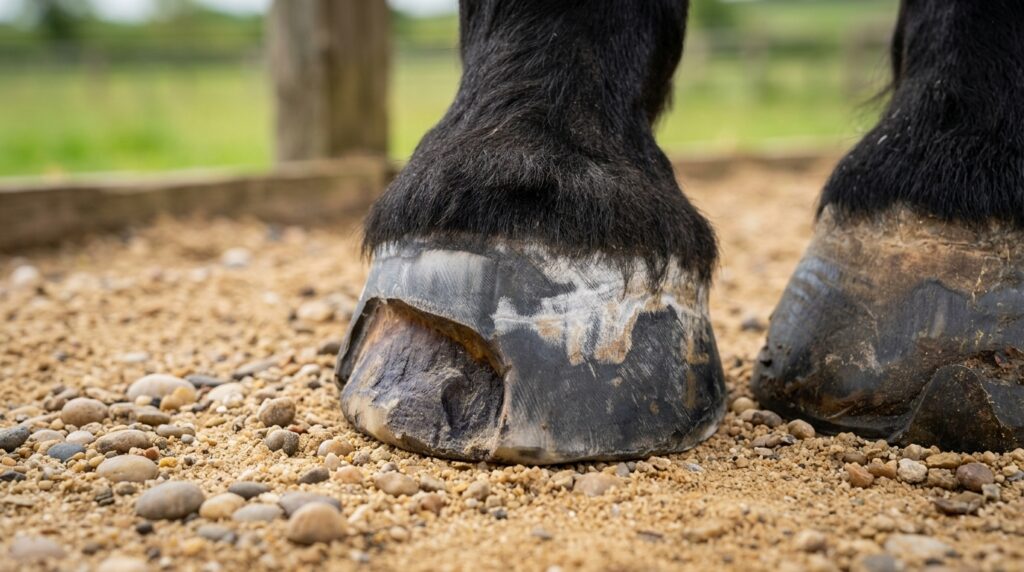
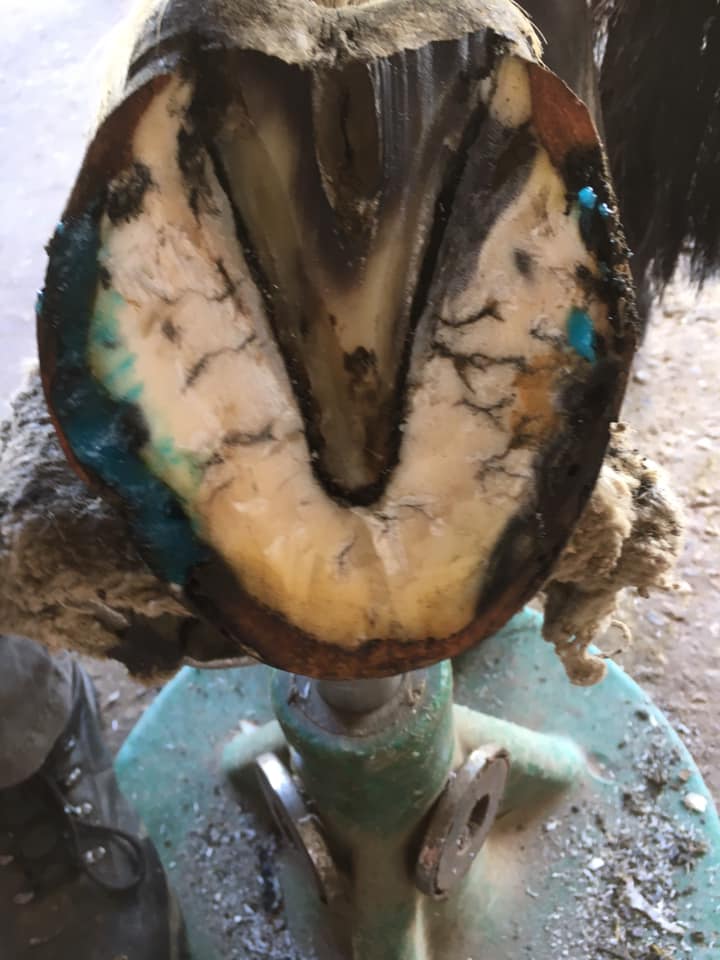
Quick Answer:
White line disease treatment in horses works best when damaged hoof is removed, the area is kept dry, and treatment is applied consistently.
1. Remove the Damaged Hoof Wall
This is the most important step.
If the infection is still covered, treatment won’t reach it.
A proper trim involves:
- Cutting away separated hoof wall
- Removing all loose, crumbly material
- Opening the area so air can reach it
It may look aggressive, but this is what stops the spread.
2. Keep the Hoof Dry
Once opened, your focus changes.
- Pick hooves daily
- Avoid mud and wet conditions
- Use clean, dry bedding
Most slow-healing cases come down to moisture-not treatment failure.
3. Apply Treatment (Keep It Simple)
Now treatments actually work.
Common options:
- Iodine
- Copper sulfate (Copper sulfate is often used in practice because it dries the area out and makes it harder for infection to keep spreading)
- Hoof disinfectants
Apply directly into the exposed area.
Consistency matters more than brand.
This stage is where white line hoof treatment becomes effective, since the infection is fully exposed.
Best White Line Disease Treatment in Horses (What Works Best)
| Method | Best For | Notes |
|---|---|---|
| Trimming only | Mild cases | Early stage only |
| Trim + topical treatment | Moderate cases | Most common approach |
| Farrier + vet care | Severe cases | Needed for deep infection |
The best treatment for white line disease in horses combines proper trimming, dryness, and consistent care.
Treatment Mistakes Table
| Mistake | Result |
|---|---|
| Wet stalls | Infection spreads |
| No trimming | Disease worsens |
| Skipping treatment | Delayed healing |
| Riding lame horse | More damage |
Simple Tool Setup (Practical Approach)
You don’t need much:
- Hoof pick
- One disinfectant
- A drying agent
That’s enough for most cases.
Fix Hoof Balance (Prevent It Coming Back)
Even after treatment, the cause must be corrected.
If the hoof still has:
- Long toe
- Flare
- Imbalance
…the separation will return.
Correct trimming reduces stress and supports healthy growth.
Risk Factors:-
| Risk Factor | Risk Level |
|---|---|
| Wet climate | High |
| Long toes | High |
| Hoof cracks | High |
| Poor trimming | High |
| Balanced hoof | Low |
Can You Ride a Horse with White Line Disease?
One of the most frequently asked topics by owners is the safety of continuing to ride a horse with white line illness. That depends on the severity of the problem and the stability of the hoof.
There isn’t a simple yes-or-no answer. “It’s a matter of severity, stability of the hoof and how the horse is traveling.”
Mild Cases – Light Work May Be Fine
Often it is ok to do some light riding early on as long as the horse doesn’t seem to be in any pain and the separation isn’t too great.
At this stage:
The hoof design is still solid
There is no limp
The infection is superficial;
In some cases, light work can be useful, as movement promotes circulation and proper hoof growth.
However, it is important to:
Stay away from hard or uneven ground
Limit workouts to short, regulated times.
Keep a watchful eye on the hoof after every ride
Stop and reconsider if anything changes.
Moderate Cases – Limit Work and Be Careful
As separation becomes more evident and the cavity deepens, riding should be lessened.
In mild cases:
The hoof wall is compromised
There could be sensitivity
The illness is more entrenched
Excessive tension on the hoof at this period can exacerbate the separation.
If riding is to continue it must be:
Light and not too heavy
Over soft level ground
closely monitored
Many farriers counsel to limit work at this time until the hoof begins to settle.
Severe Cases – Rest Is the Better Option
In advanced cases, riding should be avoided completely.
When the hoof is:
Deep cleft
Structural fragility
Flaccidity, visible
… the hoof cannot than safely manage regular workload.
At this time, riding on can
Make the spacing greater
Slow down healing
Put more tension on the hoof
The rest allows the hoof to heal and prevents future harm.
What Matters Most
Regardless of the stage, the most important factor is how the horse feels.
- If there is lameness → stop riding
- If the hoof is unstable → avoid workload
- If the condition is improving → gradually return to work
In many cases, once the infected area is properly cleaned and the hoof is balanced, horses can return to normal work over time.
Practical Takeaway
- Mild → light, careful riding
- Moderate → limited work
- Severe → rest
When in doubt, it’s better to reduce workload than risk making the condition worse.
White Line Disease Treatment in Horses Recovery Timeline
Healing doesn’t “fill in.” It grows out.
- Week 1–2 → infection controlled
- Week 3–6 → cleaner, drier hoof
- Month 2+ → new healthy growth
Full recovery depends on hoof growth speed. There isn’t an instant white line disease cure, but with consistent care, the hoof can fully recover over time.
Is White Line Disease in Horses Curable?
One of the most common questions horse owners ask is whether white line disease can be completely cured.
The answer is yes-in most cases, white line disease is treatable and the hoof can make a full recovery, especially when it is identified early and managed correctly.
The infection itself can usually be eliminated through proper trimming, cleaning, and topical treatment. However, it’s important to understand that the damaged hoof wall does not “heal” in the traditional sense. Instead, the horse grows a new, healthy hoof wall from the coronary band, and the damaged section is gradually trimmed away over time.
The outlook depends on several factors, including:
- How early the condition is detected
- The amount of hoof wall separation
- Whether the hoof is kept clean and dry
- Consistent farrier care
- Correcting the underlying hoof imbalance
Mild cases often recover within a few months, while more advanced cases may require several trimming cycles before the hoof returns to normal.
The key point is that white line disease is usually curable when the underlying cause is addressed-not just the infection itself.
What Recovery Looks Like (Before vs After)
Before:
- Loose, crumbly wall
- Visible separation
- Weak structure
After:
- Tight white line
- Solid hoof wall
- Healthy growth from top
Progress is gradual-but clear over time.
Ideal Environment for Healing

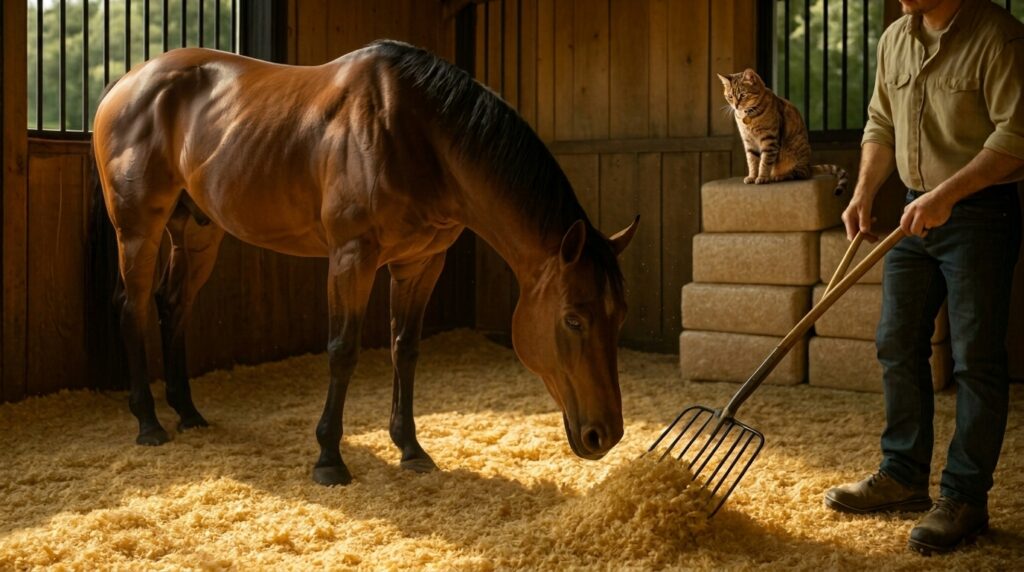
Environment plays a bigger role than most people think.
For faster recovery:
- Keep footing dry
- Use clean bedding
- Avoid standing water
- Ensure proper drainage
A dry hoof heals faster-every time.
Can You Treat White Line Disease in Horses at Home?
Many horse owners wonder if white line disease can be managed without calling a professional.
For very mild cases, daily home care can play an important role, but it should never replace proper hoof trimming. The infection develops beneath the hoof wall, so simply applying products to the outside usually won’t solve the problem.
Good home care includes:
- Picking out the hoof every day
- Keeping the hoof as dry as possible
- Removing mud, manure, and packed debris
- Applying a veterinarian- or farrier-recommended hoof disinfectant
- Monitoring the affected area for any increase in separation or lameness
Avoid trying to cut away damaged hoof yourself unless you have experience. Removing too much hoof wall can weaken the foot and make recovery more difficult.
If the separation continues to spread, the horse becomes lame, or you notice a large cavity developing, it’s best to involve a farrier or veterinarian.
Home care works best as supportive treatment alongside professional hoof care, not as a replacement for it.
Natural White Line Disease Treatment in Horses (Supportive Care)
Nutrition for Stronger Hooves
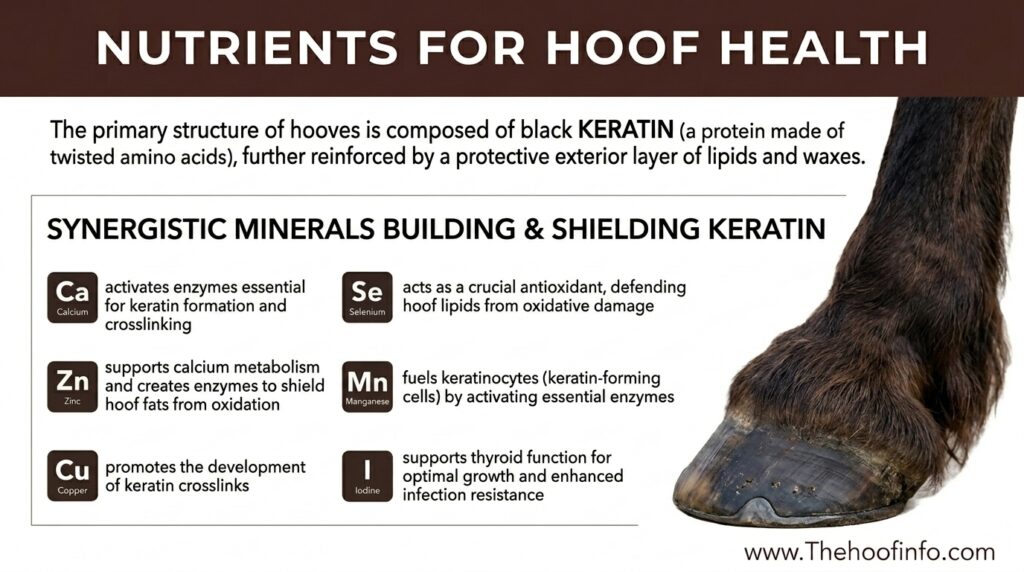
Stronger hooves are less likely to separate.
Support hoof quality with:
- Biotin
- Zinc and copper
- Balanced diet
Nutrition won’t cure infection-but it helps prevent repeat problems.
Cost and Effort of Treatment
Treating white line disease in horses isn’t complicated, but it does require time, consistency, and a bit of patience. Most of the work isn’t difficult-it’s just something that needs to be done regularly.
The biggest thing to understand is this: you’re not fixing the hoof overnight-you’re managing it while new, healthy hoof grows in.
Multiple Trimming Cycles
White line disease is rarely resolved in a single trim.
In most cases, you’ll need:
- Regular trimming every 4–6 weeks
- Occasional follow-up adjustments
- Gradual removal of damaged hoof over time
Each trim helps reduce stress on the hoof and supports better growth, but it’s a process. Trying to fix everything in one go usually causes more harm than good.
Daily Care and Maintenance
The day-to-day effort is simple, but it matters.
You’ll need to:
- Pick and clean the hoof regularly
- Apply treatment consistently
- Keep the hoof dry as much as possible
This doesn’t take a lot of time, but skipping days can slow progress. Most cases that drag on come down to inconsistency, not difficulty.
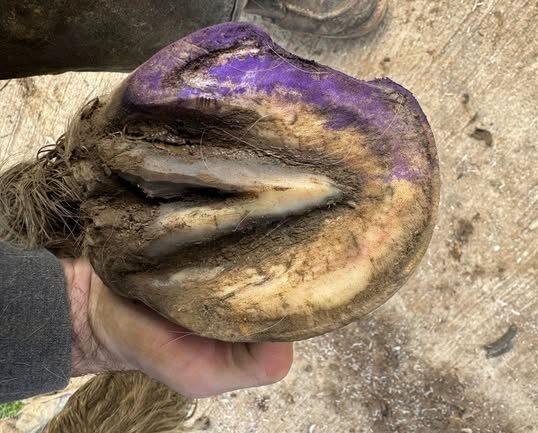
Months of Monitoring
Even after the infection is under control, the job isn’t finished.
The hoof has to grow out fully, which takes time.
Depending on the severity:
- Mild cases may resolve in a few weeks
- Moderate cases take a few months
- Deeper cases can take longer to fully grow out
During this time, you’ll need to keep checking:
- Whether the separation is growing out cleanly
- If new hoof is coming in strong
- Whether the environment is staying dry
What About Cost?
Costs can vary depending on how the case is managed, but generally include:
- Regular farrier visits
- Basic hoof care products
- Occasional additional support if needed
Most cases don’t require anything extreme, but ongoing care is part of the process.
Keep It Simple
What makes the biggest difference isn’t expensive products or complicated methods—it’s consistency.
In many real-world cases, once the damaged hoof is properly opened and the horse is kept in a dry environment, progress becomes steady and predictable.
Practical Takeaway
- Expect multiple trims
- Stay consistent with daily care
- Be patient with hoof growth
White line disease improves over time, not overnight-but with steady care, most cases come right.
Quick Treatment Checklist
- Remove damaged hoof wall
- Keep the hoof dry
- Apply treatment daily
- Trim regularly
- Monitor progress
Real-World Insight
In most cases, once the infected area is properly opened and kept dry, improvement starts within a few weeks.
The cases that drag on usually involve:
- Moisture
- Incomplete cleaning
- Irregular trimming
Simple, consistent care works better than aggressive treatment.
Treating white line in horses becomes much easier once the hoof is properly opened and kept dry.
Real Example (Short Case)
A horse with moderate white line disease at the toe showed a visible cavity. After removing the separated wall and keeping the hoof dry, improvement was noticeable within 3-4 weeks, with new healthy growth appearing from the top.
Common Mistakes to Avoid
- Treating without removing damaged hoof
- Keeping horses in wet conditions
- Skipping trim schedules
- Overusing products
White Line Disease Prevention Checklist
✔ Pick hooves daily
✔ Trim every 5–6 weeks
✔ Avoid muddy paddocks
✔ Feed biotin
✔ Check white line weekly
✔ Remove packed stones
✔ Watch for cracks
Common Myths About White Line Disease
There’s a lot of mixed advice around white line disease, and some of it sounds convincing at first. The problem is, following the wrong idea can slow healing or make the condition worse.
Clearing up a few common myths can save time-and hoof.
“It will heal on its own” ❌
This is probably the most common misunderstanding.
White line disease doesn’t just disappear. Once the hoof wall has separated and infection has set in, the condition tends to progress slowly if left alone.
You might not see dramatic changes right away, but over time:
- The separation usually widens
- The infection can travel upward
- More of the hoof wall becomes compromised
Waiting it out often turns a small, manageable issue into a longer recovery.
“Products alone will fix it” ❌
It’s easy to think that applying a good treatment product is enough.
But if the infected area is still covered by loose or separated hoof wall, the product never actually reaches the source of the problem.
That’s why trimming comes first.
Topical treatments like iodine or copper sulfate can help control infection, but only after:
- The damaged hoof wall is removed
- The area is properly opened
- The cavity is cleaned
Without that step, you’re treating the surface-not the cause.
“The more product, the better” ❌
Using multiple treatments or applying them too often can actually slow things down.
Overdoing it may:
- Irritate healthy tissue
- Dry the hoof excessively
- Interfere with natural healing
A simple, consistent approach works better than constantly changing products.
“If the horse isn’t lame, it’s not serious” ❌
Many early and moderate cases show little to no lameness.
But that doesn’t mean the problem is small.
White line disease can progress quietly. By the time lameness appears, the separation is often deeper and harder to manage.
Catching it early-even without pain-is what keeps it simple.
“You can fix it in one trim” ❌
Trying to remove everything in a single trim can cause more harm than good.
Hoof care works best when it’s gradual:
- Remove damaged material carefully
- Reduce stress over time
- Allow healthy growth to replace it
Rushing the process usually sets things back.
What Actually Works
When you strip away the myths, the approach is straightforward:
- Remove the damaged hoof wall
- Keep the hoof clean and dry
- Apply treatment consistently
- Maintain regular trimming
Most cases improve steadily when these basics are done right.
Prevention (Long-Term)
- Regular trimming
- Dry environment
- Early crack management
Good prevention reduces the need for repeated white line disease treatment in horses.
White Line Disease vs Seedy Toe
Seedy toe is simply white line disease at the toe.
Same cause, same treatment.
Seedy toe treatment in horses follows the same principles-removing damaged hoof, keeping it dry, and maintaining proper trimming.
In most cases, horse seedy toe treatment is handled exactly like white line disease.
When to Call a Farrier or Vet
Knowing when to seek help is part of proper white line disease treatment in horses. Most mild cases of white line disease can be managed with proper trimming, cleaning, and consistent care. But there’s a point where it’s better to bring in experienced hands.
The challenge is knowing when it’s still manageable-and when it’s going too far.
Signs You Should Call a Farrier
If the separation is getting deeper or spreading faster than expected, a farrier should be involved.
Look for:
- A cavity that keeps widening
- Hoof wall starting to sound hollow when tapped
- Loose or detached sections of hoof wall
- Difficulty cleaning the affected area fully
A farrier can safely remove damaged hoof, rebalance the foot, and prevent the problem from progressing further. In many cases, getting a proper trim at the right time makes a big difference in recovery speed.
When a Vet Should Be Involved
Some cases go beyond routine hoof care and need veterinary attention.
Call a vet if you notice:
- Clear lameness or discomfort
- Heat or swelling in the hoof
- Deep infection reaching higher into the wall
- Sudden worsening of the condition
At this stage, there may be more going on than just surface infection. A vet can assess deeper structures and rule out complications.
Why Early Help Matters
Waiting too long often turns a manageable issue into a longer recovery.
In real-world cases, the biggest delays usually come from:
- Leaving separated hoof wall in place
- Not addressing imbalance early
- Letting the infection spread deeper
Bringing in a farrier or vet early doesn’t mean the case is severe-it just means you’re handling it correctly.
How Veterinarians Diagnose White Line Disease
- Hoof testers
- Hoof knife examination
- Radiographs (X-rays)
- Assessing rotation
- Looking for abscesses
- Checking sole thickness
- Determining whether laminitis is also present

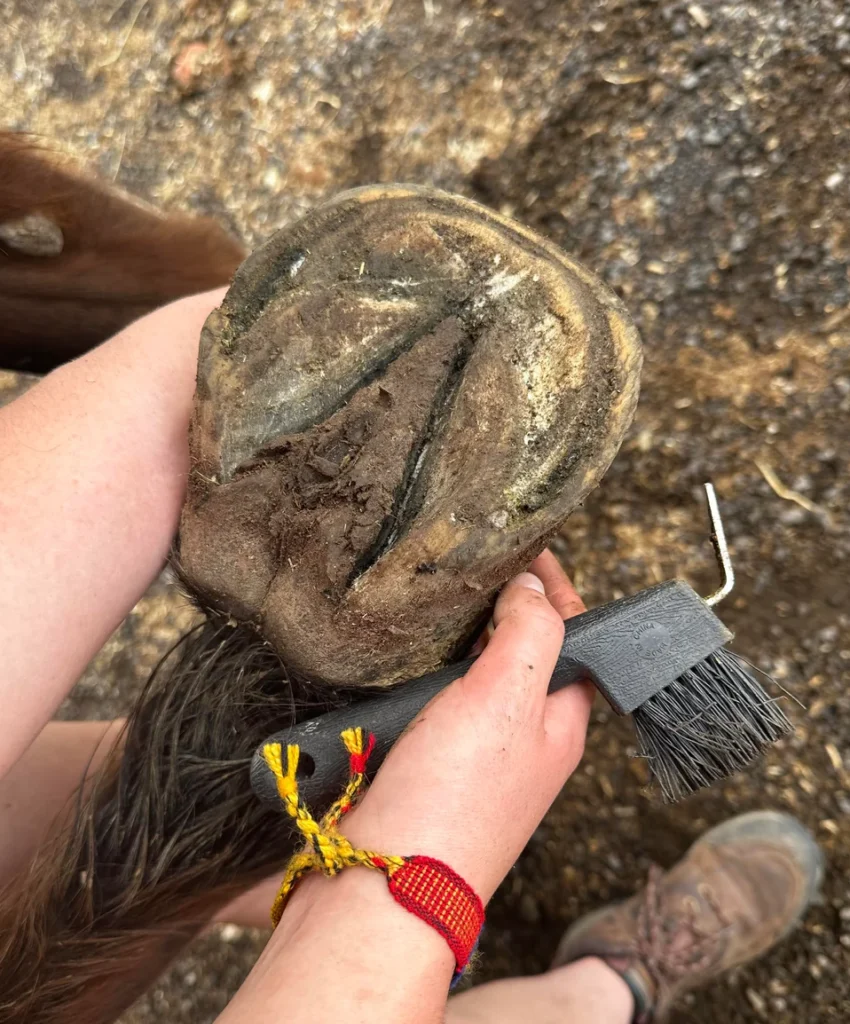
What Most Owners Miss
The biggest mistake isn’t the infection-it’s leaving the damaged hoof wall in place. Once that’s removed and the hoof stays dry, most cases turn around.
Why Most White Line Disease Treatments Fail (And What Actually Works)
Most treatments fail for a simple reason-they focus on the surface, not the source.
White line disease isn’t just an infection. It starts with a structural separation in the hoof, and the infection follows.
That means:
- If the damaged hoof wall isn’t removed, treatment won’t reach the infection
- If the hoof stays wet, bacteria continue to grow
- If trimming isn’t consistent, the separation keeps returning
What actually works is simple:
- Remove the damaged area properly
- Keep the hoof clean and dry
- Stay consistent with trimming and care
Once those basics are done right, most cases improve steadily.
Before Calling the Farrier Checklist
- Take clear photos
- Clean the hoof
- Check for heat
- Look for swelling
- Record lameness
This article written and Reviewed by:-
Reviewed by: James Lilli – Equine Hoof Care Educator, farrier & Horse Health Writer
Experience: Over 20 years of researching equine hoof care, horse health, and practical management on horse hoof trimming for owners.
Editorial Policy: Every article on TheHoofInfo.com is written using current veterinary guidance, peer-reviewed equine research, and practical horse management principles. Content is intended for educational purposes and should not replace professional veterinary advice.
Last Updated: July 2026
Medical Disclaimer
This article is educational and is not a substitute for professional veterinary advice. Treatment recommendations align with accepted farriery and veterinary practices rather than relying only on opinion.
Frequently Asked Questions
What is the best white line disease treatment in horses?
The best white line disease treatment in horses involves removing damaged hoof, keeping it dry, and applying consistent care.
How long does it take to heal?
Weeks to months depending on severity.
Can it heal on its own?
No, it requires proper care and trimming.
Is it the same as seedy toe?
Seedy toe is a form of white line disease.
Can White Line Disease Spread to Other Horses?
White line disease itself is not considered contagious from one horse to another.
The bacteria and fungi involved are commonly present in the environment. What causes disease is the combination of hoof wall separation, moisture, poor hoof balance, and trapped debris—not direct transmission between horses.
However, horses sharing the same environment may develop similar problems if they are exposed to the same risk factors, such as:
- Wet or muddy paddocks
- Poor hoof hygiene
- Long intervals between trimming
- Hoof wall cracks or flares
If one horse develops white line disease, it’s a good idea to inspect the hooves of other horses on the property and improve stable hygiene where needed.
Regular hoof care and dry footing are the best ways to reduce the risk across the entire herd.
Is B Gone White Line Treatment Effective?
B Gone White Line Treatment is one of several commercial hoof-care products used by some horse owners and farriers to help manage white line disease.
Its purpose is to help keep the affected area dry and create conditions that are less favorable for bacteria and fungi. Like other topical treatments, it works best after the separated and infected hoof wall has been properly opened so the product can reach the affected tissue.
It’s important to understand that no topical product can cure white line disease on its own. Successful treatment still depends on:
- Removing the damaged hoof wall
- Correcting hoof balance
- Keeping the hoof dry
- Following a regular trimming schedule
Many different hoof disinfectants and drying agents can be effective when combined with good hoof management. The product you choose is generally less important than applying it consistently after proper trimming.
Can White Line Disease Spread?
White line disease is not considered contagious from horse to horse. However, horses kept in the same wet, muddy environment with poor hoof care may develop similar problems because the conditions that encourage infection are shared.
Summary:-
White line disease treatment in horses isn’t complicated-but it does depend on doing the basics right, every time.
Open the damaged area properly.
Keep the hoof clean and dry.
Stay consistent with trimming.
That’s what makes the difference.
There’s no quick fix or instant cure, but most cases improve steadily when the hoof is managed correctly. In real-world situations, the biggest setbacks usually come from missed steps, not the condition itself.
When white line disease treatment in horses is handled with patience and consistency, the hoof has a strong ability to recover and grow back healthy.
In many real-world cases, the biggest factor affecting recovery isn’t the disinfectant being used-it’s hoof balance and environmental management. Horses that receive regular trimming, stay in a clean, dry environment, and have the damaged hoof wall properly removed generally recover much more predictably than horses treated with multiple products alone.
While every case is different, consistent hoof care and early intervention remain the foundation of successful white line disease treatment.
You may also read:
- equine hoof disease treatment
- equine white line disease
- Healthy white line
- hoof wall separation disease treatment
- horse hoof white line disease
- how to treat white line disease in horses
- seedy toe treatment in horses
- treating white line in horses
- treatment for white line disease in horses
- white line disease treatment
- White Line Disease Treatment in Horses
- white line separation horse hoof treatment






Leave a comment