

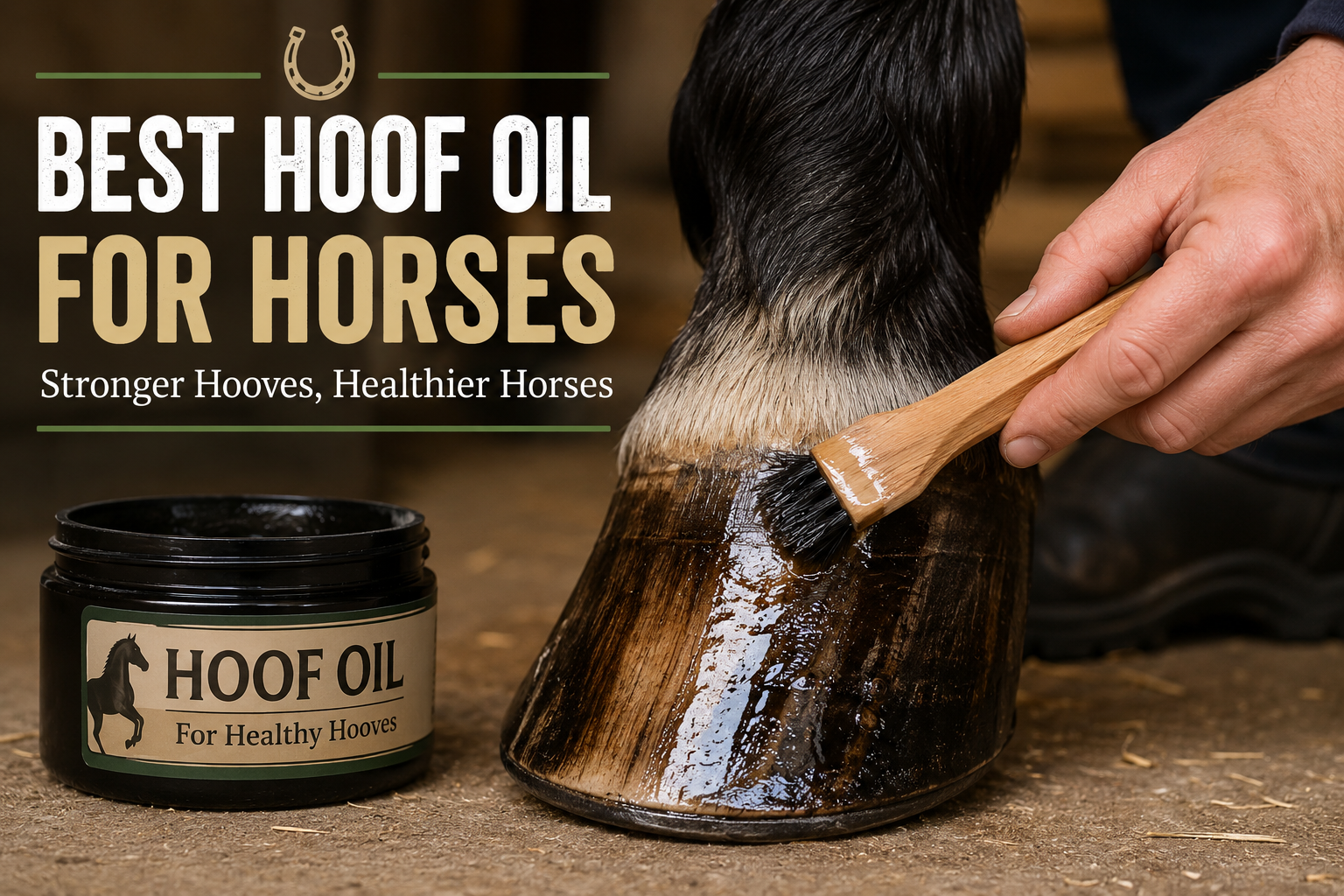
Best Hoof Oil for Horses: What Actually Helps a Horse’s Feet Stay Healthy?
If you spend enough time around horses, you start realizing pretty quickly that shiny hooves do not always mean healthy hooves.
Some horses can walk around with glossy black feet and still have weak walls, cracks, soreness, or thrush hiding underneath. Meanwhile, another horse may have dusty-looking feet but stay sound all year long because the hoof is balanced and healthy where it matters.
That is where a lot of people misunderstand hoof oil.
A good hoof oil is not magic in a bottle. It will not fix neglected feet, poor trimming, bad nutrition, or months of imbalance. But when used correctly, the right product can absolutely help protect the hoof wall and keep the foot from drying out or becoming brittle.
And honestly, some horses really do benefit from it – especially during rough weather swings, dry summers, or muddy turnout seasons.
Some horse owners prefer natural conditioners, while others use heavier dressings for dry cracked feet. Below are some of the most commonly used hoof oils among horse owners and farriers.
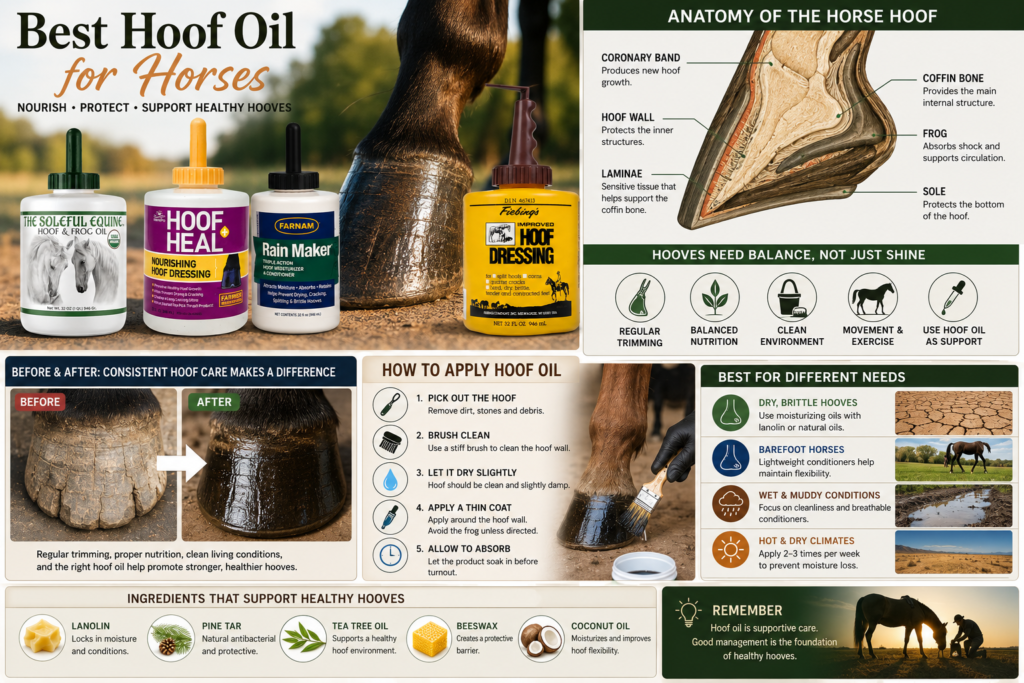
See Top Hoof Oil Picks Below
| Product | Best For | Texture | Main Ingredients | Climate | Rating |
|---|---|---|---|---|---|
| Hooflex | Dry hooves | Light Oil | Lanolin, Oils | Dry | ⭐⭐⭐⭐⭐ |
| Rain Maker | Brittle walls | Medium | Oils, Conditioners | Dry/Windy | ⭐⭐⭐⭐☆ |
| Effol | Barefoot horses | Thick | Lanolin | Moderate | ⭐⭐⭐⭐⭐ |
| Keratex | Very dry feet | Moisturizer | Moisture Formula | Dry | ⭐⭐⭐⭐⭐ |
| Cornucrescine | Daily maintenance | Cream | Conditioning Oils | All Seasons | ⭐⭐⭐⭐☆ |
Questions to Ask Before Buying Hoof Oil
Before choosing a product, ask yourself:
- Does my horse actually have dry hooves, or is there another issue?
- Is the horse barefoot or shod?
- Does the horse live in a dry or wet climate?
- Are cracks caused by dryness or poor hoof balance?
- Has my farrier recommended a specific type of conditioner?
- Am I already providing a balanced diet with adequate minerals?
- Will this product fit into my regular hoof care routine?
Answering these questions makes it easier to choose a product that matches your horse’s needs.
Our Recommendation
If your horse has generally healthy hooves, a lightweight conditioning oil used during dry weather is often enough to maintain moisture balance.
If your horse has brittle hoof walls or superficial cracks, choose a product containing conditioning ingredients such as lanolin or natural oils, while working with your farrier to address the underlying cause.
For horses living in consistently wet conditions, improving stable hygiene, providing dry turnout areas, and maintaining regular hoof cleaning usually have a greater impact than applying additional hoof oil.
Remember that the best hoof oil is the one that fits your horse’s individual needs-not necessarily the most expensive product on the shelf.
Does Hoof Oil Actually Work?
Many horse owners wonder whether hoof oil is genuinely beneficial or simply a cosmetic product that makes hooves look shiny.
The answer is yes-but only when used correctly.
A quality hoof oil helps reduce moisture loss from the hoof wall, supports flexibility during dry weather, and provides a protective barrier against environmental conditions. However, it cannot repair deep cracks, reverse poor hoof quality, or replace regular farrier care.
Healthy hooves are built through consistent trimming, balanced nutrition, daily cleaning, and proper management. Hoof oil simply supports those good practices.
If a horse has long toes, flares, infections, or nutritional deficiencies, addressing those issues will have a much greater impact than applying any topical product.
Why Horse Hooves Change So Much
Horse hooves deal with constant stress every day.
One week the ground is wet and muddy. The next week it is dry, hard, and packed like concrete. That constant change affects the hoof wall more than many people realize.
You especially notice it in horses living outside full time.
During dry weather, the hoof can start looking chalky and brittle around the edges. Small chips begin showing up near nail holes or along the outer wall. Then after heavy rain, the hoof softens again and starts expanding from moisture.
That constant wet-dry cycle is hard on feet.
Some horses handle it better than others. Horses with naturally strong hoof structure usually stay pretty solid. Others seem to struggle every season no matter what.
That is usually when owners start looking into hoof oils and conditioners.
What Research Tells Us About Hoof Moisture
Horse hooves naturally contain moisture that helps maintain their strength and flexibility. Unlike human skin, the hoof wall is made primarily of keratin-a tough structural protein that responds to both environmental moisture and the horse’s overall health.
Research and veterinary guidance suggest that the hoof constantly exchanges moisture with its surroundings. During prolonged dry weather, the outer hoof wall may lose moisture more quickly, increasing the likelihood of brittleness and surface chipping. In contrast, extended exposure to wet conditions can soften the hoof, making it more susceptible to wear and mechanical damage.
Hoof oils do not force moisture into the hoof. Instead, many products help slow excessive moisture loss by forming a light protective barrier on the hoof wall. This is why experienced farriers often recommend using hoof oil selectively based on seasonal conditions rather than applying it every day throughout the year.
Maintaining healthy hoof moisture also depends on balanced nutrition, regular exercise, appropriate trimming, and providing horses with clean, well-managed living conditions.
How to Choose the Best Hoof Oil for Horses
A lot of people think hoof oil “moisturizes” the hoof like lotion on skin. It does not really work that way.
Most quality hoof oils help the hoof hold a more stable moisture balance. They create a light protective layer that helps keep the hoof from drying too fast in harsh conditions.
That matters more than people think.
A hoof that becomes too dry loses flexibility. Once that happens, you start seeing:
- chips
- rough edges
- shallow cracks
- brittle walls
- flaky outer hoof layers
A decent hoof oil can help slow some of that down.
But the important part is this:
Hoof oil works best on a healthy hoof that is already being cared for properly.
If the horse is overdue for trimming by two months, standing in manure all day, or eating a poor diet, hoof oil will not fix the bigger problem.
Most experienced farriers will tell you the same thing.
Which Hoof Oil Is Best for Your Horse?
Every horse has different hoof care needs. Choosing the right product depends on the horse’s environment, workload, and hoof condition.
Best for Barefoot Horses
Choose lightweight conditioners that help maintain flexibility without leaving heavy residue.
Best for Cracked Hooves
Look for products containing lanolin or moisturizing oils that help reduce excessive drying while maintaining a consistent trimming schedule.
Best for Dry Climates
Products with longer-lasting conditioning ingredients often perform better where hot weather quickly dries the hoof wall.
Best for Wet Conditions
Instead of heavy oils, many farriers prefer breathable conditioners that support moisture balance without trapping excessive moisture.
Best Budget Option
Simple conditioning oils can provide good maintenance for horses with generally healthy feet.
The Biggest Mistake Horse Owners Make
One thing you see all the time is people trying to “dress up” unhealthy feet.
They apply thick oil every single day because the hoof looks dry, but the horse is still overdue for trims or walking around with imbalance.
That shiny finish fools people sometimes.
A hoof can look polished and still be unhealthy underneath.
Good feet usually come from:
- regular trimming
- clean living conditions
- proper nutrition
- movement
- hydration
- consistent hoof care
The oil is just support work.
Nutrients That Support Strong Hoof Growth
Healthy hooves begin from the inside out. Several nutrients play an important role in producing strong hoof horn.
- Biotin helps support hoof growth.
- Zinc contributes to healthy keratin formation.
- Copper supports strong connective tissue.
- Methionine provides sulfur needed for hoof structure.
- Lysine assists with protein utilization.
- Omega-3 fatty acids may help support overall hoof health.
- Adequate protein provides the building blocks for healthy hoof growth.
Since a hoof grows slowly from the coronary band, improvements in nutrition often take several months before becoming visible.
Best Hoof Oil for Barefoot Horses
Barefoot horses often need slightly different hoof care compared to shod horses, especially if they spend a lot of time on rough ground, dry turnout, or rocky trails. Since the hoof wall takes direct impact without the protection of shoes, many barefoot horse owners pay close attention to moisture balance and wall strength. The best hoof oil for barefoot horses is usually one that helps maintain flexibility without making the hoof overly soft.
Many owners prefer lighter conditioners with ingredients like coconut oil, lanolin, or avocado oil instead of heavy greasy coatings. Still, even for barefoot horses, proper trimming and balanced feet matter far more than any hoof product. A healthy barefoot hoof should stay strong naturally with regular maintenance, movement, and good nutrition.
When Hoof Oil Actually Helps
There are definitely situations where hoof oil can make a noticeable difference.
Dry summer weather is a big one.
Some horses start chipping badly after weeks of hard dry ground, especially if they spend time on gravel turnout or rocky trails. You will often notice the hoof wall looking faded and rough around the edges.
That is where conditioning products can help.
Another common situation is repeated wet-dry weather swings.
A horse stands in wet grass all morning, then dries out in heat all afternoon. The hoof expands and contracts constantly. Over time, that stresses the wall.
Certain hoof oils help protect against those constant environmental changes.
You also see benefits in horses with naturally brittle feet.
Some horses simply have weaker hoof quality genetically. Good nutrition matters most, but supportive products sometimes help keep the outer wall in better condition between trims.
How Hoof Oil Needs Change Throughout the Year
Your horse’s hoof care routine shouldn’t stay the same year-round. Seasonal weather affects hoof moisture, hoof wall strength, and how often conditioning products are needed.
Spring
Spring often brings wet pastures and muddy turnout areas. During this season, focus on keeping the hooves clean and monitoring for early signs of thrush or white line disease. Heavy hoof oils are usually unnecessary unless the hoof wall begins drying after repeated wet-dry cycles.
Summer
Long periods of heat and dry ground can draw moisture from the hoof wall, making some horses more prone to chipping and superficial cracks. This is when many owners apply a lightweight hoof oil two or three times a week to help maintain flexibility.
Autumn
Changing temperatures and alternating rain and sunshine can cause repeated expansion and contraction of the hoof wall. Consistent trimming and occasional conditioning help many horses adapt to these seasonal changes.
Winter
Cold weather alone doesn’t usually dry the hoof, but frozen ground, snow, and repeated freeze-thaw cycles can increase hoof wear. Horses spending time on frozen or rocky surfaces often benefit more from regular trimming and good nutrition than frequent hoof oil application.
Seasonal tip: Adjust your hoof care routine based on your horse’s environment rather than following the same schedule all year.
What Experienced Horse People Usually Look For
Most people who have worked around horses for years do not care much about “instant shine.”
They usually care more about:
- hoof flexibility
- wall strength
- moisture balance
- clean frogs
- healthy growth
- fewer cracks
That is why many experienced owners prefer lighter conditioners over heavy greasy coatings.
Some older-style petroleum products create a beautiful shine, but overusing thick coatings can sometimes trap too much moisture or leave the hoof feeling overly soft.
A balanced product usually works better long term.
Ingredients That Tend to Work Well
Over the years, a few ingredients have stayed popular for a reason.
Tea Tree Oil
A lot of hoof products use tea tree oil because it works well around damp conditions and dirty feet.
Horses standing in muddy turnout often deal with bacteria buildup around the frog area, especially during rainy seasons.
Lanolin
Lanolin is useful for dry hoof walls because it helps condition without making the hoof greasy.
Coconut Oil
Many horse owners like coconut oil because it is lighter and absorbs fairly well compared to heavier dressings.
Pine Tar
Pine tar has been around forever in hoof care.
Some people love the smell. Some absolutely hate it.
But in wet conditions, many old-school horse owners still swear by it for protecting soles and frogs.
Avocado Oil
Avocado oil is found in a lot of modern hoof conditioners because it helps support flexibility in dry hoof walls.
Hoof Oil vs. Hoof Conditioner vs. Hoof Dressing
These products are often confused, but they serve slightly different purposes.
Hoof Oil
A lightweight product designed to help reduce moisture loss and maintain flexibility.
Best for:
- Dry weather
- Routine maintenance
- Healthy hooves
Hoof Conditioner
Contains moisturizing ingredients intended to support overall hoof health during seasonal changes.
Best for:
- Mild dryness
- Regular maintenance
- Barefoot horses
Hoof Dressing
Usually thicker and designed to stay on the hoof longer.
Best for:
- Extremely dry conditions
- Horses living on hard ground
- Temporary protection
No matter which product you choose, none can replace proper trimming or a balanced diet.
How We Selected These Hoof Oils
Not every hoof oil performs the same under different conditions. For this guide, the products were selected based on several practical factors that experienced horse owners and farriers often consider.
These include:
- Ingredient quality
- Ability to maintain moisture balance
- Ease of application
- Long-term user feedback
- Suitability for different climates
- Value for money
- Availability in the United States
Rather than choosing products based only on popularity, the focus is on how well they support healthy hoof care as part of a complete management routine.
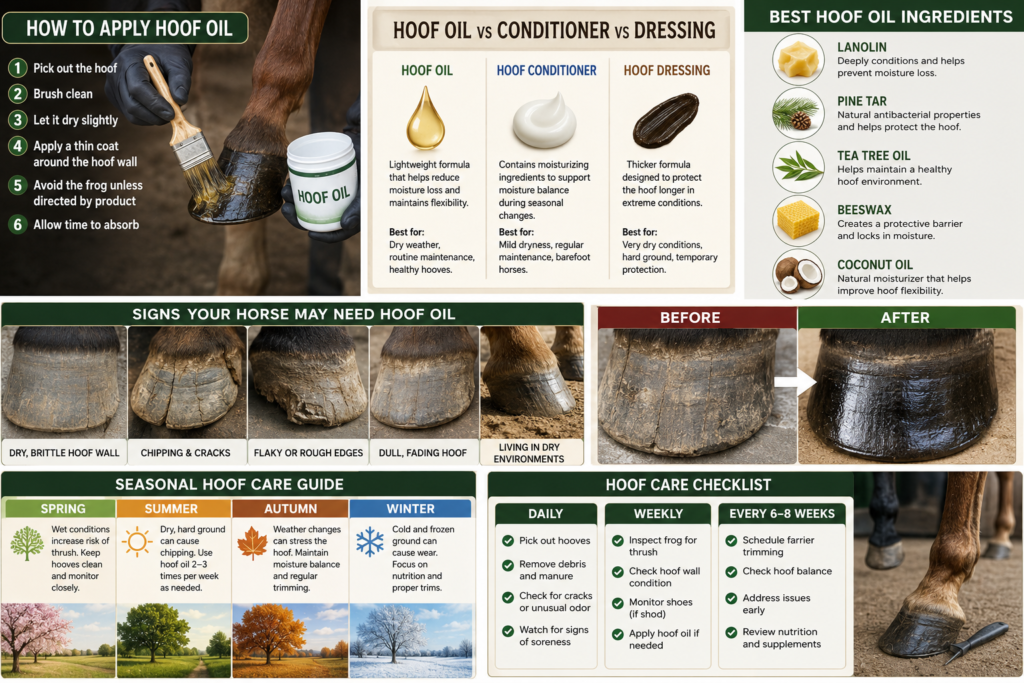
Products Horse Owners Commonly Use
There are dozens of products out there, but a few names keep showing up in barns over and over again.
Absorbine Hooflex
This one has been around a long time.
A lot of owners like it because it conditions without leaving the hoof dripping in grease. It works well for everyday maintenance in many climates.
Farnam Rain Maker
Popular for dry and brittle feet.
Many people use it during hot weather when hooves start looking rough or dehydrated around the edges.
Carr & Day & Martin Cornucrescine
Very common in grooming barns and show barns.
People often use it around the coronary band as part of regular hoof maintenance.
Effol Hoof Ointment
This one is thicker than many oils.
Some horse owners prefer it during dry months because it stays on the hoof longer.
Keratex Hoof Moisturizer
A lot of farriers recommend this for horses struggling with extremely dry feet.
It focuses more on moisture balance than cosmetic shine.
Hoof Oil Will Not Replace Good Trimming
This part matters more than the product itself.
If the hoof is out of balance, too long, flared, or neglected, oil alone will not stop cracks from forming.
Most serious hoof problems start mechanically.
A long toe changes pressure distribution. A flare weakens the wall. Imbalance creates stress points. Once that happens, cracks start traveling upward.
That is why consistent farrier work matters so much.
You can usually spot well-maintained feet immediately. The hoof grows cleaner, holds shape better, and chips less between appointments.
What Veterinarians and Farriers Generally Recommend
Veterinarians and experienced farriers generally agree that hoof oils can be helpful when used appropriately, particularly during periods of extreme dryness or frequent weather changes.
However, they also emphasize that topical products should never be viewed as a cure for hoof problems.
Persistent cracks, lameness, white line disease, thrush, or poor hoof growth require proper diagnosis and management. In many cases, regular trimming, balanced nutrition, and addressing the underlying cause will produce much greater improvements than changing hoof care products.
Signs It’s Time to Review Your Hoof Care Routine
Occasional chips or small imperfections can happen to any horse. However, recurring hoof problems often indicate that something in the management program needs attention.
You may need to review your hoof care routine if you notice:
- Hoof walls that chip between every farrier visit.
- Cracks that continue growing upward.
- Hooves that become excessively dry every summer.
- Soft soles after periods of wet weather.
- Frequent episodes of thrush.
- Loose or frequently lost horseshoes.
- Slow hoof growth.
- Persistent white line separation.
- Changes in your horse’s gait or comfort.
Addressing these issues early with your veterinarian or farrier is usually far easier than treating more advanced hoof problems later.
When Professional Help Is Needed
While minor chips and surface dryness can often be managed at home, some hoof problems require prompt attention.
Contact your veterinarian or farrier if you notice:
- Sudden lameness
- Heat or a strong digital pulse
- Deep hoof wall cracks
- Bleeding around the hoof
- A foul smell from the frog that doesn’t improve
- Hoof wall separation
- Loose or twisted shoes
- Persistent tenderness on hard ground
- Rapid changes in hoof shape
Early treatment often prevents minor issues from becoming more serious and expensive to manage.
Feeding Matters More Than Most Products
A lot of weak hoof problems actually begin inside the horse.
If a horse constantly has soft, brittle, or poor-quality feet, it is worth looking at the diet before buying expensive hoof dressings.
Things that affect hoof quality include:
- protein intake
- copper
- zinc
- amino acids
- biotin
- hydration
And hoof growth takes time.
That is something people get impatient about.
You cannot completely rebuild bad feet in two weeks. Hooves grow slowly. Sometimes it takes several months before healthier growth fully comes down from the coronary band.
How Many People Overuse Hoof Oil
This happens constantly.
Some owners apply thick oil every single day because they think more product means healthier feet.
Sometimes the opposite happens.
Overapplying heavy products can leave hooves overly soft or greasy, especially in wet climates. In muddy conditions, that can actually make the foot harder to manage.
Many horses do perfectly fine with hoof oil only a few times per week depending on weather conditions.
It really depends on the horse and the environment.
The Best Time to Apply Hoof Oil
A slightly damp hoof usually holds conditioners better than a bone-dry hoof.
That is why many horse people apply hoof oil:
- after rinsing the feet
- after bathing
- after washing off mud
- early in the morning before turnout
The key is starting with clean feet.
Packing oil over manure, packed mud, or debris just traps dirt against the hoof wall.
How to Apply Hoof Oil Correctly
Applying hoof oil properly helps maximize its benefits.
- Pick out the hoof thoroughly.
- Remove mud, manure, and loose debris.
- Brush away dirt from the hoof wall.
- Allow the hoof to dry slightly if it is soaking wet.
- Apply a thin, even coat around the hoof wall.
- Follow the product instructions regarding the frog and sole.
- Avoid applying excessive amounts, as more product does not necessarily produce better results.
For many horses, applying hoof oil two or three times per week during dry conditions is sufficient.
When Hoof Oil May Not Be the Best Choice
Although hoof oil is helpful in many situations, there are times when applying it may not provide any benefit-or could even interfere with proper hoof management.
Avoid relying on hoof oil alone if your horse has:
Active Thrush
Thrush is a bacterial infection that requires cleaning and appropriate treatment. Covering an infected frog with hoof oil without treating the infection can delay recovery.
White Line Disease
White line disease is caused by microorganisms invading the inner hoof wall. The damaged hoof must be properly cleaned and managed before considering conditioning products.
Deep Quarter Cracks
Deep cracks usually result from mechanical stress, poor hoof balance, or injury. Corrective trimming and veterinary or farrier care are much more important than topical products.
Laminitis
Laminitis affects the sensitive structures inside the hoof capsule. Hoof oil cannot treat this condition. Horses with laminitis require immediate veterinary attention and a carefully managed rehabilitation plan.
Constantly Wet Conditions
If your horse spends most of the day standing in wet mud or saturated pasture, applying heavy hoof oils may not provide additional benefits. Improving drainage and providing dry standing areas are usually far more effective.
Whenever your horse develops persistent lameness, hoof heat, swelling, drainage, or severe cracking, consult a veterinarian or qualified farrier rather than relying on topical products alone.
Realistically, What Matters Most?
Most healthy feet come from simple consistent care.
Not fancy products.
The horses with the strongest hooves are usually the ones getting:
- regular trims
- decent nutrition
- clean turnout
- daily movement
- dry places to stand
- routine hoof cleaning
That foundation matters far more than any bottle sitting on a tack room shelf.
Still, the right hoof oil can absolutely help support the hoof when conditions get rough.
And sometimes those little improvements make a noticeable difference over time.
Especially during dry summers, muddy winters, or heavy workload seasons.
Common Mistakes Horse Owners Make
Even experienced owners occasionally misuse hoof oil.
Some of the most common mistakes include:
- Applying hoof oil to dirty feet
- Using hoof oil every day without considering weather conditions
- Expecting hoof oil to repair cracks
- Ignoring overdue trimming
- Neglecting nutrition
- Applying heavy oils before turnout in muddy paddocks
Healthy hoof management is always more important than the product itself.
Healthy Hoof Care Checklist
If you want stronger, healthier hooves throughout the year, focus on these simple daily habits.
Daily
✔ Pick out all four hooves.
✔ Check for stones, cracks, or unusual odor.
✔ Remove packed mud and manure.
✔ Watch for signs of soreness or heat.
Weekly
✔ Inspect nail clinches (for shod horses).
✔ Examine the frog for early signs of thrush.
✔ Monitor hoof wall condition.
✔ Apply hoof conditioner if needed during dry weather.
Every 6–8 Weeks
✔ Schedule regular farrier trimming or shoeing.
✔ Check hoof balance.
✔ Address small cracks before they become larger.
Every Season
✔ Adjust hoof care to changing weather conditions.
✔ Review your horse’s diet.
✔ Evaluate pasture and turnout conditions.
✔ Replace worn hoof care products if necessary.
Following this checklist consistently often has a greater impact on hoof health than changing from one hoof oil brand to another.
Common Myths About Hoof Oil
There are many misconceptions about hoof oils. Separating fact from fiction helps horse owners make better decisions.
Myth 1: Shiny Hooves Are Healthy Hooves
A glossy finish doesn’t necessarily indicate a healthy hoof. Serious issues such as white line disease or early cracks can exist beneath a polished appearance.
Myth 2: More Hoof Oil Means Better Results
Applying large amounts of hoof oil every day rarely improves hoof health. Overuse may leave the hoof greasy without addressing the real cause of poor hoof quality.
Myth 3: Hoof Oil Repairs Cracks
Cracks heal only as new, healthy hoof grows down from the coronary band. Hoof oil may reduce additional drying but cannot repair damaged hoof horn.
Myth 4: Every Horse Needs Hoof Oil
Some horses maintain excellent hoof quality with proper trimming, nutrition, and daily care, requiring little or no topical conditioning.
Myth 5: Expensive Products Always Work Better
Price doesn’t guarantee better results. The best hoof oil is the one that suits your horse’s needs, climate, and management routine.
Frequently Asked Questions
Does hoof oil actually work?
Yes. It helps maintain moisture balance and protects the hoof wall, but it cannot replace trimming or nutrition.
How often should I apply hoof oil?
Most horses only need hoof oil two or three times each week during dry conditions. Overuse may not provide additional benefits.
Can hoof oil repair cracks?
No. It may help reduce further drying, but proper trimming and healthy new hoof growth are required to resolve cracks.
Is hoof oil safe for barefoot horses?
Yes. Many barefoot horses benefit from lightweight conditioners, particularly during hot, dry weather.
Should hoof oil be applied to the sole?
Always follow the manufacturer’s directions, as recommendations vary between products.
Real-World Example: Improving Brittle Hooves with Consistent Care
A Quarter Horse gelding in his early teens began developing brittle hoof walls during an unusually hot summer. Small chips appeared around the nail holes, and shallow cracks formed along the outer hoof wall. Although the horse remained sound, the owner noticed that the hooves became increasingly dry between farrier visits.
Instead of relying on hoof oil alone, the owner worked with the farrier to develop a complete hoof care plan.
The management changes included:
- Scheduling farrier visits every six weeks instead of waiting eight weeks.
- Adding a hoof-support supplement containing biotin, zinc, copper, and methionine.
- Cleaning the hooves every day to remove mud and manure.
- Providing access to clean, dry turnout whenever possible.
- Applying a lanolin-based hoof oil twice each week after cleaning the hooves.
After approximately three months, healthier hoof growth began appearing below the coronary band. While the original cracks did not disappear overnight, they gradually grew out as stronger hoof horn replaced the damaged section.
The farrier emphasized that the improved results came from consistent management rather than the hoof oil alone. The hoof oil helped reduce excessive drying, but regular trimming and better nutrition were the primary reasons the hoof quality improved.
Key takeaway: Hoof oil works best as part of a complete hoof care program-not as a quick fix.
Expert Tips from Experienced Farriers
After years of caring for horses in a wide range of climates, many farriers share similar advice when it comes to hoof oils.
- Focus on regular trimming before buying expensive hoof products.
- Use hoof oil to support healthy hooves-not to hide neglected ones.
- Match the product to your climate. Dry environments often require different care than wet regions.
- Clean the hoof thoroughly before applying any conditioner.
- Don’t expect overnight results. Healthy hoof growth takes time.
- If cracks continue to worsen despite good hoof care, investigate the underlying cause instead of simply changing products.
- Review your horse’s diet if hoof quality remains poor for several months.
- Observe how your horse responds rather than assuming one product works for every horse.
Many experienced horse owners find that consistency-not expensive products-is the biggest factor in maintaining strong, resilient hooves.
Building Healthy Hooves Takes Patience
One of the biggest mistakes horse owners make is expecting rapid results after switching hoof products.
The hoof grows slowly from the coronary band, typically around ¼ to ⅜ inch (6–10 mm) per month, although growth rates vary depending on age, nutrition, health, season, and workload.
This means noticeable improvements in hoof quality often take several months, while a complete hoof wall may take 9–12 months to grow from the coronary band to the ground.
Consistency is far more important than changing products frequently. Sticking to a regular trimming schedule, feeding a balanced diet, maintaining clean living conditions, and using hoof oil only when appropriate gives your horse the best chance of developing stronger, healthier feet over time.
Key Takeaways
- Hoof oil supports healthy hooves but cannot replace proper trimming or nutrition.
- Choose a product based on your horse’s environment and hoof condition rather than marketing claims.
- Apply hoof oil only to clean hooves and follow the manufacturer’s instructions.
- Healthy hoof growth begins with balanced nutrition, routine farrier care, and consistent management.
- Seasonal adjustments to hoof care are often more important than changing hoof oil brands.
- If hoof problems persist, consult a veterinarian or qualified farrier to identify and treat the underlying cause.
Summary:-
The best hoof oil for horses is not necessarily the shiniest product or the most expensive one.
It is the product that works well for your horse’s environment, hoof quality, and daily routine.
Some horses barely need anything at all. Others benefit from regular conditioning during difficult weather changes.
But experienced horse people usually agree on one thing:
Healthy feet are built through steady everyday care.
Good trimming, clean conditions, balanced nutrition, and attention to small problems early – that is what keeps horses comfortable long term.
The hoof oil is just one small piece of the puzzle.
Why You Can Trust This Guide
This guide is based on established hoof care principles, practical farrier recommendations, and current veterinary understanding of hoof health. It is intended to help horse owners make informed decisions about using hoof oil as part of a complete hoof care program.
Every horse is different, and factors such as breed, age, workload, nutrition, environment, and underlying health conditions can influence hoof quality. For horses experiencing persistent lameness, severe cracks, or signs of disease, consult a qualified veterinarian or experienced farrier for an individual assessment.
You may also Read:-
If your horse also struggles with bacterial hoof infections, read our guide on Homemade Thrush Treatment for Horses.
Horses affected by laminitis often require specialized hoof management. Learn more in our article on New Treatments for Laminitis in Horses.
If you notice separation between the hoof wall and sole, our guide to White Line Disease Treatment in Horses explains the causes, treatment options, and prevention strategies.
- Best hoof conditioner for cracked hooves
- Best hoof dressing for horses
- best hoof oil for barefoot horses
- best hoof oil for cracked hooves
- Best Hoof Oil for Horses
- best horse hoof oil
- Farriers' Fix hoof Oil
- Is hoof oil good for horses feet
- Sport Horse Essentials Hoof Oil
- what is the best hoof oil for horses
- world best hoof oil









Leave a comment