

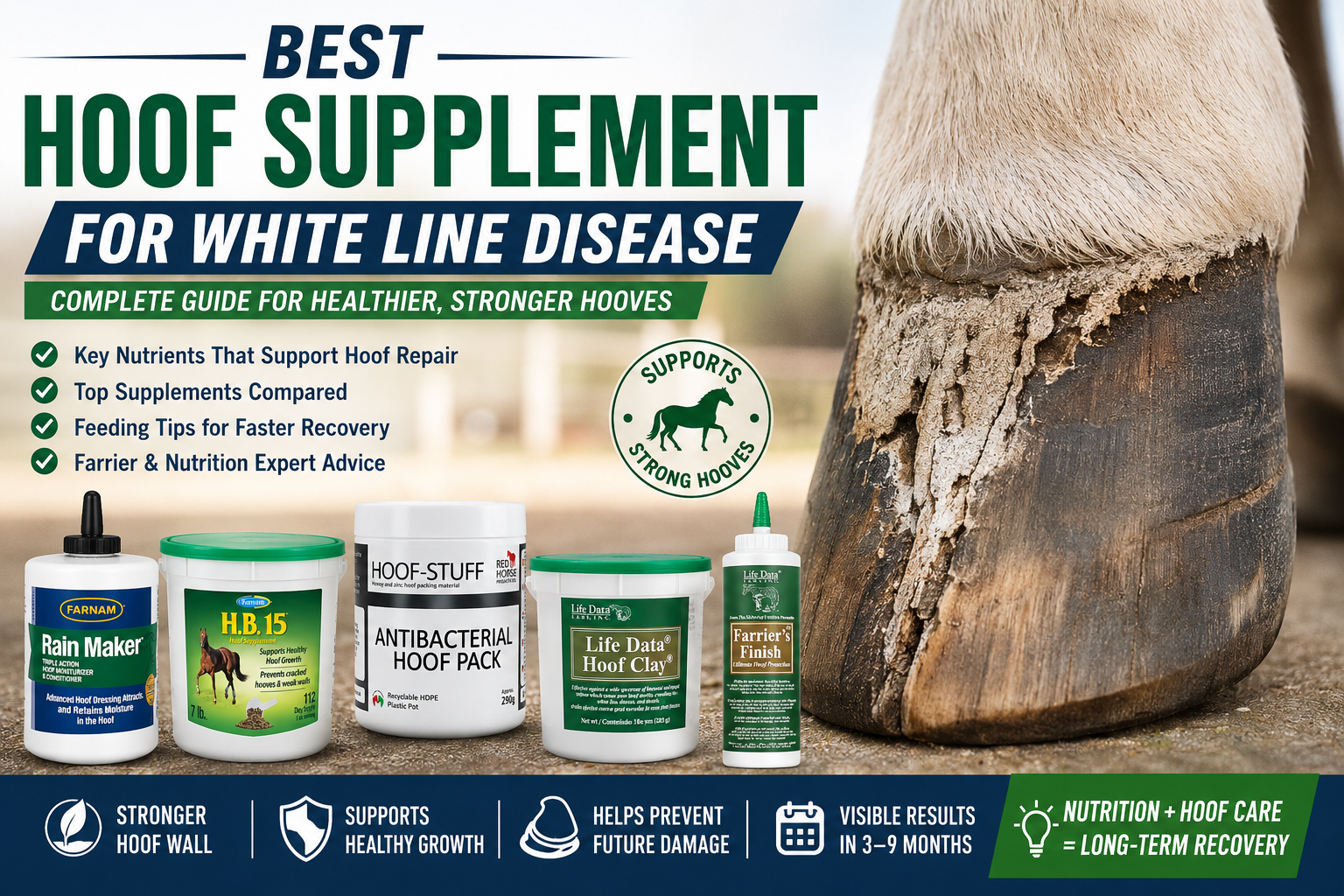
Best Hoof Supplement for White Line Disease
White Line Disease is one of the most frustrating hoof problems horse owners face. It slowly weakens the hoof wall, creates separation between the hoof layers, and, if left untreated, can lead to serious lameness.
Many owners focus only on cleaning the infected hoof or applying topical treatments. While those steps are essential, they only address the infection on the surface.
Healthy hoof growth begins from the inside.
A horse cannot grow a strong hoof wall without the right nutrients. This is where a quality hoof supplement becomes an important part of recovery.
Although no supplement can cure White Line Disease by itself, the right ingredients can help produce stronger hoof horn, improve hoof quality, and support long-term healing while proper trimming and infection control remove the damaged tissue.
In this guide, you’ll learn:
- Whether hoof supplements actually help
- The nutrients that matter most
- Ingredients to avoid
- How long supplements take to work
- Feeding recommendations
- Common mistakes horse owners make
- Frequently asked questions
Can Hoof Supplements Cure White Line Disease?
The short answer is no.
White Line Disease is caused by fungi, bacteria, or both invading weakened hoof tissue.
A supplement cannot kill the organisms causing the infection.
However, supplements can help the horse grow a healthier, stronger hoof wall that gradually replaces the damaged horn after proper treatment.
Think of supplements as supporting recovery rather than replacing treatment.
The best results come from combining:
- Regular farrier care
- Removal of diseased hoof
- Topical antimicrobial treatment
- Clean, dry footing
- Balanced nutrition
- High-quality hoof supplement
When all these work together, new hoof growth becomes stronger and more resistant to future infections.
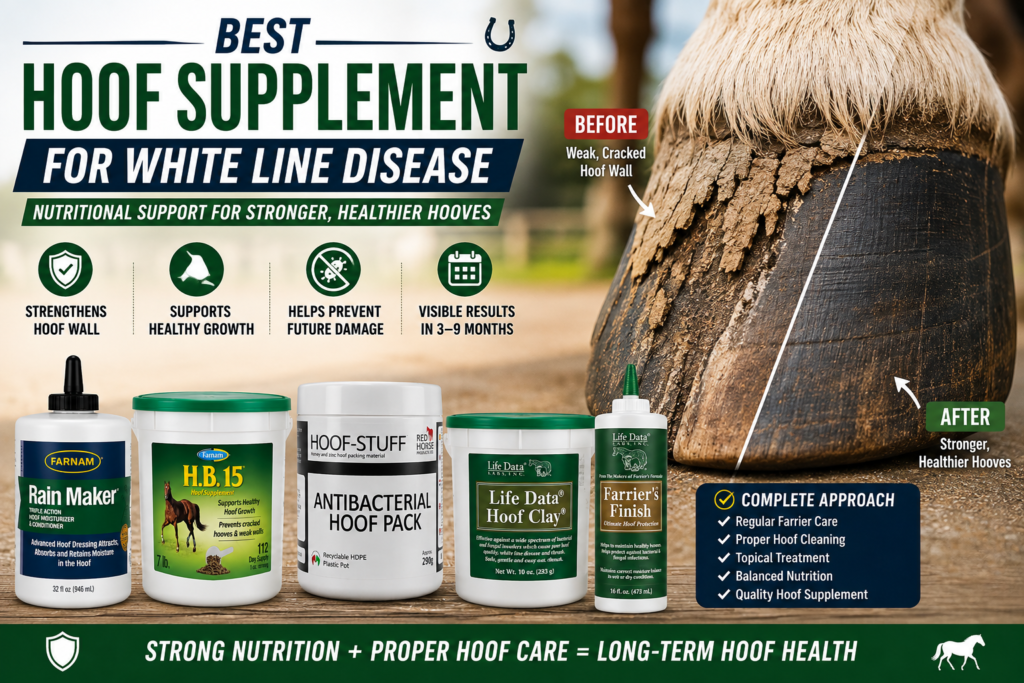
Why Nutrition Matters During Recovery
The hoof is made primarily of keratin, a tough protein that requires several vitamins and minerals for proper formation.
If a horse lacks these nutrients, the hoof wall may become:
- Weak
- Brittle
- Thin
- Slow growing
- More likely to crack
- Easier for White Line Disease organisms to invade
Healthy hoof growth starts at the coronary band.
Since a complete hoof takes approximately 9 to 12 months to grow from the coronary band to the ground, nutrition plays a long-term role in recovery.
Can Poor Nutrition Contribute to White Line Disease?
While poor nutrition does not directly cause White Line Disease, it can weaken the hoof and make it more vulnerable to infection. A healthy hoof wall acts as a protective barrier, but when the horn becomes soft, brittle, or slow-growing, fungi and bacteria can more easily invade the white line.
Nutritional problems that may affect hoof quality include:
- Inadequate protein intake
- Low levels of biotin
- Deficiencies in zinc or copper
- Poor amino acid balance
- Diets high in sugar and starch
- Poor-quality forage
Think of nutrition as building materials for the hoof. Even the best farrier and topical treatments cannot produce a strong hoof wall if the horse lacks the nutrients needed to grow healthy horn.
Farrier Tip: If your horse experiences recurring White Line Disease despite good hoof care, it may be worth reviewing the diet with your veterinarian or an equine nutritionist.
Key Nutrients Every White Line Disease Supplement Should Contain
1. Biotin
Biotin is the most researched nutrient for hoof quality.
It supports keratin production and helps improve hoof hardness over time.
Many studies have shown improved hoof quality after several months of supplementation.
Recommended daily intake often ranges between 15–25 mg for an average adult horse, depending on the product and veterinary guidance.
2. Methionine
Methionine is an essential amino acid needed to build strong keratin.
Without enough methionine, biotin cannot work as effectively.
Benefits include:
- Stronger hoof wall
- Better horn quality
- Reduced cracking
- Improved hoof growth
3. Lysine
Lysine supports protein synthesis throughout the body.
It works alongside methionine to improve hoof strength.
Many premium hoof supplements include both amino acids.
4. Zinc
Zinc supports healthy skin and hoof tissue.
A zinc deficiency may contribute to poor hoof quality and slow healing.
5. Copper
Copper is essential for strong connective tissue and healthy hoof horn.
Balanced zinc and copper levels are more important than simply feeding high amounts of one mineral.
6. Omega-3 Fatty Acids
Omega-3s help support normal inflammatory responses and overall health.
Sources include:
- Flaxseed
- Stabilized flax
- Chia seeds
- Fish-derived omega-3 products
7. Vitamin E
Vitamin E supports immune function and helps protect cells from oxidative stress.
It is especially helpful for horses on limited pasture.
8. High-Quality Protein
Poor-quality protein often limits hoof growth.
A balanced diet should provide adequate amino acids for healthy keratin production.
Signs Your Horse May Benefit From a Hoof Supplement
Not every horse needs a hoof supplement. However, some horses may benefit from additional nutritional support, especially during recovery from White Line Disease.
Common signs include:
- Slow hoof growth
- Frequent hoof cracks
- Crumbling or brittle hoof walls
- Thin hoof walls
- Poor nail retention
- Recurrent White Line Disease
- Frequent hoof chipping
- Weak hoof horn
- Shoes becoming loose too quickly
- Slow recovery after hoof injuries
If you notice several of these signs, ask your veterinarian or equine nutritionist whether your horse’s current diet is meeting its nutritional needs.
Ingredients That Matter More Than Brand Names
Instead of choosing a supplement based only on advertising, compare the ingredient list.
Look for products containing:
✔ Biotin
✔ Methionine
✔ Lysine
✔ Zinc
✔ Copper
✔ Vitamin E
✔ Omega-3 fatty acids
✔ Quality amino acids
A supplement with balanced nutrients is often more valuable than one containing dozens of unnecessary ingredients.
How to Read a Hoof Supplement Label
Not all hoof supplements are created equal. Marketing claims can be impressive, but the ingredient label tells you far more about the product’s value.
When comparing supplements, look for:
✔ A clearly stated amount of biotin per daily serving
✔ Amino acids such as methionine and lysine
✔ Chelated or highly available forms of zinc and copper
✔ Transparent ingredient lists
✔ Feeding directions based on body weight
✔ A reasonable serving size that matches your horse’s needs
Avoid choosing a supplement based only on the front label. Products with similar packaging can vary greatly in nutrient quality and concentration.
How Long Does It Take to See Results?
One of the biggest mistakes horse owners make is expecting results within a few weeks.
Hooves grow slowly.
Typical timeline:
| Time | What to Expect |
|---|---|
| 1 month | No visible hoof change |
| 2–3 months | Improved new hoof growth near the coronary band |
| 4–6 months | Stronger hoof wall becomes more noticeable |
| 6–9 months | Significant improvement in many horses |
| 9–12 months | Full hoof replacement in most horses |
Consistency is the key.
Skipping supplements regularly may delay progress.
White Line Disease Recovery Timeline
Every horse heals at a different rate, but the following timeline provides a general idea of what to expect.
Weeks 1–4
- Infection is brought under control.
- Damaged hoof is trimmed away.
- Little visible improvement in hoof appearance.
Months 2–3
- New hoof begins growing from the coronary band.
- The new growth often appears smoother and stronger.
Months 4–6
- A larger section of healthy hoof wall replaces damaged tissue.
- Cracking and chipping may become less noticeable.
Months 7–9
- Most horses show significant improvement with consistent farrier care and balanced nutrition.
Months 9–12
- Many horses have replaced nearly the entire damaged hoof wall with healthy new growth.
Patience is essential because the hoof grows slowly from top to bottom.
Best Feeding Practices During Recovery
A balanced diet supports hoof repair better than supplements alone.
Focus on:
- Good-quality forage
- Balanced minerals
- Adequate protein
- Clean water
- Controlled sugar intake
- Healthy body condition
Avoid sudden feed changes whenever possible.
Sample Feeding Plan for a Horse Recovering From White Line Disease
Every horse has different nutritional needs, but a balanced feeding program often includes:
| Feed | Purpose |
|---|---|
| High-quality grass hay | Primary fiber source |
| Balanced ration balancer | Vitamins and minerals |
| Hoof supplement | Supports healthy hoof growth |
| Fresh clean water | Hydration |
| Salt | Maintains electrolyte balance |
| Omega-3 source (optional) | Supports overall health |
Avoid making sudden dietary changes unless advised by your veterinarian.
A balanced diet works together with regular hoof care to encourage healthy new hoof growth.
Should Horses with White Line Disease Avoid Sugar?
In many cases, yes.
High-sugar diets may contribute to poor hoof health, especially in horses with metabolic conditions such as insulin dysregulation or laminitis.
Limit excessive:
- Sweet feeds
- Molasses-rich products
- Large grain meals
- High-sugar treats
Choose feeds recommended by your veterinarian or equine nutritionist.
Supplements Work Best Alongside Proper Hoof Care
Even the best supplement cannot compensate for poor hoof management.
Your farrier plays a major role in recovery.
Regular trimming helps:
- Remove loose hoof wall
- Reduce leverage
- Prevent cracks from spreading
- Encourage healthy hoof growth
- Improve hoof balance
Many successful cases require trimming every 4–6 weeks, although schedules vary by horse.
Environmental Management Matters
White Line Disease organisms thrive in certain conditions.
Reduce risk by:
- Keeping stalls clean
- Removing manure daily
- Avoiding prolonged wet conditions
- Improving drainage
- Allowing hooves to dry properly
- Picking hooves every day
Clean feet are just as important as good nutrition.
Common Mistakes Horse Owners Make
Expecting supplements to cure infection
Supplements support growth but cannot eliminate fungal or bacterial organisms.
Buying supplements based only on price
The cheapest product is not always the best value.
Compare ingredient quality.
Stopping supplements too early
Healthy hoof replacement takes months.
Stay consistent.
Ignoring regular trimming
Overgrown feet place extra stress on damaged hoof walls.
Feeding too many supplements
More is not always better.
Excess minerals can interfere with each other.
When Hoof Supplements Aren’t Enough
A hoof supplement supports healthy hoof growth, but some cases require additional veterinary attention.
Contact your veterinarian if your horse develops:
- Severe or worsening lameness
- Deep hoof wall separation
- A hoof abscess
- Persistent drainage
- Swelling around the coronary band
- Signs of laminitis
- White Line Disease that continues spreading despite treatment
Early treatment often leads to a better outcome and may prevent long-term hoof damage.
Signs the Supplement Is Helping
Over time you may notice:
- Stronger new hoof wall
- Fewer cracks
- Better hoof hardness
- Improved nail retention
- Faster hoof growth
- Cleaner white line
- Reduced chipping
Remember that new growth appears first near the coronary band.
Can Young Horses Benefit?
Yes.
Young horses with poor hoof quality or recovering from White Line Disease may benefit from balanced nutrition.
However, supplements should always match the horse’s age, diet, workload, and overall health.
Do Barefoot Horses Need Hoof Supplements?
Not necessarily.
Many barefoot horses have excellent hooves without supplements.
Supplements are most helpful when:
- Hoof quality is poor
- Nutritional deficiencies exist
- Hoof growth is slow
- Recovery from White Line Disease is ongoing
Are Hoof Supplements Safe?
Most commercial hoof supplements are safe when fed according to the manufacturer’s directions.
Always:
- Follow label instructions
- Avoid doubling doses
- Consult your veterinarian before combining multiple supplements
How to Choose the Best Hoof Supplement
Before purchasing, ask these questions:
- Does it contain biotin?
- Does it include methionine and lysine?
- Are zinc and copper balanced?
- Is the company reputable?
- Is the ingredient list transparent?
- Is it designed specifically for hoof support?
Choosing based on ingredients rather than marketing claims usually leads to better results.
Best Hoof Supplements for White Line Disease Compared
Quick Recommendation: If you’re looking for a hoof supplement that contains biotin, methionine, zinc, and copper in one formula, check out our top recommended products below before making your decision.
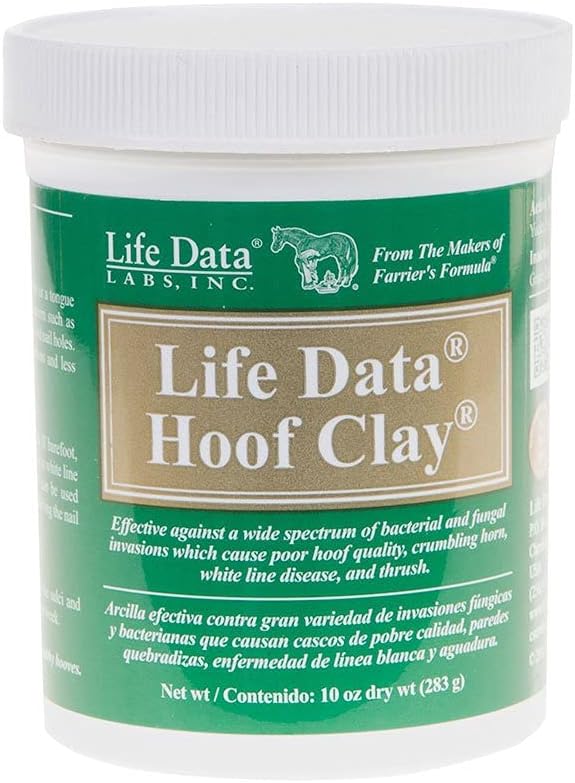
| Supplement | Key Ingredients | Best For | Potential Benefits |
|---|---|---|---|
| Farrier’s Formula | Biotin, methionine, zinc, copper | Overall hoof support | Long-standing reputation for hoof quality |
| Horseshoer’s Secret | Biotin, amino acids, minerals | Horses with brittle hooves | Supports hoof strength and growth |
| Formula 707 Hoof Health | Biotin, lysine, methionine | Performance horses | Comprehensive hoof nutrition |
| Life Data Hoof Formula | Biotin, amino acids, trace minerals | Long-term hoof maintenance | Supports strong hoof horn formation |
The best supplement is one that complements your horse’s overall diet rather than simply providing the highest amount of one ingredient.
Frequently Asked Questions
What is the best hoof supplement for White Line Disease?
Look for a product containing biotin, methionine, lysine, zinc, copper, and other nutrients that support healthy hoof growth. Remember that supplements support recovery but do not treat the infection itself.
Can supplements heal White Line Disease?
No. White Line Disease requires proper hoof trimming, removal of infected tissue, and appropriate topical treatment. Supplements help grow healthier replacement hoof.
How long should I feed a hoof supplement?
Most horses benefit from at least 6–12 months of consistent supplementation because hoof growth is slow.
Is biotin enough?
Biotin works best when combined with amino acids and trace minerals. A balanced hoof formula is generally more effective than biotin alone.
Can I use hoof supplements with topical treatments?
Yes. In fact, combining nutritional support with appropriate hoof care and topical treatment is often the most effective approach.
Can White Line Disease come back?
Yes. Horses can develop White Line Disease again if hoof hygiene, trimming schedules, or environmental conditions are not properly managed. Regular hoof care helps reduce the risk of recurrence.
Are hoof supplements worth the money?
For horses with poor hoof quality or those recovering from White Line Disease, a well-formulated hoof supplement can be a worthwhile investment when used alongside proper trimming, infection control, and balanced nutrition.
Can I feed two hoof supplements at the same time?
Generally, it is not recommended unless advised by your veterinarian or an equine nutritionist. Feeding multiple supplements may result in excessive amounts of certain vitamins or minerals.
Do older horses benefit from hoof supplements?
Yes. Older horses with slow hoof growth or poor hoof quality may benefit from targeted nutritional support, especially if dietary deficiencies are identified.
Expert Tip
Many owners focus on treating the visible infection while overlooking hoof growth from the coronary band. A well-balanced diet, regular farrier visits, and a quality hoof supplement give the new hoof wall the best chance to grow stronger and healthier over time.
What Research Says About Hoof Supplements
Several studies have examined the role of nutrition in hoof health. Research suggests that long-term supplementation with biotin, particularly when combined with essential amino acids and trace minerals, may improve hoof horn quality in horses with poor-quality hooves.
However, researchers also emphasize that supplements are most effective when combined with:
- Balanced nutrition
- Proper hoof trimming
- Good environmental management
- Appropriate treatment for White Line Disease
No supplement can replace regular farrier care or eliminate an active infection on its own.
Expert Case Example
A 12-year-old Quarter Horse developed White Line Disease after spending several weeks in wet pasture conditions. The treatment plan included regular farrier visits every five weeks, removal of infected hoof tissue, improved stall hygiene, and a hoof supplement containing biotin, methionine, zinc, and copper.
After approximately three months, healthier hoof growth became visible at the coronary band. By nine months, most of the damaged hoof wall had grown out, and the horse had returned to normal work. While every horse heals at a different rate, this example highlights the importance of combining nutrition with proper hoof care rather than relying on supplements alone.
Ready to Support Your Horse’s Hoof Recovery?
A quality hoof supplement won’t cure White Line Disease on its own, but it can provide the nutrients needed to grow a stronger, healthier hoof wall alongside proper farrier care and treatment.
Our top recommendation: Farrier’s Formula Double Strength for overall hoof support, while Horseshoer’s Secret Pellets offer a solid value option for many horse owners.
👉 Compare today’s prices and customer reviews before choosing the supplement that best fits your horse’s needs.
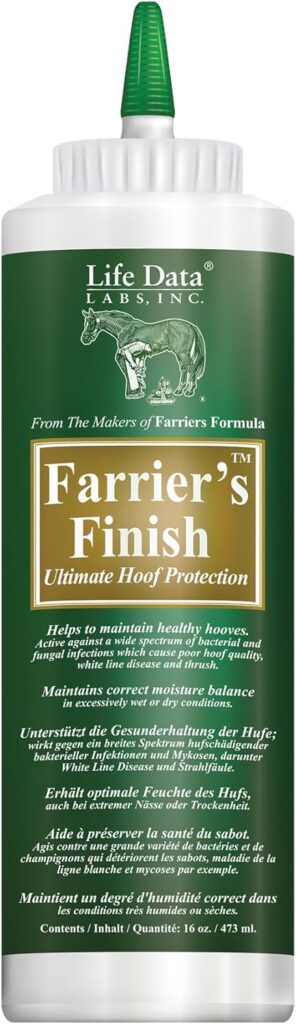
Summary:-
White Line Disease can take months to resolve, but recovery is possible with patience and a consistent plan. While hoof supplements won’t eliminate the infection, they provide the nutritional building blocks needed to grow a stronger hoof wall. When combined with skilled farrier care, appropriate topical treatment, a clean environment, and balanced feeding, the right supplement can play an important role in long-term hoof health.
Rather than looking for a quick fix, focus on supporting steady, healthy hoof growth. Over time, those small improvements can make a significant difference in your horse’s soundness and overall well-being.



Leave a comment