

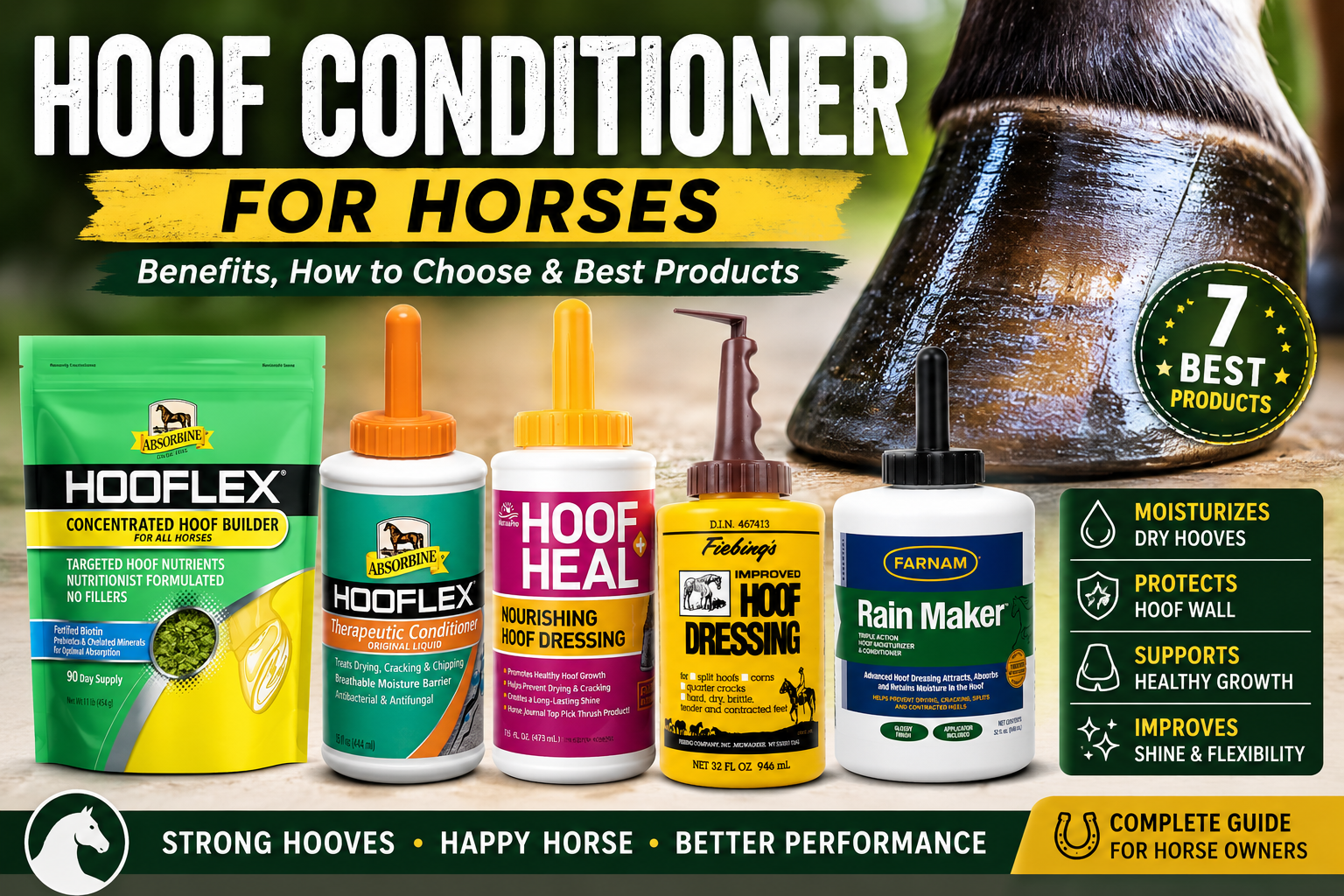
Hoof Conditioner for Horses: Benefits, How to Choose & 7 Best Products (2026 Guide)
If you’ve ever picked up your horse’s hoof and noticed it looks dry, brittle, or full of small cracks, you’re probably wondering whether a hoof conditioner for horses can help.
The short answer is yes-but only when it’s used correctly.
Many horse owners assume a hoof conditioner can fix every hoof problem. In reality, it works best as part of a complete hoof care routine that includes proper trimming, balanced nutrition, regular exercise, and a clean environment. A quality conditioner helps maintain the hoof wall’s moisture balance, improves flexibility, and may reduce the risk of superficial cracking caused by dry conditions.
As a farrier, I’ve seen horses with healthy, strong feet and others with hooves so dry they chipped every few weeks. In many cases, choosing the right hoof conditioner and applying it consistently made a noticeable difference.
In this guide, you’ll learn:
- What a hoof conditioner is
- When your horse actually needs one
- How to use it correctly
- Hoof conditioner vs. hoof oil vs. hoof dressing
- Common mistakes horse owners make
- The 7 best hoof conditioners for horses
- Frequently asked questions
Whether you own a performance horse, trail horse, or backyard companion, this guide will help you choose the right product and keep your horse’s hooves in top condition.
Quick Answer: A hoof conditioner helps maintain the hoof’s natural moisture balance, reducing dryness and improving flexibility. While it won’t cure hoof diseases, it can help protect healthy hooves and support overall hoof care when used alongside regular trimming, balanced nutrition, and proper management.
What Is a Hoof Conditioner for Horses?
A hoof conditioner is a product designed to help maintain the hoof’s natural moisture balance. It typically contains oils, waxes, lanolin, or other conditioning ingredients that help prevent the hoof wall from becoming excessively dry.
Contrary to popular belief, a hoof conditioner doesn’t “grow” new hoof overnight. Instead, it supports healthier hoof quality over time by protecting the outer hoof wall and helping it stay flexible.
Good hoof conditioners may also contain:
- Lanolin
- Coconut oil
- Beeswax
- Avocado oil
- Aloe vera
- Tea tree oil
- Vitamin E
- Natural plant oils
The exact ingredients vary by brand, so always read the label before purchasing.
Do Horses Really Need a Hoof Conditioner?
Not every horse needs one.
A horse living on healthy pasture with balanced nutrition and regular hoof care may have naturally healthy feet without any topical products.
However, hoof conditioners can be beneficial when horses experience:
- Dry weather
- Hot summer conditions
- Hard, rocky ground
- Brittle hoof walls
- Minor surface cracks
- Frequent chipping
- Stall environments that alternate between wet and dry conditions
Think of a hoof conditioner as supportive maintenance-not a cure for underlying hoof disease.
Signs Your Horse May Need a Hoof Conditioner
Watch for these common signs:
- Dry-looking hoof wall
- Small surface cracks
- Hoof wall chipping
- Rough texture
- Dull appearance
- Hooves that seem brittle
- Increased flaking around the hoof wall
If you notice deep cracks, severe lameness, hoof separation, white line disease, or persistent infections, consult your veterinarian or farrier rather than relying on a conditioner alone.
Benefits of Using a Hoof Conditioner
When used appropriately, hoof conditioners can offer several benefits.
Helps Maintain Moisture Balance
Healthy hooves aren’t overly wet or extremely dry. A conditioner helps protect against excessive moisture loss during dry seasons.
Supports Hoof Flexibility
Flexible hoof walls absorb concussion better than brittle ones.
Reduces Surface Cracking
Conditioners may reduce minor cosmetic cracks caused by dryness.
Improves Hoof Appearance
Many products leave hooves looking healthier and cleaner without an overly greasy finish.
Protects Against Environmental Stress
Dust, heat, sand, and hard footing can dry out the hoof wall. A conditioner provides a protective barrier against these conditions.
Hoof Conditioner vs. Hoof Oil vs. Hoof Dressing
Many horse owners confuse these products.
Hoof Conditioner
- Maintains moisture balance
- Usually absorbs into the hoof wall
- Best for regular maintenance
Hoof Oil
- Adds shine
- Helps reduce moisture loss
- Often used before shows
- Cosmetic benefits are common
Hoof Dressing
- A broader term
- May contain oils, waxes, or conditioners
- Some products focus more on protection than hydration
For everyday hoof care, many farriers prefer a quality conditioner over heavy oil because it supports the hoof without leaving an excessively greasy coating.
Does Hoof Conditioner Really Work?
This is one of the most common questions horse owners ask.
The answer is yes-but only when it’s used correctly.
A hoof conditioner doesn’t repair damaged hoof tissue overnight or make hooves grow faster. Instead, it helps maintain the hoof wall’s natural moisture balance, improving flexibility and reducing dryness-related brittleness.
However, healthy hooves depend on much more than topical products. Regular trimming, proper nutrition, exercise, and a clean environment all play a much larger role in hoof quality.
Think of a hoof conditioner as part of a complete hoof care program rather than a miracle solution.
How to Use Hoof Conditioner for Horses
Using the product correctly matters just as much as choosing the right one.
Step 1: Clean the Hoof
Remove dirt, stones, and manure using a hoof pick.
Step 2: Brush Away Dust
Use a stiff brush to clean the hoof wall.
Step 3: Apply to a Clean Hoof
Use the included brush or a dedicated hoof brush.
Step 4: Cover the Entire Hoof Wall
Apply an even layer around the hoof wall.
Step 5: Include the Coronary Band
Many products recommend lightly applying conditioner around the coronary band, where new hoof growth begins.
Step 6: Allow It to Absorb
Avoid immediately turning the horse into dusty footing if possible.
How Often Should You Use Hoof Conditioner?
This depends on your climate.
- Dry climates: 3–5 times per week
- Moderate climates: 2–3 times weekly
- Wet climates: As recommended by your farrier
- Show horses: Often before competitions for appearance
Avoid overusing any product, as excessive application won’t necessarily improve hoof quality.
Seasonal Hoof Care Tips
Your horse’s hoof care routine should change with the seasons.
Summer
Hot temperatures and dry ground can quickly remove moisture from the hoof wall.
- Pick hooves daily.
- Apply conditioner as needed.
- Provide plenty of fresh water.
- Avoid prolonged exposure to extremely dry footing.
Winter
Frozen ground can increase hoof stress.
- Keep hooves clean.
- Remove packed snow and ice.
- Continue regular farrier visits.
- Condition hooves if they become dry.
Rainy Seasons
Alternating wet and dry conditions can weaken the hoof wall.
- Keep stalls as dry as possible.
- Clean hooves daily.
- Allow hooves to dry naturally before applying conditioner.
Horses Living in Arid Regions
If your horse lives in a desert or consistently dry climate, inspect the hooves more frequently and use a conditioner according to the manufacturer’s directions or your farrier’s advice.
Common Hoof Problems a Conditioner Can Help With
A hoof conditioner can support healthy hooves by helping manage:
- Dry hoof walls
- Minor surface cracks
- Brittleness
- Small chips
- Dull-looking hooves
- Loss of flexibility caused by dry conditions
Problems It Cannot Treat
A hoof conditioner is not a treatment for:
- Laminitis
- White line disease
- Thrush
- Hoof abscesses
- Deep hoof cracks
- Serious lameness
- Hoof wall separation caused by infection
These conditions require professional diagnosis and treatment.
Hoof Conditioner Myths
Many horse owners hear conflicting advice about hoof care. Here are some common myths.
Myth: More Conditioner Means Faster Hoof Growth
False. Hoof growth depends primarily on genetics, nutrition, circulation, and regular trimming.
Myth: Every Horse Needs Hoof Conditioner
False. Some horses maintain excellent hoof quality without topical products.
Myth: Hoof Conditioner Can Replace a Farrier
False. No product can replace proper hoof trimming and balancing.
Myth: Shiny Hooves Mean Healthy Hooves
False. A glossy appearance doesn’t always indicate a healthy hoof. Internal hoof quality is much more important.
Common Mistakes Horse Owners Make
Applying Conditioner to Dirty Hooves
Mud and manure prevent proper contact with the hoof wall.
Expecting Overnight Results
Hooves grow slowly. Visible improvement often takes several weeks or months.
Ignoring Nutrition
No topical product can replace proper nutrition. Healthy hoof growth starts from within.
Skipping Regular Trimming
Even the best conditioner cannot compensate for neglected hoof maintenance.
Buying Based Only on Price
Quality ingredients often make a significant difference.
How to Choose the Best Hoof Conditioner for Horses
Not all hoof conditioners are the same. Choosing the right one depends on your horse’s environment, hoof condition, and daily workload.
Choose Based on Your Climate
Dry Climates
Horses living in hot, dry regions often benefit from conditioners that contain moisturizing ingredients such as lanolin, coconut oil, aloe vera, or avocado oil. These ingredients help reduce excessive moisture loss from the hoof wall.
Wet Climates
In consistently wet conditions, the goal isn’t to add more moisture but to help maintain the hoof’s natural balance. Look for products designed to protect the hoof wall without trapping excessive moisture.
Summer
Heat, dust, and hard ground can dry out hooves quickly. A lightweight conditioner applied several times a week may help keep the hoof wall flexible.
Winter
Cold weather combined with frozen ground can make hooves brittle. Regular conditioning, along with proper hoof maintenance, can help minimize superficial cracking.
Choose Based on Your Horse’s Hoof Condition
Different hoof conditions require different products.
- Dry, brittle hooves – Choose a moisturizing conditioner.
- Minor surface cracks – Select a conditioner that supports flexibility.
- Dull-looking hooves – A conditioner with natural oils can restore a healthier appearance.
- Horses in dusty environments – Choose a product that helps reduce moisture loss.
If your horse has deep cracks, white line disease, laminitis, or an abscess, consult your veterinarian or farrier. A hoof conditioner alone won’t solve these conditions.
Choose Based on Ingredients
High-quality hoof conditioners often contain beneficial ingredients such as:
- Lanolin
- Beeswax
- Coconut oil
- Aloe vera
- Tea tree oil
- Vitamin E
- Avocado oil
- Natural plant oils
Products made with nourishing ingredients generally provide better long-term hoof maintenance than those containing mostly fillers.
Ingredients to Look For
Reading the ingredient label is one of the easiest ways to choose a quality hoof conditioner.
Lanolin
Lanolin helps lock in moisture while keeping the hoof wall flexible.
Beeswax
Beeswax creates a protective barrier that slows moisture loss without completely sealing the hoof.
Coconut Oil
A natural moisturizer that helps reduce dryness while conditioning the hoof wall.
Aloe Vera
Known for its soothing and hydrating properties, aloe vera helps support healthy hoof tissue.
Tea Tree Oil
Included in some products for its cleansing properties and ability to support overall hoof hygiene.
Vitamin E
An antioxidant that helps maintain healthy skin around the coronary band.
Avocado Oil
Rich in healthy fatty acids that nourish dry hoof walls.
Ingredients to Avoid
Not every hoof conditioner is made with high-quality ingredients.
Avoid products that contain excessive amounts of:
- Harsh solvents
- Strong artificial fragrances
- High concentrations of alcohol
- Low-quality petroleum-based fillers
While these ingredients aren’t necessarily harmful in every formula, many horse owners prefer conditioners made with nourishing natural oils and waxes.
Best Hoof Conditioners for Horses
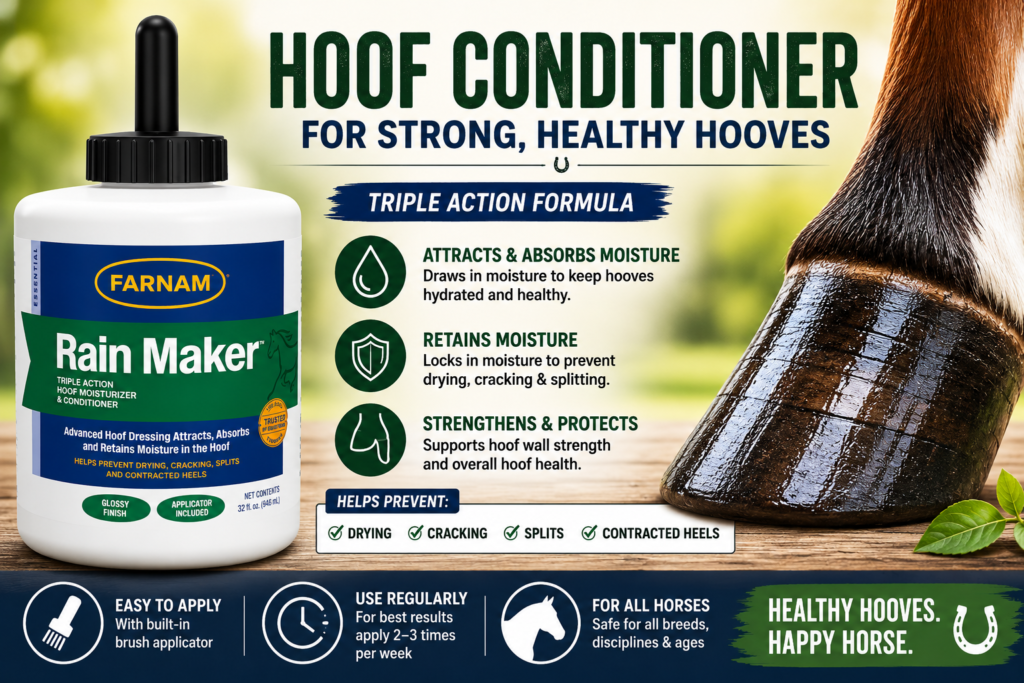
1. Farnam Horseshoer’s Secret Deep Penetrating Hoof Conditioner
A popular choice that helps support moisture balance and hoof flexibility.
Best for:
- Dry hooves
- Everyday maintenance

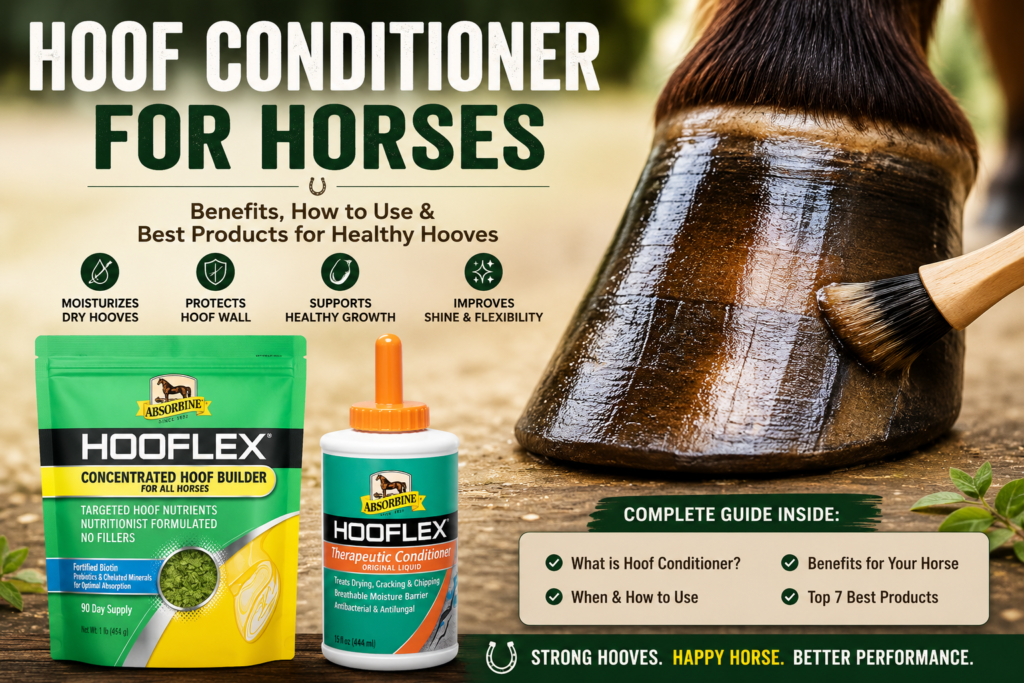
2. Absorbine Hooflex Natural Dressing
Known for its natural oils and conditioning ingredients.
Best for:
- Daily hoof care
- Show horses
- Routine conditioning
3. Keratex Hoof Moisturiser
Designed for horses living in dry environments where hooves may lose moisture.
Best for:
- Summer conditions
- Dry climates
4. Effol Hoof Ointment
Contains conditioning ingredients that help maintain hoof quality while protecting against excessive drying.
Best for:
- Daily maintenance
- Dry hoof walls
5. Carr & Day & Martin Cornucrescine Daily Hoof Moisturiser
A trusted brand used by many horse owners around the world.
Best for:
- Routine conditioning
- Year-round hoof care
6. Life Data Hoof Clay
Although primarily known for sole and frog care, many owners use it as part of an overall hoof maintenance routine.
Best for:
- Challenging environments
- Wet and muddy conditions
7. Kevin Bacon’s Hoof Dressing
Made with natural ingredients and widely used to maintain healthy hoof moisture.
Best for:
- Dry climates
- Regular conditioning
Homemade Hoof Conditioner for Horses
Some owners prefer homemade alternatives.
Common ingredients include:
- Coconut oil
- Beeswax
- Olive oil
- Shea butter
While homemade recipes may help moisturize the hoof wall, commercial products are often formulated to provide longer-lasting protection and consistent performance.
If you make your own, avoid harsh chemicals or ingredients that may irritate sensitive skin.
Natural Hoof Conditioner for Horses
Natural products are becoming increasingly popular.
Look for ingredients such as:
- Coconut oil
- Avocado oil
- Tea tree oil
- Aloe vera
- Beeswax
- Lanolin
- Vitamin E
Natural doesn’t always mean better, but many horse owners appreciate products with fewer synthetic ingredients.
Best Hoof Conditioner for Cracked Hooves
If your horse has cracked hooves, the first step is identifying the cause.
Minor surface cracks caused by dryness may benefit from a hoof conditioner.
However, deeper cracks can result from:
- Poor hoof balance
- Trauma
- Nutritional deficiencies
- White line disease
- Infection
In these cases, work with your veterinarian or farrier to address the underlying issue. A conditioner can support the hoof, but it won’t correct structural problems on its own.
Where to Buy Hoof Conditioner for Horses
Quality hoof conditioners are available from:
- Local tack shops
- Equine supply stores
- Veterinary clinics
- Online equestrian retailers
- Amazon
When buying online, check recent customer reviews, ingredient lists, and product recommendations from trusted equine professionals.
Other Horse Hoof Care Products Worth Having
A complete hoof care kit may include:
- Hoof pick
- Hoof brush
- Thrush treatment
- Hoof conditioner
- Hoof boots
- Hoof supplements (when recommended)
- Farrier rasp (for professionals)
Frequently Asked Questions
What is the best way to moisturize horse hooves?
The best approach is combining proper hydration, balanced nutrition, regular trimming, and a quality hoof conditioner when needed. Healthy management practices have a greater impact than any single product.
When should you use hoof conditioner?
Use it when hooves become dry, brittle, or exposed to harsh environmental conditions. Follow the product instructions and your farrier’s advice.
Can I make homemade hoof conditioner for my horse?
Yes. Many owners use simple mixtures containing coconut oil, beeswax, and olive oil. Homemade options may help with moisture, though commercial products often provide more consistent results.
What does apple cider vinegar do for horse hooves?
Apple cider vinegar is sometimes used in hoof care routines because of its mild acidic properties, but scientific evidence supporting routine use is limited. It should never replace proper diagnosis or treatment for hoof disease.
Can hoof conditioner cure hoof cracks?
No. It may help reduce dryness-related surface cracks, but deeper cracks require professional evaluation and corrective hoof care.
Is hoof oil better than hoof conditioner?
Not necessarily. Hoof oil is often chosen for appearance and moisture retention, while hoof conditioners are generally formulated for ongoing hoof maintenance. The better choice depends on your horse’s needs.
If you’re interested in learning more about hoof health, these guides can help:
- Best Hoof Oil for Horses
- Best Hoof Boots for Horses
- Horse Hoof Cracks: Causes and Treatment
- White Line Disease in Horses
- Thrush Treatment for Horses
- Horse Hoof Supplements Guide
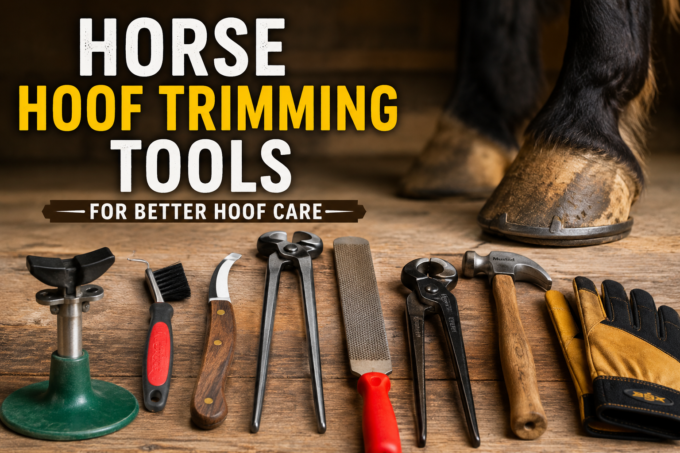
- Horse Hoof Trimming Tools
- Best Fly Spray for Horses: What Actually Works?
Summary:-
A quality hoof conditioner for horses can be a valuable addition to your horse’s hoof care routine, especially during dry weather or when hooves become brittle and prone to chipping. While no topical product can replace proper trimming, nutrition, and overall management, the right conditioner helps support healthy moisture balance and keeps the hoof wall more resilient.
Choose a product suited to your horse’s environment, apply it to clean hooves, and stay consistent. Pair it with regular farrier visits, balanced nutrition, and daily hoof inspections for the best long-term results.
Healthy hooves are built through good management-not quick fixes. When used as part of a complete care routine, a hoof conditioner can help your horse stay comfortable, sound, and ready for work throughout the year.
References
For additional information on hoof care, consult reputable equine health resources such as:
- American Association of Equine Practitioners (AAEP)
- University equine extension publications
- Veterinary textbooks on equine podiatry
- Peer-reviewed research on equine hoof health
- Product manufacturer technical information and usage guidelines.





Leave a comment