

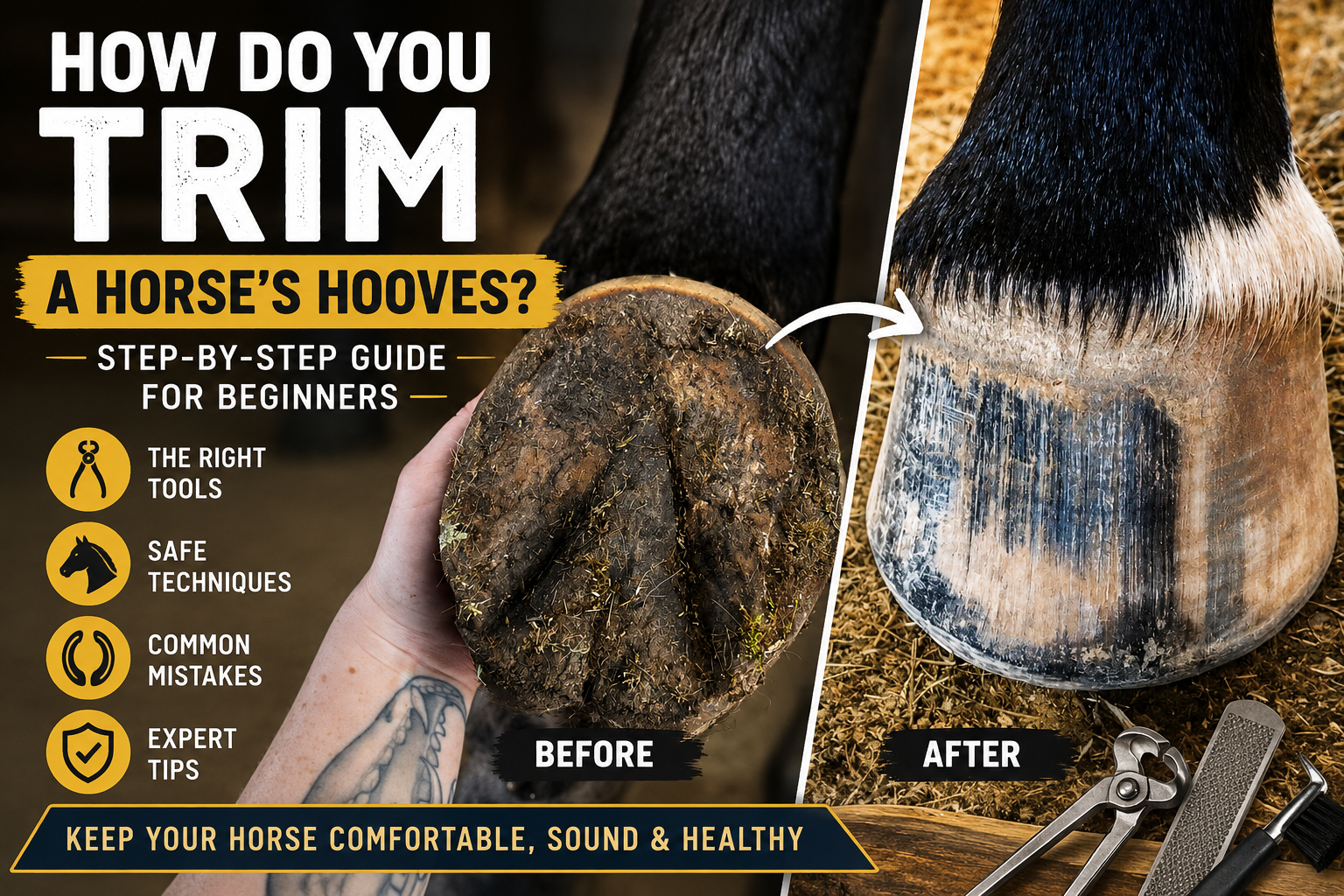
How Do You Trim a Horse’s Hooves? A Step-by-Step Guide for Beginners
If you’ve ever wondered how do you trim a horse’s hooves, you’re not alone. Hoof trimming is one of the most important parts of horse care, yet it can feel intimidating for first-time owners. Healthy hooves support your horse’s entire body, and neglecting them can lead to pain, poor movement, cracks, and even long-term lameness.
While many horse owners rely on a professional farrier, understanding the basics of hoof trimming helps you recognize healthy hoof growth and know when something isn’t right. It also allows you to maintain your horse’s hooves between farrier visits.
Hoof trimming isn’t about removing as much hoof as possible. Instead, it’s about restoring the hoof to its natural shape, balancing weight evenly, and encouraging healthy movement. Every horse is different, so trimming techniques may vary depending on age, breed, workload, hoof quality, and terrain.
In this guide, you’ll learn the essential tools, preparation steps, and safe trimming practices used by experienced horse owners and farriers. Whether you’re simply learning or planning to maintain your own horse’s hooves under professional guidance, these tips will help you understand the process with confidence.
Why Regular Hoof Trimming Is Important
Horse hooves never stop growing. On average, they grow about ¼ to ⅜ inch (6–10 mm) each month. Without regular trimming, the hoof becomes too long, changing the horse’s balance and placing excessive stress on joints, tendons, and ligaments.
A properly trimmed hoof allows the horse to move comfortably while reducing the risk of injury.
Benefits of regular hoof trimming include:
- Maintains proper hoof balance
- Prevents cracks and chips
- Reduces stress on tendons and joints
- Encourages healthy hoof growth
- Improves traction and movement
- Helps prevent lameness
- Detects hoof problems early
I’ve seen horses develop serious hoof issues simply because trims were delayed for several months. A small imbalance may not seem obvious at first, but over time it can affect the entire leg.
How Often Should a Horse’s Hooves Be Trimmed?
One of the most common questions new owners ask after learning how do you trim a horse’s hooves is how often trimming should be done.
For most horses, trimming every 6 to 8 weeks is recommended.
However, several factors affect this schedule:
Young Horses
Foals and young horses often require more frequent trims because their hooves grow quickly and proper limb development is important.
Horses Working Frequently
Performance horses that are ridden regularly usually need closer monitoring since hoof wear and growth patterns change with activity.
Barefoot Horses
Barefoot horses may naturally wear some hoof depending on the terrain, but they still require regular evaluation.
Older Horses
Senior horses often have slower hoof growth but may develop hoof distortions that require routine maintenance.
Never wait until the hoof becomes noticeably long before scheduling a trim.
Signs Your Horse Needs a Hoof Trim
You don’t have to be a farrier to recognize when it’s time for a trim.
Watch for these signs:
- Hooves look unusually long
- Toes begin flaring outward
- Hoof walls start chipping
- Cracks appear around the hoof wall
- Horse stumbles more often
- Heels become uneven
- Shoes become loose (if shod)
- Horse appears uncomfortable while walking
Checking your horse’s feet daily helps you notice these changes before they become serious.
Tools Needed to Trim a Horse’s Hooves
Before trimming, gather the proper equipment. Using the right tools makes the job safer and produces cleaner results.
Hoof Pick
A hoof pick removes mud, stones, manure, and debris before trimming. Cleaning the hoof allows you to inspect the sole, frog, and white line more accurately.
Hoof Nippers
Hoof nippers remove excess hoof wall. They work similarly to large pruning shears and should only remove small amounts of hoof at a time.
Sharp nippers make trimming easier and reduce unnecessary pressure on the hoof.
Hoof Rasp
The rasp smooths rough edges and levels the hoof after nipping. It creates an even bearing surface and helps balance the foot.
Many experienced farriers spend more time using the rasp than the nippers because balance is more important than speed.
Hoof Knife
A hoof knife carefully removes loose, dead sole and ragged frog tissue.
Only remove dead material. Cutting healthy tissue can make the horse sore.
Hoof Stand
A hoof stand supports the horse’s leg while trimming, reducing strain on your back and making the process more comfortable.
Farrier Apron
A farrier apron protects your legs from sharp tools while providing extra grip when holding the hoof.
Gloves and Safety Glasses
Good-quality gloves improve grip, while safety glasses protect your eyes from flying hoof particles.
Preparing Your Horse Before Trimming
Preparation is just as important as the trimming itself.
Choose a quiet area with firm, level ground where your horse feels relaxed.
Secure the horse using a quick-release knot or ask an experienced handler to assist if needed.
Avoid trimming in muddy, slippery, or uneven areas.
Before picking up a hoof:
- Speak calmly to your horse.
- Stand close to the shoulder or hip.
- Run your hand gently down the leg.
- Ask the horse to lift the foot.
- Support the hoof naturally without pulling it too high.
If your horse becomes nervous, stop and allow it to relax before continuing.
Trying to rush the process often creates unnecessary stress for both horse and handler.
Inspect the Hoof Before Trimming
Every trim should begin with a careful inspection.
Clean the hoof thoroughly using a hoof pick and brush.
Look for:
- Cracks
- Thrush
- White line separation
- Bruising
- Foreign objects
- Abscess signs
- Loose hoof wall
- Sole damage
Also compare all four feet.
Healthy horses should have balanced hooves that match their natural conformation. Differences between feet may indicate uneven weight bearing or underlying problems.
If you notice heat, a strong digital pulse, severe cracks, or signs of lameness, postpone trimming and consult your veterinarian or farrier before making changes to the hoof.
Step-by-Step Guide: How Do You Trim a Horse’s Hooves?
Once your horse is calm, the hoof is clean, and you’ve inspected it carefully, you can begin trimming. Remember, hoof trimming is about restoring balance—not removing as much hoof as possible.
If you’re new to trimming, make small adjustments and work slowly. Many experienced farriers say it’s easy to remove hoof, but impossible to put it back.
Step 1: Clean the Hoof Thoroughly
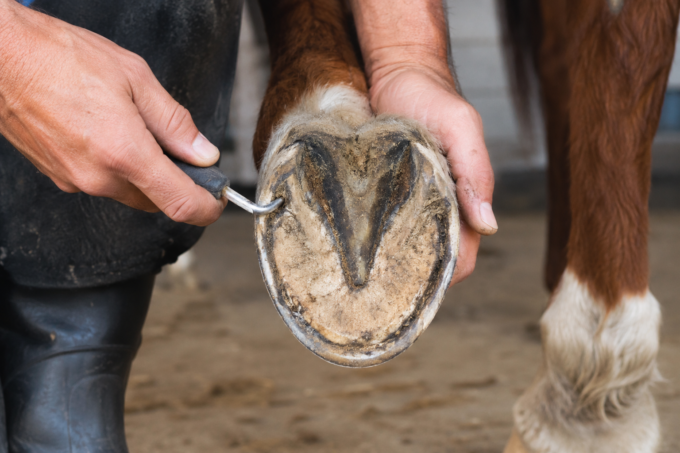
Before using any trimming tools, clean the entire hoof with a hoof pick.
Remove:
- Mud
- Stones
- Manure
- Packed dirt
- Loose debris
Pay special attention to the grooves beside the frog, as debris often hides signs of thrush or infection.
After cleaning, use a stiff brush to remove any remaining dirt so you can clearly see the hoof wall, sole, frog, and white line.
Step 2: Examine the Hoof Balance
Before making the first cut, study the hoof from several angles.
Look at:
- Toe length
- Heel height
- Hoof wall thickness
- Medial and lateral balance
- Frog condition
- Sole depth
A healthy hoof should appear symmetrical when viewed from the front and balanced from heel to toe.
If one side appears significantly higher than the other, resist the temptation to remove large amounts of hoof at once. Small corrections over multiple trimming cycles are much safer.
Step 3: Trim the Hoof Wall with Nippers
This is where many beginners become nervous.
Position the hoof comfortably and hold the nippers securely.
Start at one heel and work toward the toe, taking small, controlled bites of the hoof wall.
Avoid trying to remove too much in one cut.
Small cuts give you much better control and reduce the chance of making a costly mistake.
As you trim:
- Follow the natural shape of the hoof.
- Keep both sides even.
- Remove only overgrown hoof wall.
- Frequently compare both sides of the foot.
If you’re unsure whether more hoof should come off, it’s usually safer to stop and reassess.
Step 4: Check Heel Height
The heels play a major role in supporting the horse’s weight.
Overgrown heels can alter limb alignment and increase stress on tendons.
However, trimming heels too aggressively can leave the horse sore and uncomfortable.
The goal is to maintain a balanced heel that supports healthy movement rather than forcing the hoof into a particular shape.
Step 5: Use the Hoof Knife Carefully
The hoof knife should only remove dead tissue.
Trim away:
- Loose sole
- Flaking sole
- Ragged frog edges
- Dead frog tissue
Do not carve deeply into the sole.
One mistake many beginners make is trying to create a perfectly clean-looking hoof. Healthy sole protects sensitive structures underneath and should remain intact.
If you’re uncertain whether tissue is alive or dead, leave it alone.
Step 6: Level the Hoof with a Rasp
After nipping, the hoof wall will usually have rough edges.
Use the rasp with long, smooth strokes across the hoof.
Work evenly from heel to toe.
Avoid short, aggressive strokes that create an uneven surface.
The rasp helps:
- Smooth the hoof wall
- Level the bearing surface
- Improve balance
- Remove sharp edges
Many professional farriers spend considerable time rasping because proper balance is more important than removing hoof quickly.
Step 7: Round the Hoof Edge
After leveling the hoof, lightly round the outer edge.
This is often called creating a “mustang roll.”
A rounded edge helps:
- Reduce chipping
- Prevent cracks
- Improve breakover
- Protect the hoof wall
Only remove the sharp edge-not large amounts of hoof.
Step 8: Compare All Four Feet
Before setting the hoof down for the final time, compare it with the other feet.
Look for:
- Similar toe lengths
- Balanced heels
- Even hoof walls
- Smooth finish
Each hoof should complement the horse’s natural conformation.
Remember that front and hind hooves naturally have different shapes.
Common Mistakes Beginners Make
Learning how do you trim a horse’s hooves takes practice.
These are some of the most common mistakes new horse owners make.
Removing Too Much Hoof
Taking off excessive hoof wall is probably the most serious mistake.
It can lead to:
- Tenderness
- Lameness
- Bruising
- Poor weight distribution
When in doubt, remove less.
Ignoring Hoof Balance
Some people focus only on shortening the toe.
Proper trimming also requires balancing:
- Heel height
- Medial and lateral sides
- Toe angle
- Overall hoof symmetry
An unbalanced trim may affect the entire limb.
Cutting Healthy Sole
The sole protects sensitive structures inside the hoof.
Only loose, dead sole should be removed.
Healthy sole should remain untouched.
Using Dull Tools
Sharp tools are actually safer.
Dull nippers and rasps require more force, making slips more likely and producing rough cuts.
Regularly sharpen or replace your equipment.
Trimming Too Infrequently
Waiting several months between trims often results in excessive hoof growth.
This places unnecessary stress on joints and soft tissues.
Routine maintenance is much easier than correcting severe overgrowth.
Rushing the Process
A restless horse can tempt owners to hurry.
Instead:
- Stay patient.
- Give the horse breaks if needed.
- Work calmly.
- Stop if the horse becomes anxious.
Good trimming is never rushed.
Aftercare Following a Hoof Trim
Once trimming is complete, observe your horse walking on a flat surface.
Look for:
- Comfortable movement
- Even strides
- Balanced foot placement
- No signs of soreness
Some horses immediately move more freely after a well-balanced trim.
Continue picking out the hooves daily and check for any cracks or loose pieces over the following week.
If your horse appears unusually sore after trimming, contact your farrier or veterinarian before attempting additional adjustments.
Can You Trim Your Horse’s Hooves Yourself?
Many experienced horse owners perform maintenance trims between professional visits.
However, complete hoof trimming requires knowledge of hoof anatomy, balance, and biomechanics.
If you’re just starting out, consider:
- Watching an experienced farrier work.
- Taking a hoof care course.
- Practicing under professional supervision.
- Beginning with simple maintenance rather than full trims.
Building confidence gradually is much safer than attempting major corrections on your own.
When Should You Call a Professional Farrier?
Although learning how do you trim a horse’s hooves is valuable, there are situations where a qualified farrier should handle the job. Some hoof conditions require advanced knowledge and specialized trimming techniques that go beyond routine maintenance.
Contact a professional if your horse has:
- Severe hoof cracks
- Laminitis or founder
- White line disease
- Thrush that extends into deep tissues
- Hoof abscesses
- Club feet
- Significant hoof imbalance
- Chronic lameness
- Loose or damaged horseshoes
- Hoof wall separation
Performance horses, breeding horses, and horses with corrective shoeing needs should also be evaluated regularly by an experienced farrier.
Remember, hoof trimming isn’t just about making the hoof look neat. Every trim affects the horse’s movement, comfort, and long-term soundness.
Tips for Maintaining Healthy Hooves Between Trims
Regular trimming is only one part of good hoof care. Daily management plays an equally important role in keeping your horse’s feet healthy.
Here are a few habits that make a big difference:
Pick Out the Hooves Every Day
Removing mud, manure, and stones helps prevent bruising, thrush, and hidden injuries. Daily cleaning also gives you a chance to spot cracks or unusual wear before they become serious.
Keep Living Areas Clean
Standing in wet, dirty conditions for long periods can soften the hoof and encourage bacterial or fungal infections. A dry, well-maintained stall or pasture supports stronger hoof growth.
Feed a Balanced Diet
Healthy hooves begin from the inside out. Horses need a balanced diet that provides adequate protein, vitamins, and minerals to support strong hoof growth.
Poor nutrition often leads to brittle hooves, slow growth, and weak hoof walls.
Encourage Regular Exercise
Movement increases blood circulation within the hoof, helping deliver nutrients needed for healthy horn production.
Even light daily turnout benefits hoof health.
Stay on a Consistent Trimming Schedule
Don’t wait until the hooves become noticeably overgrown. Keeping a regular 6–8 week trimming schedule makes each trim easier and helps maintain proper hoof balance.
Best Tools for Trimming a Horse’s Hooves
If you’re building your hoof care kit, investing in quality tools makes trimming easier and safer. Cheap tools often dull quickly and require more effort to use.
Consider recommending these products in your affiliate section:
Essential Tools
- Hoof Pick
- Hoof Nippers
- Hoof Rasp
- Hoof Knife
- Hoof Stand
- Farrier Apron
- Protective Gloves
- Wire Hoof Brush
Helpful Extras
- Hoof Moisturizer
- Hoof Conditioner
- Thrush Treatment
- Hoof Disinfectant Spray
- First Aid Kit
- Farrier Tool Bag
Affiliate Placement Tip: Add a section titled “Recommended Hoof Trimming Tools” just before the conclusion. Include a comparison table with your top product picks and affiliate links. This naturally fits the article and can improve click-through rates without disrupting the reading experience.
Frequently Asked Questions
How often should horse hooves be trimmed?
Most horses need trimming every 6 to 8 weeks, although this varies depending on hoof growth, age, activity level, and the terrain they live on.
Can beginners trim a horse’s hooves?
Beginners can learn basic hoof maintenance, but full hoof trimming should only be attempted after receiving guidance from an experienced farrier or hoof care professional.
Does hoof trimming hurt the horse?
No. Trimming the outer hoof wall is similar to trimming human fingernails. Problems only occur if too much hoof is removed or sensitive structures are cut.
What happens if horse hooves aren’t trimmed?
Overgrown hooves can lead to cracks, poor balance, joint strain, tendon injuries, abnormal gait, and, in severe cases, lameness.
Can I trim my horse’s hooves without special tools?
It’s not recommended. Proper tools such as hoof nippers, a rasp, and a hoof pick are designed to make trimming safer, cleaner, and more accurate.
How long does it take to trim a horse’s hooves?
An experienced farrier can often trim all four feet in 20 to 40 minutes. Beginners usually need more time, especially while learning proper technique.
In Short:-
Learning how do you trim a horse’s hooves is an important step toward becoming a more confident horse owner. Even if you plan to rely on a professional farrier, understanding the trimming process helps you recognize healthy hoof growth, spot potential problems early, and communicate more effectively about your horse’s hoof care.
Take your time, use the right tools, and focus on making small, careful adjustments rather than dramatic changes. Good hoof trimming is built on patience, consistency, and attention to detail.
With regular maintenance, proper nutrition, daily hoof cleaning, and a consistent trimming schedule, you’ll help your horse stay comfortable, balanced, and sound for years to come.








Leave a comment