

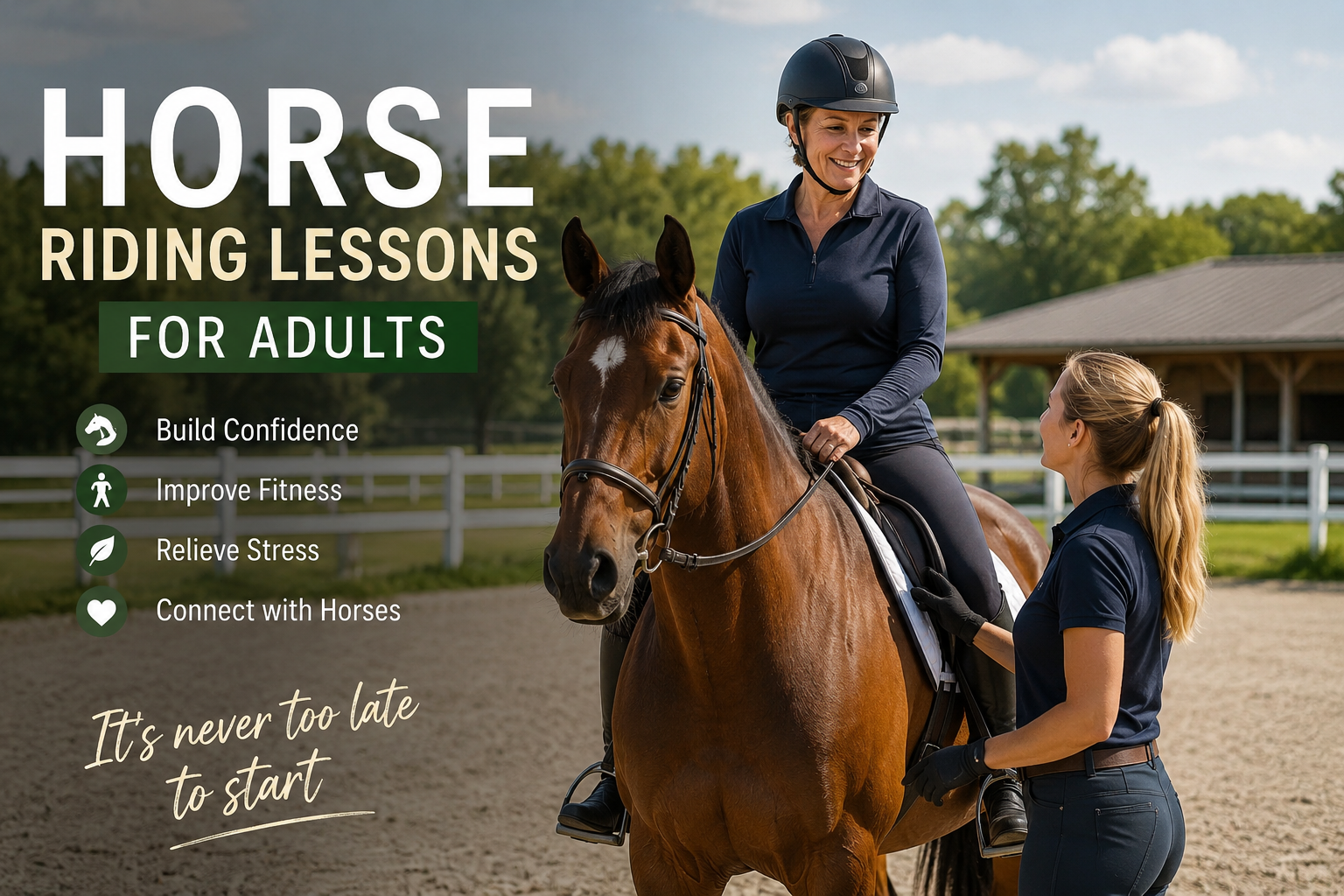
Horse Riding Lessons for Adults: What to Expect, Benefits, and How to Get Started
Many people assume horse riding is something you have to start as a child. The truth is that adults of all ages begin riding lessons every year. Some have dreamed about horses since childhood, while others simply want to try a new outdoor activity that combines fitness, learning, and time with animals.
Whether you’re in your twenties, forties, or even retirement age, horse riding lessons for adults can be a rewarding experience. Riding develops balance, confidence, coordination, and a unique connection with horses that many people find deeply enjoyable.
If you’ve been considering taking your first lesson but aren’t sure what to expect, this guide will help you understand how adult riding lessons work and how to get started with confidence.
Why More Adults Are Taking Horse Riding Lessons
Horse riding has become increasingly popular among adults looking for activities that go beyond the typical gym workout. Riding challenges both the body and mind while providing an opportunity to spend time outdoors.
Unlike many sports, horse riding involves working with a living animal. Every lesson teaches riders how to communicate, build trust, and develop a partnership with their horse.
Adults often choose riding lessons for several reasons:
- Learning a lifelong dream skill
- Improving fitness and balance
- Reducing stress
- Spending more time outdoors
- Building confidence
- Meeting people with similar interests
- Preparing for horse ownership
Many riding schools welcome beginners and regularly teach adults with no previous experience around horses.
Are You Too Old to Start Riding?
One of the most common questions new riders ask is whether they are too old to begin.
The simple answer is no.
Many successful riders start in adulthood. Riding instructors are accustomed to teaching adult beginners and understand that adults learn differently from children.
Adults often bring advantages to the learning process, including:
- Better focus
- Patience
- Strong problem-solving skills
- Greater understanding of safety instructions
As long as you are reasonably healthy and physically able to participate, age alone should not prevent you from learning to ride.
Before starting lessons, individuals with medical conditions or mobility concerns should discuss riding with their healthcare provider.
What Happens During Your First Riding Lesson?
Your first lesson is usually much more relaxed than many beginners expect.
Most riding schools start by introducing students to basic horse safety and handling before they ever get in the saddle.
A typical first lesson may include:
Meeting the Horse
Your instructor will introduce you to the horse you’ll be riding and explain basic behavior and safety rules.
You’ll learn:
- How to approach a horse safely
- Where to stand
- How horses communicate through body language
- Basic grooming techniques
Learning Basic Equipment
You’ll become familiar with riding equipment such as:
- Saddle
- Bridle
- Reins
- Stirrups
- Helmet
Understanding equipment helps riders feel more comfortable and confident before mounting.
Mounting the Horse
Most instructors use a mounting block to make getting on easier and safer.
The instructor will guide you step-by-step through the process.
Basic Riding Skills
During the first lesson, you’ll typically learn:
- Correct riding position
- Holding the reins
- Starting and stopping
- Steering
- Walking the horse
Many beginners remain at the walk for their first lesson while becoming comfortable with balance and control.
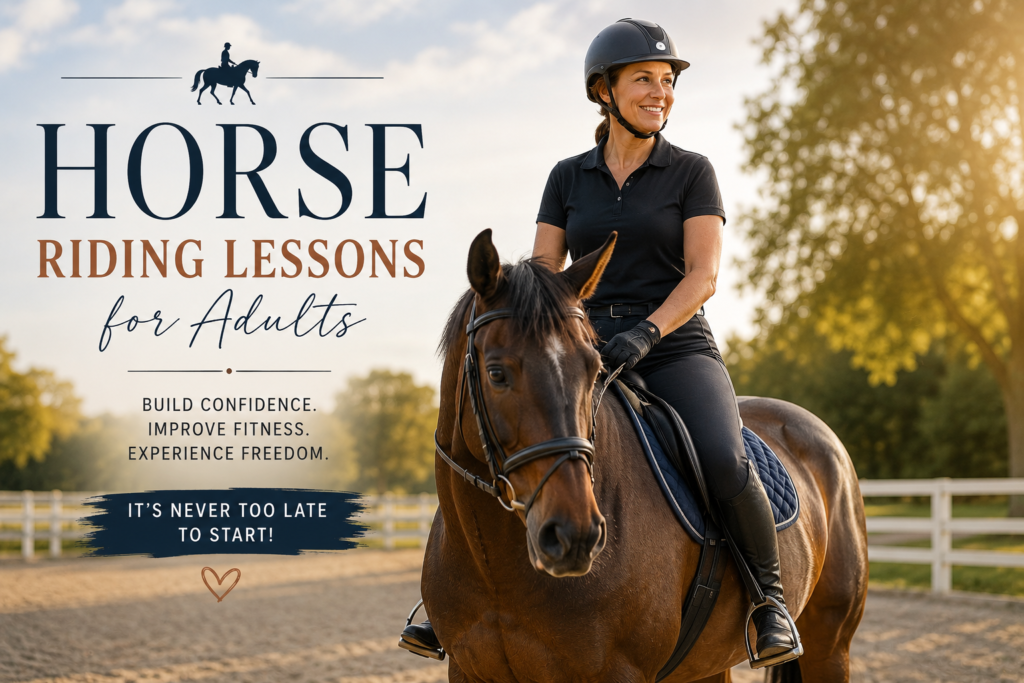
Physical Benefits of Horse Riding
Horse riding provides a surprisingly effective full-body workout.
While riding may appear effortless, riders constantly engage multiple muscle groups to stay balanced and communicate with the horse.
Some physical benefits include:
Improved Core Strength
Maintaining proper posture in the saddle requires continuous use of abdominal and back muscles.
Over time, many riders notice improved core stability and posture.
Better Balance and Coordination
The horse’s movement challenges the rider’s balance with every stride.
As skills improve, coordination and body awareness often improve as well.
Increased Flexibility
Riding encourages flexibility in the hips, legs, and lower back.
Many riders find that regular lessons help improve overall mobility.
Cardiovascular Activity
Although riding is not as intense as some sports, active riding sessions can elevate heart rate and provide moderate cardiovascular exercise.
Mental and Emotional Benefits
Many adult riders quickly discover that riding offers more than physical exercise.
Time spent around horses can have a positive effect on mental well-being.
Stress Relief
Focusing on the horse and the riding experience often helps riders disconnect from work, technology, and daily pressures.
Improved Confidence
Learning new riding skills creates a strong sense of accomplishment.
Many adult beginners gain confidence not only in riding but also in other areas of life.
Better Focus
Horses require attention and clear communication.
Riders must remain present and focused, making lessons an excellent mental exercise.
Connection With Animals
Developing trust with a horse can be incredibly rewarding and is one of the reasons many riders stay involved in the sport for years.
What Should Adults Wear for Riding Lessons?
You don’t need expensive equipment for your first lesson.
Most riding schools provide guidance regarding appropriate clothing.
Recommended items include:
- Riding helmet (often provided)
- Long pants
- Boots with a small heel
- Comfortable fitted shirt
- Weather-appropriate outerwear
Avoid:
- Shorts
- Sandals
- Loose clothing
- Heavy backpacks
As you continue riding, you may decide to invest in your own riding gear.
supplements-for-laminitis-in-horses
How Often Should Adults Take Lessons?
Consistency plays a major role in progress.
For most beginners, one lesson per week provides a solid foundation.
This schedule allows riders to:
- Build skills steadily
- Develop confidence
- Retain information between lessons
- Avoid becoming overwhelmed
Riders who want faster progress may choose two or more lessons each week.
The ideal schedule depends on personal goals, time availability, and budget.
Choosing the Right Riding School
Not all riding schools are the same.
Finding the right instructor and facility can make a significant difference in your experience.
When evaluating riding programs, consider:
Instructor Experience
Look for instructors who have experience teaching adult beginners.
Teaching children and teaching adults often require different approaches.
School Horses
Well-trained lesson horses help beginners learn safely and confidently.
Observe whether the horses appear healthy, calm, and well cared for.
Safety Standards
A quality riding facility should emphasize:
- Proper helmet use
- Safe riding practices
- Well-maintained equipment
- Clear instruction
Facility Environment
Visit the facility if possible.
A clean, organized, and welcoming environment often reflects good management and horse care.
Common Fears New Adult Riders Have
Nearly every beginner feels nervous before the first lesson.
Some common concerns include:
Fear of Falling
While falls can happen in any equestrian activity, beginner lessons are designed to minimize risk.
Instructors carefully match riders with suitable horses and progress at a comfortable pace.
Feeling Embarrassed
Many adults worry they’ll look inexperienced.
In reality, instructors teach beginners every day and understand the learning process.
Fear of Large Animals
Horses are powerful animals, but well-trained lesson horses are selected specifically for their calm temperament.
As knowledge and experience grow, confidence usually follows.
Setting Realistic Expectations
Learning to ride takes time.
Most riders require several lessons before they feel fully comfortable controlling a horse independently.
Progress varies from person to person, and that’s perfectly normal.
Rather than comparing yourself to others, focus on:
- Building confidence
- Developing proper technique
- Enjoying the learning process
- Creating a positive relationship with horses
Small improvements add up over time.
Are Horse Riding Lessons for Adults With No Experience?
Absolutely. Most riding schools regularly teach adults who have never been on a horse before. Instructors understand that beginners need time to build confidence and learn the basics at a comfortable pace.
Your first few lessons will usually focus on safety, proper riding position, steering, stopping, and understanding horse behavior. Well-trained lesson horses are selected specifically for beginners because they are calm, patient, and responsive.
Many adults worry that they are starting too late, but age is rarely a barrier. Riders begin lessons in their 30s, 40s, 50s, and beyond. With consistent practice and a willingness to learn, adult beginners can make excellent progress and enjoy all the benefits horse riding has to offer.
How Much Do Horse Riding Lessons Cost?
The cost of horse riding lessons varies depending on location, lesson length, instructor experience, and facility quality.
In the United States, beginner riding lessons typically range from $40 to $100 per lesson, while private lessons can cost $60 to $150 or more. Group lessons are usually more affordable and are a popular option for beginners.
Some riding schools offer monthly packages that reduce the cost per lesson. Additional expenses may include riding boots, helmets, gloves, and other equipment if you decide to continue riding regularly.
Before booking lessons, ask what is included in the price. Many facilities provide helmets and basic equipment for beginners, helping new riders get started without a large upfront investment.
How Long Does It Take to Learn Horse Riding?
Learning horse riding is a gradual process, and progress depends on how often you ride and what your goals are.
Most adult beginners can learn basic riding skills within a few weeks of regular lessons. After several months, many riders feel comfortable walking, trotting, steering, and controlling their horse with confidence.
Developing more advanced skills such as cantering, jumping, dressage, or trail riding safely may take months or even years of practice. Horse riding is a lifelong learning experience, and even experienced riders continue improving their skills.
For steady progress, many instructors recommend taking at least one lesson per week. Consistency is often more important than speed when building a solid foundation.
What Should Adults Wear to Riding Lessons?
Wearing the right clothing helps improve comfort and safety during riding lessons.
Most instructors recommend:
- Long pants or riding breeches
- Boots with a small heel
- A properly fitted riding helmet
- A comfortable, fitted shirt
- Weather-appropriate layers
Avoid shorts, sandals, loose clothing, and shoes with smooth flat soles. These items can increase the risk of discomfort or accidents while riding.
Many riding schools provide helmets for beginners, allowing new riders to try lessons before purchasing their own equipment. As you gain experience, investing in quality riding gear can make lessons more comfortable and enjoyable.
Is Horse Riding Good Exercise for Adults?
Yes, horse riding is an excellent form of exercise that benefits both the body and mind.
While many people assume the horse does most of the work, riders constantly use their muscles to maintain balance, communicate with the horse, and stay in the correct position. Riding engages the core, legs, back, and stabilizing muscles throughout the body.
Regular riding can help improve:
- Balance and coordination
- Core strength
- Posture
- Flexibility
- Muscle endurance
- Body awareness
Beyond the physical benefits, horse riding can also reduce stress, improve focus, and boost confidence. Spending time outdoors and working with horses provides a unique mental break from everyday pressures, making riding a rewarding activity for adults seeking both fitness and relaxation.
In Short:-
Horse riding lessons for adults offer a unique combination of fitness, learning, outdoor activity, and personal growth. Whether your goal is recreational riding, competition, or simply fulfilling a lifelong dream, it’s never too late to start.
The first lesson may feel intimidating, but every experienced rider was once a beginner. With the right instructor, a reliable horse, and a willingness to learn, adult riders can make steady progress while enjoying one of the most rewarding activities available.
If you’ve been thinking about taking riding lessons, there’s no perfect age to begin. The best time to start is when you’re ready to step into the saddle and give it a try.
- Beginner horse riding lessons
- Horse riding lesson tips for beginners
- Horse Riding Lessons for Adults
- Horse riding lessons for kids
- Horse riding lessons near me
- Horseback riding lessons for adults
- How much do horse riding lessons cost
- How to choose a horse riding school
- What to expect at your first horse riding lesson








Leave a comment