

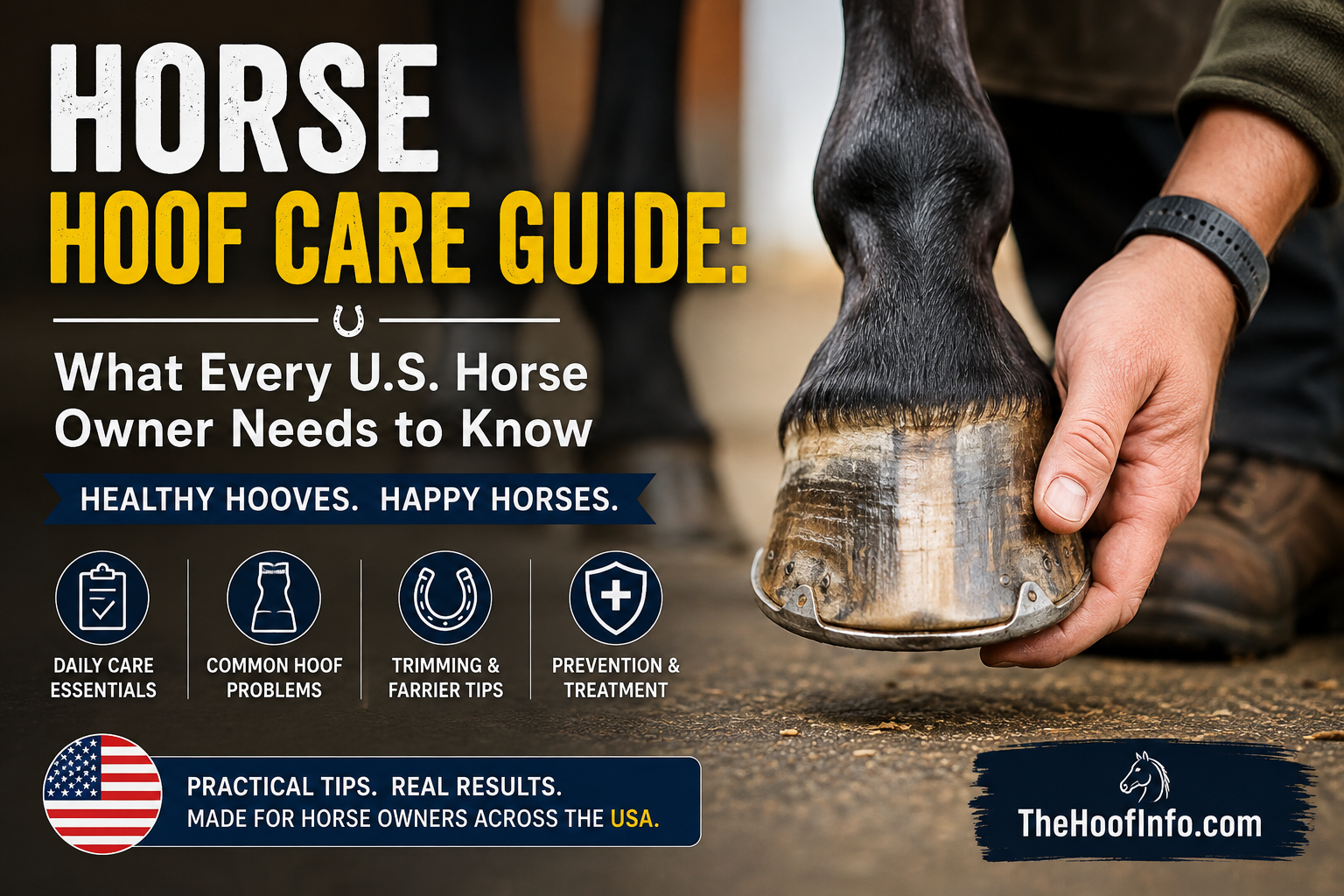
Horse Hoof Care Guide: What Every U.S. Horse Owner Needs to Know
There’s an old saying among horsemen: no hoof, no horse. It sounds simple, but it captures something owners sometimes underestimate – the hoof isn’t just a hard covering on the bottom of a horse’s leg. It’s a living, weight-bearing structure that absorbs the shock of every stride, helps circulate blood back up the limb, and directly determines whether a horse moves comfortably or struggles with pain. Get hoof care right, and you’re investing in your horse’s soundness for years to come. Get it wrong, and even minor neglect can snowball into lameness, costly vet bills, or a permanently compromised horse.
Here’s what actually matters when it comes to keeping hooves healthy, backed by what farriers, veterinarians, and researchers have learned about how hooves function.
Understanding the Hoof
A horse’s hoof is made up of several key structures working together. The hoof wall is the hard outer layer that bears most of the horse’s weight. Underneath sits the sole, a concave surface that shields the more sensitive internal tissue. The frog – the V-shaped structure at the back of the hoof – plays an outsized role in shock absorption and circulation, despite looking like an afterthought. Where the hoof wall meets the sole, you’ll find the white line, a junction that’s a common entry point for infection when it becomes compromised.
Healthy hooves expand slightly with each step to absorb impact and then release, functioning almost like a secondary pump that helps move blood through the lower leg. That’s part of why regular movement and turnout matter so much – a horse standing still in a stall for long stretches doesn’t get the same circulatory benefit as one out grazing and walking.
Why Trimming Schedules Matter More Than Owners Think
Hooves grow continuously, similar to human fingernails, and they need to be trimmed back into balance on a regular basis. Most farriers recommend a visit every four to six weeks. That interval isn’t arbitrary – research on hoof mechanics has found that letting trims stretch past six weeks, and especially toward eight weeks, allows enough growth to shift the horse’s hoof-pastern alignment and increase strain on the tendons and joints in the lower limb. A horse that’s overdue for a trim isn’t just growing “long feet” cosmetically – the altered angles change how weight and force travel up the leg with every stride.
Balance is the real goal of any trim, not just length reduction. A well-trimmed hoof lands close to flat or slightly heel-first, breaks over cleanly near the toe, and distributes weight evenly from side to side. Owners can learn to spot early warning signs of imbalance between visits: flaring at the toe or quarters, vertical cracks, heels that appear uneven in height, or a frog that looks narrow, asymmetrical, or has a deep central crevice (often where thrush takes hold).
Shoes, Boots, or Barefoot?
Few topics generate more debate in equestrian circles than whether a horse needs shoes. The honest answer is that it depends – on the individual horse’s conformation, workload, environment, and any existing hoof issues. Horses in heavy work, competing on hard or abrasive surfaces, or recovering from certain injuries often benefit from the protection and traction shoes provide. Farriers can also use specialized shoes and pads to correct conformational issues, support weak structures, or aid rehabilitation.
On the other hand, many horses – especially those in lighter work with strong natural hoof structure – do perfectly well barefoot, sometimes with hoof boots added for trail rides or rocky terrain. Studies comparing barefoot and shod hooves have found real structural differences, including wider heels and larger, more developed frogs in barefoot horses, along with a natural concavity that develops over time. There’s no universally “correct” answer here – it’s a conversation to have with your farrier and veterinarian based on your specific horse.
Regional Climate Changes the Equation
This is where U.S. owners need to think beyond generic advice. A humid Florida farm, a dry Arizona property, and a Minnesota barn dealing with months of snow and mud each present different hoof challenges.
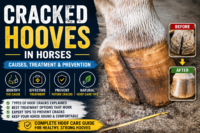
In humid regions of the Southeast and Gulf Coast, constant moisture softens hoof tissue and creates ideal conditions for thrush and white line disease. Daily hoof picking, dry bedding, and proactive antimicrobial care go a long way. In arid climates like the Southwest, the opposite problem shows up – hooves can become brittle and prone to cracking, and rocky terrain wears down soles faster than they can regrow. Northern regions deal with a different set of headaches: snow packing into shod hooves, freeze-thaw cycles, and the mud that inevitably arrives every spring, all of which raise infection risk.
Whatever the region, the fix is largely the same principle applied differently: manage moisture, keep footing as clean and dry as practical, and adjust hoof care products (sealants versus moisturizers, for instance) to counteract your specific climate rather than fight it blindly.
Nutrition’s Slow but Real Impact
Hoof quality starts from the inside, though it’s a slow-moving lever rather than a quick fix. Biotin is the most researched nutrient for hoof horn quality – studies have shown that horses supplemented with adequate biotin developed less sensitive soles and faster, stronger hoof growth.
Because it only affects new hoof growth, though, it typically takes six months to a year of consistent supplementation before visible improvement shows up. Zinc, copper, and omega-3 fatty acids also support the keratin production and elasticity that make up healthy hoof tissue. None of this replaces a well-balanced, forage-based diet – and for overweight or insulin-resistant horses, managing body condition matters even more, since metabolic issues are a leading contributor to laminitis, one of the most serious hoof conditions a horse can develop.
Summary:-
Good hoof care isn’t a single task – it’s a routine built from consistent farrier visits, daily attention at home, smart adaptation to your climate, and patient nutritional support. The horses that stay soundest over a lifetime are almost always the ones whose owners treated hoof care as a habit, not an afterthought. Building a team around your horse – a reliable farrier on a set schedule, a veterinarian you trust, and sound nutrition – is the single best investment you can make in keeping your horse comfortable and working for years to come.







Leave a comment