

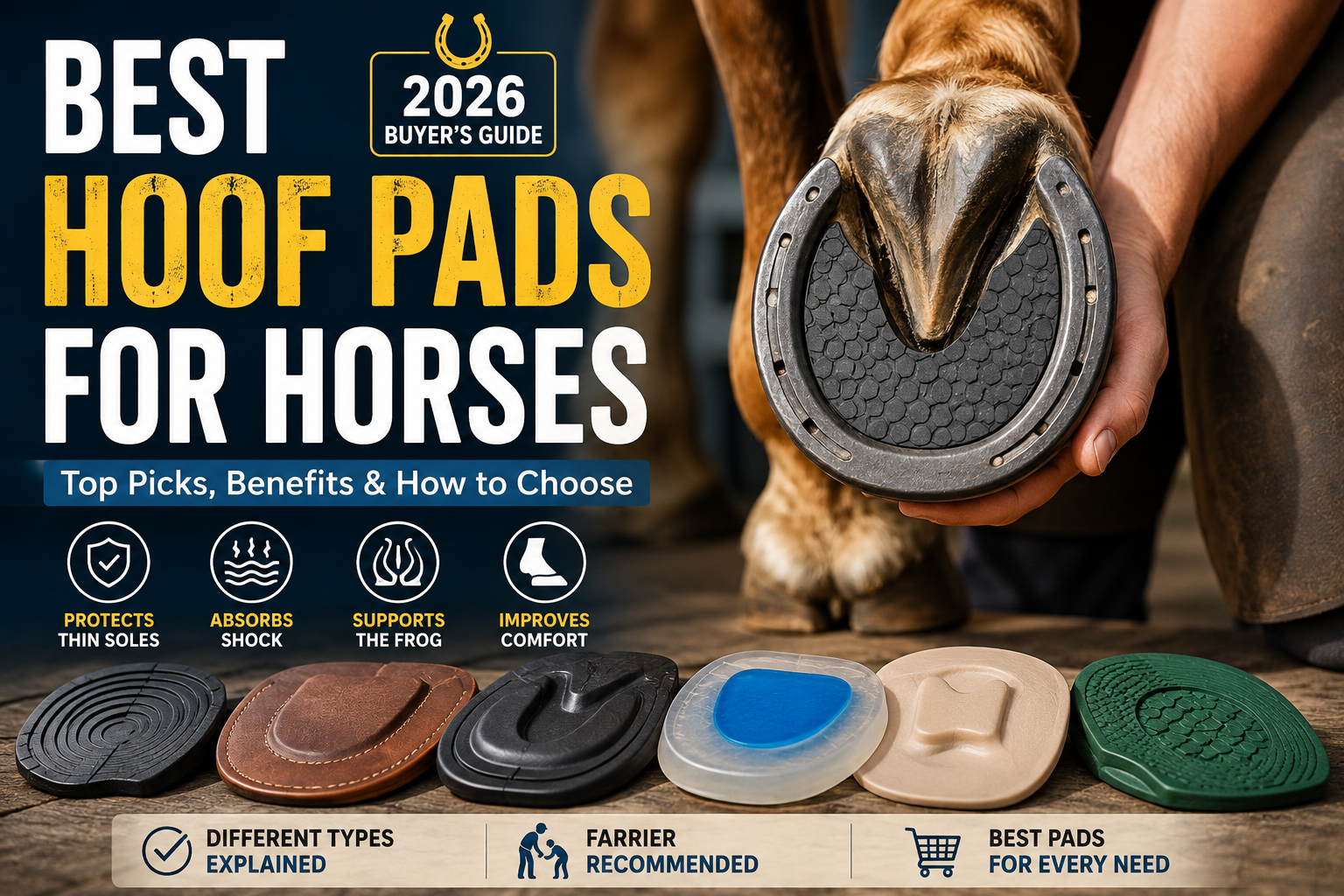
Best Hoof Pads for Horses (2026 Buyer’s Guide)
A horse’s hooves endure tremendous stress every day. Whether your horse spends hours on rocky trails, competes in demanding events, or simply walks across hard ground in the pasture, every step places pressure on the hoof’s internal structures. While healthy hooves are naturally designed to absorb shock, some horses need additional protection to stay comfortable and perform at their best. That’s where hoof pads can make a meaningful difference.
Hoof pads are commonly used by farriers and veterinarians to provide extra cushioning, reduce concussion, and protect sensitive soles. They’re also an important part of many therapeutic shoeing plans for horses recovering from conditions such as laminitis, sole bruising, or heel pain. However, choosing the right hoof pad isn’t always straightforward. Different materials, thicknesses, and designs all serve specific purposes, and selecting the wrong one may provide little benefit—or even create new problems.
This buyer’s guide explains everything horse owners need to know about hoof pads, including the different types available, their advantages and limitations, when they’re recommended, and how to choose the best option based on your horse’s individual needs. Whether you’re caring for a pleasure horse, performance horse, or senior companion, understanding hoof pads can help you make informed decisions that support long-term hoof health.
What Are Hoof Pads for Horses?
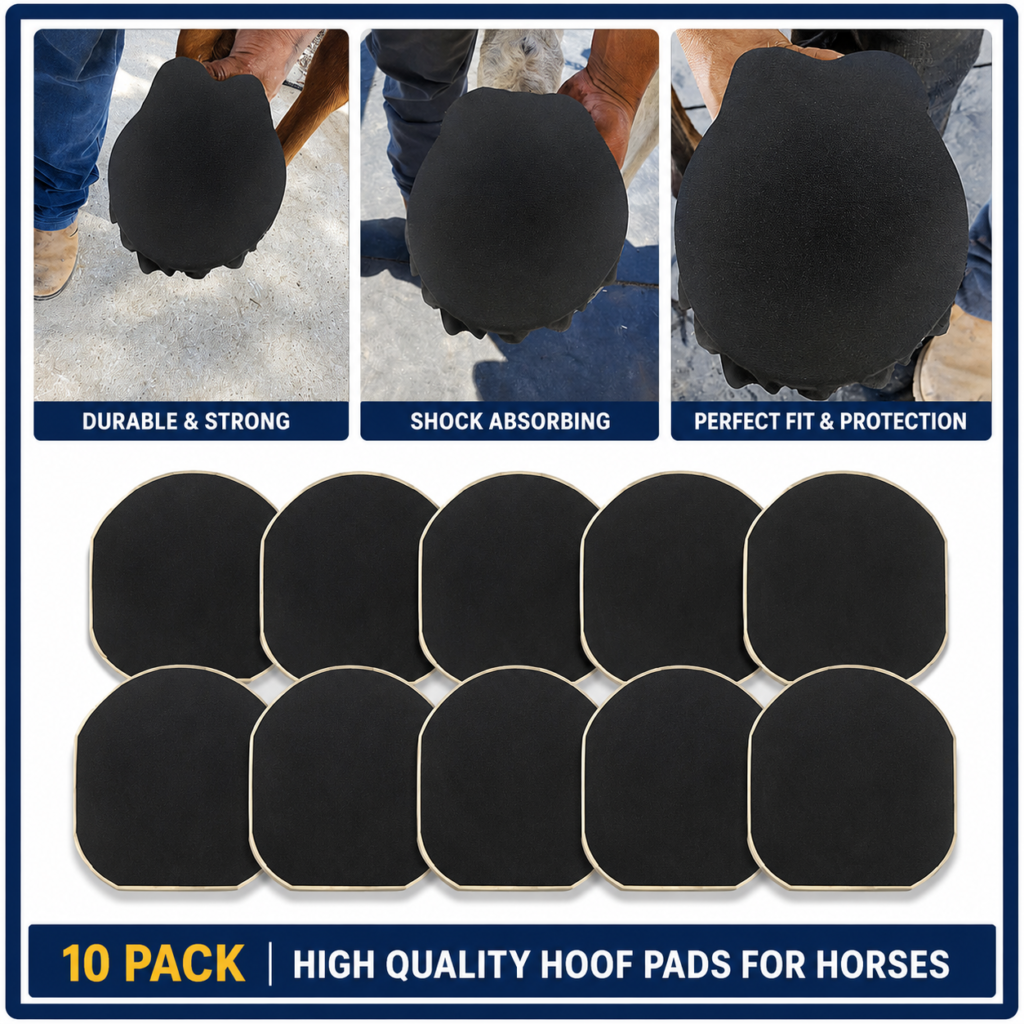
Hoof pads are protective layers fitted between the horse’s hoof and the horseshoe, or in some cases, inside specialized hoof boots. Their primary purpose is to protect the sole, absorb shock, and improve comfort while helping distribute weight more evenly across the hoof.
Although many people think hoof pads are only for horses with medical conditions, they are also used on healthy horses that regularly travel over abrasive or uneven terrain. A horse that frequently works on gravel roads, rocky trails, or hard-packed arenas may benefit from additional protection even without an existing hoof problem.
Modern hoof pads are manufactured from several different materials, including rubber, polyurethane, EVA foam, leather, and synthetic composites. Each material offers unique advantages depending on the horse’s workload, hoof condition, and the farrier’s treatment goals.
When properly fitted, hoof pads can help:
- Reduce concussion from hard surfaces
- Protect thin or sensitive soles
- Minimize bruising
- Improve comfort during movement
- Support therapeutic shoeing
- Extend the usefulness of corrective shoeing techniques
It’s important to remember that hoof pads are not a replacement for regular hoof care. Balanced trimming, proper shoeing, good nutrition, and routine hoof inspections remain the foundation of healthy feet.
Why Horses May Need Hoof Pads
Every horse is unique. Some have naturally strong, thick soles that handle rough terrain with ease, while others develop soreness after only a short ride on gravel. Genetics, hoof quality, environment, workload, and previous injuries all influence whether a horse might benefit from hoof pads.
Several situations commonly lead farriers or veterinarians to recommend them.
Thin Soles
Horses with thin soles often experience discomfort because there is less natural protection between the ground and the sensitive tissues inside the hoof. They may shorten their stride, avoid rocky footing, or become footsore after exercise. Properly selected hoof pads provide additional cushioning that helps reduce pressure on the sole.
Sole Bruising
Repeated work on hard or uneven surfaces can cause bruising beneath the sole. While mild bruising may resolve with rest, recurring bruises often indicate that the hoof needs additional protection. Hoof pads can help reduce direct impact and allow bruised areas to recover more comfortably.
Laminitis Recovery
Laminitis is a painful condition affecting the sensitive laminae within the hoof. Horses recovering from laminitis often require specialized therapeutic shoeing, which may include frog support pads, impression material, or other cushioning systems designed to redistribute weight away from damaged structures.
Navicular Syndrome
Horses with chronic heel pain or navicular syndrome may benefit from specific hoof pad designs that improve weight distribution and reduce stress on the back portion of the hoof. These therapeutic applications should always be guided by an experienced farrier working alongside a veterinarian.
Performance Horses
Even horses with healthy feet may need extra protection. Barrel racers, jumpers, eventers, ranch horses, and endurance horses frequently work on demanding surfaces where repeated concussion can contribute to hoof fatigue. In these cases, hoof pads can improve comfort while helping reduce long-term wear on sensitive structures.
Types of Hoof Pads for Horses
Not all hoof pads are created equal. Different materials offer different levels of flexibility, durability, shock absorption, and support.
Rubber Hoof Pads
Rubber hoof pads remain one of the most widely used options because they provide dependable cushioning without compressing excessively over time.
Advantages
- Excellent shock absorption
- Durable for everyday riding
- Suitable for many disciplines
- Available in several thicknesses
Rubber pads are often recommended for horses that spend considerable time working on firm ground.
Polyurethane Hoof Pads
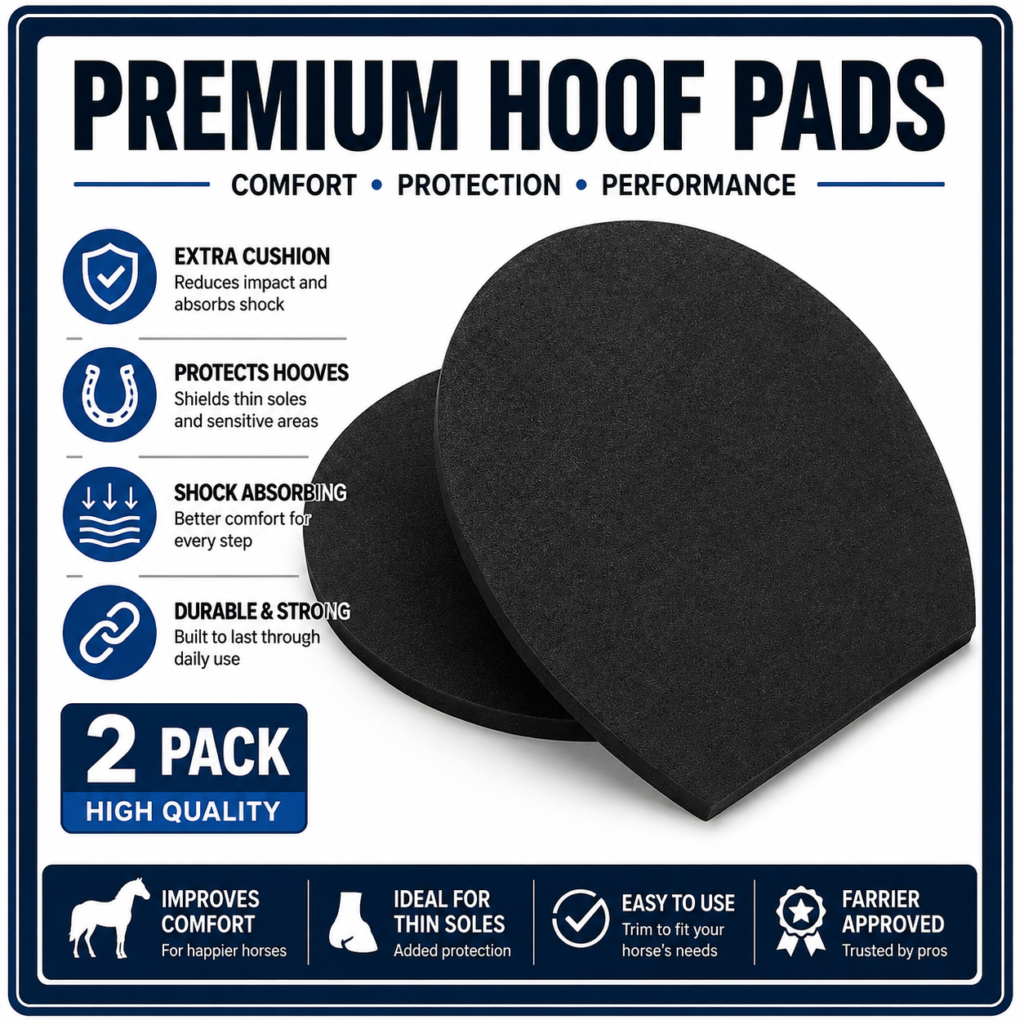
Polyurethane pads combine flexibility with long-lasting support. They are commonly used in performance horses because they maintain their shape well throughout a normal shoeing cycle.
Advantages
- Lightweight
- Durable
- Good impact absorption
- Resistant to wear
These pads are frequently incorporated into corrective and therapeutic shoeing plans.
EVA Foam Hoof Pads
EVA (ethylene-vinyl acetate) foam is popular because it offers exceptional cushioning while remaining lightweight.
Farriers often recommend EVA pads for horses experiencing:
- Thin soles
- Temporary foot soreness
- Sole bruising
- Recovery after hoof trimming
Because EVA compresses more easily than harder materials, it is especially useful when comfort is the primary goal.
Leather Hoof Pads
Leather pads have been used in farriery for generations. Although newer synthetic materials have become more common, leather remains a practical option in certain situations.
Advantages
- Natural material
- Good breathability
- Moderate shock absorption
- Durable when properly maintained
Leather pads are still appreciated by many farriers for traditional shoeing applications.
Gel Hoof Pads
Gel-based pads distribute pressure evenly across the sole and provide excellent cushioning. They are most commonly used as part of therapeutic shoeing programs rather than routine shoeing.
These pads may improve comfort during rehabilitation from hoof injuries, although they require proper fitting and regular monitoring.
Frog Support Pads
Unlike standard flat pads, frog support pads are designed to make controlled contact with the frog, allowing it to share some of the horse’s weight-bearing load. This helps reduce pressure on the hoof wall and sole while improving overall stability.
These pads are commonly used as part of therapeutic shoeing programs for horses with specific hoof conditions.
Frog support pads may be recommended for:
- Laminitis
- Navicular syndrome
- Heel pain
- Collapsed heels
- Coffin bone support during rehabilitation
Although they can be highly effective, frog support pads should only be fitted by an experienced farrier. Too much or too little frog pressure can make the horse uncomfortable and may reduce the pad’s therapeutic benefits.
Best Hoof Pads for Horses with Thin Soles
Thin soles are one of the most common reasons horse owners invest in hoof pads. Horses with thin soles often become sore after walking on gravel, rocky trails, or other hard surfaces because there is less natural protection between the ground and the sensitive structures inside the hoof.
Signs your horse may have thin soles include:
- Tenderness on rocky ground
- Frequent sole bruising
- Short, cautious strides
- Reluctance to move forward
- Increased sensitivity after trimming
For many horses, soft EVA foam pads or polyurethane pads provide the best combination of cushioning and support. These materials absorb impact while allowing the hoof to function naturally.
It’s important to remember that hoof pads alone won’t solve thin soles. Proper trimming, balanced nutrition, and regular farrier care all contribute to healthier hoof growth over time.
Best Hoof Pads for Horses with Laminitis
Laminitis is a painful condition that affects the sensitive laminae connecting the hoof wall to the coffin bone. During recovery, reducing pressure on damaged tissues is essential for improving comfort and supporting healing.
Therapeutic hoof pads are often used alongside corrective shoeing to help redistribute weight away from painful areas.
Common options include:
- Frog support pads
- EVA foam pads
- Impression material
- Pour-in pad systems
- Heart bar shoe combinations
The best hoof pad for a horse with laminitis depends on the severity of the condition, radiographic findings, and the horse’s overall comfort. Because every case is different, treatment should always be guided by a veterinarian working with an experienced therapeutic farrier.
Best Hoof Pads for Horses with Navicular Syndrome
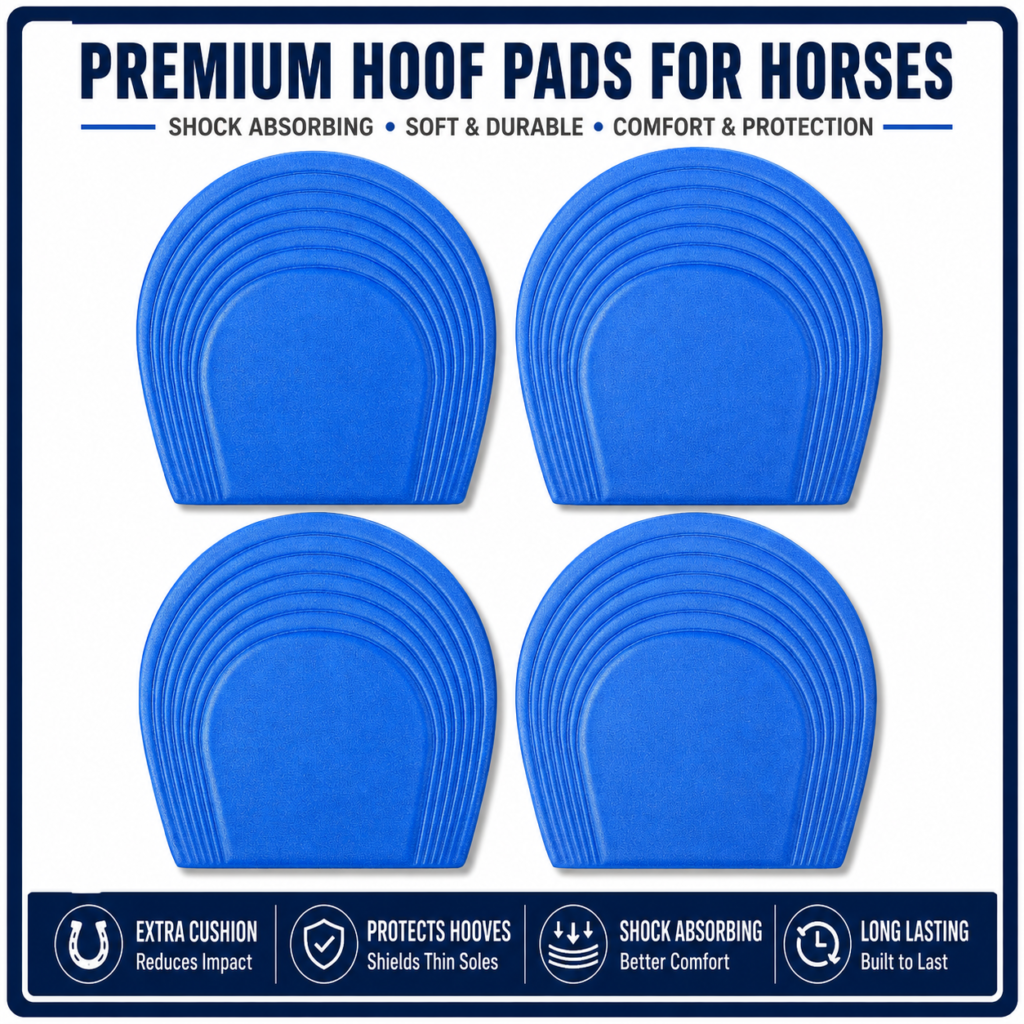
Navicular syndrome often causes chronic pain in the back portion of the hoof. While hoof pads cannot cure the condition, they may improve comfort by reducing concussion and supporting better weight distribution.
Depending on the horse’s needs, a farrier may recommend:
- Frog support pads
- Shock-absorbing polyurethane pads
- Pour-in support materials
- Wedge pads (only when appropriate)
Successful management usually involves a combination of corrective trimming, shoeing, exercise management, and veterinary care.
Hoof Pads vs. Hoof Boots
Horse owners often wonder whether hoof pads or hoof boots are the better option. The answer depends on how the horse is used and whether the need is temporary or long-term.
| Hoof Pads | Hoof Boots |
|---|---|
| Installed beneath horseshoes | Worn externally |
| Long-term protection | Temporary protection |
| Requires farrier installation | Owner can usually apply |
| Suitable for therapeutic shoeing | Ideal for trail riding |
| Continuous support | Easy to remove after riding |
If your horse only needs extra protection during occasional rides, hoof boots may be enough. However, horses requiring daily therapeutic support generally benefit more from properly fitted hoof pads.
How to Choose the Best Hoof Pads for Horses
Selecting the right hoof pad involves more than choosing the softest material. Every horse has different needs, and the best pad depends on several important factors.
Consider Your Horse’s Hoof Condition
Ask yourself why your horse needs hoof pads.
Is the goal to:
- Protect thin soles?
- Reduce bruising?
- Improve comfort?
- Support laminitis recovery?
- Manage heel pain?
Understanding the underlying problem helps narrow your options.
Think About Your Riding Surface
The footing your horse works on plays a major role.
- Rocky trails require maximum protection.
- Hard-packed arenas increase concussion.
- Soft footing may require minimal cushioning.
- Road riding often benefits from durable shock-absorbing pads.
Match the Pad to Your Horse’s Workload
A horse that competes every weekend has different requirements than one that enjoys occasional trail rides.
Performance horses often need pads that combine durability with consistent shock absorption throughout an entire shoeing cycle.
Work With Your Farrier
Your farrier understands hoof balance, limb biomechanics, and how different pad materials perform under real-world conditions. Their advice is one of the most valuable tools when selecting hoof pads.
Buying Guide: What to Look for Before Purchasing Hoof Pads
Before purchasing hoof pads, compare the following features.
Material Quality
Choose pads made from durable, high-quality materials that resist excessive compression and wear.
Cushioning
More cushioning isn’t always better. The pad should absorb impact without making the hoof unstable.
Durability
Quality pads should remain effective throughout the shoeing cycle without breaking down prematurely.
Water Resistance
Pads exposed to wet environments should resist moisture to reduce the risk of bacterial growth beneath the shoe.
Compatibility
Always make sure the pad matches your horse’s shoe size and your farrier’s shoeing method.
Common Mistakes to Avoid
Even the best hoof pads won’t perform well if they’re used incorrectly.
Avoid these common mistakes:
- Choosing pads based only on price
- Ignoring professional farrier advice
- Leaving worn-out pads in place too long
- Failing to clean the hoof regularly
- Allowing moisture and debris to collect beneath the pad
- Assuming one type of pad works for every horse
Routine hoof inspections help catch small problems before they become major issues.
How to Care for Horses Wearing Hoof Pads
Proper maintenance extends the life of both the hoof pads and your horse’s hooves.
Follow these simple care tips:
- Pick out your horse’s hooves every day.
- Check for loose shoes or shifting pads.
- Watch for foul odors that could indicate thrush.
- Schedule regular farrier visits every 5–8 weeks, depending on your horse.
- Keep stalls and turnout areas as clean and dry as possible.
- Monitor your horse for changes in movement or comfort.
Daily observation is often the quickest way to spot developing hoof problems.
Frequently Asked Questions
Are hoof pads good for every horse?
No. Many horses with healthy, strong hooves do not need hoof pads. They are most beneficial for horses requiring additional protection, therapeutic support, or shock absorption.
Can hoof pads help prevent bruising?
Yes. Hoof pads create a protective barrier that helps reduce direct impact on the sole, making bruising less likely on hard or rocky terrain.
How long do hoof pads last?
Most hoof pads are designed to last one shoeing cycle, although lifespan varies depending on the material, riding conditions, and the horse’s workload.
Can horses wear hoof pads without shoes?
Some pad systems are designed to work inside hoof boots, but traditional hoof pads are generally intended to be used with horseshoes.
Do hoof pads cause thrush?
Hoof pads themselves do not cause thrush. However, trapped moisture and poor hoof hygiene can create conditions that encourage bacterial and fungal growth. Regular cleaning and farrier care help minimize this risk.
Summary:-
Choosing the best hoof pads for horses starts with understanding your horse’s individual needs rather than simply selecting the most popular product. Horses with thin soles, recurring bruising, laminitis, or heavy workloads often benefit from the extra protection and support that well-fitted hoof pads provide. The right pad can improve comfort, reduce concussion, and help protect sensitive hoof structures during both everyday work and rehabilitation.
No single hoof pad is perfect for every horse. Factors such as hoof condition, riding discipline, terrain, and shoeing method all influence which type will perform best. Working closely with your farrier and veterinarian ensures that your horse receives the most appropriate support while avoiding common fitting mistakes.
Finally, remember that hoof pads are only one part of a complete hoof care program. Regular trimming or shoeing, balanced nutrition, routine hoof cleaning, and early attention to any signs of discomfort are equally important. When combined with consistent hoof care, the right hoof pads can help keep your horse comfortable, confident, and ready for every ride.




Leave a comment