

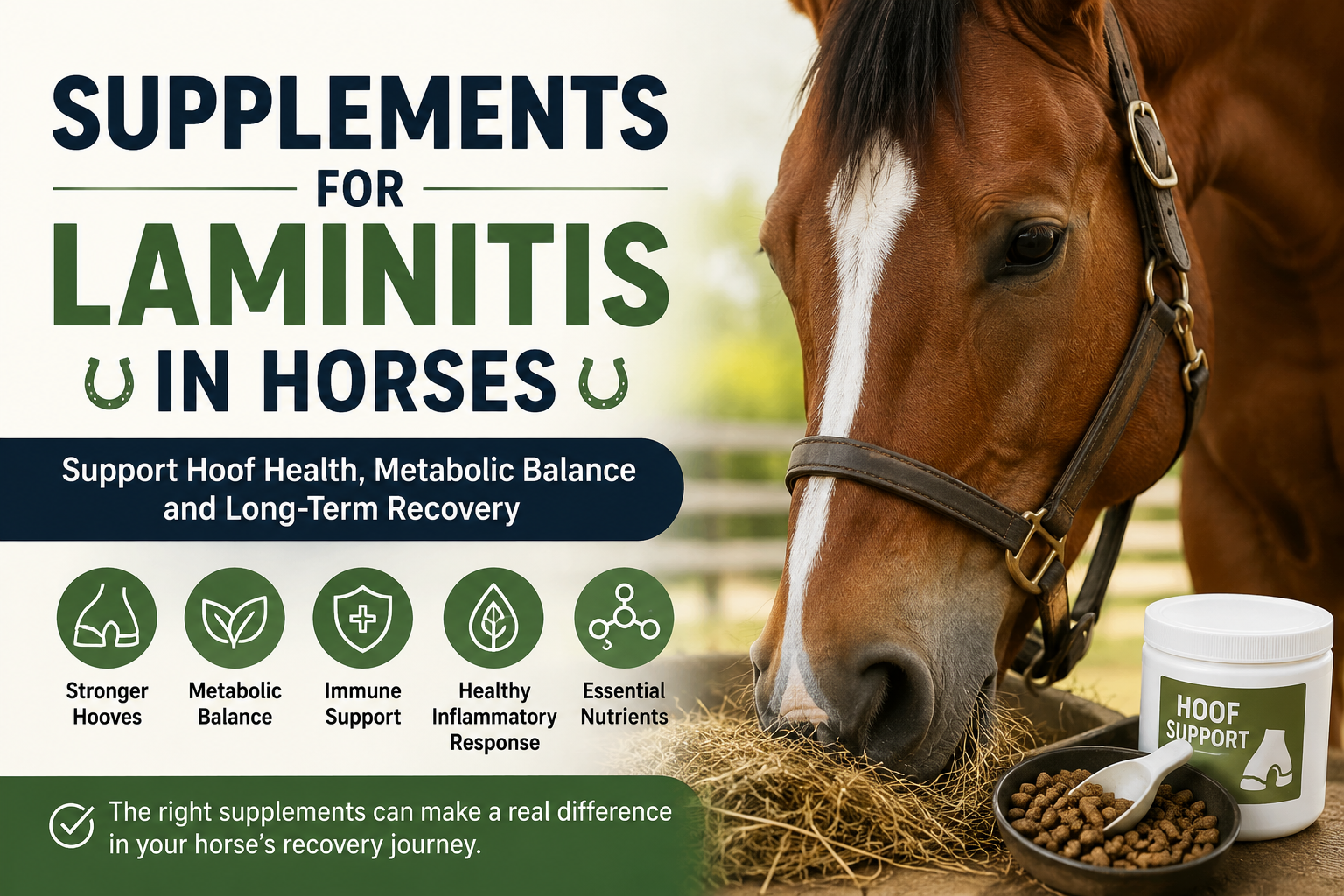
Supplements for Laminitis in Horses
Laminitis changes everything for a horse.
The right supplements for laminitis in horses can help support hoof recovery, metabolic balance, and long-term health – but not every supplement is actually helpful.
One day a horse may be moving comfortably. The next day it may struggle to turn, walk stiffly, or spend most of its time standing still because of foot pain. For many owners, the first reaction is panic. The second is searching for something that might help.
That is where supplements often enter the conversation.
But supplements for laminitis in horses are often misunderstood. Some owners expect them to cure laminitis overnight. Others buy multiple products without understanding what their horse actually needs.
A good supplement cannot replace proper trimming, veterinary care, weight management, or a low-sugar diet. But the right nutritional support can help improve hoof quality, support healthier growth, and assist long-term recovery.
From a farrier’s perspective, the horses that recover best are usually the ones receiving consistent hoof care, controlled feeding, proper movement management, and balanced nutrition together.
Farrier Perspective and Experience
This article is written from a practical hoof-care and horse management perspective based on years of observing laminitic horses during recovery. Experience working around routine trimming, hoof rehabilitation, metabolic horses, and long-term founder cases has shown that successful recovery usually depends on consistent management rather than quick fixes.
The information in this guide reflects common farrier observations alongside nutritional principles commonly discussed with veterinarians and equine nutritionists involved in laminitis management.
What Supplements Actually Do for Laminitic Horses
Supplements are support tools.
They do not reverse coffin bone rotation overnight. They do not instantly stop inflammation. They also cannot compensate for a horse that is still eating too much sugar or standing on overgrown feet.
What they can do is support the systems that laminitis damages.
That includes:
- Hoof growth quality
- Circulation support
- Metabolic balance
- Inflammation response
- Insulin regulation support
- Recovery from hoof wall damage
- Overall nutritional deficiencies
A horse recovering from laminitis grows a completely new hoof over time. That process takes months. In severe cases, it can take close to a year before healthier hoof replaces damaged growth.
Nutrition matters during that process.
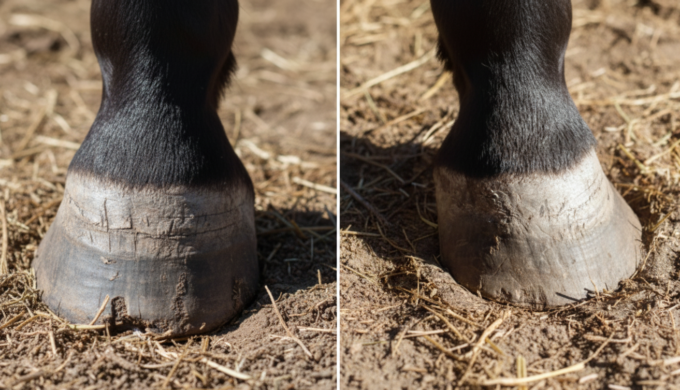
Poor nutrition often leads to weak hoof walls, stretched white lines, slow growth, and repeated setbacks.
What Supplements Help Horses with Laminitis?
The most commonly used supplements for laminitic horses include:
- Biotin for hoof growth support
- Magnesium for metabolic balance
- Omega-3 fatty acids for inflammation support
- Zinc and copper for hoof strength
- Amino acids for hoof repair and keratin production
The best supplement plan depends on the horse’s overall diet, metabolic health, hoof condition, and underlying cause of laminitis. Supplements work best alongside proper trimming, weight management, and low-sugar feeding practices.
How to Choose a Hoof Supplement for a Horse with Laminitis
Walking into a tack shop or browsing online can be overwhelming. There are dozens of metabolic formulas, and mineral balancers, all claiming to be the best choice for horses with laminitis.
The reality is that no single supplement works for every horse. The right product depends on your horse’s diet, hoof condition, metabolic health, and the underlying cause of laminitis.
Before buying a supplement, look for these key features:
1. Adequate Biotin
Biotin is one of the most researched nutrients for hoof health. Look for products that provide around 20 mg of biotin per day for an average adult horse, as this level has been associated with improved hoof horn quality when fed consistently over several months.
2. Balanced Zinc and Copper
Strong hoof walls require the right balance of trace minerals. Zinc and copper work together to support keratin formation, hoof strength, and healthy growth. Many grass hays contain high iron but relatively low zinc and copper, making a balanced mineral supplement beneficial in some cases.
3. Essential Amino Acids
Hooves are made primarily of keratin, which depends on amino acids such as methionine and lysine. A quality hoof supplement should provide these building blocks rather than relying on biotin alone.
4. Low Sugar and Starch
Because many horses with laminitis have insulin resistance or Equine Metabolic Syndrome (EMS), choose supplements with low non-structural carbohydrates (NSC). Avoid products containing molasses or added sugars that may worsen metabolic problems.
5. Clear Ingredient Levels
Choose supplements that list the amount of each active ingredient rather than hiding them in a “proprietary blend.” Transparent labeling makes it easier to compare products and ensure your horse receives meaningful nutrient levels.
6. Match the Supplement to the Horse
Different horses have different needs:
- A horse with poor hoof quality may benefit from a hoof-building supplement.
- An insulin-resistant horse may need metabolic support alongside hoof nutrients.
- A horse recovering from founder often benefits from a combination of balanced minerals, amino acids, and hoof-support nutrients.
Buying multiple supplements without a clear reason can increase costs and create unnecessary nutrient imbalances.
Quick Buying Checklist
✔ Around 20 mg of biotin per daily serving
✔ Zinc and copper included
✔ Methionine and lysine for hoof growth
✔ Low sugar and low starch (low NSC)
✔ No molasses or unnecessary fillers
✔ Transparent ingredient amounts
✔ Manufactured by a reputable equine nutrition company
✔ Appropriate for your horse’s specific condition
A well-formulated supplement should support an already balanced management plan—not replace proper trimming, veterinary care, weight control, or a low-sugar diet.
How to Choose Supplements Based on the Cause of Laminitis
Not all laminitis cases are caused by the same problem, which is why supplement choices should match the horse’s underlying condition rather than following a one-size-fits-all approach.
Supplements for Insulin-Resistant Horses
Horses with insulin resistance are highly sensitive to sugars and starches, which increases the risk of recurring laminitis episodes. These horses often benefit from supplements that support metabolic balance without adding extra calories or sugars.
Commonly used supplements include magnesium, omega-3 fatty acids, low-NSC mineral balancers, and chromium-based metabolic support formulas. Symptoms of insulin resistance may include a cresty neck, easy weight gain, fat deposits near the tailhead, and repeated soreness after grazing on rich pasture.
Supplements work best when combined with weight control, restricted pasture access, regular exercise when appropriate, and a low-sugar feeding program.
Supplements for EMS Horses
Horses affected by equine metabolic syndrome (EMS) are often prone to obesity, abnormal insulin responses and recurrent laminitis episodes. Nutritional support for these horses is largely geared toward metabolic management and safe weight control.
Many EMS horses benefit from balanced mineral supplements, magnesium support, omega-3 fatty acids, and low-carbohydrate ration balancers. Some owners also use supplements designed specifically for insulin-sensitive horses.
Typical symptoms include regional fat pads, difficulty losing weight, lethargy, and recurring hoof soreness during spring or after grass exposure.
Because EMS is a long-term condition, consistency in diet, trimming, and supplement use is usually more important than searching for quick fixes.
Supplements for PPID or Cushing’s Horses
Horses diagnosed with PPID (Cushing’s disease) often suffer from chronic laminitis due to hormonal and metabolic changes. These horses may require veterinary intervention as well as specific nutritional support.
Biotin, amino acids, zinc, copper, omega-3 fatty acids and balanced vitamin and mineral support for aging horses can be useful supplements. Some horses may also benefit from digestive support, due to changes in body condition and appetite.
Common symptoms include delayed shedding, long curly coats, excessive drinking, muscle loss, weight changes, and repeated hoof pain.
Supplements alone cannot control PPID, but they may help support hoof quality and overall condition during long-term management.
Supplements for Overweight Ponies
Overweight ponies are among the highest-risk horses for pasture-related laminitis. Excess body fat can worsen insulin problems and place additional stress on damaged feet.
These ponies usually benefit from simple, controlled supplementation rather than high-calorie products. Low-NSC mineral balancers, magnesium if needed, and omega-3 sources like flaxseed are commonly used.
Symptoms often include a thick neck crest, fat deposits behind the shoulders, difficulty moving comfortably, and repeated tenderness during grazing seasons.
The biggest priority is usually calorie control, safe weight loss, and proper hoof care rather than feeding multiple supplements unnecessarily.
Supplements for Post-Founder Hoof Recovery
After a founder episode, the hoof capsule must slowly rebuild healthier growth over many months. Nutritional support during this period focuses heavily on hoof repair and horn quality.
Many recovering horses benefit from biotin, methionine, lysine, zinc, copper, and omega-3 fatty acids to support stronger hoof growth. Mineral balance becomes especially important while new hoof replaces damaged tissue.
Common symptoms during recovery may include hoof rings, stretched white lines, poor hoof texture, sole sensitivity, and slow growth from the coronary band.
Recovery is gradual, and supplements are most effective when combined with regular trimming, proper breakover, and controlled feeding.
Supplements for Pasture-Associated Laminitis
Pasture-associated laminitis often occurs when horses consume large amounts of sugar-rich grass, especially during spring or cool sunny weather conditions.
These horses may benefit from magnesium support, low-sugar mineral balancers, omega-3 fatty acids, and controlled feeding programs designed for metabolic horses.
Common signs include sudden foot soreness after grazing, reluctance to walk, increased digital pulse, shifting weight between front feet, and repeated seasonal flare-ups.
Supplements may help support metabolic stability, but pasture management remains the most important factor. Restricted grazing, dry lots, soaked hay, and careful monitoring usually make the biggest difference in preventing future episodes.
Why Many Laminitis Horses Need Nutritional Support
Many laminitic horses are overweight easy keepers. Others may have underlying conditions like insulin resistance or equine metabolic syndrome.
These horses are often put on restricted diets immediately. While restricting sugars is necessary, it can also create nutritional gaps if the diet becomes too limited.
For example:
- Grass hay alone may not have important minerals
- Restricted pasture reduces nutrient intake
- Some horses stop eating properly due to pain
- Damaged hoof tissue increases nutritional need
- This is why balanced supplementation matters.
That is why balanced supplementation matters.
The goal is not to overload the horse with products. The goal is to provide the nutrients that support hoof repair and metabolic health without adding unnecessary sugars or starches.
Signs Your Horse May Need Supplement Support
Some laminitic horses recover well with basic management alone, while others show signs that additional nutritional support may help. Weak hoof growth, slow recovery, or repeated flare-ups can sometimes point toward nutritional imbalances or poor hoof-building support.
Common signs may include:
- Crumbling or brittle hoof walls
- Slow hoof growth after a laminitis episode
- Stretched white line
- Frequent cracks or chipping
- Thin soles or poor horn quality
- Growth rings around the hoof capsule
- Recurring tenderness on hard ground
- Poor coat condition alongside hoof problems
- Difficulty rebuilding strength during recovery
Many horses on restricted diets or soaked hay programs may also develop mineral gaps over time if the diet is not properly balanced.
These symptoms do not automatically mean a horse needs multiple supplements, but they can indicate the horse may benefit from targeted nutritional support alongside proper trimming, weight management, and veterinary care.
Can Biotin Help Horses with Laminitis?
One of the most common supplements for laminitis in horses is biotin.
Biotin is a B-vitamin linked to hoof quality and hoof wall strength. It does not act like a painkiller. Instead, it supports healthier hoof growth over time.
Many farriers notice that horses receiving consistent biotin supplementation often develop:
- Stronger hoof walls
- Better horn quality
- Reduced crumbling
- Improved nail holding ability
- More consistent growth
However, owners need realistic expectations.
Biotin works slowly because hooves grow slowly.
Most horses need several months before visible improvement appears. Stopping supplementation too early is one reason many owners think it “doesn’t work.”
Good hoof growth also requires more than biotin alone. Horses still need proper amino acids, minerals, and overall nutrition.
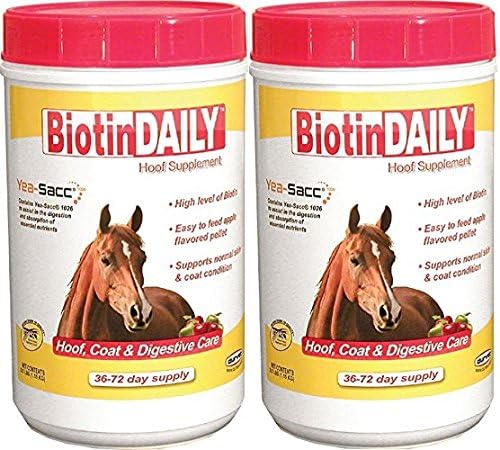
biotin hoof support supplement
Can magnesium good for laminitic horses?
Magnesium is widely discussed in the laminitis world, especially for horses with insulin problems.
Some horses with metabolic issues may benefit from magnesium supplementation because magnesium plays a role in insulin sensitivity and muscle function.
Farriers and nutritionists sometimes notice improvements in:
- Foot comfort
- Muscle tension
- Metabolic balance
- Overall calmness
But magnesium is not magic.
Giving excessive magnesium will not cure laminitis, and not every horse is deficient. Bloodwork and forage analysis can help determine whether supplementation makes sense.
Still, magnesium remains one of the more commonly used supportive supplements in horses prone to pasture-related laminitis.
Omega-3 Fatty Acids for Inflammation Support
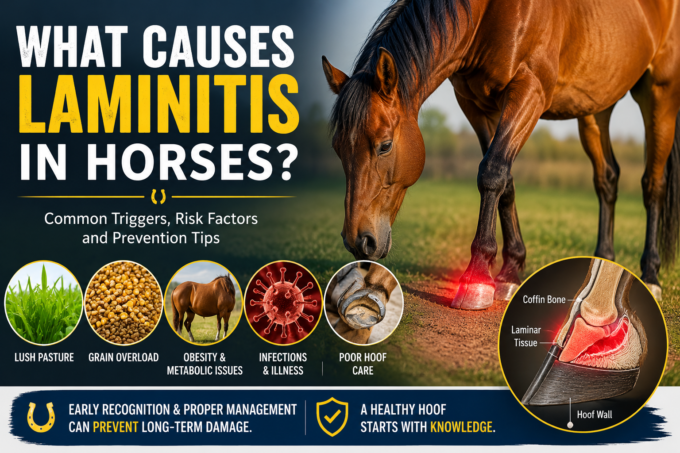
Inflammation plays a major role in laminitis.
That is why many owners add omega-3 fatty acids to the horse’s diet. Omega-3s are commonly sourced from:
- Flaxseed
- Chia seeds
- Fish oil products designed for horses
These fats may help support a healthier inflammatory response.
Some owners report improvements in:
- Coat condition
- Hoof quality
- Skin health
- General comfort
Ground flaxseed is especially popular because it is simple and relatively affordable.
The key is moderation. Supplements should fit the horse’s total calorie intake, especially in overweight horses.
Zinc and Copper for Hoof Strength
Mineral balance matters more than many owners realize.
Zinc and copper are extremely important for healthy hoof formation. Deficiencies may contribute to poor horn quality and weak hoof walls.
Many hay-based diets are naturally low in copper and zinc while containing higher iron levels. That imbalance can affect hoof health over time.
Laminitic horses with weak, shelly, or cracked feet may benefit from balanced mineral supplementation designed specifically for hoof support.
Farriers often see better hoof texture and tighter white lines when mineral balance improves consistently.
However, adding random minerals without understanding the existing diet can create new imbalances.
That is why forage testing and professional nutritional guidance are valuable, especially in chronic laminitis cases.
Amino Acids and Hoof Repair
Hooves are made largely from keratin, which depends heavily on amino acids.
Important amino acids for hoof growth include:
- Methionine
- Lysine
- Threonine
Without enough amino acids, hoof growth may remain weak even if the horse receives vitamins and minerals.
This becomes especially important in horses on restricted diets or poor-quality forage.
Some hoof supplements combine biotin with amino acids and trace minerals to support overall hoof development rather than focusing on a single ingredient.
That balanced approach often produces better long-term results.
Probiotics and Digestive Health
Digestive disturbances can sometimes contribute to laminitis episodes.
Sudden feed changes, grain overload, or hindgut imbalances may trigger inflammation that affects the feet.
Because of this, some owners use probiotics or digestive supplements to support gut health.
These products may help maintain healthier digestion, especially after illness, medication use, or dietary changes.
While probiotics are not direct laminitis treatments, maintaining digestive stability is important for horses prone to metabolic and inflammatory issues.
A healthy gut supports the entire horse.
Chromium for Metabolic Horses
Chromium is another supplement commonly discussed for insulin-resistant horses.
It plays a role in glucose metabolism and may help support insulin function in some horses.
Research and opinions remain mixed, but some metabolic support supplements include chromium alongside magnesium and other ingredients aimed at helping sugar-sensitive horses.
The important thing is understanding that no supplement overrides poor management.
If a horse is still overeating rich grass or carrying excessive weight, supplements alone will not prevent future flare-ups.
Supplements for Horses with PPID and Laminitis
- Metabolic support
- Low sugar diet
- Veterinary management
- Hoof support nutrients
Hoof Supplements vs Metabolic Supplements
Many owners confuse with metabolic supplements.
They are not always the same thing.
These Focus On:
- Hoof wall quality
- Horn strength
- Growth support
- Nutritional building blocks
Metabolic Supplements Focus On:
- Insulin support
- Weight management support
- Sugar metabolism
- Inflammatory support
Some horses may need both.
For example, a horse with chronic insulin-related laminitis may require metabolic management alongside hoof-building nutrients during recovery.
Supplement Comparison Table
| Supplement | Main Benefit | Best For | Common Signs It May Help |
|---|---|---|---|
| Biotin | Supports hoof wall growth and strength | Weak or cracked hooves | Crumbling hoof walls, slow growth |
| Magnesium | Supports metabolic balance | Insulin-resistant or EMS horses | Cresty neck, recurring soreness |
| Omega-3 Fatty Acids | Supports inflammation response | Horses with hoof inflammation | Foot tenderness, poor coat condition |
| Zinc & Copper | Supports hoof horn quality | Horses with weak horn structure | Shelly feet, stretched white line |
| Amino Acids (Methionine/Lysine) | Supports keratin production | Slow hoof recovery | Thin hoof walls, poor growth |
| Probiotics | Supports digestive stability | Horses with gut-related issues | Digestive upset, feed changes |
| Chromium | Supports glucose metabolism | Some metabolic horses | Weight gain, insulin concerns |
| Low-NSC Mineral Balancers | Provides balanced nutrients without excess sugar | Most laminitic horses |
Supplements That Commonly Work Well Together
The following combinations are commonly used in horses recovering from laminitis and generally complement one another when fed according to the manufacturer’s directions.
| Combination | Why They Work Well Together |
|---|---|
| Biotin + Methionine + Lysine | Supports keratin production and healthy hoof growth. |
| Biotin + Zinc + Copper | Helps strengthen hoof horn and improve hoof wall quality. |
| Magnesium + Low-NSC Mineral Balancer | Supports metabolic health while supplying essential vitamins and minerals. |
| Omega-3 Fatty Acids + Balanced Mineral Supplement | Supports a healthy inflammatory response and overall hoof condition. |
| Probiotics + Vitamin and Mineral Balancer | Helps maintain digestive health while meeting nutritional requirements. |
These combinations are often included in complete hoof supplements, making separate products unnecessary in many cases.
Combinations That Require Extra Care
Not every supplement should be combined without careful planning. Feeding multiple products with similar ingredients can result in excessive nutrient intake or unnecessary expense.
Be cautious when combining:
- Two horse hoof supplements containing high levels of biotin, zinc, and copper
- Multiple mineral balancers
- More than one selenium-containing supplement
- Several metabolic supplements with overlapping ingredients
- Multiple vitamin supplements providing the same nutrients
Always compare ingredient lists before adding another product to your horse’s feeding program.
Watch for Duplicate Ingredients
One of the most common mistakes is feeding several supplements that contain many of the same nutrients.
For example, a horse may already receive adequate amounts of biotin, zinc, copper, methionine, and lysine from a complete hoof supplement. Adding a second hoof formula with nearly identical ingredients usually increases cost without improving results.
Duplicate supplementation can also make it difficult to determine which product is actually helping if improvements occur.
Should You Feed Separate Supplements or One Complete Formula?
Whenever possible, a single high-quality hoof or mineral supplement is usually easier to manage than several individual products.
A complete formula often provides:
- Biotin
- Essential amino acids
- Zinc
- Copper
- Vitamins and trace minerals
If your horse has additional needs, such as insulin resistance or Equine Metabolic Syndrome (EMS), your veterinarian or equine nutritionist may recommend adding a targeted metabolic supplement rather than replacing the entire program.
A Practical Farrier’s Perspective
In my experience, horses recovering from laminitis usually do better with a simple, well-balanced nutrition plan than with a feed bucket full of supplements. Owners often assume that adding more products will produce faster hoof growth, but healthy hooves develop slowly regardless of how many supplements are fed.
The horses that recover most successfully are typically those receiving regular farrier care, a balanced low-sugar diet, and a carefully selected supplement program that addresses their specific nutritional needsnot the longest list of products.
Simple Rule: If you’re feeding more than two or three supplements, review the ingredient labels carefully. You may be paying for the same nutrients multiple times while increasing the risk of nutrient imbalances. A targeted, balanced approach is usually more effective than combining numerous overlapping products.
Best supplements for laminitic horses
- Metabolic supplements
- Low-NSC balancers
- Magnesium-based supplements
- Omega-3 supplements
- Amino acid hoof support formulas
Reading Supplement Labels Carefully
Not all horse supplements are high quality.
Some products contain:
- Excess sugars
- Molasses
- Fillers
- Tiny ineffective ingredient amounts
- Marketing claims with little science behind them
This is especially dangerous for laminitic horses because added sugars can worsen the very problem owners are trying to help.
When choosing supplements for laminitis in horses, owners should look for:
- Low sugar and starch content
- Clear ingredient amounts
- Reputable manufacturers
- Ingredients supported by research or practical results
- Products designed for metabolic horses when necessary
A supplement bucket covered in marketing promises does not guarantee results.
What Research Says About Laminitis Supplements
Research on supplements for laminitis in horses shows that some nutrients may support hoof quality and metabolic health, but results are rarely instant or guaranteed.
Studies on biotin have consistently shown improvements in hoof horn quality, hoof hardness, and reduced cracking when fed over several months. Some research found horses developed stronger hoof growth after long-term biotin supplementation, especially when combined with minerals and amino acids.
Magnesium is widely used in metabolic horses, particularly those with insulin resistance, but research remains mixed. Some horses appear to improve in comfort and metabolic balance, while others show little change. Researchers generally agree magnesium should not be treated as a cure for laminitis.
Omega-3 fatty acids from flaxseed and fish oil are commonly studied for their role in supporting a healthier inflammatory response. While they do not reverse laminitis damage, they may help support overall hoof and metabolic health.
Research also shows mineral balance matters heavily in hoof development. Zinc, copper, amino acids, and other nutrients play important roles in keratin formation and hoof strength. However, studies also warn that excessive supplementation or poor mineral ratios can create new imbalances rather than improve hoof quality.
Supplements to Avoid in Laminitic Horses
- Molasses-heavy supplements
- High-sugar treats
- Grain-based “performance” supplements
- Excess selenium
- Excess iron
- Random herbal mixes with unknown sugar content.
Common Supplement Mistakes in Laminitic Horses
- Feeding too many products
- choosing sugary supplements
- expecting fast results
- ignoring calories in oils/seeds
- changing supplements constantly
The Biggest Mistake Owners Make
The most common mistake is relying on supplements while ignoring trimming and diet.
No supplement can compensate for:
- Long toes
- Mechanical leverage
- Poor breakover
- Excess body weight
- Constant pasture access
- High-sugar feeds
From a farrier’s viewpoint, mechanical stress is a huge part of laminitis pain.
Even the best supplement cannot fix hoof imbalance.
Horses improve when everything works together:
- Correct trimming
- Proper support
- Dietary management
- Controlled movement
- Veterinary oversight
- Nutritional balance
Supplements are one piece of the puzzle.
Best Natural Supplements for Laminitis Horses
Many owners prefer natural support options.
Some commonly used natural supplements include:
Flaxseed
Provides omega-3 fatty acids and supports skin and hoof condition.
Chia Seeds
Another omega-3 source with fiber benefits.
Brewer’s Yeast
Contains B vitamins and digestive support properties.
Rosehips
Sometimes used for antioxidant support.
Turmeric
Popular for inflammation support, though research in horses remains limited.
Natural does not always mean safe in unlimited amounts. Horses still require balanced feeding.
Owners should also avoid adding multiple supplements randomly without understanding total intake.
Can Too Many Supplements Harm a Laminitic Horse?
- Mineral imbalance
- Overlapping ingredients
- Digestive upset
- Wasted money
- High calorie intake from oils/seeds
Supplements That May Not Be Necessary
Some products are heavily marketed despite limited real benefit.
In many cases, owners spend large amounts on trendy supplements while ignoring basic management.
Expensive products are not always better.
Sometimes the horse simply needs:
- Better hay
- Balanced minerals
- Weight loss
- Regular trimming
- Reduced sugar intake
Those basics often outperform fancy supplement programs.
Best Feeding Practices Alongside Supplements
Supplements work best when the horse’s daily feeding program is properly controlled. Even the best hoof or metabolic supplement cannot overcome a diet that is too high in sugar and starch.
Many laminitic horses benefit from soaked low-NSC hay to help reduce excess sugar intake. Most nutritionists recommend keeping the total diet below roughly 10–12% NSC (non-structural carbohydrates) for horses prone to laminitis or insulin problems.
Grazing management also matters. Some owners use grazing muzzles or dry lots to limit grass intake during high-risk periods, especially in spring when pasture sugar levels rise quickly.
Slow feeders can help reduce boredom while controlling calorie intake and supporting healthier digestion.
Feed timing may also play a role. Horses sensitive to pasture sugars are often safer grazing during lower-risk hours rather than during sunny afternoons when sugar levels may increase.
Balanced feeding, careful pasture control, and consistent hoof care usually make a bigger difference than supplements alone.
Real-Life Example of a Laminitic Horse Recovery
One older pony I worked around had repeated laminitis flare-ups every spring. He was overweight, sore when turning, and spent most of the day standing still to avoid putting pressure on his front feet. His hoof walls were weak, the white line was stretched, and growth rings were clearly visible.
The owner had already tried several supplements, but the horse continued struggling because the overall management was inconsistent.
The recovery improved once the basics were handled properly together.
The pony was moved onto soaked low-NSC hay, pasture access was restricted, and regular trimming was scheduled every four weeks to improve breakover and reduce stress on the damaged laminae. A simple supplement plan was added that included a mineral balancer, biotin, magnesium, and ground flaxseed for omega-3 support.
Nothing changed overnight.
The first noticeable improvement was comfort. The pony became more willing to walk and turn normally. Over the next several months, healthier hoof growth slowly began growing down from the coronary band.
By around six to eight months, the hoof quality looked much stronger, the white line tightened, and the horse moved far more comfortably.
The biggest lesson from that case was that supplements helped support recovery, but consistent trimming, weight control, and careful feeding made the biggest difference.
How Long Supplements Take to Work
Laminitis recovery is slow.
Hoof growth is slow.
That means supplements also take time.
Most nutritional improvements require several months before visible hoof changes appear.
Owners often become discouraged because they expect dramatic results within weeks.
But hoof repair happens gradually from the coronary band downward.
Consistency matters more than speed.
Stopping supplements after a short period usually prevents meaningful progress.
Signs a Supplement Is Working
One of the most common questions horse owners ask is, “How do I know if the supplement is actually helping?”
The answer requires patience. Unlike medications that may produce noticeable changes within days, work by supporting the growth of healthier hoof tissue. Because a horse’s hoof grows slowly, visible improvements often take several months to appear.
The first signs of progress usually begin at the coronary band, where new, healthier hoof horn is produced. As this new growth gradually moves toward the ground, the hoof capsule becomes stronger and more stable.
Positive Signs to Watch For
If your horse is receiving the right nutritional support alongside proper trimming and dietary management, you may notice:
- Stronger hoof wall growth from the coronary band
- Fewer cracks and chips developing in the hoof wall
- A tighter, healthier white line
- Improved hoof hardness and horn quality
- Healthier-looking growth rings that become more even over time
- Better nail-holding ability during shoeing, if the horse wears shoes
- Reduced crumbling around the hoof wall
- Increased comfort when walking on firm ground (when approved by your veterinarian)
- A shinier coat and healthier skin, reflecting improved overall nutrition
Keep in mind that improvements usually appear gradually rather than all at once.
What Improvement Looks Like Over Time
Although every horse recovers at its own pace, many owners notice progress following a general pattern:
| Time After Starting Supplements | What You May Notice |
|---|---|
| First 4–8 weeks | Few visible hoof changes, but some horses become more comfortable as overall management improves. |
| 2–4 months | New hoof growth begins appearing at the coronary band with healthier horn quality. |
| 4–6 months | Stronger hoof walls, fewer cracks, and more consistent hoof growth become noticeable. |
| 6–12 months | Much of the damaged hoof capsule has been replaced by healthier new growth in many horses. |
Recovery may take longer in severe founder cases or horses with chronic metabolic disorders.
Signs the Supplement May Not Be Working
Not every supplement produces the desired results. If you see little or no improvement after several months, it may be worth reviewing your horse’s overall management plan.
Possible warning signs include:
- Continued crumbling or splitting of the hoof wall
- Very slow hoof growth
- Recurring laminitis flare-ups
- Persistent stretched white line
- New cracks developing despite regular trimming
- Ongoing foot soreness or lameness
- No visible improvement after several months of consistent use
In many cases, the problem is not the supplement itself. Poor hoof balance, uncontrolled pasture access, excess body weight, or an unbalanced diet can all limit recovery, even when a quality supplement is being fed.
A Farrier’s Perspective
From a farrier’s point of view, the most encouraging sign is not a dramatic overnight change-it’s seeing a healthy new hoof grow steadily from the coronary band with each trim. Over time, the hoof wall becomes stronger, the white line tightens, and the hoof capsule begins replacing the damaged tissue.
The horses that show the best results are usually those receiving consistent trimming, a low-sugar diet, appropriate veterinary care, and a well-balanced supplement program. Supplements support this process, but they cannot replace the fundamentals of good hoof management.
Remember: Healthy hoof growth is measured in months, not weeks. Staying consistent with nutrition, trimming, and overall management gives your horse the best chance for a successful recovery.
Can Supplements Prevent Laminitis?
Supplements alone cannot prevent laminitis.
However, proper nutritional support may help reduce risk in horses with metabolic tendencies.
The real prevention strategy includes:
- Maintaining healthy body weight
- Limiting sugar intake
- Managing pasture access
- Routine farrier care
- Monitoring insulin problems
- Regular exercise when appropriate
- Balanced nutrition
Supplements can support that program, but they are not the foundation of it.
When to Talk to a Veterinarian or Equine Nutritionist
Not every horse needs the same supplement plan.
A horse with pasture-associated laminitis may need different support than a horse recovering from grain overload or severe founder.
Professional guidance becomes especially important when:
- Laminitis keeps returning
- The horse has insulin resistance
- The horse has equine metabolic syndrome
- Hoof growth remains poor
- The horse loses excessive weight
- Multiple supplements are being combined
- Bloodwork shows metabolic abnormalities
Good nutrition plans are usually simpler than people expect.
Farrier Perspective on Laminitis Recovery
Farriers often see the long-term side of laminitis.
We watch new hoof grow in over months. We see the effect of consistent care. We also see what happens when owners search for shortcuts.
The horses that improve most are rarely the ones taking the most supplements.
They are usually the horses receiving:
- Frequent balanced trimming
- Proper dietary control
- Comfortable footing
- Patient long-term care
Supplements help support recovery, but they work best when the basics are already handled correctly.
A horse standing on painful feet because of poor mechanics will not suddenly improve from nutrition alone.
Choosing the Right Supplement Program
A simple approach often works best.
Many laminitic horses do well with:
- A balanced mineral supplement
- Biotin and amino acid support
- Omega-3 fatty acids
- Magnesium support if appropriate
Beyond that, every addition should have a clear purpose.
Throwing ten supplements into a feed bucket usually creates confusion rather than results.
Keep the program practical and targeted.
what to feed a horse with laminitis
Simple example:
- Soaked low-NSC hay
- Mineral balancer
- Flaxseed
- Magnesium if needed
- Fresh water
- Salt
Best Supplements for Laminitis in Horses
With so many horse hoof supplements on the market, it can be difficult to know which products are actually worth considering. The best supplement for a horse with laminitis depends on the underlying cause, overall diet, and hoof condition. A horse recovering from founder may need different nutritional support than one managing insulin resistance or Equine Metabolic Syndrome (EMS).
Rather than searching for a single “miracle” product, focus on supplements that provide well-balanced nutrients backed by research and practical results. Below are some of the most commonly recommended types of supplements for horses recovering from laminitis.
| Product | Best For | Why It’s Recommended |
|---|---|---|
| Formula 4 Feet | Insulin-resistant horses | Low sugar, balanced minerals, biotin, amino acids |
| Mad Barn Omneity | Daily mineral balance | Excellent trace mineral profile |
| California Trace Plus | Mineral deficiencies | Supports zinc and copper balance |
| Progressive Hoof Care | Hoof growth | High biotin with amino acids |
| SmartHoof Ultra | Chronic hoof damage | Comprehensive hoof support formula |
Formula 4 Feet – Best for Metabolic Horses
Formula 4 Feet is widely used for horses prone to laminitis, insulin resistance, and Equine Metabolic Syndrome. It contains biotin, methionine, lysine, zinc, copper, and a carefully balanced blend of vitamins and minerals designed to support both hoof growth and metabolic health.
Many owners choose this supplement because it is formulated with low sugar and starch levels, making it suitable for horses that need careful dietary management. While it is not a treatment for laminitis, it can provide valuable nutritional support when combined with regular farrier care, and a low-NSC diet.
Best for:
- Horses with insulin resistance
- Equine Metabolic Syndrome (EMS)
- Chronic laminitis management
Progressive Hoof Care – Best for Hoof Growth
If the primary goal is improving hoof quality during recovery, Progressive Hoof Care is a popular option. It supplies high levels of biotin along with essential amino acids, zinc, and copper to support stronger hoof horn and healthier hoof wall growth.
Because hooves grow slowly, owners should expect several months of consistent feeding before noticeable improvements appear. This supplement works best when trimming intervals are maintained and nutritional deficiencies are corrected.
Best for:
- Weak or cracked hoof walls
- Slow hoof growth
- Long-term hoof rehabilitation
Mad Barn Omneity – Best Daily Mineral Balancer
Many horses recovering from laminitis don’t need dozens of separate supplements. Instead, they benefit from a high-quality vitamin and mineral balancer that fills nutritional gaps without adding unnecessary calories or sugars.
Mad Barn Omneity provides balanced trace minerals, including zinc and copper, along with vitamins that support hoof health, immune function, and overall wellness. It is especially useful for horses eating primarily grass hay or soaked hay.
Best for:
- Horses on forage-based diets
- Correcting mineral deficiencies
- Everyday nutritional support
California Trace Plus – Best for Trace Mineral Support
Some horses have poor hoof quality because their forage contains inadequate levels of important trace minerals. California Trace Plus is designed to improve zinc, copper, selenium, and other micronutrients that contribute to stronger hoof horn and healthier growth.
It is commonly recommended after forage testing identifies mineral imbalances. Rather than guessing which minerals to add, owners can use a balanced product to help correct deficiencies while avoiding unnecessary supplementation.
Best for:
- Mineral-deficient diets
- Poor hoof quality
- Long-term hoof maintenance
SmartHoof Ultra – Best Comprehensive Hoof Formula
SmartHoof Ultra combines biotin, amino acids, zinc, copper, omega-3 fatty acids, and antioxidants in one supplement. It is designed to support overall hoof health while also promoting healthy skin and coat condition.
This type of comprehensive supplement may be beneficial for horses with chronic hoof problems, although it should always be used alongside proper trimming and dietary management rather than as a standalone solution.
Best for:
- Horses with multiple hoof concerns
- Poor hoof wall quality
- Long-term hoof support
Which Supplement Is Best?
There is no single supplement that works for every horse with laminitis. The right choice depends on the horse’s individual needs, current diet, and any underlying metabolic disorders.
As a general guide:
| If Your Horse Has… | Consider… |
|---|---|
| Weak hoof walls | Biotin, methionine, zinc, and copper |
| Insulin resistance | Low-NSC metabolic support with magnesium if appropriate |
| Equine Metabolic Syndrome | Balanced mineral balancer and omega-3 fatty acids |
| Poor-quality forage | Comprehensive vitamin and mineral supplement |
| Slow hoof growth after founder | Hoof supplement containing biotin, amino acids, zinc, and copper |
Before starting any new supplement, it’s a good idea to review your horse’s diet with your veterinarian or an equine nutritionist. In many cases, a forage analysis can identify nutritional deficiencies more accurately than adding multiple supplements by trial and error.
A Practical Farrier’s Tip
One of the biggest mistakes I see is owners buying several expensive supplements and feeding them all at once, hoping for faster results. More isn’t always better. Multiple products often contain the same ingredients, which can lead to unnecessary expense or nutrient imbalances.
In most cases, a simple program that includes a balanced mineral supplement, adequate biotin, essential amino acids, and good-quality forage provides better long-term results than filling the feed bucket with multiple overlapping products. Remember, supplements support hoof recovery-they don’t replace regular trimming, careful or a low-sugar feeding program.
How Much Do Laminitis Supplements Cost?
One of the first questions many horse owners ask is, “How much should I expect to spend on supplements each month?”
The answer depends on the type of supplement, your horse’s size, and whether you’re feeding a single balanced product or several individual supplements. Fortunately, supporting a horse recovering from laminitis doesn’t always require the most expensive products.
In many cases, a well-balanced hoof or mineral supplement provides better value than purchasing multiple products with overlapping ingredients.
Typical Monthly Costs
The table below shows the approximate monthly cost of common supplements for an average 500 kg (1,100 lb) horse. Prices vary by brand, package size, and country.
| Supplement | Typical Monthly Cost (USD) | Purpose |
|---|---|---|
| Biotin Supplement | $15–30 | Supports hoof growth and hoof wall strength |
| Magnesium Supplement | $12–25 | Helps support metabolic balance in some horses |
| Ground Flaxseed (Omega-3) | $20–40 | Supports a healthy inflammatory response and coat condition |
| Vitamin & Mineral Balancer | $30–60 | Provides essential vitamins and trace minerals |
| Complete Hoof Supplement | $40–80 | Combines biotin, amino acids, zinc, copper, and other hoof-support nutrients |
| Probiotics | $20–50 | Supports digestive health and gut function |
Prices are approximate and may vary depending on the manufacturer, feeding rate, and your location.
Is a More Expensive Supplement Better?
Not necessarily.
Higher-priced supplements are not always more effective. Some premium products contain similar ingredients to more affordable options, while others charge more because of branding or marketing.
Instead of focusing on price alone, look for supplements that provide:
- Adequate levels of biotin, zinc, copper, and essential amino acids
- Transparent ingredient amounts
- Low sugar and starch levels
- A formulation designed for horses with metabolic concerns, if appropriate
- A strong reputation for quality and consistency
Sometimes a moderately priced, well-formulated supplement offers better value than an expensive product with unnecessary ingredients.
Save Money by Avoiding Duplicate Products
One of the most common mistakes is buying several supplements that contain many of the same nutrients.
For example, a complete hoof supplement may already include biotin, methionine, zinc, copper, and vitamins. Purchasing separate biotin, mineral, and hoof-support products can increase costs without providing additional benefits.
Review ingredient labels carefully before adding another supplement to your horse’s feeding program.
Budget-Friendly Approach
For many horses recovering from laminitis, a simple nutrition plan is often the most economical and effective.
A practical program may include:
- A low-NSC forage or soaked hay
- One high-quality vitamin and mineral balancer or complete hoof supplement
- Ground flaxseed for omega-3 fatty acids, if recommended
- Magnesium only when appropriate based on diet or veterinary advice
- Unlimited access to clean water and plain salt
This approach often costs less than feeding multiple overlapping supplements while still providing the nutrients needed to support hoof recovery.
A Farrier’s Perspective
Over the years, I’ve seen owners spend hundreds of dollars each month on numerous supplements, hoping to speed up recovery. In many cases, the extra expense produced little additional benefit because the horse’s diet, hoof balance, or weight management still needed attention.
A well-balanced feeding program, regular farrier visits, proper veterinary care, and one carefully selected supplement are often far more effective than an expensive collection of products. Investing in the fundamentals usually delivers better long-term results than simply buying the most costly supplement on the shelf.
Frequently Asked Questions (FAQ)
What is the best supplement for horses with laminitis?
There is no single “best” supplement for every horse. Most laminitic horses benefit from balanced minerals, biotin, amino acids, omega-3 fatty acids, and metabolic support when needed. The best results come from combining supplements with proper trimming and a low-sugar diet.
Can biotin help horses with laminitis?
Biotin can support stronger hoof growth and better hoof wall quality over time. It does not cure laminitis, but it may help damaged hooves grow healthier during recovery when paired with balanced nutrition and good farrier care.
Is magnesium good for laminitic horses?
Magnesium may help some horses with insulin resistance or metabolic issues. It can support metabolic balance and muscle function, but not every horse needs extra magnesium. Too much supplementation without guidance can create mineral imbalances.
What supplements should laminitic horses avoid?
Laminitic horses should avoid supplements high in sugar, molasses, or starch. Some performance feeds and heavily sweetened products may worsen insulin problems and increase the risk of future flare-ups.
How long do hoof supplements take to work?
Most horse hoof supplements take several months before noticeable improvement appears. Hooves grow slowly, so healthy new growth takes time to move down from the coronary band to the ground surface.
Can supplements cure founder in horses?
No supplement can cure founder or laminitis by itself. Recovery depends on proper trimming, dietary control, weight management, veterinary care, and reducing mechanical stress on the feet.
Are natural supplements safe for horses with laminitis?
Some natural supplements like flaxseed or chia seeds may support hoof and metabolic health, but natural does not always mean safe. Owners should avoid overfeeding supplements or combining too many products without understanding the horse’s overall diet.
Do horses with laminitis need hoof supplements?
Not every horse requires a dedicated hoof supplement, but many benefit from balanced minerals, amino acids, and vitamins that support healthier hoof growth during recovery.
Can omega-3 supplements help laminitic horses?
Omega-3 fatty acids from flaxseed or chia may help support a healthier inflammatory response and overall hoof condition. They work best as part of a balanced feeding program.
Should I give multiple supplements to my laminitic horse?
More supplements do not always mean better results. Too many products can create nutrient imbalances and unnecessary expense. A simple, targeted supplement plan is usually more effective.
What are the best hoof supplements for horses with laminitis?
Hoof supplements containing biotin, methionine, zinc, copper, and lysine may help support healthy hoof growth in horses recovering from laminitis. While supplements cannot cure laminitis, they can be a useful part of a management plan that includes proper nutrition, farrier care, and veterinary guidance.
Summary:-
The right supplements for laminitis in horses can support healthier hoof growth, better metabolic balance, and long-term recovery – but they work best when the basics are done correctly.
No supplement can replace proper trimming, careful feeding, weight control, and consistent hoof care. The best supplements for laminitis in horses are most effective when they are part of a complete management plan rather than used as a quick fix.
From a farrier’s perspective, the horses that recover the best are usually the ones managed patiently and consistently over time. Balanced nutrition, low-sugar diets, regular hoof maintenance, and laminitis supplements for horses good movement management all play a major role in rebuilding stronger feet.
Supplements are there to support the process, not shortcut it. Studies have shown biotin may improve hoof horn quality when fed consistently over several months.
Healthy hooves grow slowly, but with proper care and the right nutritional support, many laminitic horses can become more comfortable, develop stronger hoof quality, and return to a healthier way of moving.
Continue Reading
A healthy digestive system plays an important role in your horse’s overall well-being, including hoof health. If your horse is recovering from laminitis, learn how the right supplements can support hoof recovery and metabolic health.
You may also be interested in our guide to the latest treatment options for laminitis, our step-by-step hoof trimming guide, our laminitis feeding guide, and our review of the best hoof boots for laminitis.
- best hoof supplement for founder
- best hoof supplement for laminitis
- best supplement for laminitic horse
- chronic laminitis management
- daily diet for laminitic horse
- founder recovery supplements
- hoof supplement for laminitis
- hoof supplements for horses with laminitis
- horse laminitis supplements
- laminitis supplements
- laminitis supplements for horses
- low sugar horse supplements
- metabolic supplement for horses
- metabolic supplements for horses
- natural supplements for laminitis horses
- Supplements for Laminitis in Horses
- supplements of laminitis horse




Leave a comment