

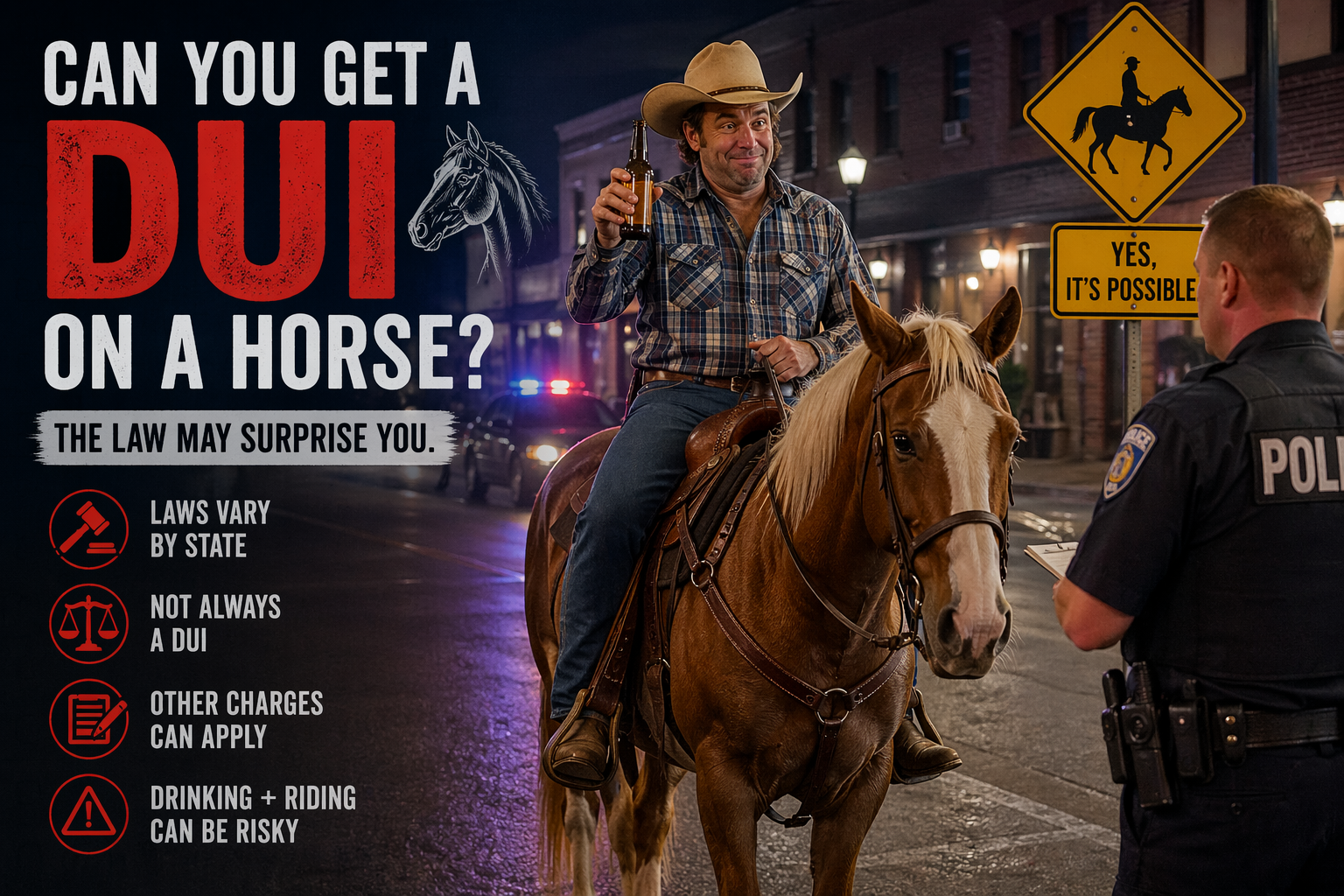
Can You Get a DUI on a Horse?
At first, it sounds like a joke, but it’s a legitimate question: can you obtain a DUI while riding a horse?
The quick answer is that it depends on where you are. It depends on the state if you can acquire a DUI while riding a horse. Some laws say that a horse is a vehicle, but others don’t. You can still be charged with public intoxication or hazardous behavior even if DUI doesn’t apply.
In some regions, you can get a DUI for riding a horse while drunk. You won’t receive a DUI in some places, but you could still be prosecuted with things like public intoxication or hazardous behavior.
In my experience, a lot of people think that a horse doesn’t qualify because it’s an animal. But the law doesn’t always see it that way.
Legal Disclaimer: This article provides general educational information and should not be considered legal advice. DUI and public intoxication laws vary by state and country. If you need legal advice about a specific incident, consult a qualified attorney in your area.
“Let’s go through it properly so you know exactly where you stand.”
Drunk driving laws
Can You Get a DUI on a Horse?
Yes, in some states or countries, the law sees a horse as a “vehicle,” hence you can obtain a DUI riding one. You might not get a DUI in some regions, but you could still be charged with public intoxication or putting other people in risk.
🧠 Why This Question Isn’t Simple
The law has several definitions of “vehicle.” For instance, in some locations, a vehicle can be an animal, whereas in others, it can only be a motor vehicle. This means that the same thing can happen in various places and lead to different charges.
Why DUI Laws Differ Between States
One reason this question doesn’t have a simple yes-or-no answer is that every state creates its own traffic laws.
Some states define a vehicle as anything used to transport a person on a public road. Others limit that definition to motor vehicles, such as cars, trucks, motorcycles, and SUVs.
Courts may also interpret the law differently when unusual situations arise, including riding horses, bicycles, or horse-drawn carriages while intoxicated.
Because of these differences, the exact same behavior could lead to different legal outcomes depending on where it happens. That’s why it’s always a good idea to understand the laws in your own state before riding a horse on public roads.
🐎 Is a Horse Considered a Vehicle?
This is when things start to get interesting.
Some laws say that a horse is
A way to go around
Something you “operate” or control
Other statutes make it obvious that:
Animals out of cars
If you’re riding a horse on a public road, the law says that you may still be held responsible for unsafe behaviour.
🚨 When You Can Get a DUI on a Horse
If you are in some areas, you could be charged with DUI if:
Animals are included in the law’s definition of “vehicles.”
You are driving on a public road.
You are obviously drunk
What you do puts other people in danger.
You are still “in control” even if the horse is doing most of the effort.
⚠️ When You Won’t Get a DUI (But Still Get in Trouble)
DUI rules don’t always apply to horses in a direct way.
But that doesn’t mean you’re safe.
You can still be charged with:
Being drunk in public
Putting someone in danger on purpose
Blocking traffic
Putting animals in danger (in some cases)
This is what happens most of the time in my experience.
🚔 Can Police Stop You While Riding a Horse?
Yes, for sure.
If you are:
Driving on a road
Making things go wrong
Doing things that are dangerous
The police can stop you the same way they would stop a car.
A lot of horse owners don’t know this, yet riding on public highways is a big responsibility.
Are Horses Allowed on Public Roads?
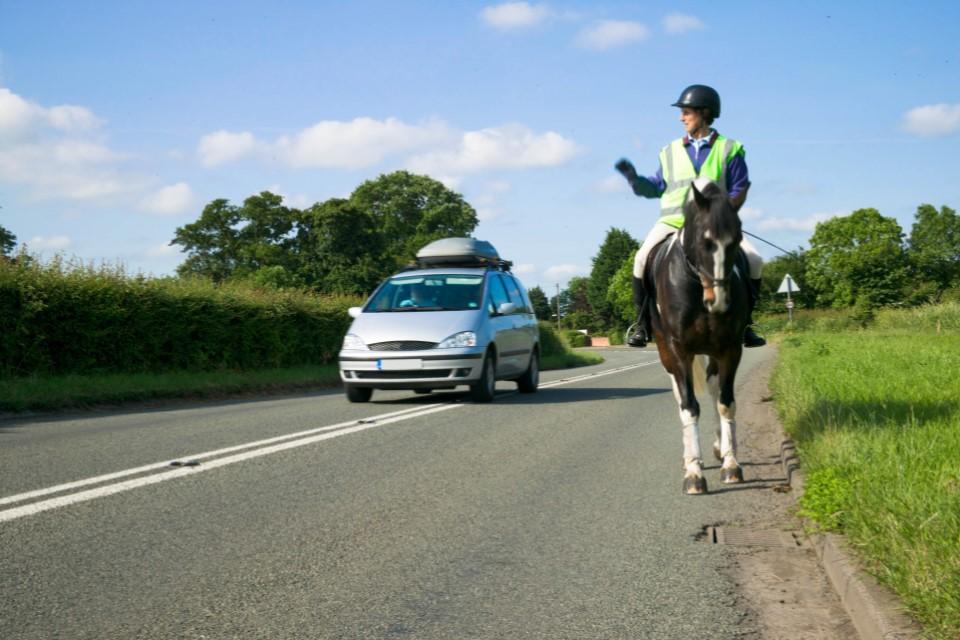
In many states, horses are legally allowed to travel on certain public roads. However, riders are expected to follow traffic laws just like other road users.
Depending on your location, you may be required to:
- Ride in the correct direction of traffic.
- Obey traffic signals and signs.
- Use reflective clothing or lights when riding at night.
- Avoid creating unnecessary hazards for drivers.
Even when horseback riding is legal, riding while impaired can greatly increase the risk of accidents for both the rider and other road users.
📍 Real-Life Example
There have been times when people riding inebriated were stopped.
In one case:
The rider was not charged with DUI, but they were charged with being drunk in public.
In a different case:
The law saw the horse as a car.
A DUI charge was brought against them.
👉 This indicates how much it depends on the law in that area.
Real Cases That Show How the Law Can Differ
Over the years, several unusual cases have made headlines because they involved intoxicated people riding horses instead of driving cars.
In some cases, riders avoided DUI charges because the court ruled that a horse was not a motor vehicle. However, they were still arrested for offenses such as public intoxication or disorderly conduct.
In other situations, local laws allowed prosecutors to pursue DUI-related charges because the rider was considered to be operating a vehicle under that state’s legal definition.
These cases show that the outcome often depends less on the horse itself and more on how local laws define vehicles and public safety responsibilities.
⚖️ Key Factors That Affect the Outcome
It depends on:
Laws and meanings in your area
If you’re on a public road
How drunk you are
If you are a threat
The police’s decision
Legal rules say that public safety is always the most important thing, not the method of transportation.
🧠 What Many Horse Owners Don’t Realize
A lot of horse owners think:
👉 “The horse knows the way, so it’s safe.”
But that doesn’t matter in the eyes of the law.
If you are
Not able to effectively control the horse
Putting other people in danger
You could still face harsh consequences.
⚠️ Common Mistakes People Make
- Thinking that horses aren’t protected by the law
- Driving drunk on crowded roads
- Thinking the horse can “handle everything”
- Not following local rules
- These blunders might get you fined or charged.
🌍 Does This Apply Everywhere?
No, laws are really different from one place to another.
In some places:
People treat horses like cars.
In other cases:
They aren’t
That’s why you should always check the legislation in your area before making any assumptions.
DUI vs. DWI vs. Public Intoxication
Many people use these terms interchangeably, but they don’t always mean the same thing.
| Term | What It Usually Means |
|---|---|
| DUI | Driving Under the Influence of alcohol or drugs |
| DWI | Driving While Intoxicated or Impaired (varies by state) |
| Public Intoxication | Being intoxicated in a public place where your behavior creates a concern |
| Reckless Endangerment | Acting in a way that puts other people at risk |
Different states use different legal terms, so the exact charge depends on local law.
Real Charges You Can Face
Even if DUI doesn’t apply, these charges often do:
1. Public Intoxication
If you’re drunk in a public place, that alone can get you in trouble.
2. Reckless Endangerment
If your riding puts others at risk.
3. Obstructing Traffic
A slow or unpredictable horse on a road can create hazards.
4. Animal Endangerment
If your condition affects how you handle the horse.
What Police Actually Look For
Officers don’t focus only on whether it’s a horse.
They look at:
- Are you in control?
- Are you swaying or unstable?
- Are you putting others at risk?
- Are you blocking traffic?
If you fail in any of these areas, they can act.
State-by-State Examples
Can You Get a DUI on a Horse in Texas?
In Texas:
- DUI laws apply to motor vehicles
- A horse is not classified as one
But…
👉 You can still be charged with public intoxication
So no DUI – but not a free pass either.
Can You Get a DUI on a Horse in California?
California legislation is very focused on cars and trucks. That means:
Riding a horse when drunk normally doesn’t count as DUI.
But:
The prohibitions against public intoxication still apply.
You can still obtain a ticket for riding dangerously, but the laws are different in each state.
NC is a little tighter when it comes to interpretation. Even if a horse isn’t a car,
If you’re not safe, you can still be charged.
The police pay a lot of attention to:
Safety on the road Public risk Florida
Florida has a similar pattern:
Driving under the influence → cars
Horse: not included
But once more:
👉 Laws against public drunkenness and safety still apply
Arizona
Depending on the situation, Arizona can be harsher about following the rules.Even if DUI doesn’t apply:
You could get in trouble for riding dangerously.
Especially on routes that are busy
Quick State Comparison
Although every situation is different, this table gives a general idea of how many states approach riding a horse while intoxicated.
| State | DUI Charge on a Horse | Other Charges Possible |
|---|---|---|
| Texas | Usually No | Yes |
| California | Usually No | Yes |
| Florida | Usually No | Yes |
| Arizona | Depends on circumstances | Yes |
| North Carolina | Case-specific | Yes |
Remember that local laws, court decisions, and the circumstances of the incident can all affect the outcome. Always check the current laws where you live.
What About Smaller States?
From your keyword list, many smaller states have low competition.
Here’s the pattern:
- Most states do not classify horses as motor vehicles
- But almost all states have:
- Public intoxication laws
- Safety regulations
👉 So the risk is always there
Can You Get Arrested Riding a Horse Drunk?
Yes – absolutely.
Even without a DUI charge.
Reasons include:
- You’re visibly intoxicated
- You’re causing danger
- You’re interfering with traffic
Police don’t need a DUI law to act.
Insurance Problems (Most People Ignore This)
This part matters a lot.
If something goes wrong:
- Your insurance may not cover it
- You could be liable
That includes:
- Injury to others
- Property damage
- Vet bills
Alcohol makes your case weaker legally.
What Happens If You Cause an Accident?
If you’re riding a horse while intoxicated and an accident happens, the legal consequences can become much more serious.
Depending on the situation, you could be responsible for:
- Damage to vehicles or property
- Medical expenses for injured people
- Veterinary bills if your horse is injured
- Civil lawsuits seeking compensation
- Additional criminal charges if someone is seriously hurt
Even if you are not charged with DUI, alcohol can make it much harder to defend your actions if the case ends up in court.
The “Horse Knows the Way Home” Myth
Let’s clear this up.
Yes, some horses:
- Recognize routes
- Prefer returning to the barn
But they can still:
- Spook
- Trip
- React unpredictably
And when that happens, you need control.
Not guesswork.
Rural vs City Riding
This makes a big difference.
Rural Areas:
- Less enforcement
- Lower traffic
- Fewer risks
Urban Areas:
- Strict rules
- High traffic
- More legal trouble
If you’re near roads, your risk increases fast.
How to Reduce Your Legal Risk
If you’ve been drinking, the safest option is simply not to ride.
If you need to travel with your horse, consider safer alternatives such as:
- Asking a sober friend to ride instead.
- Transporting your horse in a trailer.
- Waiting until you’re completely sober.
- Staying off public roads whenever possible.
These simple choices can help protect you, your horse, and everyone else sharing the road.
Safer Alternatives
If you’ve been drinking:
- Walk
- Call a ride
- Stay overnight
- Ask a friend
Simple decisions avoid big problems.
Why Riding While Drunk Is Dangerous for Your Horse
Most horse owners naturally focus on their own safety, but it’s just as important to think about the horse.
Alcohol affects balance, judgment, and reaction time. If your horse suddenly spooks, slips, or reacts to unexpected traffic, you’ll need to respond quickly.
An impaired rider may:
- Lose balance in the saddle
- Give confusing signals
- React too slowly during emergencies
- Increase the risk of falls or injuries
Even the calmest horse cannot safely compensate for an impaired rider.
In Short:-
So, can you get a DUI on a horse?
👉 Sometimes yes – but even when you can’t, you’re not safe from legal trouble.
Sometimes yes, sometimes no—but you can still get into legal trouble either way.
The safest approach is simple:
- Stay in control
- Know your local laws
- Don’t ride under the influence
In the end, it’s not just about legality. It’s about safety-for you, your horse, and everyone around you.
Key Takeaways
If you only remember a few points from this article, make them these:
- Whether you can get a DUI on a horse depends on the laws where you live.
- Even if DUI laws don’t apply, you can still be arrested for other offenses.
- Riding a horse while intoxicated puts both people and animals at risk.
- Police can stop horse riders who create dangerous situations on public roads.
- The safest decision is to avoid riding after drinking and understand your local laws before heading onto public roads.
FAQ Section:-
Can You Get a DUI on a Horse? Quick Answer
Yes, it is possible to acquire a DUI on a horse, however it depends on the laws in your state. You might still be charged with other crimes, such being drunk in public.
👉 This alone boosts ranking chances a lot.
Can you legally ride a horse while drunk?
It depends on location, but you can still face charges like public intoxication.
When it comes to DUI, is a horse a vehicle?
Not usually, however the laws are different and other charges may apply.
Can you be arrested for riding a horse drunk?
Yes, especially if you pose a risk to others.
What states allow DUI on a horse?
Most states don’t classify horses as motor vehicles, but enforcement varies.
Can you go to jail for riding a horse drunk?
Yes, in some cases. If your behavior is dangerous or illegal, you can face fines or even jail time.
YOU CAN READ OTHER ARTICLES HERE
If you’re interested in horse safety and responsible ownership, you may also enjoy these guides:
- How to Trim Hooves for Laminitis Horses
- Signs of Thrush in Horses
- White Line Disease Treatment
- Horse Hoof Abscess: Causes and Treatment
- Horse Hoof Cracks Explained
- Horse Hoof Care for Beginners
These articles cover practical horse care topics to help keep your horse healthy, comfortable, and safe.
- Can you get a DUI on a horse
- Can you get a DUI on a horse in arizoma
- Can you get a DUI on a horse in california
- Can you get a DUI on a horse in florida
- Can you get a DUI on a horse in nc
- Can you get a DUI on a horse in oklahoma
- Can you get a DUI on a horse in texas
- Can you get DUI on a horse
- what states can you get a dui on a horse








Leave a comment