

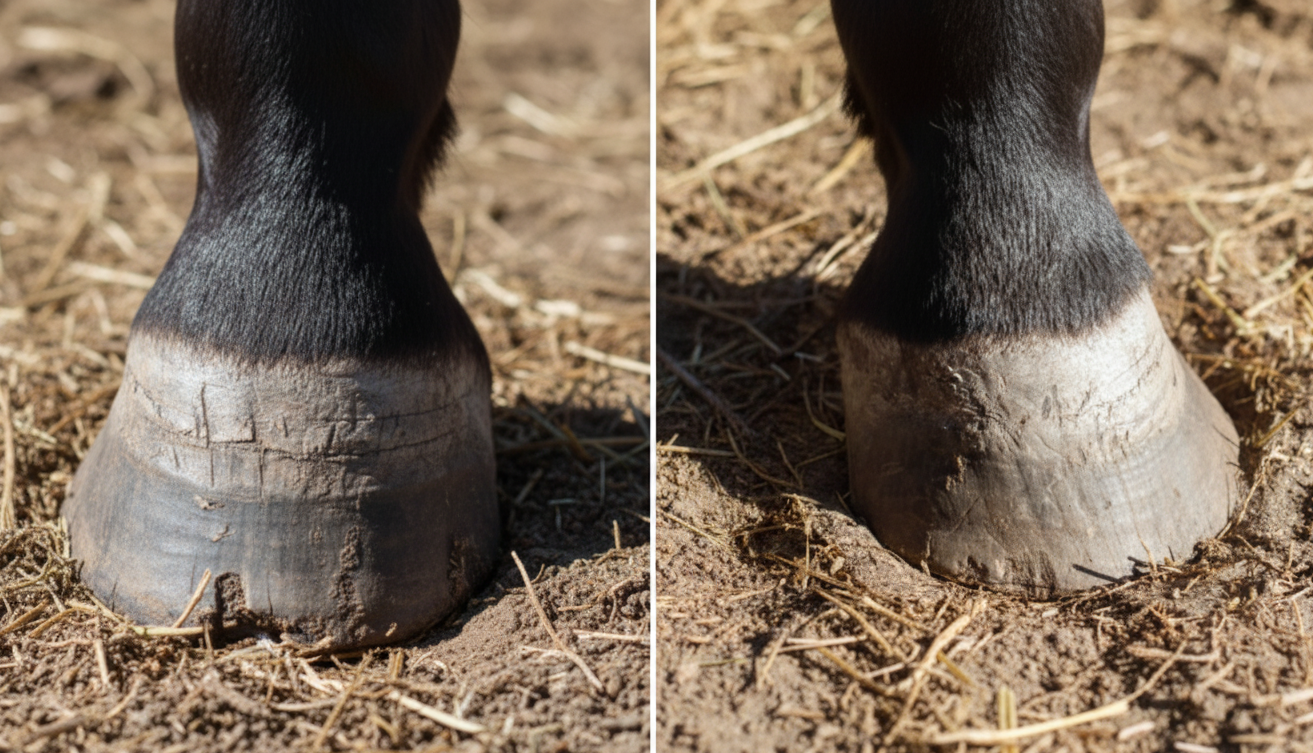
How to Trim Hooves for Laminitis Horses (Step-by-Step Guide for Safe Recovery)
Learning how to trim hooves for laminitis horses is not about making the hoof look neat. It’s about reducing pain, improving balance, and helping the horse heal from the inside.
In my experience, many horse owners try to fix everything in one trim. That’s where problems start. Laminitic hooves need small, careful adjustments over time, not aggressive cutting.
If you understand what’s happening inside the hoof, trimming becomes much easier-and safer.
When people ask how to trim hooves for laminitis horses, they’re usually looking for a quick fix. But in reality, trimming for laminitis is about small, controlled changes that reduce stress on the hoof over time. Understanding this makes the process safer and more effective.
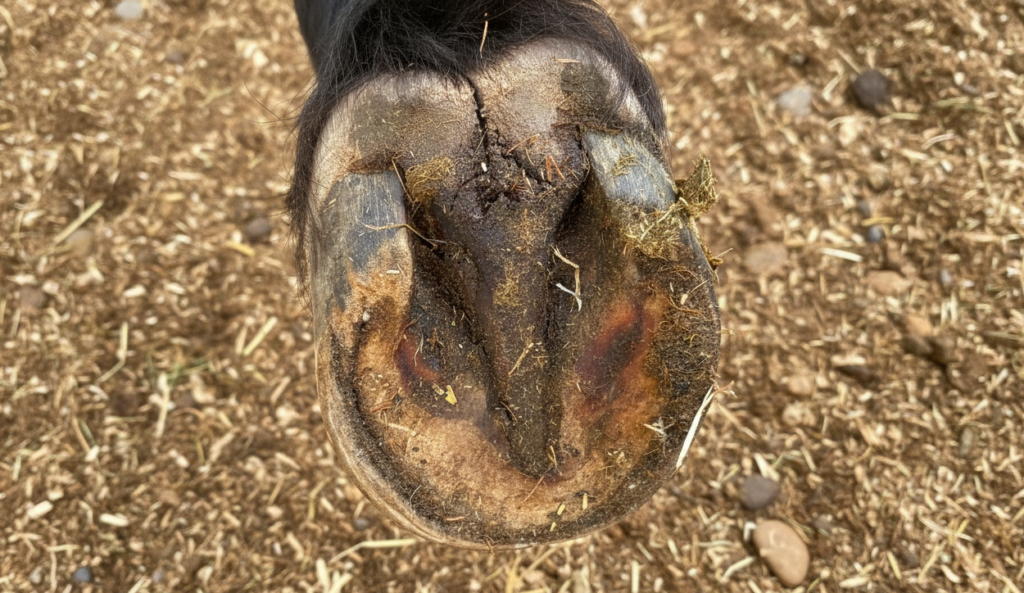
🦶 What Happens Inside a Laminitic Hoof
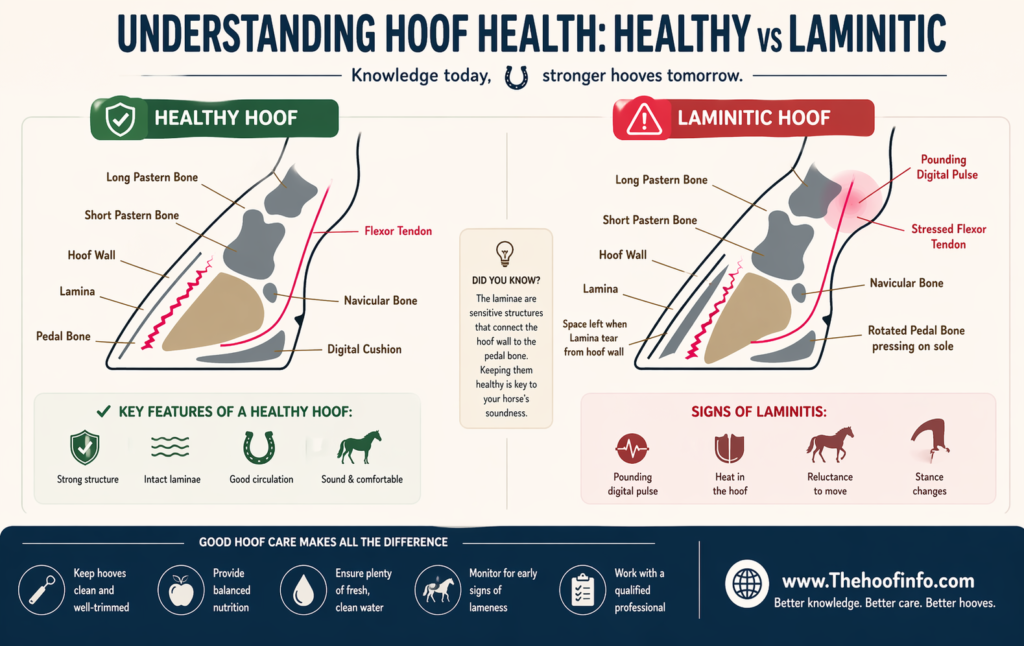
Laminitis affects the laminae-the structures that hold the hoof wall to the coffin bone.
When inflammation sets in:
- The bond weakens
- The toe starts to stretch forward
- The coffin bone may rotate
- The horse shifts weight to reduce pain
Many horse owners notice their horse standing back on its heels or moving stiffly. That’s a clear sign the front of the hoof is under too much stress.
👉 So the goal of trimming is simple:
Reduce pressure at the toe and support the back of the hoof.
What I Check Before Every Trim
Before I even pick up a tool, I take a minute to read the horse.
I check:
Digital pulse (strong pulse = active inflammation)
Heat in the hoof
How the horse is standing
Whether they’re shifting weight or reluctant to move
In my experience, this step tells you how aggressive-or gentle-you need to be. Some days, the right trim is doing less, not more.
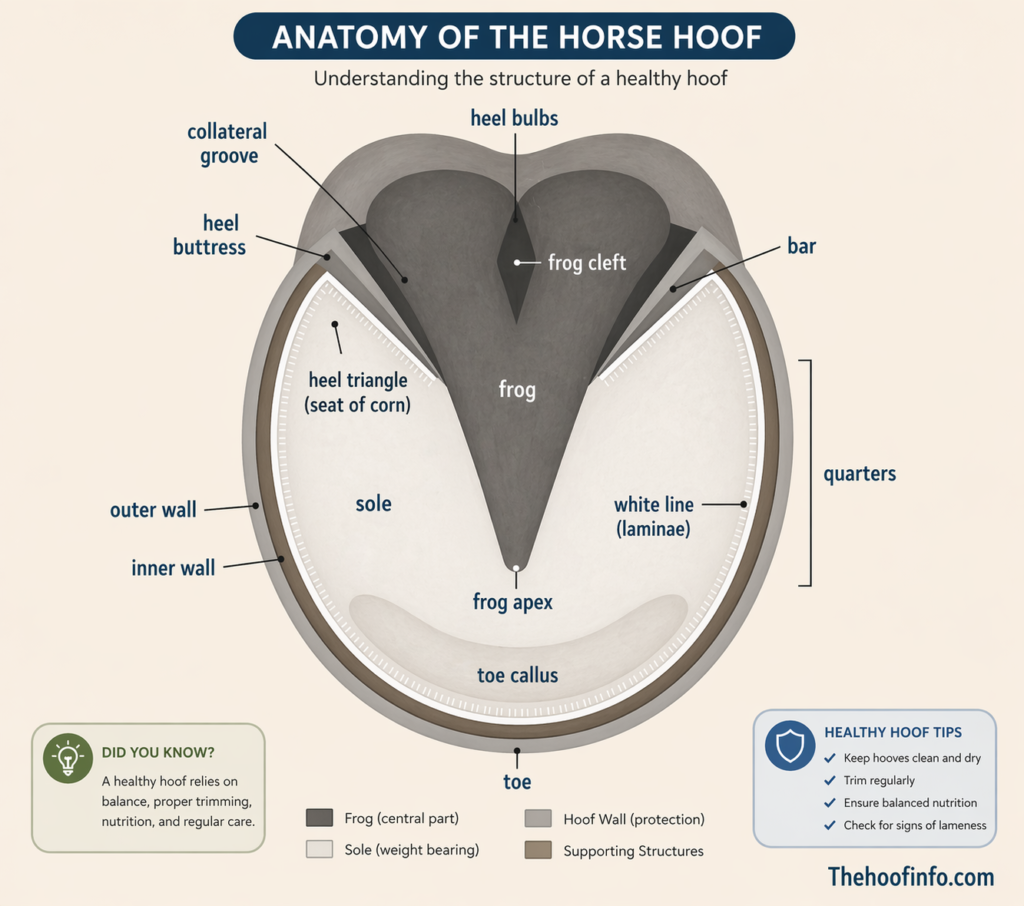
✂️ How to Trim Hooves for Laminitis Horses (Step-by-Step Method)
This is a basic working method based on farrier practice and laminitis care principles. Go slow. Always.
1. Clean the hoof properly
Before doing anything:
- Pick out dirt, stones, and debris
- Brush the sole so you can see clearly
You need a clean view to avoid cutting the wrong areas.
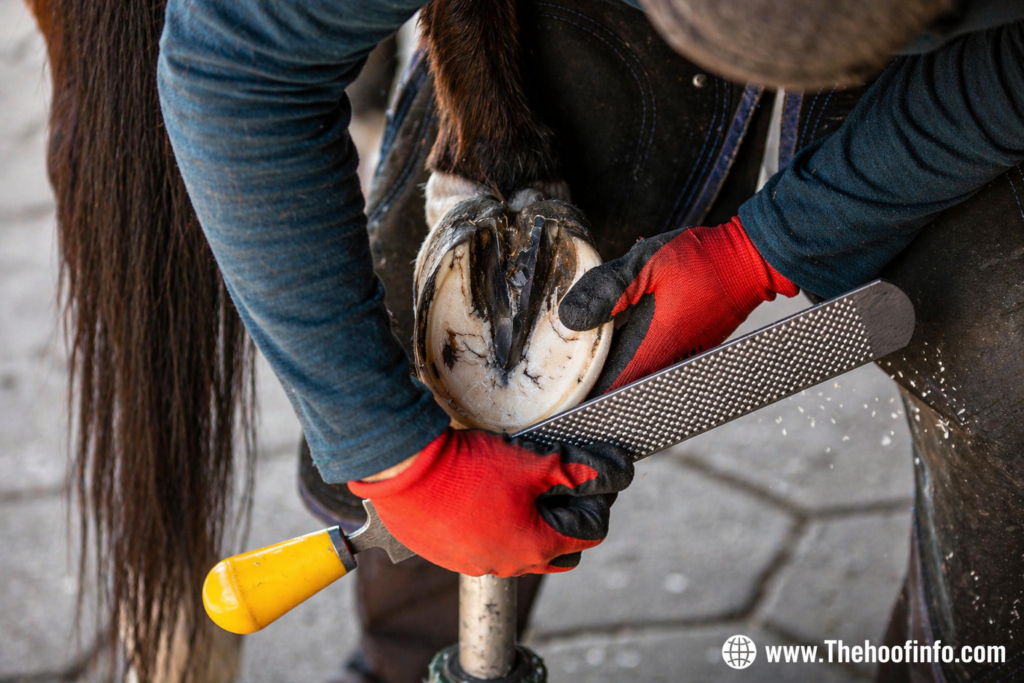
2. Identify the structures
Take a moment and look closely:
- Hoof wall (outer hard layer)
- Sole (flat inner surface)
- Frog (rubbery triangle in the center)
In laminitic hooves, the white line may look stretched or weak.
👉 Never rush this step. Many trimming mistakes happen here.
3. Shorten the toe (carefully)
This is the most important correction.
In laminitis:
- The toe grows too long
- It pulls on damaged laminae
What to do:
- Trim small amounts at a time
- Bring the toe back gradually
- Do not force it in one session
In my experience, even a slight reduction in toe length can make the horse more comfortable almost immediately.
4.How to Know If You’re Removing Too Much Sole
One of the biggest risks in laminitis trimming is taking too much sole.
Signs you’re going too far:
The sole looks chalky or thin
The horse becomes more sensitive immediately
You start seeing a slight “give” when pressing
The sole is protection. Once you remove too much, recovery becomes harder. When in doubt, leave it.
5. Check and adjust the heels
Heels can be tricky.
Sometimes they are:
- Too high → pushing weight forward
- Too low → causing instability
What you can do:
- Trim only if clearly overgrown
- Keep the heel level with the live sole
👉 Balance matters more than cutting.
6. Apply a bevel (Mustang Roll)
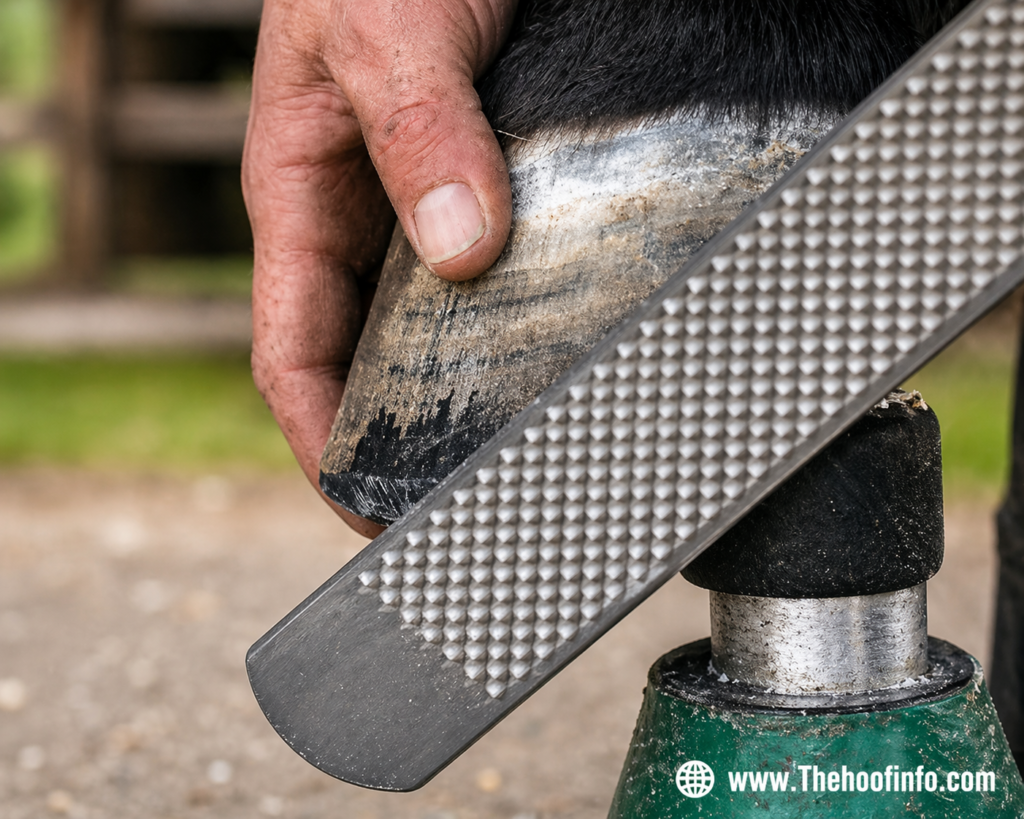
This step is often ignored, but it makes a big difference.
Beveling means:
- Rounding the outer edge of the hoof wall
- Removing sharp edges
- Reducing leverage on the toe
Why it matters:
- Less pulling on laminae
- Lower risk of cracks
- Smoother breakover
According to laminitis care principles, reducing mechanical stress at the toe is key-and this step does exactly that.
7.Understanding Breakover (Simple Explanation)
Breakover simply means how easily the hoof leaves the ground when the horse steps forward.
In laminitic horses, breakover is delayed because the toe is too long. That extra leverage pulls on already damaged laminae.
By shortening the toe and adding a bevel, you bring breakover back under the hoof—where it should be. This reduces strain and makes movement easier almost immediately.
8. Leave the frog mostly untouched
The frog supports circulation and shock absorption.
Only:
- Remove loose, dead tissue
- Avoid cutting healthy frog
Many horse owners over-trim this area. That usually makes things worse, not better.
9. Check overall balance
Before finishing:
- Look at the hoof from the front and side
- Make sure it’s even
- Avoid sharp angles
👉 A balanced hoof helps the horse stand and move more naturally.
🛠️ Tools You May Need for Hoof Trimming
In my experience, having the right tools makes trimming safer and easier. “Some links may be affiliate links, which means I may earn a small commission at no extra cost to you.”
- Hoof knife
- Nippers
- Rasp
- Hoof stand (optional but helpful)
⚠️ Common Mistakes When Learning How to Trim Hooves for Laminitis Horses
I see these all the time:
- Cutting too much in one trim
- Ignoring the long toe problem
- Trimming the frog aggressively
- Skipping the bevel step
- Trying to “fix everything today”
Laminitis trimming is not a one-time fix. It’s a process.
⏳ How Often Should You Trim Hooves for Laminitis Horses?
For laminitic horses:
- Every 2 to 4 weeks is ideal
- Light trims, not heavy sessions
Frequent maintenance keeps the hoof stable and prevents flare from coming back.
🧪 Case Example (Real-Life Situation)
I’ve worked with a few laminitic horses over the years, and one thing always stands out… progress is slow but rewarding.
- Severe toe stretch
- Sensitivity when walking
- Mild rotation confirmed by vet
Instead of aggressive trimming:
- We reduced the toe slightly every 2 weeks
- Added a clean bevel
- Left the frog intact
Within a few weeks:
- Movement improved
- Pain reduced
- Hoof shape started correcting naturally
👉 Slow correction worked better than force.
What made the biggest difference wasn’t one trim-it was consistency.
Each small adjustment reduced stress without shocking the hoof. Over time, the internal structures had a chance to stabilize, and that’s when real recovery started.
Signs Your Trim Is Helping (or Hurting)
After a trim, always watch the horse.
Good signs:
More willing to move
Standing more evenly
Less shifting weight
Warning signs:
Increased soreness
Reluctance to walk
Standing more on heels than before
In my experience, the horse will tell you quickly if the trim helped-or if you need to adjust next time.
🩺 When You Should Call a Farrier or Vet
Some cases need expert help.
Call a professional if:
- The horse is severely lame
- There’s visible hoof distortion
- You suspect coffin bone rotation
- You’re unsure how much to trim
Based on farrier guidelines, advanced laminitis cases should always be handled with proper support and sometimes imaging.
🧠 Supporting Tips for Better Results
Trimming alone is not enough.
You should also:
- Keep the horse on soft ground
- Manage diet (low sugar, low starch)
- Monitor weight
- Provide proper rest
Many horse owners focus only on trimming, but recovery depends on the whole care plan.
Environment Plays a Bigger Role Than You Think
Even the best trim won’t hold if the environment is working against you.
Wet, dirty ground softens the hoof and increases infection risk.
Hard, dry ground can make a sensitive horse more uncomfortable.
For laminitic horses, soft but supportive footing-like sand or dry bedding-often gives the best results during recovery.
❓ Frequently Asked Questions
How do you trim hooves for laminitis horses?
Trim gradually by shortening the toe, balancing the hoof, beveling the edge, and protecting the frog. Small, regular trims work best.
Can trimming cure laminitis?
No. Trimming helps manage the condition, but it doesn’t cure it. Proper care and management are also needed.
How often should laminitic hooves be trimmed?
Every 2 to 4 weeks with light adjustments to maintain balance and reduce stress.
Should you trim the frog?
Only remove dead tissue. Do not cut healthy frog, as it supports circulation and stability.
What is the most important part of trimming?
Reducing toe pressure and improving breakover. That’s where most of the pain comes from.
Can a laminitic horse walk comfortably after trimming?
Yes, if the trim reduces toe pressure and improves balance. But improvement depends on severity.
How long does hoof recovery take after laminitis?
Several months. Hooves grow slowly, and full correction takes time.
Summary:-
When you learn how to trim hooves for laminitis horses, you make small, careful changes over time. Focus on easing the pressure, supporting the hoof, and making the horse comfortable. First, clean the hoof and check to see if it is balanced. In my experience, the best way to trim is to do it a little at a time. Shorten the toe, keep the heels even, and don’t cut too much. It’s not about being perfect; it’s about feeling better.
Keep it simple:
- Shorten the toe
- Support the heel
- Protect the sole
- Go slow
And most importantly, listen to the horse.
They’ll tell you, in their own way, if what you’re doing is helping.
Learning how to trim hooves for laminitis horses takes patience and a careful eye. It’s not about fixing everything in one session, but making small, consistent changes that help the hoof recover over time. Aggressive trimming often does more harm than good, while steady, controlled adjustments reduce stress and support natural healing. Stay observant, focus on comfort over perfection, and adjust as the horse responds-that’s what truly makes a lasting difference.
You may also read:
Laminitis-in-horses-feeding-tips
New-treatment-for-laminitis-in-horses
New Treatments for Laminitis in Horses









1 Comment