

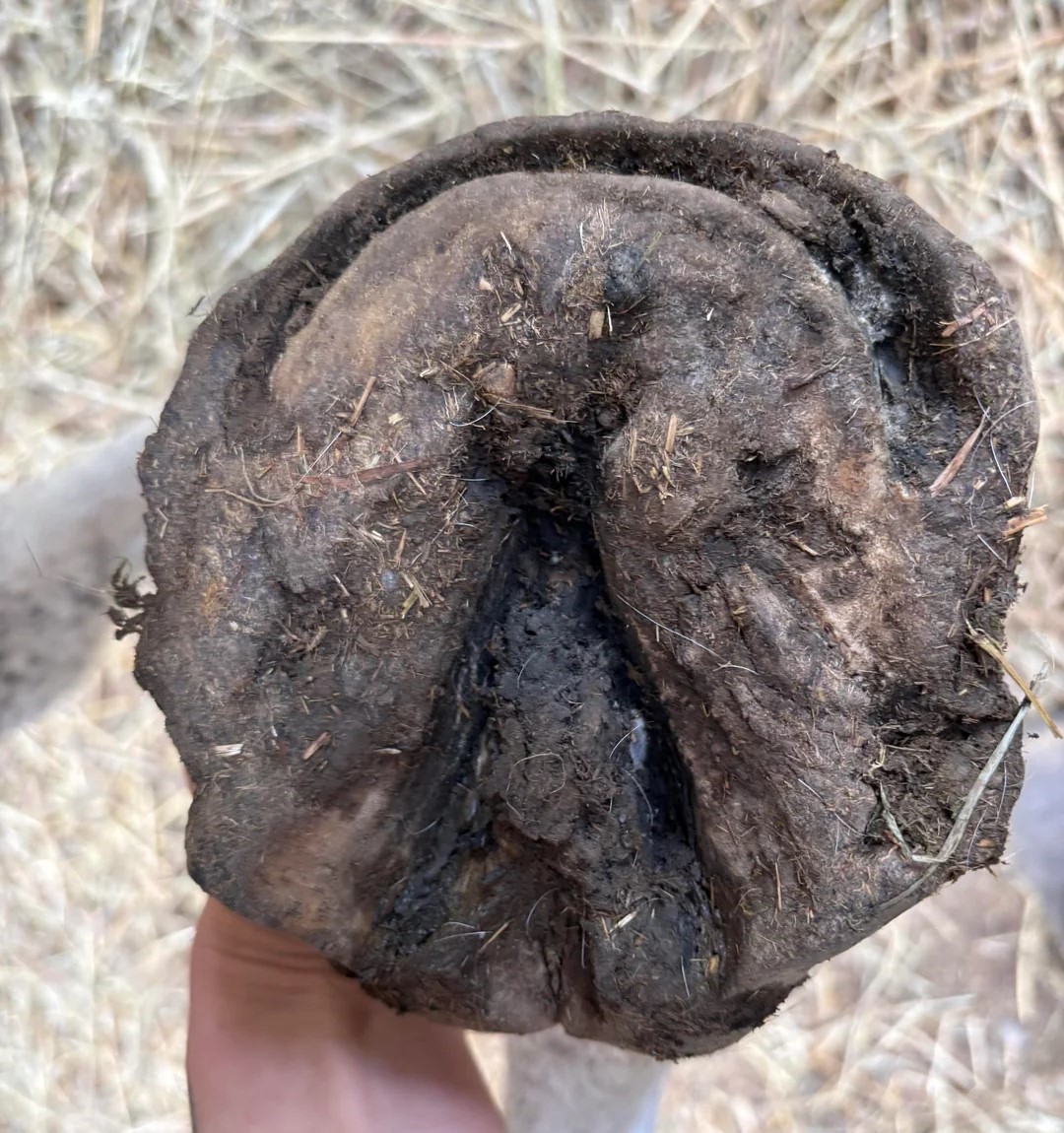
Horse Hoof Fungus Treatment: What Actually Works and What Makes It Worse
A horse can look perfectly sound one week and then suddenly start showing tenderness, foul odor, crumbly hoof walls, or deep cracks the next. In many cases, hoof fungus is sitting underneath the surface long before owners notice it.
Farriers see this all the time.
A horse comes in for a trim with stretched white line, chalky hoof material, black discharge, or a weak frog that keeps breaking apart no matter how carefully the owner cleans the feet. The problem usually is not just “dirty hooves.” It is often fungal or bacterial invasion working its way through compromised hoof tissue.
The good news is that most cases can improve when treatment starts early and the environment changes with it.
The bad news is that many horses stay stuck in a cycle of temporary improvement because the real cause never gets addressed.
This guide breaks down what hoof fungus looks like, how farriers approach treatment, what products actually help, and why some horses keep getting reinfected.
What Is Horse Hoof Fungus?
Horse hoof fungus is a broad term owners use to describe fungal infections that affect the hoof wall, frog, sole, or white line area.
The most common conditions linked to fungal invasion include:
- White line disease
- Thrush
- Seedy toe
- Fungal hoof wall separation
- Deep central sulcus infections
In many horses, fungus and bacteria work together.
Once moisture, poor hoof balance, cracks, or stretched white line create an opening, organisms move into weakened tissue and start breaking it down.
That breakdown weakens the hoof structure and creates the classic symptoms owners notice:
- Bad smell
- Powdery hoof material
- Black discharge
- Hollow hoof wall
- Crumbling frog
- Sensitivity on hard ground
- Persistent cracks
Some horses stay comfortable for months even while the infection spreads internally.
That is why routine hoof inspections matter.
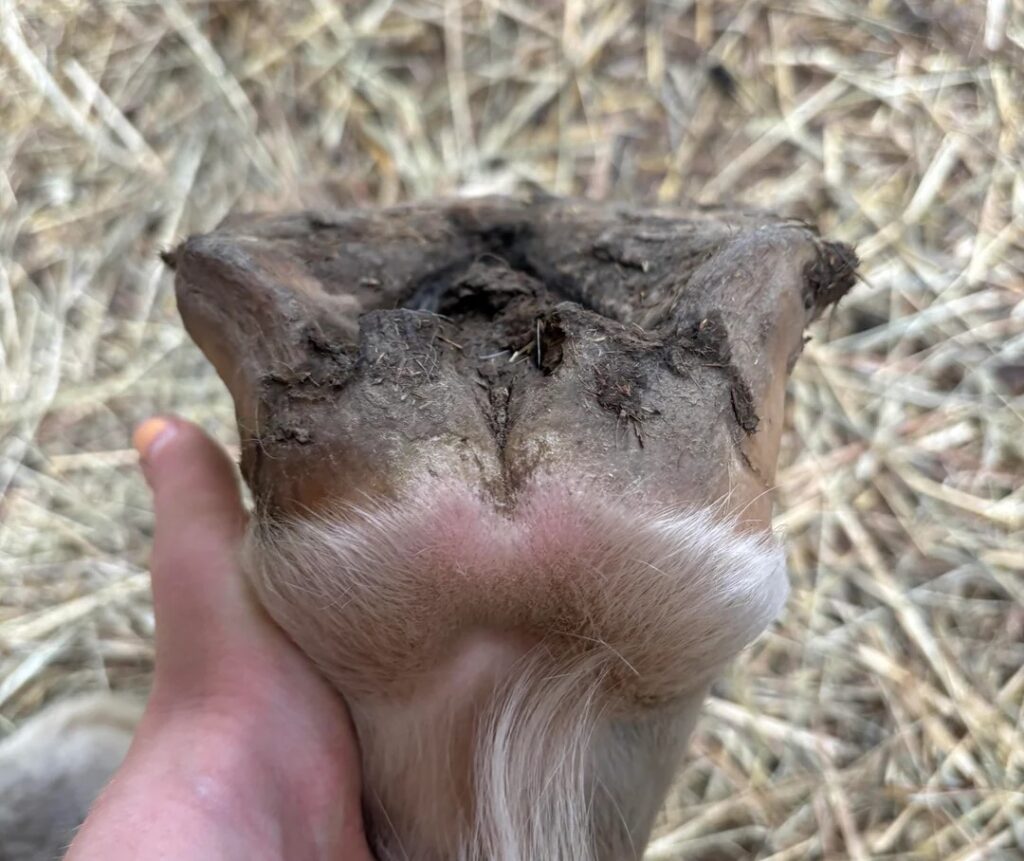
Signs Your Horse May Have a Hoof Fungus Problem
Many owners mistake early fungal infection for simple dirty feet.
Here are common warning signs farriers watch for:
Strong Odor
One of the earliest clues is a rotten smell coming from the frog or white line.
Healthy hooves should not smell foul after cleaning.
Crumbly Frog Tissue
If the frog peels apart easily or looks ragged and shredded, infection is often present.
White Powder or Chalky Material
Fungal hoof wall separation often leaves behind powdery white or gray debris.
Deep Cracks in the Frog
A deep central sulcus crack can trap bacteria and fungus far below the hoof surface.
Hollow Hoof Wall
Tap the wall lightly during cleaning.
A hollow sound can indicate separation underneath.
Repeated Hoof Abscesses
Some recurring abscesses trace back to hidden white line disease.
Tenderness During Trimming
Sensitive areas around separated hoof wall often react during hoof cleaning or trimming.
What Causes Hoof Fungus in Horses?
Fungus rarely appears without an underlying problem.
The organisms are opportunistic.
They thrive when hoof conditions become weak, wet, damaged, or poorly balanced.
Constant Moisture
Wet paddocks, muddy turnout areas, and dirty stalls soften hoof tissue.
Soft tissue becomes easier for fungus to invade.
Long Trim Cycles
Overgrown feet stretch the white line and create separation.
That separation becomes the perfect hiding place for infection.
Many farriers notice white line disease becoming worse when horses go 10 to 12 weeks between trims.
Poor Hoof Balance
Uneven weight distribution creates stress points and cracks.
Cracks allow moisture and debris deeper into the hoof.
Dirty Living Conditions
Urine-soaked bedding and manure-packed areas increase bacterial growth.
Weak Hoof Quality
Nutrition plays a major role.
Horses lacking proper amino acids, biotin, zinc, or copper often grow weaker hoof horn.
Existing Hoof Damage
Old nail holes, hoof cracks, laminitis damage, and wall separation increase risk.
Horse Hoof Fungus Treatment That Actually Helps
Successful treatment is usually a combination of:
- Removing infected tissue
- Creating a dry environment
- Using topical treatments
- Correcting hoof balance
- Supporting healthy hoof growth
Skipping one of those steps often leads to reinfection.
Step 1: Remove Diseased Hoof Material
This is one of the most important parts of treatment.
Topical products cannot work well if infected tissue remains packed underneath the surface.
Farriers commonly trim away:
- Loose hoof wall
- Separated white line material
- Dead frog tissue
- Trapped debris
The goal is to expose oxygen to infected areas.
Fungus thrives in dark, moist, airless pockets.
Once opened and cleaned, many infections improve much faster.
Owners sometimes worry when they see damaged wall removed, but hiding infected tissue under solid-looking hoof often makes the problem spread.
Step 2: Keep the Hoof Clean and Dry
This sounds simple, but it is where many treatment plans fail.
You cannot soak a hoof in mud all day and expect medication to win.
Daily hoof care matters.
Helpful habits include:
- Picking feet every day
- Removing manure from turnout areas
- Using dry bedding
- Improving drainage around water troughs
- Avoiding constant wet-dry cycles
Some horses improve dramatically just from environmental changes.
Step 3: Use Effective Topical Treatments
Not every hoof treatment works equally well.
Some products only mask odor while the infection continues underneath.
Farriers and veterinarians commonly use:
Copper Sulfate
Copper sulfate helps dry infected tissue and discourages fungal growth.
It is often used carefully in white line disease cases.
Thrush Medications
Commercial thrush treatments can help with frog infections and central sulcus problems.
Some contain iodine, formalin alternatives, or antibacterial ingredients.
Diluted Iodine Solutions
Iodine can help disinfect affected areas when used properly.
White Line Disease Treatments
Certain hoof repair products target fungal hoof wall separation specifically.
Antifungal Sprays or Gels
Veterinarians may recommend stronger antifungal medications for stubborn cases.
One important note:
Overusing harsh chemicals can damage healthy tissue too.
Some owners aggressively apply strong products daily until the frog becomes painfully dry and cracked.
Balance matters.
Step 4: Correct Hoof Balance
This part often gets ignored.
If the hoof remains mechanically stressed, cracks and separation continue reopening.
Farriers focus on:
- Proper heel support
- Reducing wall flare
- Improving breakover
- Eliminating leverage forces
- Supporting damaged areas
A balanced hoof grows stronger horn over time.
Without balance correction, fungal treatment becomes temporary maintenance instead of long-term recovery.
Step 5: Improve Nutrition for Stronger Hoof Growth
Weak hoof horn struggles to resist infection.
Healthy growth starts from inside the horse.
Key nutrients commonly associated with hoof quality include:
- Biotin
- Zinc
- Copper
- Methionine
- Lysine
- Omega-3 fatty acids
Horses with chronic hoof problems may benefit from reviewing:
- High sugar diets
- Mineral imbalances
- Poor forage quality
- Overall body condition
New hoof takes time to grow.
Owners should expect several months before major structural improvement becomes visible.
Real Case Example: Hidden White Line Disease
A gelding came in with a small crack near the toe that the owner thought was cosmetic.
The horse was still riding comfortably.
During trimming, the wall sounded hollow.
Once loose material was opened up, there was fungal separation extending much farther upward than expected.
The treatment plan included:
- Removing compromised wall
- Shorter trim cycles every 4 weeks
- Daily cleaning
- Topical copper sulfate packing
- Dry turnout area
Within several months, healthier hoof wall began growing down.
The biggest improvement came after shortening the trim cycle.
Long intervals had allowed leverage forces to keep tearing the wall apart.
Real Case Example: Deep Central Sulcus Thrush
A mare repeatedly became sore behind despite regular hoof picking.
The frog looked normal at first glance, but there was a deep crack hidden between the heels.
A hoof pick could disappear deep into the central sulcus.
The infection had likely been trapped for months.
Treatment included:
- Carefully opening the crack for airflow
- Daily cleaning
- Topical thrush treatment
- Keeping bedding dry
- Adjusting heel balance
The horse became noticeably more comfortable within weeks.
Common Mistakes That Make Hoof Fungus Worse
Ignoring Early Symptoms
Small areas of separation rarely stay small.
Stretching Trim Intervals Too Long
Overgrown feet create leverage and more separation.
Treating Without Cleaning
Medication placed over packed debris often cannot reach infected tissue.
Keeping Horses in Wet Conditions
Moisture constantly weakens the hoof.
Using Harsh Chemicals Excessively
Overdrying healthy tissue can create more cracking.
Covering Up the Problem
Some owners paint over damaged hoof walls before shows while infection continues underneath.
Can Horses Recover Fully From Hoof Fungus?
Most horses recover well when treatment starts early and hoof management improves.
However, severe cases take time.
Hoof wall grows slowly.
A badly damaged hoof may require months before healthy horn completely replaces infected material.
Consistency matters more than quick fixes.
Many owners stop treatment once the hoof looks better externally.
But internal separation can still remain.
Regular farrier visits are essential during recovery.
When to Call a Veterinarian
Some hoof infections become serious enough to require veterinary involvement.
Call your veterinarian if you notice:
- Severe lameness
- Swelling above the hoof
- Bleeding tissue
- Persistent abscesses
- Deep infection reaching sensitive structures
- Fever or heat in the leg
Advanced white line disease occasionally needs radiographs to evaluate internal hoof damage.
Expert Insight From Farriers
Many experienced farriers agree on one thing:
You cannot medicate your way out of poor hoof management.
A clean environment, proper trim cycle, balanced foot, and healthy hoof growth usually determine whether treatment succeeds.
One common saying around barns is:
“Dry feet and regular trims solve more hoof problems than miracle products.”
And honestly, there is a lot of truth in that.
Frequently Asked Questions
What kills fungus in horse hooves?
Common treatments include copper sulfate, iodine-based products, commercial thrush medications, and veterinarian-recommended antifungal products. Removing infected tissue and keeping the hoof dry are equally important.
Is hoof fungus contagious?
The organisms themselves exist naturally in many environments, but horses with weak or damaged hooves are more vulnerable. Shared wet conditions can increase risk.
Can a horse go lame from hoof fungus?
Yes. Deep infections affecting the frog, white line, or sensitive tissue can cause pain and lameness.
How long does hoof fungus treatment take?
Mild cases may improve within weeks, but severe hoof wall damage can take several months to fully grow out.
Does hoof fungus smell bad?
Usually yes. A strong rotten odor is one of the most common signs of thrush or fungal infection.
Can barefoot horses get hoof fungus?
Yes. Barefoot horses and shod horses can both develop fungal infections if hoof conditions allow it.
Final Thoughts
Horse hoof fungus treatment is rarely about finding one magic bottle.
The horses that recover best usually have several things working together:
- Consistent hoof care
- Proper trimming
- Dry footing
- Early treatment
- Strong nutrition
- Good hoof balance
Farriers often catch these problems before they become severe because small changes in hoof texture, smell, or wall integrity stand out during routine work.
That is why regular hoof maintenance matters so much.
The earlier fungal problems are addressed, the easier they usually are to fix.
And when owners stay consistent instead of chasing quick fixes, most horses grow back healthier, stronger feet over time.





Leave a comment