

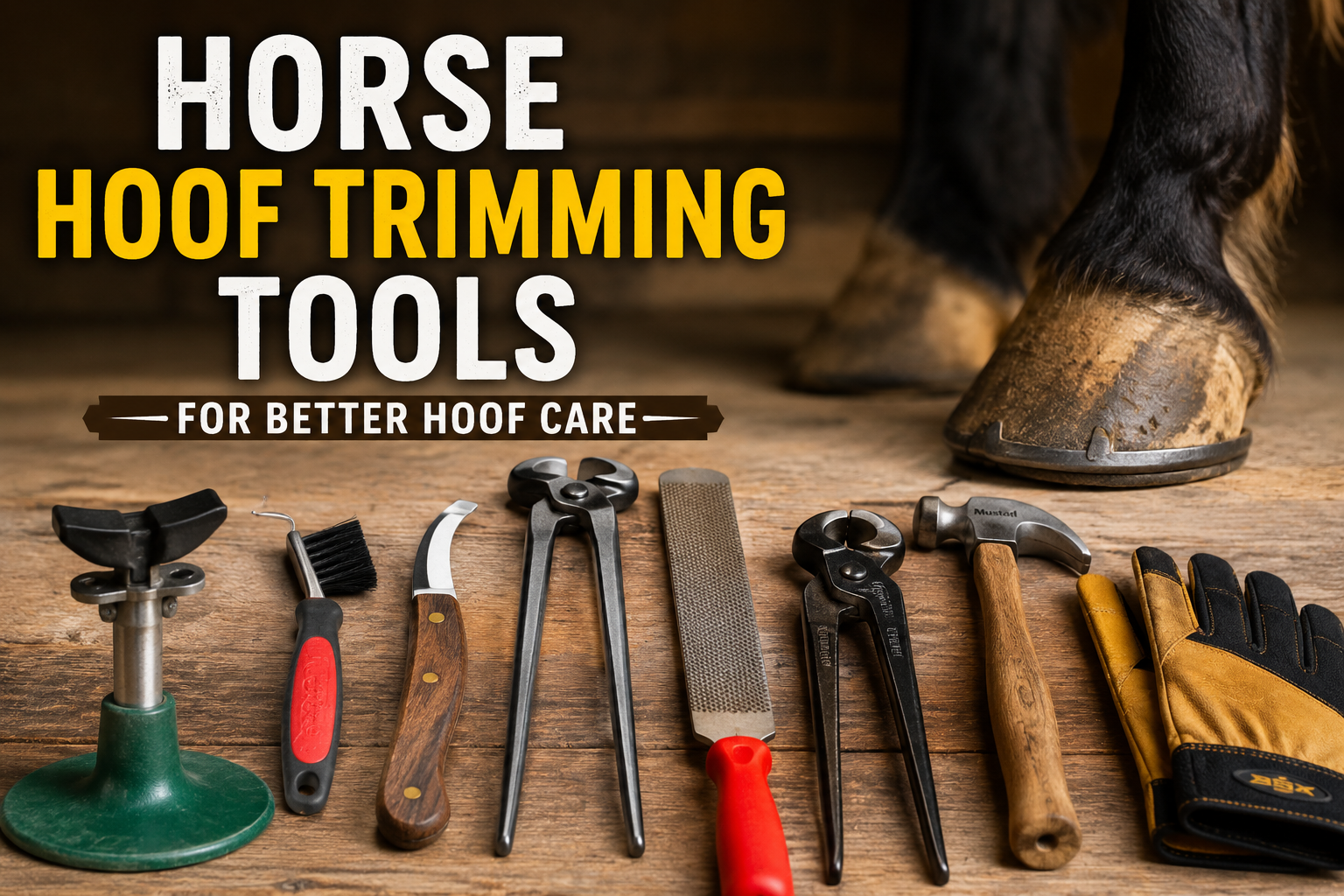
Horse Hoof Trimming Tools: A Complete Guide for Safe and Effective Hoof Care
Healthy hooves are the foundation of every sound horse. Whether your horse spends its days on the trail, in the show ring, or grazing in the pasture, regular hoof maintenance keeps it comfortable and helps prevent many common hoof problems.
Good trimming begins with the right horse hoof trimming tools. Every tool has a specific purpose, from removing excess hoof wall to cleaning the frog and leveling the hoof. Using the wrong equipment—or using quality tools incorrectly—can make trimming more difficult and increase the risk of injury to both the horse and the handler.
As a farrier, I’ve found that investing in reliable tools saves time, improves trim quality, and makes every job safer. Sharp, well-balanced equipment is easier to control and produces cleaner, more accurate results than worn-out or poorly made tools.
In this guide, you’ll learn what each hoof trimming tool does, how to choose the right equipment, and how to maintain your tools so they last for years.
Why Quality Horse Hoof Trimming Tools Matter
Many new horse owners believe trimming is all about technique. Technique is important, but even an experienced farrier struggles with dull or poorly designed tools.
Quality equipment offers several advantages:
- Cleaner cuts
- Better hoof balance
- Less strain on hands and wrists
- Faster trimming
- Increased safety
- Longer tool lifespan
- More comfortable experience for the horse
Cheap tools often lose their edge quickly, bend under pressure, or become uncomfortable during extended use.
Think of hoof trimming tools as an investment rather than an expense. Good equipment can serve you for many years when maintained properly.
Essential Horse Hoof Trimming Tools
A complete trimming kit usually includes:
- Hoof Pick
- Hoof Knife
- Hoof Nippers
- Hoof Rasp
- Hoof Stand
- Clinch Cutter
- Driving Hammer
- Hoof Gauge
- Farrier Apron
- Safety Glasses
- Protective Gloves
- Tool Bag
- Sharpening Stone
Each tool serves a different purpose, and understanding when to use it is just as important as owning it.
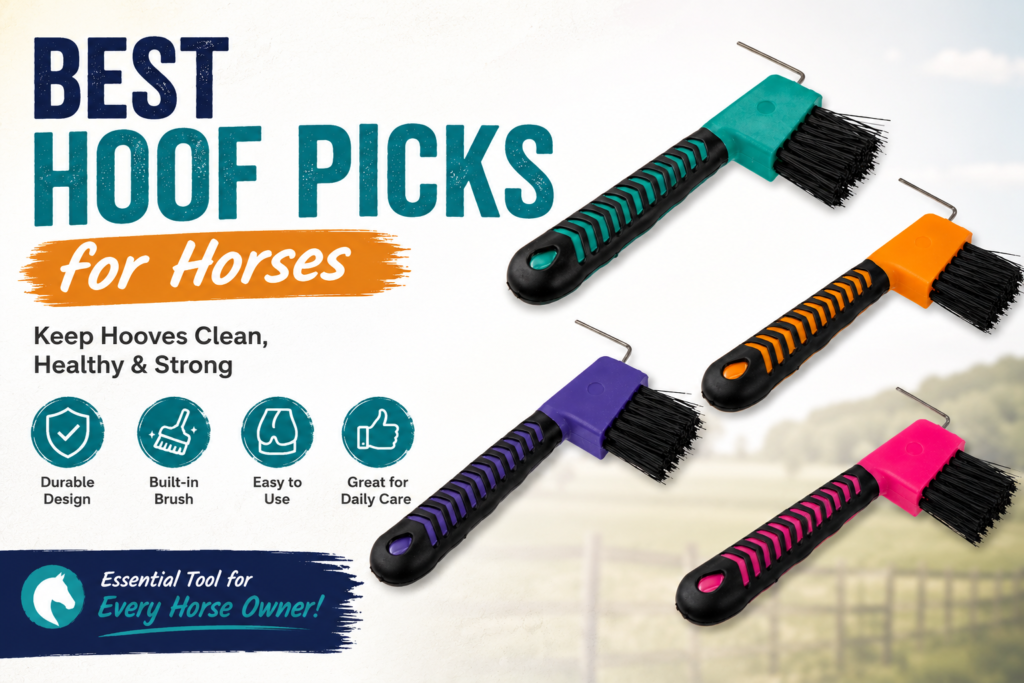
Hoof Pick
The hoof pick is the first tool used before every trim.
Its primary job is removing:
- Mud
- Packed dirt
- Small stones
- Bedding
- Manure
Cleaning the hoof lets you inspect important structures such as:
- Frog
- Sole
- White line
- Bars
- Heel bulbs
Skipping this step can hide cracks, bruises, abscesses, or signs of thrush.
Features to Look For
Choose a hoof pick with:
- Comfortable rubber grip
- Durable steel pick
- Stiff cleaning brush
- Rust-resistant finish
A brush attached to the pick makes cleaning much easier, especially after muddy rides.
Pro Tip
Always clean from the heel toward the toe. This reduces the chance of accidentally driving debris deeper into the frog or white line.
Hoof Knife
The hoof knife is one of the most important-and one of the sharpest-tools in a farrier’s kit.
It removes:
- Loose frog tissue
- Dead sole
- Damaged hoof material
- Small pockets of infection
A sharp hoof knife allows precise trimming without tearing healthy tissue.
Types of Hoof Knives
Right-Hand Hoof Knife
Designed for right-handed users.
Left-Hand Hoof Knife
Offers better control for left-handed farriers.
Double-Edge Hoof Knife
Can cut in both directions.
Many professional farriers carry several knives because different hoof shapes require different blade styles.
Choosing a Good Hoof Knife
Look for:
- High-carbon steel blade
- Comfortable wooden or composite handle
- Excellent edge retention
- Easy sharpening
Avoid extremely cheap knives. They often dull quickly and require excessive force, increasing the chance of slipping.
Safety Tips
Always cut away from your body.
Never force the knife through hard horn.
Keep the blade razor sharp.
A dull knife is actually more dangerous than a sharp one because it requires more pressure.
Hoof Nippers
If the hoof knife is used for precision work, hoof nippers do the heavy cutting.
Their purpose is removing excess hoof wall before rasping.
Nippers work much like oversized pruning shears.
A quality pair makes trimming faster while producing cleaner cuts.
Common Sizes
- 12-inch
- 14-inch
- 15-inch
- 16-inch
Most professional farriers prefer 14- or 15-inch nippers because they offer a good balance of cutting power and control.
Features to Consider
Choose nippers with:
- Forged steel construction
- Comfortable handles
- Precision-ground jaws
- Excellent balance
- Replaceable cutting edges (if available)
Well-balanced nippers reduce fatigue during long trimming sessions.
Common Mistakes
Avoid taking large bites from the hoof wall.
Instead, remove small sections gradually.
This creates a smoother trim and reduces the chance of cracking the hoof wall.
Hoof Rasp
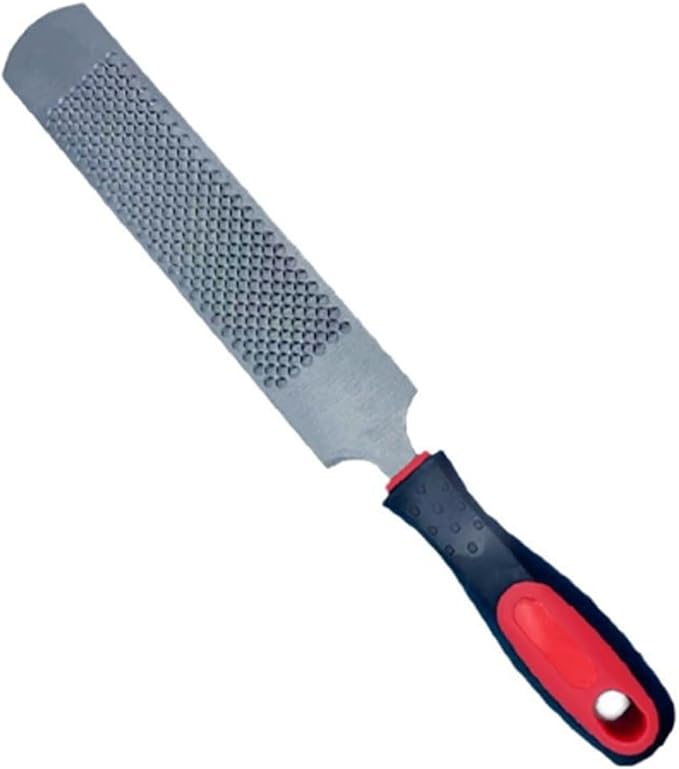
Once the hoof wall has been shortened with nippers, the hoof rasp creates the final shape.
It smooths rough edges and levels the hoof.
A rasp has two working sides:
Coarse Side
Used for removing more hoof material.
Fine Side
Used for finishing and smoothing.
Professional farriers often describe rasping as the step that transforms a rough trim into a balanced hoof.
Signs It’s Time to Replace a Rasp
Replace your rasp if it:
- Slips instead of cutting
- Requires extra pressure
- Leaves rough edges
- Has missing teeth
- Shows excessive rust
Many professionals replace rasps more frequently than beginners expect because a sharp rasp produces better results with less effort.
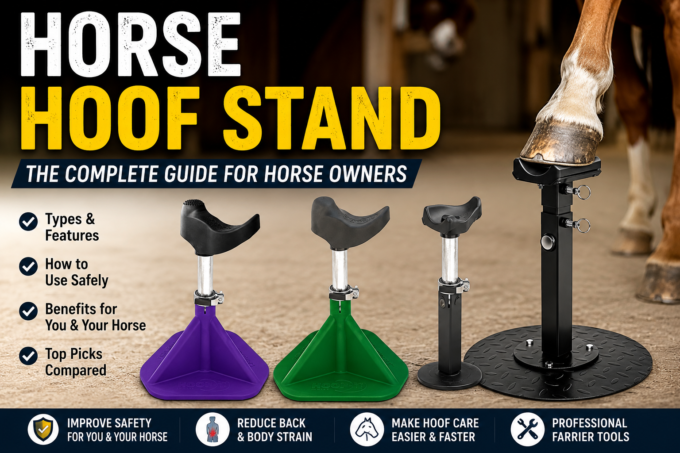
Hoof Stand
Holding a horse’s hoof for extended periods can be physically demanding. A hoof stand supports the hoof during trimming and rasping, reducing strain on both the farrier and the horse.
There are two primary support positions:
Front Support
Used while cleaning the sole, trimming the frog, and working with a hoof knife.
Rear Cradle
Supports the hoof while rasping and leveling the hoof wall.
Using a hoof stand helps maintain a consistent working height, improves precision, and can reduce back and shoulder fatigue during long trimming sessions.
Features to Look For
A good hoof stand should include:
- Adjustable height
- Stable, non-slip base
- Durable steel construction
- Comfortable hoof cradle
- Replaceable rubber top
For beginners, a sturdy stand is often one of the best investments because it improves comfort and control.
Clinch Cutter
If your horse wears shoes, a clinch cutter becomes an essential part of the trimming and shoe removal process.
The clinches are the bent ends of the horseshoe nails that hold the shoe securely to the hoof wall. Before removing the shoe, these clinches should be cut or lifted to prevent unnecessary damage to the hoof wall.
A clinch cutter is designed specifically for this task. When paired with a driving hammer, it helps separate the clinches cleanly, making shoe removal safer and easier.
Key Features
Choose a clinch cutter with:
- Forged steel construction
- Sharp cutting edge
- Comfortable grip
- Corrosion-resistant finish
- Balanced weight
A well-made clinch cutter should withstand repeated hammer strikes without chipping or deforming.
When Should You Use a Clinch Cutter?
- Removing horseshoes
- Replacing worn shoes
- Corrective shoeing
- Hoof repairs requiring shoe removal
For barefoot horse owners, this tool may not be necessary. However, farriers who regularly work with shod horses consider it indispensable.
Driving Hammer
A driving hammer is one of the most recognizable tools in a farrier’s toolbox.
Unlike a regular carpenter’s hammer, a driving hammer is designed specifically for horseshoe nails. One side drives nails into the hoof wall, while the opposite side is used to remove misplaced nails or make minor adjustments.
What Makes a Good Driving Hammer?
Look for:
- Balanced weight
- Forged steel head
- Comfortable wooden or fiberglass handle
- Durable construction
- Secure head attachment
A balanced hammer improves nail placement accuracy and reduces arm fatigue.
Common Uses
- Driving horseshoe nails
- Adjusting shoe placement
- Removing misplaced nails
- Assisting with clinch cutting
Hoof Gauge
One of the biggest challenges in hoof trimming is maintaining proper hoof angles.
Even experienced farriers occasionally verify their work using a hoof gauge.
A hoof gauge measures the angle between the hoof wall and the ground, helping ensure balance and symmetry.
Maintaining the correct angle supports healthy movement and reduces unnecessary stress on joints, tendons, and ligaments.
Why Use a Hoof Gauge?
It helps you:
- Compare front hooves
- Compare hind hooves
- Monitor trimming consistency
- Track hoof changes over time
- Improve overall hoof balance
Remember, a hoof gauge is a measuring tool-not a substitute for understanding hoof anatomy. Every horse is unique, so angles should always be interpreted alongside the horse’s conformation and movement.
Farrier Apron
Many people underestimate the value of a good farrier apron until they spend several hours trimming hooves.
A farrier apron protects your legs while providing convenient storage for essential tools.
Quality aprons reduce fatigue by distributing the weight of your tools evenly and protecting your thighs from sharp hoof edges.
Features to Look For
- Heavy-duty leather or synthetic material
- Adjustable waist belt
- Reinforced leg panels
- Large tool pockets
- Comfortable fit
A well-designed apron keeps your tools within easy reach, reducing unnecessary movement during trimming.
Safety Gloves
Hands are constantly exposed to sharp tools, rough hoof walls, and unexpected horse movements.
Protective gloves improve grip while reducing the risk of cuts and abrasions.
Look for gloves that provide:
- Good grip
- Cut resistance
- Breathability
- Flexible fingers
- Comfortable fit
Avoid bulky gloves that reduce your ability to feel and control your tools.
Safety Glasses
Small hoof fragments, dirt, and metal particles can become airborne during trimming and shoe removal.
Safety glasses protect your eyes from unexpected debris.
Choose eyewear with:
- Impact-resistant lenses
- Anti-fog coating
- Comfortable fit
- UV protection for outdoor work
Eye protection is inexpensive compared to the cost of treating an eye injury.
Professional vs. Beginner Horse Hoof Trimming Tool Kits
Not everyone needs a full professional farrier setup. The right kit depends on your experience and how often you’ll be trimming.
Beginner Tool Kit
For horse owners learning basic hoof maintenance, a starter kit should include:
- Hoof pick
- Hoof knife
- Hoof nippers
- Hoof rasp
- Hoof stand
- Gloves
- Safety glasses
This combination covers the essentials without unnecessary expense.
Professional Farrier Kit
A professional farrier typically carries:
- Multiple hoof knives
- Several sizes of hoof nippers
- Premium hoof rasps
- Clinch cutter
- Driving hammer
- Clinchers
- Pull-offs
- Hoof gauge
- Hoof stand
- Apron
- Sharpening tools
- Replacement rasps
- Tool bag
- Measuring tools
- Hoof testers
Professionals often keep duplicate tools to avoid interruptions if one becomes damaged during the workday.
How to Choose the Best Horse Hoof Trimming Tools
With so many options available, choosing the right tools can feel overwhelming.
Here are the most important factors to consider.
Build Quality
Forged steel tools generally last longer than cast steel versions. High-quality materials maintain sharp edges and resist bending under heavy use.
Comfort
You’ll spend a lot of time holding these tools. Ergonomic handles reduce hand fatigue and improve control, especially during long trimming sessions.
Weight
Heavier tools can provide more cutting power but may tire your hands more quickly. Choose a weight that feels balanced and comfortable for your strength and experience.
Edge Retention
A quality hoof knife or nipper should stay sharp through multiple trims before needing maintenance. Better edge retention means cleaner cuts and less effort.
Brand Reputation
Established farrier brands have earned their reputation through years of reliable performance. Reading reviews from experienced farriers can help you identify tools that offer good value and durability.
Replacement Parts
Some premium tools allow you to replace blades or other components instead of buying an entirely new tool. This can save money over time.
Common Mistakes When Buying Horse Hoof Trimming Tools
Many beginners make the same purchasing mistakes.
Avoid these common pitfalls:
- Buying the cheapest tools available
- Ignoring comfort and handle design
- Choosing tools that are too large or heavy
- Forgetting safety equipment
- Purchasing complete kits filled with low-quality items
- Neglecting tool maintenance
- Assuming expensive always means better
Instead, focus on buying a few high-quality essentials and expand your collection as your skills develop.
Best Horse Hoof Trimming Tool Brands
Not all hoof trimming tools are built to the same standard. Professional farriers often stay loyal to brands that consistently deliver sharp edges, durable materials, and comfortable handling. While the best choice depends on your budget and trimming frequency, several manufacturers have earned strong reputations over the years.
GE Forge & Tool
GE Forge is well known among professional farriers for producing durable hoof nippers, hoof knives, and clinchers. Their tools are forged from high-quality steel and are designed to withstand years of regular use.
Best for:
- Professional farriers
- Heavy-duty daily trimming
- Long-term durability
Diamond Farrier
Diamond Farrier offers a wide range of hoof care tools suitable for both beginners and professionals. Their products are widely available and provide excellent value for the price.
Popular products include:
- Hoof nippers
- Rasps
- Hoof knives
- Hoof stands
- Driving hammers
Best for:
- Horse owners
- Beginner farriers
- Affordable professional tools
Mustad
Mustad is one of the most recognized names in the farrier industry. In addition to horseshoes and nails, they manufacture dependable hoof trimming tools trusted around the world.
Known for:
- Excellent steel quality
- Comfortable grip
- Consistent performance
Bassoli
Bassoli tools are handcrafted in Italy and are highly regarded by experienced farriers. Their hoof knives are especially popular for their sharpness and edge retention.
Ideal for:
- Precision trimming
- Frog work
- Sole trimming
Nordic Forge
Nordic Forge produces premium hoof tools designed for professional use. Their hoof stands and nippers are particularly well known for strength and durability.
How to Maintain Horse Hoof Trimming Tools
Even the best tools won’t perform well if they’re neglected. Proper maintenance keeps your equipment safe, efficient, and ready for every trim.
Clean After Every Use
Hoof debris contains moisture, bacteria, manure, and dirt that can damage metal over time.
After each trimming session:
- Brush away hoof dust.
- Remove mud and manure.
- Wipe tools with a clean cloth.
- Dry them thoroughly before storage.
A few minutes of cleaning can add years to the life of your tools.
Keep Cutting Edges Sharp
Sharp tools make cleaner cuts and require less force.
Regular sharpening helps:
- Reduce hand fatigue.
- Improve trimming accuracy.
- Prevent slipping.
- Protect healthy hoof tissue.
Hoof knives usually need sharpening more frequently than nippers or rasps.
Prevent Rust
Moisture is the biggest enemy of steel tools.
To reduce rust:
- Store tools in a dry location.
- Wipe metal parts with a light coat of machine oil.
- Avoid leaving tools in wet trucks or barns.
If rust begins to appear, remove it promptly before it spreads.
Inspect Before Every Trim
Before starting work, check for:
- Loose handles
- Cracks
- Bent jaws
- Chipped blades
- Excessive wear
Never use damaged tools, as they can fail unexpectedly and cause injury.
Proper Storage Tips
A well-organized toolbox saves time and protects your investment.
Store tools:
- In a dedicated farrier toolbox
- Away from moisture
- With blades covered
- Separately from loose hardware
- In an organized layout
Avoid tossing sharp tools into a bucket where they can strike each other and become damaged.
How Long Do Horse Hoof Trimming Tools Last?
The lifespan depends on tool quality, trimming frequency, and maintenance.
| Tool | Average Lifespan |
|---|---|
| Hoof Pick | 10+ years |
| Hoof Knife | 3–10 years |
| Hoof Nippers | 10–20 years |
| Hoof Stand | 10+ years |
| Clinch Cutter | 10+ years |
| Driving Hammer | 15+ years |
| Farrier Apron | 5–10 years |
| Gloves | Replace as needed |
| Rasp | Replace after wear |
A professional farrier may replace rasps several times a year, while an occasional horse owner may use one for much longer.
Expert Tips from a Farrier
Over the years, I’ve learned that successful trimming isn’t just about owning expensive tools—it’s about using them correctly and consistently.
Here are a few practical tips:
- Always begin with a clean hoof.
- Let sharp tools do the work instead of forcing cuts.
- Take small, controlled bites with the nippers.
- Rasp evenly to maintain hoof balance.
- Keep your body in a comfortable position to reduce fatigue.
- Watch the horse’s behavior. Sudden movement may signal discomfort or imbalance.
- Maintain your tools after every trimming session rather than waiting until they become dull or rusty.
Patience and consistency will always produce better results than rushing through a trim.
A Basic Hoof Trimming Workflow
If you’re learning the trimming process, following a consistent routine can help you stay organized.
- Secure the horse in a safe, calm environment.
- Clean each hoof thoroughly with a hoof pick.
- Inspect the sole, frog, white line, and hoof wall.
- Remove loose or dead sole with a hoof knife if needed.
- Trim excess hoof wall using hoof nippers.
- Use a rasp to level and smooth the hoof.
- Check hoof balance and angle with a hoof gauge.
- Repeat the process for each hoof.
- Clean your tools and store them properly.
Remember, trimming requires knowledge of hoof anatomy. If you’re unsure about removing hoof material, it’s safest to work with an experienced farrier until you’ve developed the necessary skills.
Frequently Asked Questions
Can I trim my own horse’s hooves?
Yes, but only after receiving proper training. Incorrect trimming can affect hoof balance and potentially lead to lameness. Many horse owners learn to perform routine maintenance, while more complex trims are best handled by a qualified farrier.
What is the best farrier nipper?
There isn’t a single “best” nipper for everyone. The right choice depends on your hand strength, experience, and trimming needs. Look for forged steel construction, comfortable handles, and a size that feels balanced in your hands.
How often should horse hooves be trimmed?
Most horses need trimming every 6 to 8 weeks, though the schedule can vary depending on hoof growth, season, terrain, age, and workload. Your farrier can recommend the best interval for your horse.
How do you trim a horse’s hoof for beginners?
Start by cleaning the hoof, inspecting it carefully, removing only loose or excess hoof material, and using the correct tools with light, controlled movements. Beginners should learn under the guidance of an experienced farrier to avoid over-trimming.
What tools do farriers use?
A typical farrier toolkit includes:
- Hoof pick
- Hoof knife
- Hoof nippers
- Hoof rasp
- Hoof stand
- Clinch cutter
- Driving hammer
- Hoof gauge
- Pull-offs
- Farrier apron
- Safety equipment
How much does a complete hoof trimming tool kit cost?
Basic kits for horse owners can range from $150–$300, while professional-grade kits with premium tools often cost $800–$2,000 or more. Buying high-quality essentials first is usually more cost-effective than purchasing a large kit filled with lower-quality tools.
Summary:-
The right horse hoof trimming tools make hoof care safer, easier, and more precise. Whether you’re a horse owner learning basic maintenance or a professional farrier trimming horses every day, investing in durable, well-designed tools pays off in better performance and longer service life.
Focus on building your toolkit gradually with reliable essentials like a hoof pick, hoof knife, nippers, rasp, and hoof stand. Maintain your equipment regularly, keep cutting edges sharp, and replace worn tools when necessary.
Most importantly, remember that tools alone don’t create a good trim. Understanding hoof anatomy, practicing proper technique, and prioritizing your horse’s comfort are what truly lead to healthy, balanced hooves.
You may also read:-
- How to Trim Horse Hooves Safely
- Horse Hoof Anatomy Explained
- How Often Should You Trim a Horse’s Hooves?
- Common Horse Hoof Problems and Treatments
- White Line Disease in Horses
- Thrush in Horses: Causes and Treatment
- Horse Hoof Cracks: Causes and Prevention
- Best Hoof Boots for Horses
- Barefoot Horse Hoof Care Guide




Leave a comment