

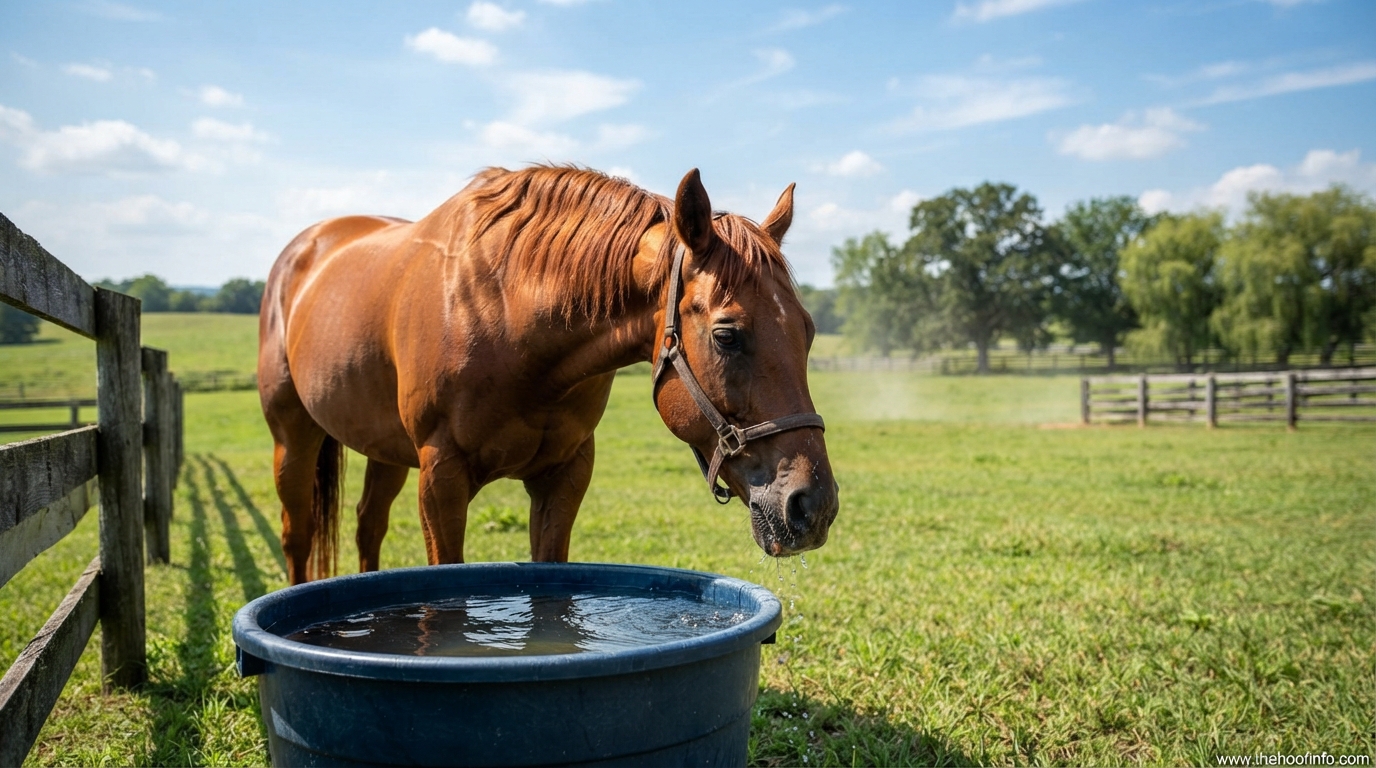
Dehydration in Horses: Signs, Causes, Treatment & Prevention
A dehydrated horse can go from appearing slightly tired to developing a serious medical emergency faster than many horse owners realize. Whether your horse has been working in hot summer weather, traveling long distances, recovering from illness, or simply not drinking enough water, dehydration can affect every major body system.
One of the most common questions horse owners ask is, “What does a dehydrated horse look like?” Others want to know what causes dehydration in horses, how to treat it, how long it takes for a horse to become dehydrated, and whether dehydration can lead to colic. These are important questions because recognizing the early warning signs can prevent a minor problem from becoming life-threatening.
In many cases, the first symptoms are easy to miss. A horse may seem less energetic, produce dry manure, have tacky gums, or drink less water than usual. As dehydration becomes more severe, you may notice skin that doesn’t spring back quickly, sunken eyes, an increased heart rate, poor performance, or signs of heat stress. Left untreated, severe dehydration can contribute to impaction colic, kidney problems, heat stroke, shock, and even death.
The good news is that dehydration is often preventable with proper management. Providing constant access to clean water, monitoring your horse during hot weather, replacing electrolytes after heavy sweating, and recognizing the early signs can significantly reduce the risk.
In this comprehensive guide, you’ll learn:
- What dehydration in horses is
- Common causes and risk factors
- Early and advanced symptoms
- What dehydrated horse gums look like
- How to check if your horse is dehydrated
- How to treat dehydration safely
- Whether dehydration can cause colic
- How long it takes a horse to become dehydrated
- Prevention tips for every season
- When it’s time to call your veterinarian
By the end of this article, you’ll know how to recognize dehydration early, respond appropriately, and keep your horse healthy and well-hydrated throughout the year.
How Long Does It Take for a Horse to Become Dehydrated?
One of the most common questions horse owners ask is, “How long does it take for a horse to get dehydrated?” The answer depends on several factors, including the weather, workload, health status, and access to clean drinking water.
A healthy horse with unlimited access to fresh water can usually maintain proper hydration. However, during hot weather, strenuous exercise, or illness, dehydration can develop much more quickly than many people expect.
Factors That Affect How Quickly Dehydration Occurs
Several conditions influence how fast a horse loses body fluids:
- Air temperature and humidity
- Exercise intensity
- Sweat production
- Access to fresh water
- Electrolyte balance
- Age
- Overall health
- Illness such as diarrhea or fever
Typical Timeline
| Situation | How Quickly Dehydration Can Develop |
|---|---|
| Mild hot weather with water available | Usually prevented by regular drinking |
| Heavy exercise in summer | Within a few hours if water isn’t replaced |
| Long trailer ride without drinking | 4–8 hours |
| Diarrhea or severe illness | Several hours |
| Extreme heat with no water | Can become dangerous within a day |
Keep in mind that every horse is different. Some horses continue drinking well under stressful conditions, while others refuse water when traveling or competing.
What Does a Dehydrated Horse Look Like?
Recognizing the physical appearance of a dehydrated horse can help you act before the condition becomes severe.
A mildly dehydrated horse may simply appear tired or less interested in its surroundings. As dehydration progresses, the changes become much more noticeable.
Common Physical Signs
A dehydrated horse may have:
- Dull or sunken eyes
- Dry or sticky gums
- Dry muzzle
- Skin that remains tented after being pinched
- Reduced sweating despite hot weather
- Dark, concentrated urine
- Dry or firm manure
- Poor appetite
- Faster breathing
- Elevated heart rate
- Slow movement or reluctance to exercise
Many horses also appear quieter than usual. They may stand in one place with their head lowered instead of interacting with other horses or showing interest in food.
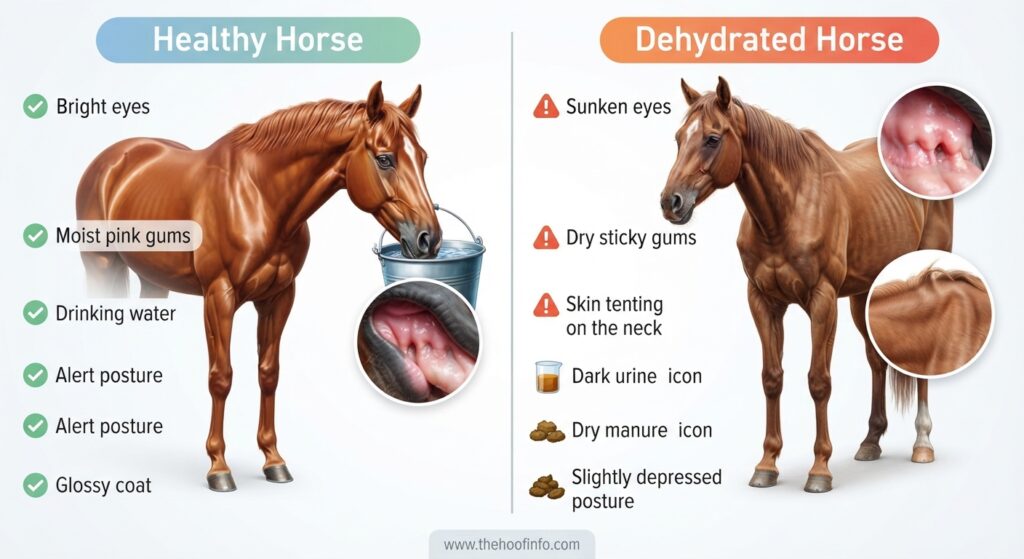
Dehydration Severity Chart
Not every dehydrated horse requires emergency treatment, but knowing the severity can help determine your next steps.
| Severity | Estimated Fluid Loss | Common Signs | Recommended Action |
|---|---|---|---|
| Mild | 3–5% | Slight skin tent, tacky gums, mild thirst | Encourage drinking, monitor closely |
| Moderate | 6–8% | Sunken eyes, dry gums, elevated heart rate, dark urine | Contact your veterinarian |
| Severe | 10% or more | Collapse, shock, severe weakness, colic | Emergency veterinary treatment immediately |
Important: This chart is only a general guide. Horses can deteriorate quickly, particularly in hot weather or during illness.
Can Dehydration Cause Colic in Horses?
Yes. Dehydration is one of the major risk factors for impaction colic, especially during hot weather and periods of heavy exercise.
When a horse loses too much water, the digestive tract also loses moisture. Feed material inside the intestines becomes drier and harder to move through the digestive system.
This increases the likelihood of an impaction, where feed becomes lodged in part of the intestine and blocks normal movement.
Why Dehydration Leads to Colic
When a horse is dehydrated:
- The large intestine absorbs more water from digested feed.
- Manure becomes dry and firm.
- Gut movement slows.
- Feed material becomes compacted.
- Pain develops as the blockage worsens.
This type of colic is common during:
- Heat waves
- Long-distance trail riding
- Extended transportation
- Winter when horses drink less
- Recovery after illness
Warning Signs of Colic
Contact your veterinarian immediately if your horse shows any of the following:
- Pawing at the ground
- Rolling repeatedly
- Looking at its flank
- Refusing feed
- Little or no manure production
- Sweating without exercise
- Repeatedly lying down and getting back up
Early treatment greatly improves the chances of a full recovery.
Heat Stress vs. Dehydration: What’s the Difference?
Heat stress and dehydration often occur together, but they are not exactly the same condition.
Heat stress occurs when a horse’s body produces more heat than it can eliminate.
Dehydration occurs when the horse loses more fluids than it replaces.
Because sweating is the horse’s primary cooling mechanism, prolonged sweating can quickly lead to dehydration.
| Heat Stress | Dehydration |
|---|---|
| High body temperature | Loss of body fluids |
| Heavy sweating | Dry or sticky gums |
| Rapid breathing | Skin tenting |
| Weakness | Sunken eyes |
| Increased heart rate | Dark urine |
| Can progress to heat stroke | Can contribute to colic |
A horse may experience both conditions simultaneously, making prompt cooling and hydration especially important.
How Veterinarians Diagnose Dehydration
Although horse owners can perform simple hydration checks at home, a veterinarian has additional tools to determine how severe dehydration is and identify any underlying illness.
A complete examination may include:
Physical Examination
Your veterinarian will assess:
- Heart rate
- Respiratory rate
- Body temperature
- Gum color
- Capillary refill time
- Skin elasticity
- Intestinal sounds
- Overall attitude
Blood Tests
Blood work provides valuable information about hydration status and organ function.
Common tests include:
- Packed Cell Volume (PCV)
- Total Protein (TP)
- Electrolyte levels
- Kidney values
- Blood lactate
- Complete blood count (CBC)
These tests help determine how much fluid has been lost and whether additional medical treatment is needed.
Monitoring Water Intake
If dehydration is related to an illness, your veterinarian may recommend measuring your horse’s daily water consumption to ensure it is drinking enough during recovery.
How to Treat Dehydration in Horses
The best treatment depends on how severely the horse is dehydrated and what caused the problem in the first place.
Mild Dehydration
If your horse is alert and willing to drink:
- Move it to a cool, shaded area.
- Offer unlimited clean, fresh water.
- Allow the horse to drink small amounts frequently.
- Provide access to salt or veterinarian-approved electrolytes if appropriate.
- Monitor appetite, manure production, and urination over the next several hours.
Never force a horse to drink if it is unwilling or showing signs of severe illness.
Moderate Dehydration
If the horse has sticky gums, noticeable skin tenting, reduced appetite, or elevated heart rate, contact your veterinarian promptly.
Treatment may include:
- Oral electrolyte solutions
- Nasogastric fluid administration
- Monitoring of vital signs
- Blood tests to assess electrolyte and hydration status
Severe Dehydration
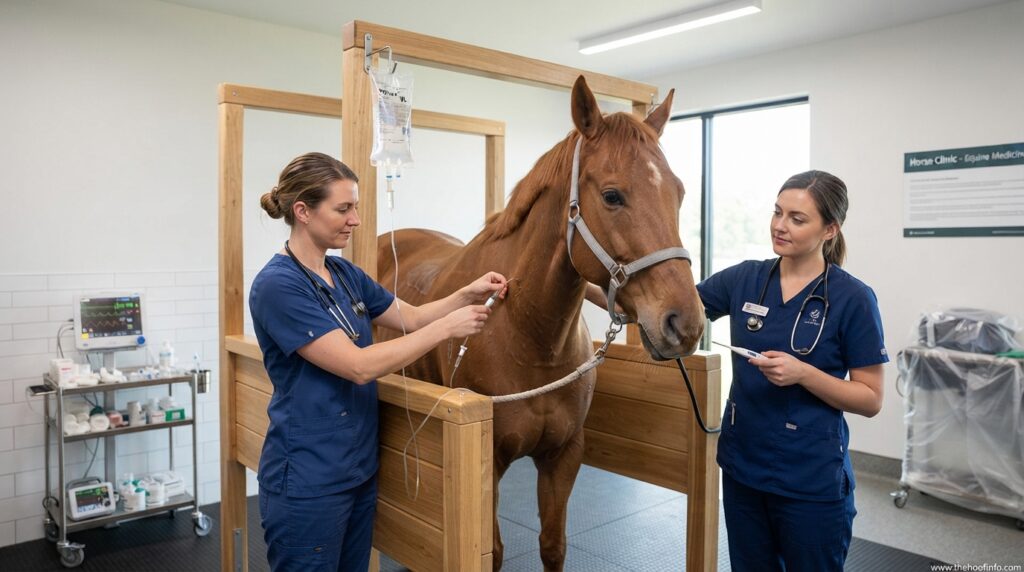
A horse that is weak, unable to stand, showing signs of shock, or experiencing severe colic requires emergency veterinary care.
In these cases, treatment often involves:
- Intravenous (IV) fluids
- Electrolyte replacement
- Cooling measures if heat stress is present
- Pain management
- Treatment of the underlying cause, such as infection or gastrointestinal disease
Delaying treatment can lead to serious complications affecting the kidneys, digestive system, and cardiovascular system.
Do Horses Always Need Electrolytes?
Electrolytes are minerals that help regulate fluid balance, nerve function, and muscle contractions. Every time a horse sweats, it loses not only water but also important electrolytes such as sodium, chloride, potassium, calcium, and magnesium.
For horses that spend most of their day in a pasture with minimal exercise, a balanced diet and free-choice salt are often enough to maintain normal electrolyte levels. However, horses that sweat heavily during work, travel, competitions, or extreme summer heat may benefit from additional electrolyte supplementation.
Important: Electrolytes should never replace water. A horse must always have unlimited access to fresh, clean drinking water before and after receiving an electrolyte supplement.
Horses That May Benefit from Electrolytes
Electrolyte supplementation is often useful for:
- Endurance horses
- Barrel racing horses
- Event horses
- Dressage horses in hot weather
- Horses working cattle
- Horses traveling long distances
- Horses sweating heavily during summer
Signs Your Horse May Need Electrolyte Support
Watch for:
- Heavy sweating
- Slow recovery after exercise
- Muscle fatigue
- Reduced performance
- Increased thirst
- Muscle twitching
- Mild cramping
Before introducing any supplement, consult your veterinarian or equine nutritionist, especially if your horse has kidney disease or another medical condition.
How Long Does Recovery Take?
Recovery depends on how severe the dehydration is and whether there is an underlying illness.
Mild Dehydration
Most horses improve within several hours after drinking water and resting in a cool environment.
Moderate Dehydration
Recovery often takes 12–24 hours, depending on the amount of fluid lost and whether electrolyte replacement is needed.
Severe Dehydration
If intravenous fluids are required, recovery may take one to several days. Horses recovering from heat stroke, severe colic, or infectious disease may require longer monitoring.
Do not return your horse to work until it is eating, drinking, and behaving normally and your veterinarian has approved exercise.
Summer Hydration Tips for Horse Owners
Summer is when dehydration is most likely to occur, particularly in many parts of the United States where high temperatures and humidity increase fluid loss.
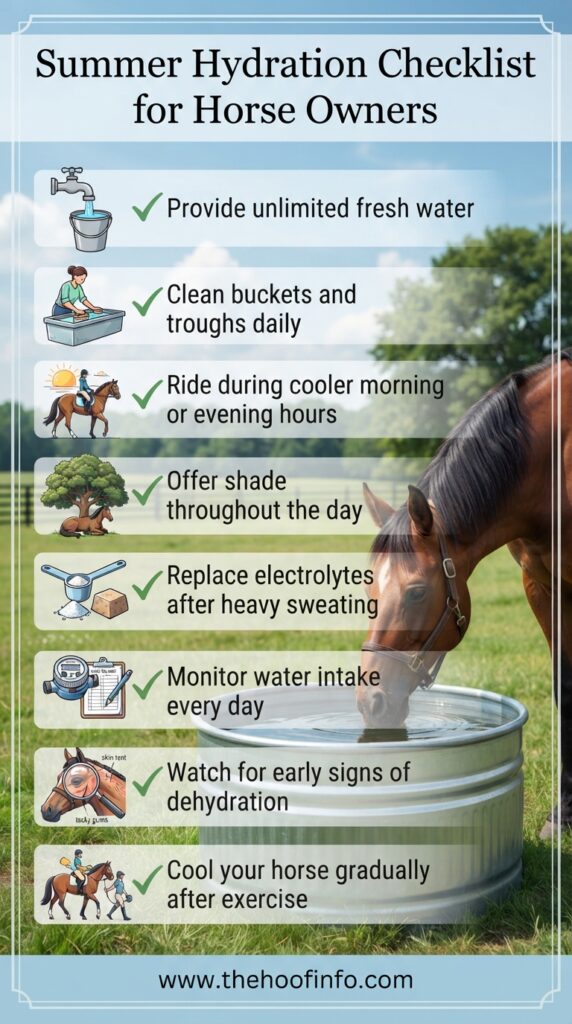
1. Provide Unlimited Fresh Water
Water buckets and troughs should always be full of clean, cool water. Check them several times a day, especially during hot weather.
2. Keep Water Cool
Many horses drink more when the water is cool rather than warm. Position troughs in shaded areas whenever possible.
3. Offer Shade
Shade helps reduce body temperature and lowers the amount of sweating.
Natural trees, run-in sheds, or shelters all provide valuable protection.
4. Ride During Cooler Hours
Whenever possible, schedule exercise:
- Early morning
- Late evening
Avoid intense work during the hottest part of the day.
5. Monitor Sweating
Excessive sweating may indicate significant fluid loss.
Conversely, a horse that suddenly stops sweating despite being hot may be experiencing a medical emergency and should be evaluated immediately.
6. Replace Fluids After Exercise
Allow your horse to cool down gradually.
Offer fresh water before, during, and after exercise rather than waiting until the horse returns to the barn.
Winter Hydration Is Just as Important
Many owners associate dehydration with summer, but winter dehydration is surprisingly common.
Cold weather often causes horses to drink less water, increasing the risk of impaction colic.
Why Horses Drink Less During Winter
Several factors contribute:
- Cold water
- Frozen buckets
- Ice-covered troughs
- Reduced thirst response
Tips to Encourage Drinking
- Break ice several times daily.
- Use heated buckets when appropriate.
- Provide clean water at a comfortable temperature.
- Monitor water consumption every day.
Keeping water available during winter is one of the simplest ways to reduce the risk of dehydration-related colic.
How to Check a Horse for Dehydration
Skin Pinch Test
The skin pinch test, also called the skin tent test, is one of the quickest ways to check your horse for dehydration at home. It measures skin elasticity, which decreases as the body loses fluids.
To perform the test, gently pinch a fold of skin on your horse’s neck or shoulder, then release it. In a well-hydrated horse, the skin should flatten back into place almost immediately.
How to Interpret the Results
- Less than 2 seconds: Usually indicates normal hydration.
- 2–3 seconds: May suggest mild dehydration.
- More than 3 seconds: Could indicate moderate to severe dehydration and should be evaluated by a veterinarian.
While this test is useful, it should not be used by itself. Older horses naturally have less elastic skin, and certain health conditions can affect the results. Always combine the skin pinch test with other hydration checks, such as examining the gums and capillary refill time.
Gum Moisture Test
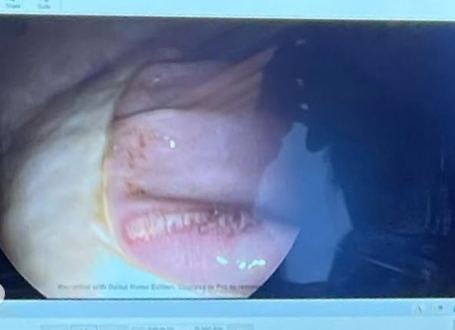
Checking your horse’s gums is another simple way to assess hydration. Healthy gums should be pink, smooth, moist, and slippery to the touch.
To perform the test, gently lift your horse’s upper lip and lightly touch the gums with a clean finger.
What the Results Mean
- Moist, shiny gums: Usually indicate good hydration.
- Slightly sticky gums: May be an early sign of dehydration.
- Very dry or tacky gums: Often indicate moderate to severe dehydration and require prompt attention.
Also observe the gum color. Pale, dark red, or bluish gums may signal poor circulation or another medical emergency that requires immediate veterinary care.
Capillary Refill Time (CRT)
The Capillary Refill Time (CRT) test evaluates how quickly blood returns to the gums after gentle pressure is applied. It provides useful information about your horse’s circulation and hydration status.
To perform the test, press your thumb firmly against your horse’s gums for about 2 seconds until the area turns white. Release the pressure and count how long it takes for the pink color to return.
Normal CRT Values
- 1-2 seconds: Normal blood circulation and hydration.
- More than 2 seconds: May indicate dehydration, poor circulation, or shock.
A delayed capillary refill time should never be ignored, particularly if it occurs alongside other signs such as sticky gums, skin tenting, lethargy, elevated heart rate, or colic symptoms. In these situations, contact your veterinarian as soon as possible.
Tip: No single test can accurately diagnose dehydration. For the most reliable assessment, evaluate your horse’s water intake, gum moisture, skin elasticity, capillary refill time, behavior, and overall condition together. If you’re uncertain about the results or your horse appears unwell, seek veterinary advice promptly.
Quick Dehydration Decision Guide
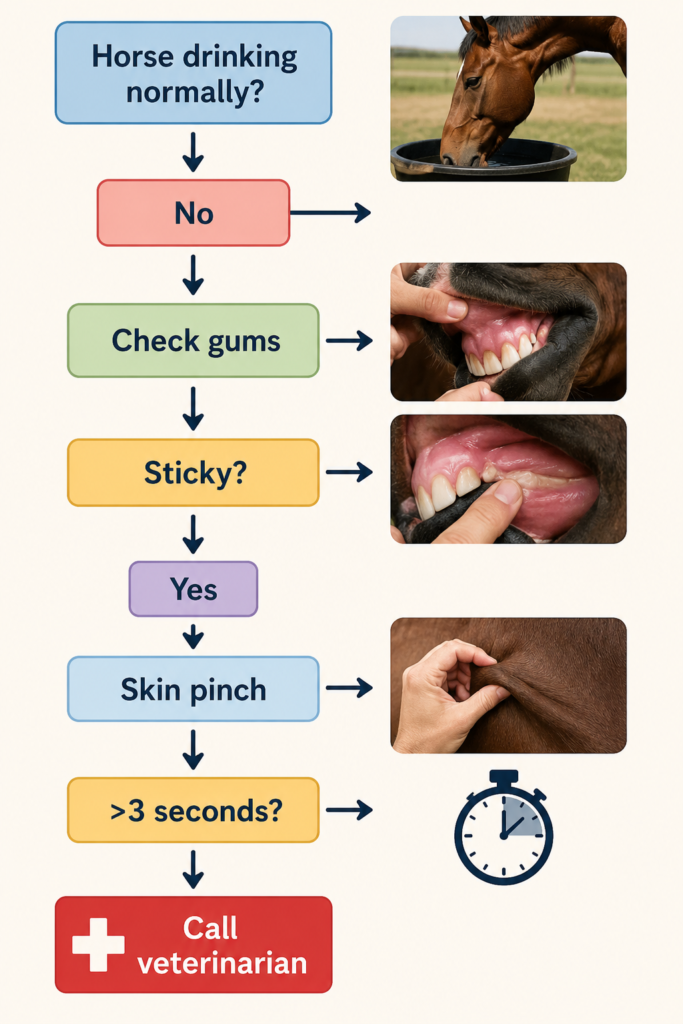
If you’re unsure whether your horse is simply thirsty or showing signs of dehydration, this quick flowchart can help you decide what to do next. It walks you through three simple checks that many horse owners can perform at home: observing whether your horse is drinking normally, checking the moisture of the gums, and performing the skin pinch test.
These checks can help identify early warning signs of dehydration, but they should never replace a professional veterinary examination. Some horses-especially senior horses or those with underlying health conditions-may not show obvious symptoms until dehydration has become more serious.
If your horse has sticky or dry gums, the skin remains tented for more than three seconds, or your horse appears weak, depressed, or refuses to drink water, contact your veterinarian as soon as possible. Early treatment can prevent dehydration from progressing to more serious complications such as impaction colic, heat stress, kidney damage, or shock.
Use the decision guide below as a quick reference whenever you suspect your horse may be dehydrated.
Remember: This flowchart is intended for educational purposes only. If your horse is showing severe signs such as collapse, persistent colic, difficulty standing, or extreme weakness, seek emergency veterinary care immediately without relying solely on this guide.
Preventing Dehydration in Horses
Preventing dehydration is far easier than treating it.
Developing good daily management habits helps keep horses healthy throughout the year.
Daily Prevention Checklist
✔ Provide unlimited fresh water.
✔ Clean buckets and troughs regularly.
✔ Check automatic waterers daily.
✔ Supply free-choice salt unless otherwise directed by your veterinarian.
✔ Monitor water intake during hot weather.
✔ Allow rest breaks during exercise.
✔ Cool horses gradually after work.
✔ Replace electrolytes when recommended.
✔ Watch for changes in appetite, manure, and behavior.
✔ Schedule regular veterinary examinations.
Small daily habits often prevent major health emergencies.
Common Mistakes Horse Owners Make
Even experienced horse owners occasionally overlook early signs of dehydration.
Avoid these common mistakes:
Waiting Until the Horse Looks Sick
By the time obvious symptoms appear, dehydration may already be moderate or severe.
Assuming Every Horse Drinks Enough
Some horses naturally drink less, especially while traveling or competing.
Forgetting to Check Water Sources
Dirty buckets, algae growth, broken waterers, or frozen troughs can all reduce water intake.
Overworking Horses During Extreme Heat
Plan exercise around cooler parts of the day whenever possible.
Ignoring Mild Colic Signs
Even mild colic may be related to dehydration and should never be dismissed.
When Should You Call a Veterinarian?
Seek veterinary attention immediately if your horse:
- Refuses water for several hours
- Has severe skin tenting
- Shows dark or brick-red gums
- Produces very little urine
- Has persistent diarrhea
- Develops a fever
- Experiences repeated colic signs
- Collapses or becomes unable to stand
- Stops sweating during hot weather
- Appears confused or extremely weak
Prompt treatment can be lifesaving.
Practical Experience
One of the simplest habits I’ve found helpful is checking every horse’s water source several times a day instead of only during feeding. During hot weather, buckets can empty much faster than expected, and some horses are surprisingly sensitive to dirty or warm water. I’ve also noticed that monitoring manure consistency and daily water intake often reveals hydration problems before more obvious clinical signs appear. While these routine checks don’t replace veterinary care, they can help owners identify dehydration early and seek treatment before it becomes an emergency.
Frequently Asked Questions
Can a dehydrated horse recover without a veterinarian?
Mild dehydration may improve with rest, fresh water, and close monitoring. However, horses showing moderate or severe dehydration should always be examined by a veterinarian.
How can I tell if my horse is dehydrated?
Common signs include sticky gums, skin tenting, sunken eyes, dark urine, reduced appetite, decreased performance, and lethargy.
Can dehydration cause colic?
Yes. Dehydration can lead to impaction colic by reducing moisture in the digestive tract and slowing gut movement.
How much water should a horse drink every day?
Most adult horses drink between 5 and 10 gallons (19–38 liters) daily, but this amount increases significantly during hot weather, heavy exercise, pregnancy, or lactation.
Is it normal for horses to drink less during winter?
Yes. Many horses drink less during cold weather, which is why owners should monitor water intake carefully and prevent buckets or troughs from freezing.
Should I give electrolytes every day?
Not necessarily. Horses with light workloads often meet their needs through a balanced diet and free-choice salt. Horses that sweat heavily may benefit from electrolyte supplementation under veterinary guidance.
Can horses drink too much water after exercise?
Most healthy horses can safely drink after exercise. Current veterinary recommendations generally encourage allowing access to fresh water rather than restricting it. Extremely exhausted horses should still be cooled and monitored appropriately.
Does dehydration affect performance?
Yes. Even mild dehydration can reduce stamina, slow recovery, impair muscle function, and decrease athletic performance.
Are senior horses more likely to become dehydrated?
Yes. Older horses may drink less because of dental problems, chronic disease, or a reduced thirst response, making regular monitoring especially important.
How can I prevent dehydration while traveling?
Offer water frequently during long trips, schedule rest breaks, avoid traveling during the hottest part of the day when possible, and monitor your horse closely for signs of dehydration.
Summary:-
Dehydration in horses is one of the most common-and most preventable-health problems horse owners face. Whether your horse is enjoying a quiet day in the pasture, traveling to a competition, or working hard during the summer, maintaining proper hydration is essential for digestion, muscle function, circulation, temperature regulation, and overall well-being.
The key is to recognize the early warning signs before they become emergencies. Monitoring your horse’s water intake, checking gum moisture, observing manure consistency, and ensuring constant access to clean, fresh water can go a long way toward preventing serious complications such as impaction colic, heat stress, and kidney problems.
When in doubt, don’t wait. If your horse shows signs of moderate or severe dehydration, contact your veterinarian promptly. Early intervention often leads to a faster recovery and can prevent life-threatening complications.
By making hydration part of your daily horse care routine, you’ll help keep your horse healthier, more comfortable, and ready to perform throughout every season.
Related Articles You May Also Like
To learn more about keeping your horse healthy, read these guides:
- Heat Stress in Horses: Signs, Treatment & Prevention
- Summer Horse Care Checklist for U.S. Horse Owners
- What Causes Colic in Horses?
- Best Horse Electrolytes for Hot Weather
- How Much Water Should a Horse Drink Each Day?
- Signs Your Horse Needs Veterinary Care Immediately
- Your Horse Isn’t Lazy – It Might Be Showing Pain








Leave a comment