

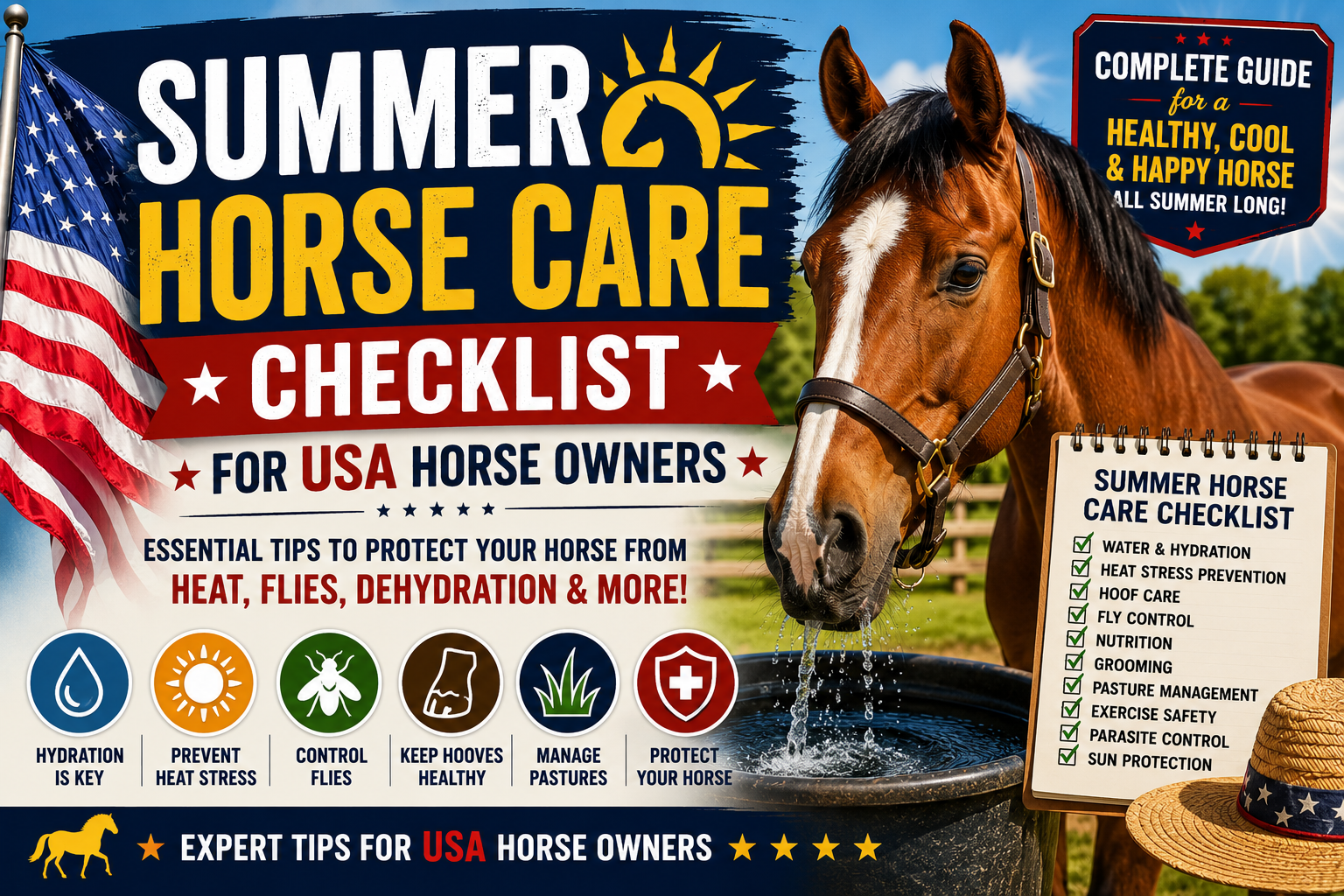
10 Essential Summer Horse Care Checklist USA Horse Owners
Summer is one of the best seasons to enjoy riding, trail adventures, and spending more time with your horse. However, it also brings unique challenges that every horse owner should prepare for. High temperatures, humidity, insects, dry pastures, and changing hoof conditions can quickly affect your horse’s health if proper care isn’t taken.
In many parts of the United States, summer temperatures regularly climb above 90°F (32°C). During heat waves, horses can become dehydrated, develop heat stress, suffer from painful sunburn, or experience hoof problems caused by extremely dry or constantly wet ground.
In my experience, most summer health issues can be prevented with a consistent daily routine. A few simple management practices can help your horse stay comfortable, healthy, and ready to perform throughout the season.
This complete summer horse care checklist covers the essential steps every horse owner should follow to keep horses safe during the hottest months of the year.
Why Summer Horse Care checklist usa Is So Important
Unlike humans, horses generate a tremendous amount of body heat during exercise. They rely heavily on sweating to cool themselves. When temperatures and humidity rise, it becomes much harder for the body to release excess heat.
Without proper management, horses may experience:
- Heat stress
- Dehydration
- Heat exhaustion
- Fly irritation
- Hoof cracks
- Thrush
- White line disease
- Sunburn
- Weight loss
- Reduced performance
A proactive approach helps prevent these problems before they become serious.
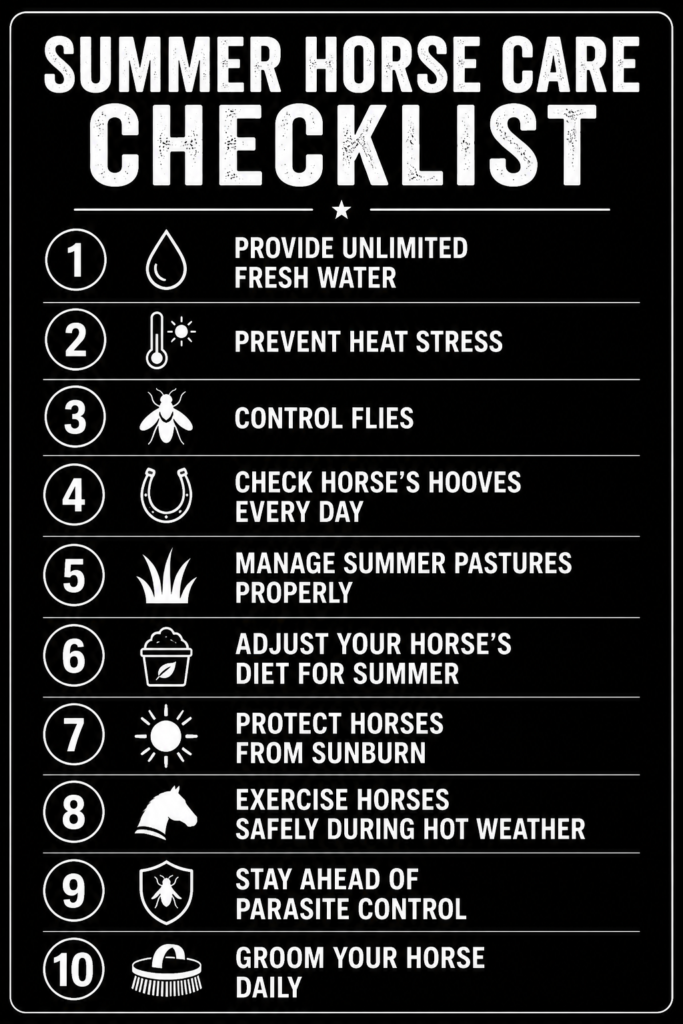
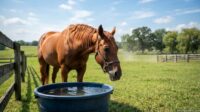
1. Provide Unlimited Fresh Water
Water is the most important part of summer horse care.
An average horse may drink 10 to 20 gallons (38-76 liters) of water per day during hot weather, and even more after exercise.
To encourage proper hydration:
- Refill water troughs daily.
- Keep buckets clean.
- Place water in shaded areas whenever possible.
- Check automatic waterers regularly.
- Offer fresh water immediately after exercise.
Watch for signs of dehydration, including:
- Dry gums
- Sunken eyes
- Reduced skin elasticity
- Dark urine
- Lethargy
A dehydrated horse is at greater risk of colic, muscle problems, and heat stress.
2. Protect Your Horse from Heat Stress
Heat stress can develop surprisingly quickly, especially during intense exercise or periods of high humidity.
Signs of heat stress include:
- Rapid breathing
- Heavy sweating-or no sweating at all
- Increased heart rate
- Weakness
- Stumbling
- Depression
- Reluctance to move
To reduce the risk:
- Ride early in the morning or late in the evening.
- Avoid strenuous work during the hottest part of the day.
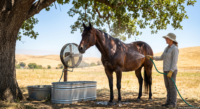
- Provide plenty of shade.
- Cool your horse with water after exercise.
- Allow adequate recovery time before returning to work.
If your horse shows signs of heat stress, move it to a shaded area immediately, begin cooling with water, and contact your veterinarian if symptoms do not improve quickly.
3. Keep Flies Under Control
Summer also means fly season across much of the United States.
Flies don’t just annoy horses-they can spread disease, cause skin irritation, and make horses reluctant to eat or relax.
A complete fly-control program should include:
- Fly masks
- Fly sheets
- Fly spray
- Regular manure removal
- Clean water troughs
- Fly traps around barns
Reducing fly breeding areas is often more effective than relying on fly spray alone.
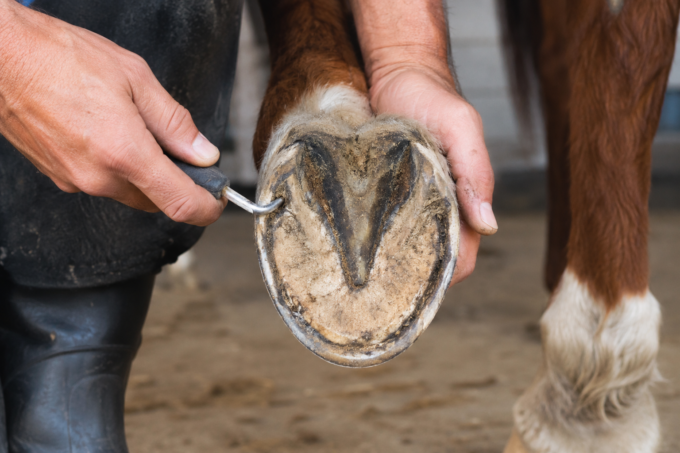
4. Inspect Hooves Every Day
Summer weather can be tough on horse hooves.
Hot, dry conditions may cause brittle hoof walls and cracks, while wet paddocks increase the risk of thrush and white line disease.
Daily hoof care should include:
- Picking out each hoof.
- Checking for stones or debris.
- Looking for cracks or chips.
- Smelling for signs of thrush.
- Watching for loose shoes or soreness.
Regular hoof inspections allow you to catch small problems before they become major issues.
5. Manage Summer Pastures Carefully
Summer pasture conditions can change quickly, especially during periods of drought or extreme heat.
As grass becomes dry and less nutritious, horses may not receive enough calories, vitamins, and minerals from grazing alone.
Walk your pasture regularly and check for:
- Dry or overgrazed grass
- Toxic weeds
- Uneven ground
- Sharp objects
- Muddy areas around water sources
If pasture quality declines, supplement your horse’s diet with good-quality hay and consult your veterinarian about nutritional needs.
Rotating pastures also helps maintain healthy grass while reducing parasite exposure.
6. Adjust Your Horse’s Diet During Summer
Many horses require dietary adjustments during hot weather.
Sweating causes horses to lose important electrolytes, including sodium, potassium, and chloride. Horses working regularly or sweating heavily may benefit from an electrolyte supplement recommended by your veterinarian.
Good summer feeding practices include:
- Provide high-quality forage.
- Feed smaller meals during the cooler parts of the day.
- Ensure constant access to clean water.
- Maintain a balanced vitamin and mineral program.
- Monitor body condition regularly.
Watch for unexpected weight loss during the summer, especially in senior horses or horses working several days each week.
7. Protect Horses from Sunburn
Sunburn isn’t just a human problem.
Horses with pink skin, white facial markings, or light-colored noses are particularly vulnerable to ultraviolet (UV) damage.
Common areas affected include:
- Nose
- Eyelids
- Muzzle
- White legs
To reduce the risk:
- Provide shade in turnout areas.
- Use a UV-protective fly mask.
- Apply horse-safe sunscreen to exposed skin.
- Avoid turnout during the hottest part of the afternoon if your horse is especially sensitive.
Repeated sunburn can lead to painful skin irritation and long-term damage.
8. Exercise Smart During Hot Weather
Summer doesn’t mean you have to stop riding, but it does mean you should train more carefully.
Consider these tips:
- Ride early in the morning.
- Choose shaded trails whenever possible.
- Take frequent water breaks.
- Allow plenty of cool-down time.
- Hose your horse with cool water after exercise.
- Monitor breathing and heart rate during recovery.
Avoid intense training sessions when temperatures and humidity are both high, as these conditions significantly increase the risk of heat-related illness.
9. Stay Ahead of Parasites
Warm weather creates ideal conditions for internal and external parasites.
Work with your veterinarian to develop a parasite control program based on fecal egg counts rather than routine deworming alone.
Summer parasite management should include:
- Removing manure from paddocks.
- Rotating grazing areas.
- Keeping feed off the ground.
- Following a veterinarian-recommended deworming schedule.
- Controlling flies around barns and manure piles.
Good pasture hygiene helps reduce parasite pressure throughout the season.
10. Groom Your Horse Daily
Daily grooming does more than keep your horse looking good.
It allows you to check for:
- Cuts
- Swelling
- Tick bites
- Skin infections
- Fly bites
- Heat rashes
- Hoof problems
Brushing also removes dirt and sweat that can trap heat against the skin.
Pay special attention to the girth area, under the saddle, and around the legs, where sweat and dirt commonly accumulate during summer rides.
Keep a Summer Horse First Aid Kit Ready
Every horse owner should have a well-stocked first aid kit during summer.
Essential supplies include:
- Digital thermometer
- Gauze pads
- Bandages
- Antiseptic solution
- Hoof pick
- Electrolytes
- Fly spray
- Horse-safe sunscreen
- Saline solution
- Vet wrap
- Disposable gloves
Having these items readily available allows you to respond quickly to minor injuries until professional care is available.
Best Summer Horse Care Products (Affiliate Section)
The right products can make summer management easier while improving your horse’s comfort.
Electrolyte Supplements
Electrolyte supplements help replace minerals lost through sweating and support proper hydration during hot weather.
Fly Masks
A quality fly mask protects your horse’s eyes from flies while reducing UV exposure.
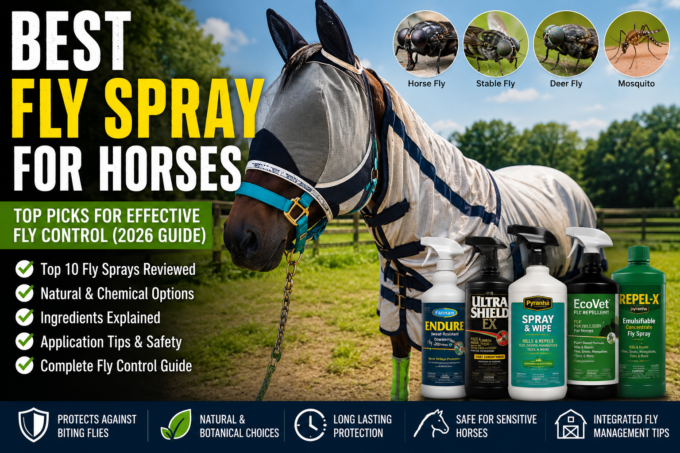
Fly Spray
Long-lasting fly sprays help reduce irritation from flies, mosquitoes, and gnats.
Hoof Conditioner
Dry summer weather can make hooves brittle. A hoof conditioner may help maintain proper moisture balance when used as part of a complete hoof care routine.
Automatic Waterers
Automatic waterers ensure horses always have access to fresh drinking water while reducing daily maintenance.
Frequently Asked Questions
How much water does a horse drink during summer?
Most horses drink between 10 and 20 gallons of water per day, although horses working in hot weather may drink even more.
What temperature is too hot to ride a horse?
Temperature alone doesn’t tell the whole story. Heat, humidity, workload, and your horse’s fitness all matter. On very hot and humid days, it’s safest to ride during the early morning or evening and reduce exercise intensity.
How can I tell if my horse is dehydrated?
Signs include:
- Dry gums
- Slow skin pinch test
- Dark urine
- Lethargy
- Reduced appetite
- Poor performance
Should horses receive electrolytes every day?
Not always. Horses that sweat heavily or work regularly during summer may benefit from electrolyte supplementation, but it’s best to discuss your horse’s specific needs with your veterinarian.
In Short:-
Summer can be one of the most enjoyable seasons for horse owners, but it also places extra demands on your horse’s health. By following a simple daily checklist, you can greatly reduce the risk of heat stress, dehydration, hoof problems, flies, and other seasonal challenges.
Focus on the basics: provide clean water, maintain regular hoof care, adjust exercise to the weather, protect against insects and sun exposure, and monitor your horse closely each day. Small, consistent efforts can make a big difference in keeping your horse healthy, comfortable, and ready to enjoy the riding season.
The Following articles you May Read:
- Horse Hoof Care Essentials for New Owners
- Horse Thrush Treatment
- Horse Feeding Guide for Beginners
- Best Hoof Supplements for Horses
- How Do You Trim a Horse’s Hooves?
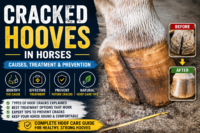
- Cracked Hooves in Horses: Causes, Treatment, Prevention & Expert Care Guide
- White Line Disease Treatment in Horses (Complete Guide from First Signs to Full Recovery)
- How to Trim Hooves for Laminitis Horses (Step-by-Step Guide for Safe Recovery)




Leave a comment