

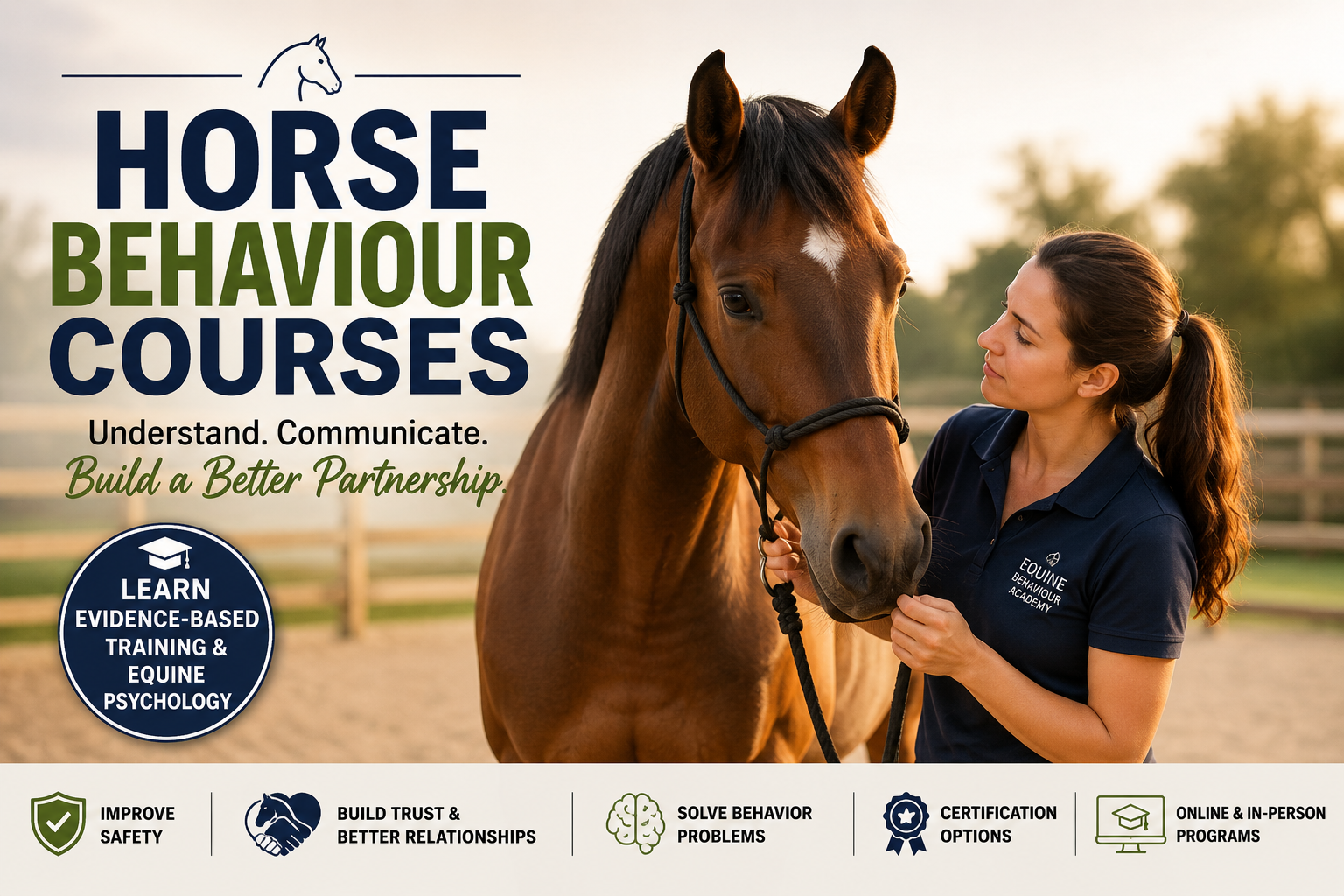
9 Powerful Benefits of Horse Behaviour Courses
Understanding horses goes far beyond learning how to ride. Every horse owner, trainer, rider, and equine professional eventually encounters behavioral challenges that can’t be solved with better tack, stronger aids, or more time in the saddle.
A horse that spooks at seemingly harmless objects, refuses to load into a trailer, becomes anxious when separated from companions, or reacts aggressively during handling is often communicating something important. The problem is that many people never learn how to interpret those signals correctly.
This is where horse behaviour courses can make a remarkable difference.
Over the last decade, horse behaviour education has become increasingly popular throughout the United States, Canada, the United Kingdom, and Australia. Modern courses combine equine science, psychology, welfare principles, and practical training techniques to help people understand how horses think, learn, and respond to their environment.
Whether you’re a first-time horse owner or an experienced equestrian looking to deepen your knowledge, horse behaviour courses can help improve safety, build trust, and create a better partnership with your horse.
What Are Horse Behaviour Courses?
Horse behaviour courses are educational programs that focus on understanding equine psychology, communication, learning theory, and welfare.
Unlike traditional riding lessons, these courses focus on why horses behave the way they do rather than simply teaching riding or handling techniques.
Most programs cover topics such as:
- Horse body language
- Herd dynamics
- Fear and stress responses
- Learning theory
- Behavioral problem-solving
- Welfare assessment
- Ethical training methods
- Safe horse handling
Some courses are designed for horse owners seeking practical knowledge, while others provide professional-level education for trainers, instructors, veterinary professionals, and aspiring equine behaviourists.

Why Horse Behaviour Courses Are Growing in Popularity
The horse industry has changed significantly over the last twenty years.
Owners today have greater access to scientific research and are becoming more interested in evidence-based training methods. Instead of viewing behavioral issues as disobedience, many horse owners now recognize that behavior is often influenced by fear, confusion, pain, environment, or previous experiences.
As a result, behavior-focused education has become one of the fastest-growing areas within equine learning.
Horse owners are increasingly enrolling in courses to:
- Improve safety
- Solve behavior problems
- Enhance horse welfare
- Strengthen horse-human relationships
- Advance professional careers
- Gain confidence around horses
What You’ll Learn in Horse Behaviour Courses
The exact curriculum varies between providers, but most reputable courses teach students how to understand horses from a behavioral perspective.
Reading Horse Body Language
Horses communicate constantly through subtle signals.
Students learn how to interpret:
- Ear positions
- Facial expressions
- Tail movement
- Muscle tension
- Posture changes
- Movement patterns
Recognizing these signs allows handlers to identify stress, discomfort, relaxation, curiosity, or fear before situations escalate.
Understanding Herd Behavior
Horses are social animals that evolved to live within structured groups.
Learning how herd dynamics influence behavior helps owners better understand:
- Leadership roles
- Social bonding
- Separation anxiety
- Resource guarding
- Group movement
Understanding Fear and Stress Responses
Many unwanted behaviors stem from fear rather than stubbornness.
Students learn how horses respond to:
- New environments
- Loud noises
- Sudden movement
- Transportation
- Veterinary procedures
- Isolation from herd mates
Learning Theory
Modern horse behaviour courses frequently cover:
- Positive reinforcement
- Negative reinforcement
- Habituation
- Desensitization
- Timing and consistency
Understanding how horses learn allows trainers to communicate more effectively and avoid common mistakes.
1. Improve Safety Around Horses
Safety is one of the biggest reasons people invest in horse behaviour education.
Many horse-related accidents occur because warning signs go unnoticed.
A horse rarely reacts without first displaying subtle indicators of stress or discomfort. The problem is that many handlers fail to recognize those signals.
Behavior courses teach students to identify:
- Anxiety
- Fear
- Frustration
- Aggression
- Overstimulation
- Pain-related behaviors
Recognizing these signs early can help prevent situations that may lead to kicking, biting, rearing, bolting, or other dangerous incidents.
For riders and handlers of all experience levels, this knowledge can significantly improve safety.
2. Build Better Relationships With Your Horse
Strong horse-human partnerships are built on trust and understanding.
When owners learn how horses process information and respond to situations, they become more effective communicators.
Instead of assuming a horse is being difficult, educated handlers learn to ask:
- Is the horse confused?
- Is the horse afraid?
- Is there physical discomfort involved?
- Has the horse understood the request?
This shift in mindset often transforms the relationship between horse and owner.
Many people report that behavior education helped them develop a deeper bond with their horses than years of riding alone ever did.
3. Solve Common Behavioral Problems
Horse behaviour courses provide practical strategies for addressing everyday behavioral challenges.
Spooking
Spooking is a natural survival response.
Courses teach students how to identify triggers, manage anxiety, and gradually improve a horse’s confidence through systematic training.
Trailer Loading Problems
Many horses resist trailer loading because of fear, previous negative experiences, or poor training methods.
Understanding equine learning principles can make trailer training safer and more successful.
Separation Anxiety
Horses often become distressed when separated from companions.
Behavior education helps owners understand why this occurs and how to reduce dependence in a safe, gradual manner.
Aggressive Behavior
Behaviors such as biting, kicking, charging, or pinning ears may result from pain, stress, fear, or learned responses.
Rather than simply correcting the behavior, students learn how to identify and address underlying causes.
4. Learn Modern Science-Based Training Methods
Horse training has evolved dramatically.
Many traditional approaches relied heavily on force, repetition, and dominance-based concepts.
Modern behavior courses focus on evidence-based methods supported by equine science.
Students learn how to:
- Create clear communication
- Reward desired behaviors
- Reduce confusion
- Improve learning speed
- Minimize stress
This approach benefits both horse welfare and training effectiveness.
5. Improve Horse Welfare
Many behavioral issues are linked to management practices rather than training problems.
Behavior courses teach owners how factors such as housing, feeding, turnout, social interaction, and exercise influence behavior.
Students learn to evaluate:
- Stable environments
- Feeding schedules
- Social opportunities
- Workload management
- Stress levels
A horse whose physical and emotional needs are met is generally calmer, healthier, and easier to train.
6. Gain Confidence Around Horses
Confidence often comes from understanding.
Many riders feel nervous because they are unsure how to interpret a horse’s reactions.
When people understand why horses behave the way they do, uncertainty decreases and confidence increases.
Students frequently report feeling more comfortable with:
- Ground handling
- Riding unfamiliar horses
- Managing stressful situations
- Introducing new experiences
- Problem-solving
This confidence often improves both safety and enjoyment.
7. Enhance Career Opportunities in the Equine Industry
Horse behaviour knowledge is becoming increasingly valuable across the equine sector.
Many employers now recognize that understanding equine behavior improves safety, welfare, customer satisfaction, and training outcomes.
Professionals who can benefit from horse behaviour courses include:
- Riding instructors
- Horse trainers
- Stable managers
- Veterinary technicians
- Equine therapists
- Farriers
- Rescue and rehabilitation workers
- Breeders
- Equine welfare officers
Even if you are not planning a full-time career with horses, behavior education can strengthen your credentials and help you stand out within the industry.
Can You Become a Certified Equine Behaviourist?
Yes, although certification pathways vary by country.
Most professional equine behaviourists combine:
- Formal education
- Practical horse experience
- Continuing education courses
- Case study work
- Mentorship from experienced professionals
Many professionals begin with short horse behaviour courses before progressing into advanced certificates, diplomas, or university-based equine science programs.
8. Understand Horse Welfare at a Deeper Level
Modern horsemanship places a strong emphasis on welfare.
Behavior is often one of the first indicators that something is wrong.
A horse may display unwanted behaviors because of:
- Poor saddle fit
- Dental discomfort
- Social isolation
- Inadequate turnout
- Nutritional imbalances
- Chronic stress
Horse behaviour courses teach owners how to look beyond the symptoms and consider the whole horse.
This welfare-focused approach often leads to healthier, happier horses and fewer behavioral problems.
9. Become a More Effective Horse Owner
Many horse owners spend years learning through trial and error.
Behavior education helps shorten that learning curve.
By understanding how horses think, communicate, and learn, owners can make better decisions in everyday situations.
This knowledge applies to:
- Training
- Feeding
- Handling
- Transportation
- Competition preparation
- Stable management
Ultimately, behavior education helps horse owners become more knowledgeable, confident, and effective caretakers.
Best Horse Behaviour Courses Available Today
There are numerous horse behaviour courses available online and in person.
Some focus on beginner education, while others provide professional-level qualifications.
Popular options include:
| Provider | Country | Delivery Method |
|---|---|---|
| Open College of Equine Studies | UK | Online |
| University of Guelph Equine Programs | Canada | Online & Campus |
| Equine Behaviour Forum Resources | UK | Workshops & Seminars |
| Equine Science Programs | USA | Online & In-Person |
| Independent Equine Behaviour Specialists | Australia | Online & Practical |
When comparing programs, look for evidence-based content, experienced instructors, and practical applications rather than marketing claims.
Horse Behaviour Course Costs
One of the most common questions horse owners ask is how much horse behaviour courses cost.
The answer depends on the level of education and certification offered.
| Course Type | Typical Cost |
|---|---|
| Introductory Online Course | $50–$200 |
| Certificate Program | $300–$1,500 |
| Professional Diploma | $1,500–$5,000 |
| University-Level Program | $5,000–$20,000+ |
Many online programs offer payment plans, making behavior education more accessible to horse owners.
Where Can You Study Horse Behaviour?
United States
The United States offers a wide range of equine science and behavior programs through universities, equestrian colleges, and private educational providers.
United Kingdom
The UK is widely recognized for evidence-based equine behavior education and offers several respected certification pathways.
Canada
Canadian horse owners can access university programs, online certifications, and continuing education courses focused on equine behavior and welfare.
Australia
Australia continues to expand its equine science sector, offering practical and online learning opportunities for horse enthusiasts and professionals.
Online vs In-Person Horse Behaviour Courses
Both formats have advantages.
| Feature | Online Courses | In-Person Courses |
|---|---|---|
| Cost | Lower | Higher |
| Flexibility | Excellent | Limited |
| Travel Required | No | Yes |
| Practical Experience | Limited | Extensive |
| Self-Paced Learning | Yes | Usually No |
| Networking Opportunities | Moderate | High |
Many students choose online learning first and later attend workshops or clinics to gain practical experience.
Real Success Story
Sarah, a recreational rider from Texas, struggled with a gelding that spooked frequently on trail rides.
Initially, she believed the horse was simply difficult and unpredictable.
After enrolling in a horse behaviour course, she learned to recognize subtle signs of anxiety long before the horse reacted.
Using gradual desensitization techniques and improved timing, she helped her horse become more confident in unfamiliar environments.
Within several months, trail rides became safer, calmer, and more enjoyable for both horse and rider.
Stories like this are common among horse owners who invest in behavior education.
What Equine Behaviour Experts Say
Many equine behavior specialists agree on one important point: most behavioral problems are communication problems.
Horses rarely misbehave without a reason.
Fear, confusion, discomfort, environmental stress, and inconsistent handling are often at the root of unwanted behaviors.
When owners learn to understand what their horses are communicating, training becomes clearer and welfare often improves.
This shift in perspective is one of the biggest benefits of behavior education.
What Should You Look for in a Horse Behaviour Course?
Not all courses provide the same quality of education.
Before enrolling, consider the following:
Instructor Credentials
Look for instructors with proven experience and recognized qualifications in equine behavior.
Science-Based Curriculum
Choose programs grounded in current equine research rather than outdated myths.
Practical Applications
The best courses provide real-world solutions you can use immediately.
Student Reviews
Feedback from previous students can reveal the strengths and weaknesses of a course.
Continuing Support
Some providers offer discussion groups, mentoring, webinars, or ongoing educational resources.
Is a Horse Behaviour Course Worth It?
For most horse owners, the answer is yes.
Behavior education can help improve:
- Safety
- Communication
- Training effectiveness
- Horse welfare
- Rider confidence
- Professional opportunities
Whether you own one horse or work with dozens, understanding behavior can make every interaction more productive and rewarding.
Frequently Asked Questions About Horse Behaviour Courses
Are horse behaviour courses suitable for beginners?
Yes. Many courses are specifically designed for beginners and require no previous experience.
How long do horse behaviour courses take?
Course length varies from a few hours for introductory programs to several months for advanced certifications.
Can horse behaviour courses help with problem horses?
Absolutely. Many courses focus on understanding and addressing common behavioral issues through science-based methods.
Do I need my own horse?
No. Many students complete behavior courses before purchasing or leasing a horse.
Are online horse behaviour courses effective?
Yes. High-quality online programs can provide excellent education, especially when combined with practical experience around horses.
How much do horse behaviour courses cost?
Most introductory courses range from $50 to $200, while advanced certifications and diplomas can cost several thousand dollars.
Can horse behaviour courses lead to a career?
Yes. Many people use behavior education as a stepping stone toward careers in training, instruction, welfare, rehabilitation, and consulting.
Best Horse Behavior books (Amazon)
In Short:-
Horse behaviour courses offer much more than theoretical knowledge. They provide practical skills that can improve safety, strengthen horse-human relationships, solve behavioral challenges, and enhance horse welfare.
As the equine industry continues to embrace science-based training and welfare practices, understanding horse behavior has become an essential skill rather than an optional extra.
Whether you’re a new horse owner, an experienced rider, a trainer, or someone considering a professional career with horses, investing in horse behaviour education can pay dividends for years to come.
The more you understand how horses think, learn, and communicate, the better equipped you’ll be to build trust, improve training outcomes, and create a safer, more rewarding partnership with your horse.
Horse Riding Lessons for Adults
Your Horse Isn’t Lazy – It Might Be Showing Pain













Leave a comment