

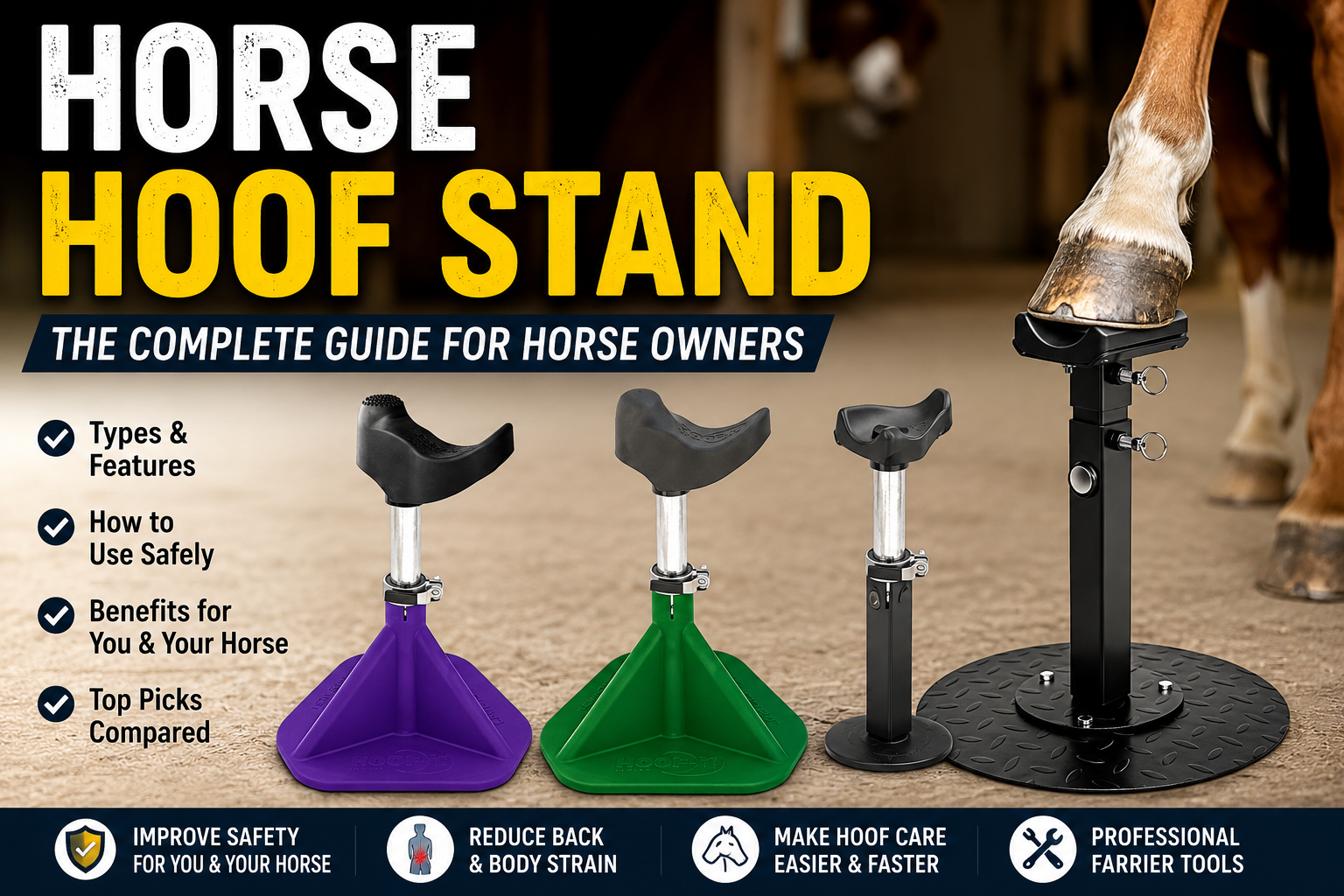
Horse Hoof Stand: Benefits, Types, How to Use One Safely
Working on a horse’s hooves can be physically demanding, especially if you’re holding a heavy hoof for several minutes while trimming or cleaning. That’s why many professional farriers and experienced horse owners rely on a horse hoof stand. It provides support for the horse’s leg, reduces strain on your back, and helps make hoof care safer and more comfortable.
Whether you’re trimming barefoot horses, cleaning hooves, or applying hoof treatments, a quality hoof stand can make a noticeable difference. It’s one of those tools many horse owners don’t realize they need until they use one for the first time.
In this guide, you’ll learn what a horse hoof stand is, how it works, the different types available, and how to choose the right one for your horse.
What Is a Horse Hoof Stand?
A horse hoof stand is a support tool designed to hold a horse’s hoof during trimming, rasping, shoeing, or routine hoof maintenance. Instead of supporting the horse’s leg with your own body, the hoof rests securely on the stand.
Most hoof stands have two working positions:
- A rubber cradle that supports the hoof during cleaning or trimming.
- A flat or angled support for rasping and finishing the hoof wall.
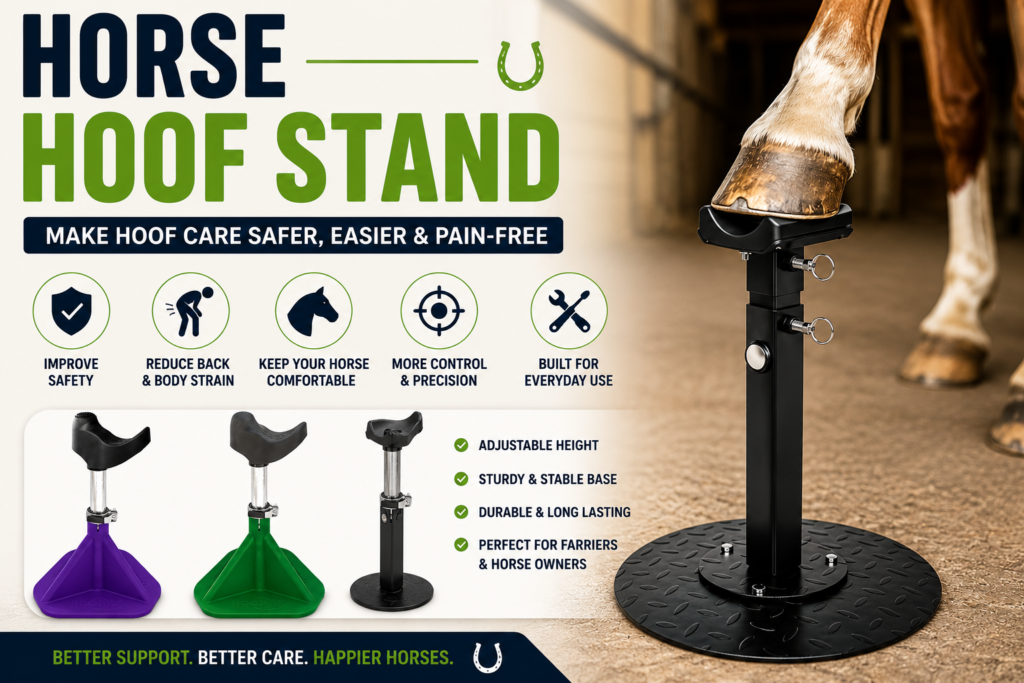
By supporting the horse’s weight, the stand reduces fatigue for both the horse and the person doing the work.
Professional farriers use hoof stands every day, but they are also becoming popular among horse owners who perform routine hoof maintenance between farrier visits.
Why Use a Horse Hoof Stand?
A hoof stand isn’t just a convenience-it can improve both safety and comfort.
Reduces Back Pain
One of the biggest challenges during hoof trimming is staying bent over for long periods. Supporting the hoof on a stand lets you work in a more natural position, reducing strain on your lower back, shoulders, and knees.
Keeps the Horse Comfortable
Many horses become restless if they’re asked to hold a leg up for too long. A hoof stand supports the leg, allowing the horse to relax while you work.
Older horses and horses recovering from injuries often tolerate hoof care much better when a stand is used.
Improves Stability
When the hoof is supported, your trimming or rasping becomes more controlled. This can lead to cleaner hoof work and fewer accidental slips.
Makes Hoof Care Safer
Supporting the hoof properly helps reduce sudden movements that could cause injury to either the horse or the handler.
Who Should Use a Horse Hoof Stand?
Many people assume hoof stands are only for professional farriers, but that’s no longer true.
A hoof stand can benefit:
- Horse owners who clean hooves regularly
- Barefoot horse owners
- Professional farriers
- Equine podiatrists
- Hoof trimmers
- Veterinary professionals
- Horse rescue organizations
- Riding schools
Even if your farrier trims your horse every six to eight weeks, having a hoof stand at home can make daily hoof cleaning easier.
Types of Horse Hoof Stands
Not every hoof stand is built the same. Choosing the right one depends on how often you’ll use it and the type of work you perform.
Standard Adjustable Hoof Stand
This is the most common design.
Features include:
- Adjustable height
- Rubber hoof cradle
- Flat rasp support
- Steel construction
- Non-slip base
These stands are suitable for both front and hind hooves and are ideal for most horse owners.
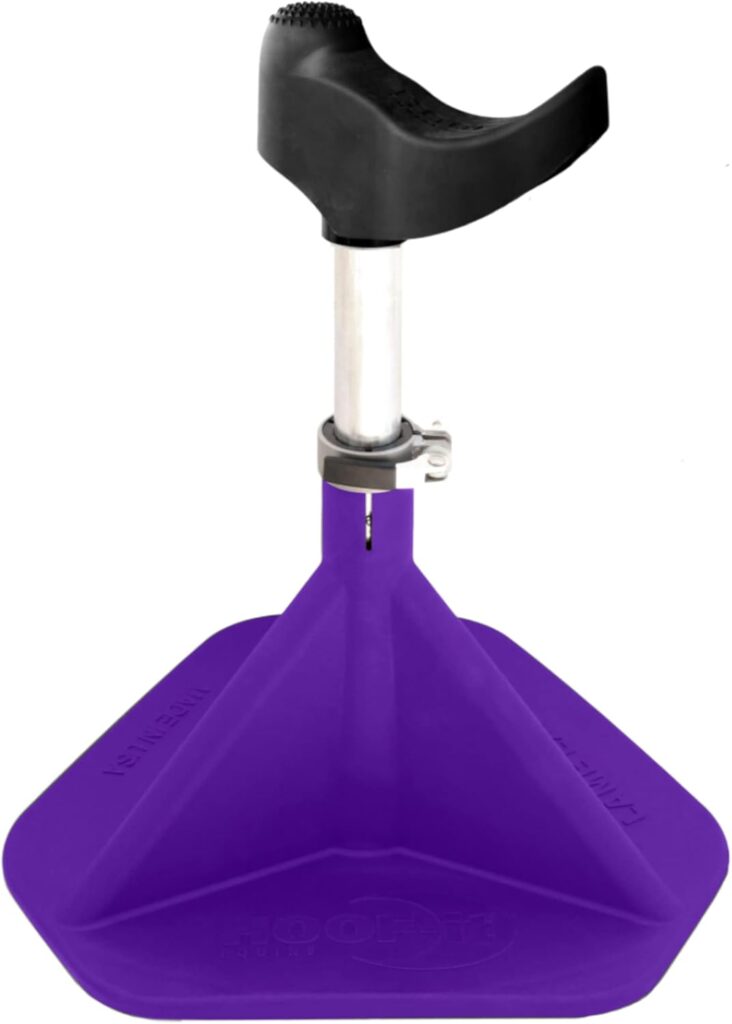
Hoof Jack Stand
A Hoof Jack-style stand combines several functions into one tool.
It typically includes:
- Adjustable height
- Replaceable rubber cradle
- Magnetic rasp holder
- Hoof support block
- Stable wide base
Many professional farriers prefer this design because it reduces setup time during trimming.
Mini Horse Hoof Stand
Miniature horses require smaller equipment.
Mini hoof stands feature:
- Lower working height
- Smaller cradle
- Lightweight construction
- Easy portability
Using a full-size stand on a miniature horse often creates awkward working angles.
Metal Hoof Stand
Heavy-duty steel hoof stands are designed for long-term professional use.
Advantages include:
- Excellent durability
- Greater stability
- Higher weight capacity
- Long service life
Although heavier to transport, they’re often the preferred choice for busy farriers.
How to Use a Horse Hoof Stand Safely
Using a hoof stand correctly helps protect both you and your horse.
Start by placing the stand on a flat, non-slip surface. Adjust the height before lifting the horse’s leg so the hoof naturally rests on the cradle without forcing the joint into an uncomfortable position.
When cleaning or trimming the sole, place the hoof in the rubber cradle. For rasping the hoof wall, switch to the flat support.
Stay beside the horse rather than directly behind it, and always watch for signs that the horse is becoming uncomfortable.
If the horse repeatedly pulls its foot away, take a short break rather than trying to force the leg to stay on the stand.
A calm horse will usually stand much better than one that feels rushed or uncomfortable.
Common Mistakes to Avoid
Even experienced horse owners occasionally misuse a hoof stand.
Some of the most common mistakes include:
- Setting the stand too high or too low
- Working on uneven ground
- Forcing the horse’s leg into an unnatural position
- Ignoring signs of discomfort
- Using damaged rubber cradles
- Allowing the stand to slide during trimming
Taking a few moments to position the stand correctly can make the entire hoof care session smoother and safer.
Is a Horse Hoof Stand Worth Buying?
For many horse owners, the answer is yes.
If you only pick out hooves occasionally, you may not need one right away. But if you regularly clean, trim, rasp, or maintain your horse’s feet, a hoof stand quickly becomes one of the most useful tools in your barn.
Beyond making hoof care easier, it also helps reduce physical strain, improves working posture, and provides better support for the horse.
Many owners find that after using a hoof stand once, they don’t want to go back to holding the hoof entirely by hand.
Horse Hoof Stand vs. Hoof Jack: What’s the Difference?
Many horse owners use the terms hoof stand and Hoof Jack interchangeably, but they’re not exactly the same.
A hoof stand is a general term for any tool that supports a horse’s hoof during trimming, rasping, or routine hoof care. A Hoof Jack is a specific style of hoof stand that combines multiple functions into one adjustable tool.
If you’re just starting out, understanding the differences can help you choose the right equipment.
| Feature | Standard Hoof Stand | Hoof Jack |
|---|---|---|
| Supports hoof | ✔ | ✔ |
| Adjustable height | Usually | ✔ |
| Rubber cradle | ✔ | ✔ |
| Rasp support | Some models | ✔ |
| Magnetic tool holder | ✖ | Many models |
| Professional use | Yes | Excellent |
| Beginner friendly | ✔ | ✔ |
A standard hoof stand works well for routine maintenance and is often more affordable. A Hoof Jack offers additional features that make trimming and rasping faster, especially if you’re working on multiple horses.
For most horse owners, either option is a significant improvement over supporting the hoof entirely by hand.
How to Choose the Best Horse Hoof Stand
Not every hoof stand fits every horse or every owner. Before buying one, consider how often you’ll use it and the type of hoof care you perform.
1. Adjustable Height
An adjustable stand is one of the most important features.
Different horses have different leg lengths, and you’ll also need different heights when working on front and hind feet.
Choose a model that adjusts easily without requiring complicated tools.
2. Stable Base
A hoof stand should remain steady even if the horse shifts its weight.
Look for:
- Wide base
- Non-slip rubber feet
- Heavy-duty construction
A stable stand helps prevent sudden slips that could startle the horse.
3. Durable Construction
Steel stands generally last longer than lightweight plastic models.
If you’re trimming horses regularly, invest in a stand made from powder-coated steel or another corrosion-resistant material.
4. Comfortable Rubber Cradle
The rubber cradle should securely support the hoof without damaging the hoof wall.
A high-quality cradle also reduces slipping during trimming.
5. Easy Portability
If you travel between barns, consider:
- Lightweight design
- Foldable construction
- Carry handle
- Compact storage
Mobile farriers often prioritize portability without sacrificing stability.
Best Horse Hoof Stand Features to Look For
When comparing models, prioritize these features:
- Adjustable height
- Heavy-duty steel frame
- Replaceable rubber cradle
- Flat rasp support
- Wide anti-slip base
- Rust-resistant coating
- Easy height adjustment
- Long warranty
Buying a quality stand usually costs less than replacing a cheap one every few years.
Can You Make a DIY Horse Hoof Stand?
Many horse owners search for homemade hoof stand ideas, especially if they only perform basic hoof maintenance.
While it’s possible to build a simple stand using wood or metal, homemade designs often lack the stability and safety of commercial models.
Some DIY builders use:
- Wooden posts
- Steel pipe
- Thick rubber pads
- Old trailer jack bases
- Heavy plywood platforms
Although these designs may work for light cleaning, they usually don’t provide the adjustability needed for trimming or rasping.
If you choose to build one yourself, ensure it is:
- Stable on uneven surfaces
- Strong enough to support weight
- Free from sharp edges
- Properly secured
Never compromise safety to save money.
Should You Buy a Used Horse Hoof Stand?
Buying a used hoof stand can save money, but inspect it carefully before purchasing.
Check for:
- Rust
- Bent metal
- Loose bolts
- Worn rubber cradle
- Cracked welds
- Missing adjustment pins
Replacing worn rubber parts is usually inexpensive, but structural damage can make the stand unsafe.
If you find a quality professional stand in good condition, it can provide many more years of reliable service.
Caring for Your Horse Hoof Stand
Like any farrier tool, a hoof stand lasts longer with regular maintenance.
After each use:
- Brush away hoof dirt and mud.
- Wipe off moisture.
- Tighten loose bolts.
- Inspect rubber supports for wear.
- Lubricate adjustment mechanisms if needed.
Store the stand indoors whenever possible to prevent rust and extend its lifespan.
Frequently Asked Questions
What is a farrier stand called?
A farrier stand is commonly called a horse hoof stand or hoof support stand. Some people also refer to premium adjustable models as a Hoof Jack, although Hoof Jack is a specific style rather than a generic name.
How do you make a homemade hoof stand?
A basic DIY hoof stand can be made using a sturdy wooden base, a vertical support, and a rubber cradle or padded top. However, homemade stands should be built with safety in mind and tested carefully before supporting a horse’s leg.
Why do horses stand with one hoof up?
Healthy horses often rest one hind leg while standing to relax their muscles and conserve energy. This is normal behavior. However, if a horse consistently refuses to bear weight on one foot or appears lame, it should be examined by a veterinarian or farrier.
Do beginners need a hoof stand?
Yes. A hoof stand can make routine hoof cleaning much easier for beginners by supporting the horse’s leg and reducing physical strain. It also encourages better posture and helps you work more safely.
Can one hoof stand be used for all horses?
Most adjustable hoof stands fit adult horses of various sizes. However, miniature horses, ponies, and draft breeds may benefit from stands specifically designed for their height and build.
Summary:-
A horse hoof stand is one of the most valuable tools for anyone involved in hoof care. Whether you’re an experienced farrier or a horse owner who simply wants to make routine maintenance easier, the right stand can improve comfort, safety, and the quality of your work.
Look for a stand with an adjustable height, a stable non-slip base, and durable construction. While DIY and used options can be practical in some situations, investing in a well-built hoof stand often pays off through years of reliable service.
Used correctly, a hoof stand helps protect your back, keeps the horse more comfortable, and allows you to work with greater control. It’s a simple piece of equipment that can make every hoof care session safer and more efficient.




Leave a comment