

Summer Sores in Horses: Causes, Symptoms, Treatment, and Prevention
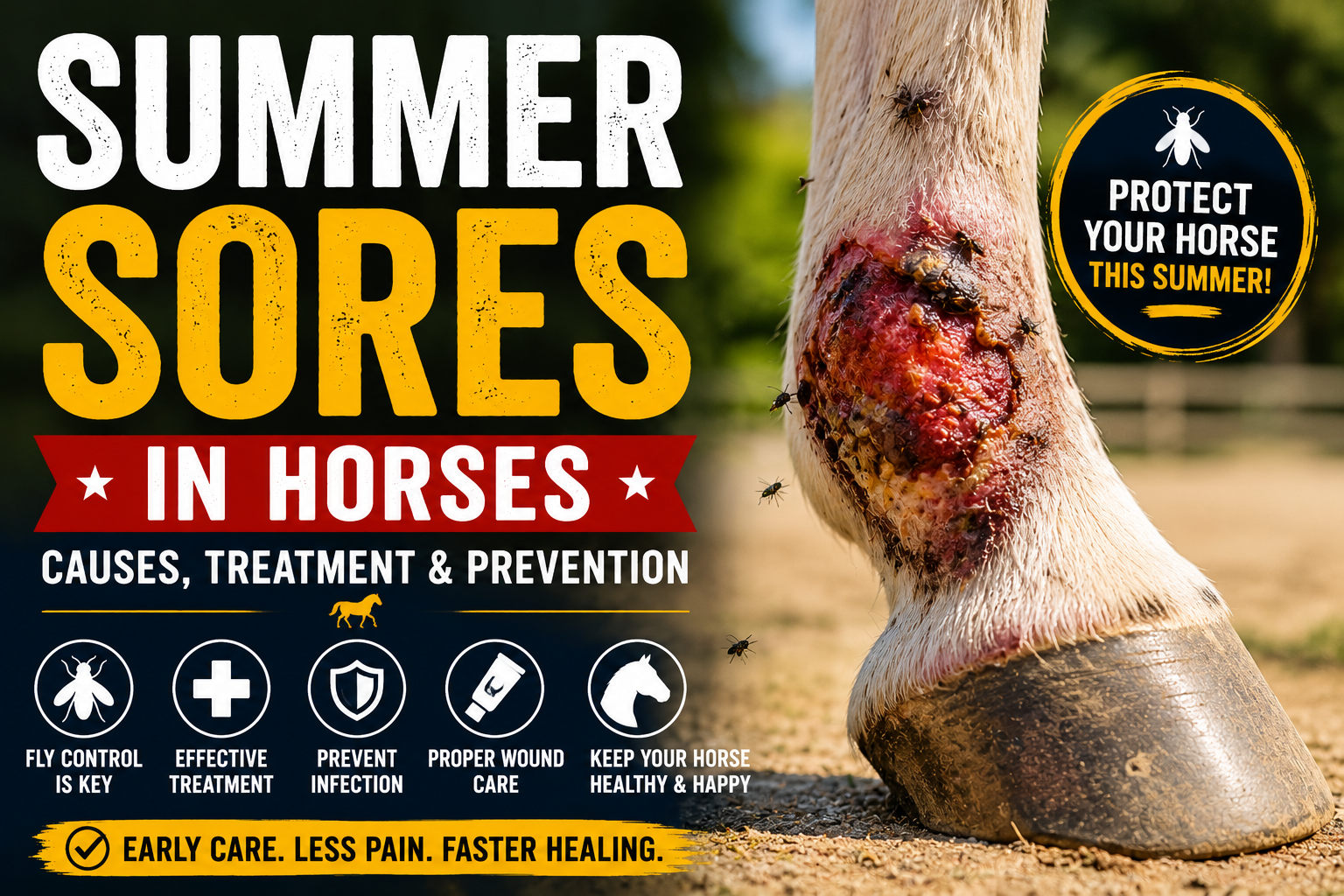
Summer is a favorite season for many horse owners, bringing longer riding days, greener pastures, and more time outdoors. Unfortunately, it also marks the beginning of fly season-and with it comes one of the most frustrating skin conditions horses can develop: summer sores in horses.
These sores are more than just ordinary wounds. They are caused by a combination of parasitic larvae and flies, creating painful, slow-healing lesions that can become larger if left untreated. Horses living in warm, humid regions of the United States are especially at risk during late spring, summer, and early fall.
In my experience, many horse owners mistake summer sores for simple cuts or infections. While they may look similar at first, summer sores require a different treatment approach because parasites play a major role in their development.
The good news is that early diagnosis, proper wound care, effective fly control, and veterinary treatment can successfully manage most cases.
This guide explains everything horse owners need to know about summer sores in horses, including what causes them, how to recognize the symptoms, the best treatment options, and practical ways to prevent them from returning.
What Are Summer Sores in Horses?
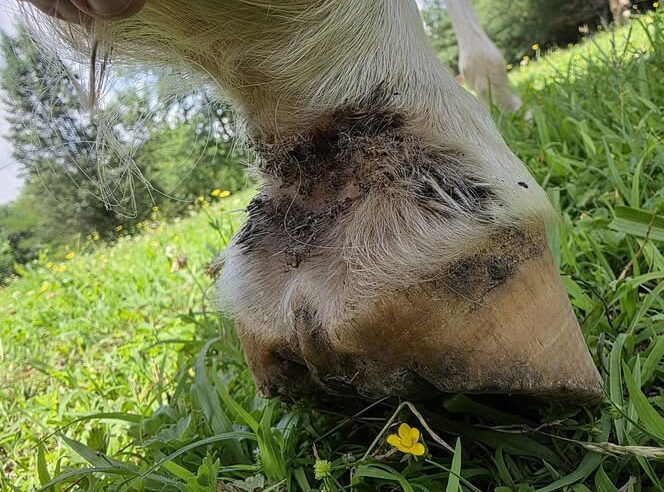
Summer sores, also known as cutaneous habronemiasis, are skin lesions caused by the larvae of stomach worms known as Habronema species.
Normally, adult Habronema worms live inside a horse’s stomach without causing significant problems. However, the trouble begins when flies carry the worm larvae and deposit them onto open wounds or moist areas of the horse’s skin.
Instead of completing their normal life cycle, the larvae become trapped in the skin. The horse’s immune system reacts aggressively, producing inflammation, excessive granulation tissue (commonly called “proud flesh”), and persistent sores that refuse to heal.
Unlike a typical cut or scrape, a summer sore often continues to enlarge throughout the fly season if it isn’t treated properly.
Why Are They Called Summer Sores?
The condition is called a summer sore because it occurs almost exclusively during warm weather when flies are most active.
Cases are most common from:
- Late spring
- Summer
- Early fall
In southern states with mild winters, some horses may experience problems for much longer periods due to year-round fly activity.
What Causes Summer Sores in Horses?
Understanding the life cycle helps explain why these sores are so difficult to control.
1. Stomach Worms
Adult Habronema worms live inside the horse’s stomach.
Most horses show no signs of illness from these parasites.
2. Fly Transmission
Stable flies and house flies feed on manure containing Habronema larvae.
The larvae attach to the flies as they develop.
3. Larvae Reach the Horse
When flies land on:
- Small cuts
- Surgical wounds
- Scratches
- Eyes
- Lips
- Sheath
- Legs
they deposit the larvae onto the skin.
4. The Body Reacts
Because the larvae cannot survive normally within the skin, the horse’s immune system launches an inflammatory response.
This reaction causes:
- Thickened skin
- Swelling
- Excessive granulation tissue
- Persistent drainage
- Slow healing
- Intense itching
The result is the painful lesion known as a summer sore.
Which Horses Are Most at Risk?
Although any horse can develop summer sores, certain factors increase the risk.
Higher-risk horses include:
- Horses living in warm climates
- Horses exposed to large numbers of flies
- Horses with untreated wounds
- Horses turned out near manure piles
- Horses with poor fly control
- Horses grazing near standing water
States such as Florida, Texas, Louisiana, Georgia, Alabama, Mississippi, South Carolina, and other warm southern regions report more cases because fly populations remain active for much of the year.
Common Symptoms of Summer Sores in Horses
Early recognition allows treatment to begin before the lesion becomes severe.
Watch for:
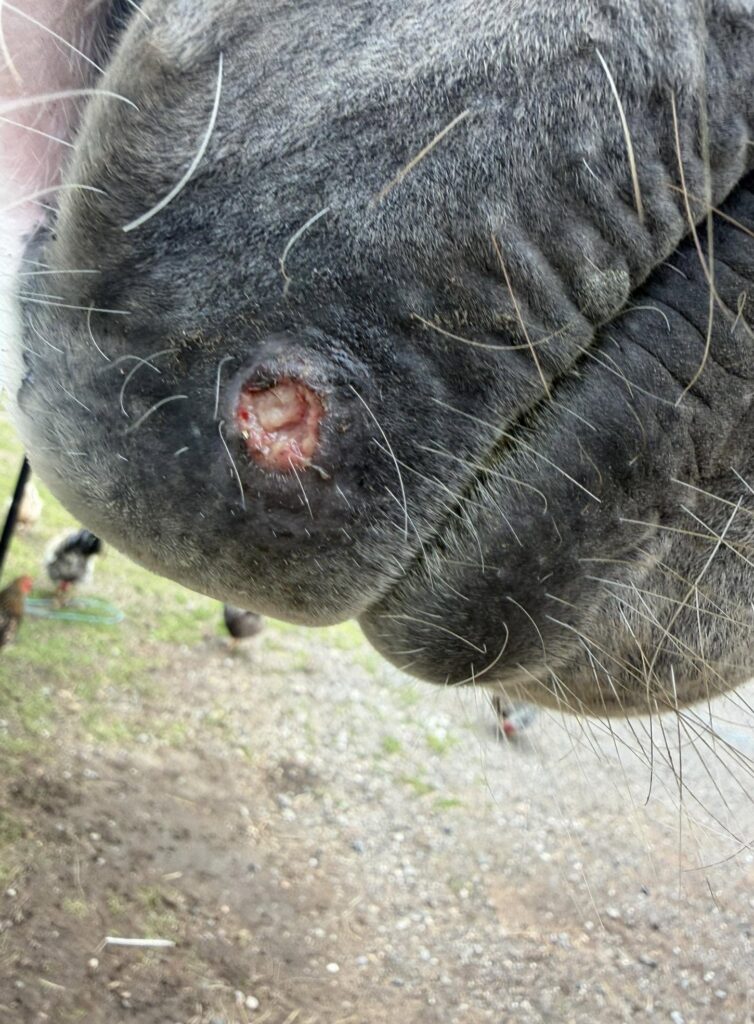
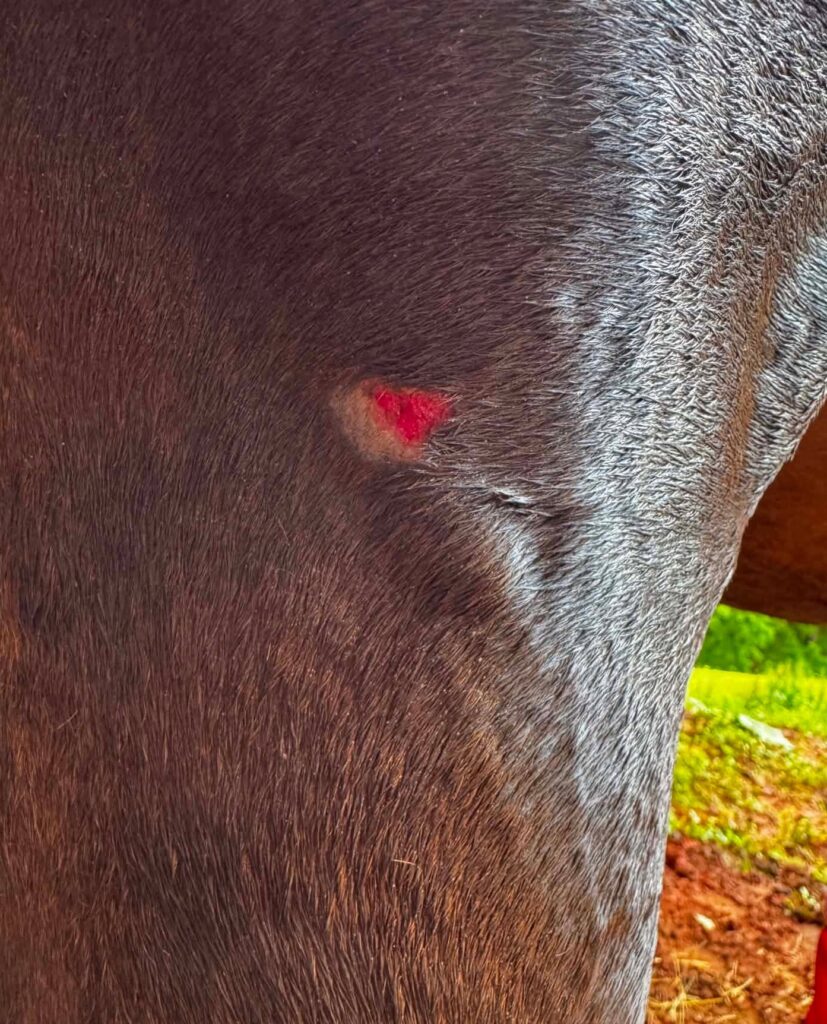
- Raised wounds that don’t heal
- Bright pink or red tissue
- Yellow sticky discharge
- Small yellow granules within the wound
- Excessive proud flesh
- Swelling
- Persistent itching
- Frequent rubbing
- Bleeding after irritation
- Large numbers of flies around the wound
Some horses become uncomfortable enough to limp if the sore develops near a joint or lower leg.
Where Do Summer Sores Usually Appear?
Summer sores typically develop on moist or injured areas where flies commonly feed.
Common locations include:
- Lower legs
- Coronary band
- Hooves near old wounds
- Face
- Lips
- Eyes
- Sheath
- Belly
- Chest
- Existing cuts or abrasions
Any open wound can potentially become a summer sore if contaminated by infected flies.
How Are Summer Sores in Horses Diagnosed?
Summer sores can resemble several other skin conditions, including proud flesh, bacterial infections, fungal infections, sarcoids, and even certain skin tumors. Because treatment differs depending on the underlying cause, obtaining an accurate diagnosis is essential.
A veterinarian will usually diagnose summer sores in horses by considering:
- The horse’s medical history
- The time of year the lesion appeared
- The wound’s appearance
- Fly exposure
- The location of the sore
In some cases, additional tests such as a skin biopsy or tissue sample may be recommended to rule out other conditions, especially if the wound does not respond to treatment.
Prompt diagnosis helps prevent the lesion from becoming larger and more difficult to manage.
7 Effective Ways to Treat Summer Sores in Horses
Successful treatment focuses on eliminating the parasite, reducing inflammation, protecting the wound, and preventing additional fly exposure.
1. Eliminate the Parasites
Because parasitic larvae are responsible for summer sores, treatment usually begins with an appropriate deworming medication prescribed by your veterinarian.
Many veterinarians use medications such as:
- Ivermectin
- Moxidectin
These medications help eliminate Habronema larvae and stop the cycle of infection.
Never administer medications without veterinary guidance, as dosage and timing should be based on your horse’s individual needs.
2. Clean the Wound Properly
Daily wound care helps reduce bacteria, remove debris, and encourage healthy healing.
Basic wound care includes:
- Gently rinsing the sore with sterile saline or a veterinarian-approved wound cleanser.
- Removing dirt and dried discharge.
- Keeping the surrounding skin clean.
- Avoiding harsh chemicals that may delay healing.
Cleaning should be gentle, as aggressive scrubbing can damage healthy tissue and increase irritation.
3. Control Excessive Inflammation
One of the biggest problems with summer sores is the horse’s exaggerated immune response.
This inflammation often produces:
- Proud flesh
- Swelling
- Persistent itching
- Continued drainage
Your veterinarian may prescribe anti-inflammatory medications or topical treatments to reduce irritation and improve healing.
As inflammation decreases, healthy skin has a better chance of repairing the wound.
4. Keep Flies Away
Without effective fly control, treatment is often unsuccessful.
Flies continually irritate the wound and may deposit additional parasite larvae.
Protect the affected horse by:
- Applying veterinarian-approved fly repellents around—but not directly inside—the wound unless instructed otherwise.
- Using fly masks or fly sheets when appropriate.
- Installing fans inside barns.
- Removing manure frequently.
- Using fly traps around turnout areas.
Reducing fly pressure is one of the most important steps in preventing recurring summer sores.
5. Protect the Wound
Depending on the location, your veterinarian may recommend covering the wound with a clean bandage.
Bandaging helps:
- Keep dirt out.
- Reduce fly contact.
- Protect healing tissue.
- Prevent the horse from rubbing the sore.
Not every wound is suitable for bandaging, so always follow veterinary recommendations.
6. Reduce Proud Flesh
Summer sores often develop excessive granulation tissue, commonly called proud flesh.
If this tissue grows too much, it can interfere with normal skin healing.
Treatment may include:
- Specialized topical medications
- Careful trimming by a veterinarian
- Bandaging techniques that encourage healthy tissue growth
Attempting to remove proud flesh yourself can lead to bleeding, pain, and delayed healing.
7. Monitor Healing Closely
Even after treatment begins, daily observation remains important.
Check the wound for:
- Reduced swelling
- Less discharge
- Smaller wound size
- Fewer flies
- Healthy pink tissue instead of excessive proud flesh
If the wound worsens, develops a foul odor, or your horse becomes lame, contact your veterinarian immediately.
Can Summer Sores Heal Without Treatment?
Small wounds occasionally improve once fly season ends, but true summer sores rarely resolve completely without appropriate treatment.
Because parasite larvae continue triggering inflammation, untreated lesions often:
- Continue growing.
- Attract more flies.
- Develop excessive proud flesh.
- Become infected.
- Leave permanent scarring.
Early veterinary treatment usually results in a faster recovery and reduces the risk of complications.
How to Prevent Summer Sores in Horses
Prevention is far easier than treating an established lesion.
Practice Excellent Fly Control
Flies are the primary carriers of Habronema larvae.
A complete fly management program should include:
- Daily manure removal
- Fly traps
- Fly predators where appropriate
- Fly sprays
- Fly masks
- Fly sheets
- Fans in barns
Reducing the fly population significantly lowers the risk of summer sores.
Treat Every Wound Immediately
Even a small scrape can become a summer sore if flies deposit parasite larvae into the wound.
Whenever your horse gets injured:
- Clean the wound promptly.
- Apply appropriate wound protection.
- Keep flies away.
- Monitor healing daily.
Never assume a small cut will heal without attention during fly season.
Follow a Deworming Program
Although modern parasite control focuses on fecal egg counts rather than routine deworming, maintaining an effective parasite management plan helps reduce the number of Habronema worms present in your horse.
Work with your veterinarian to develop a deworming schedule based on your horse’s individual risk.
Keep the Environment Clean
Good stable management also helps reduce fly breeding.
Simple practices include:
- Cleaning stalls daily.
- Removing manure piles.
- Eliminating standing water.
- Keeping feed storage clean.
- Improving drainage around turnout areas.
A cleaner environment benefits both horse health and overall fly control.
Best Products for Treating Summer Sores in Horses
While medications prescribed by your veterinarian are the foundation of treatment, a few well-chosen products can make wound management easier and help reduce the risk of future summer sores.
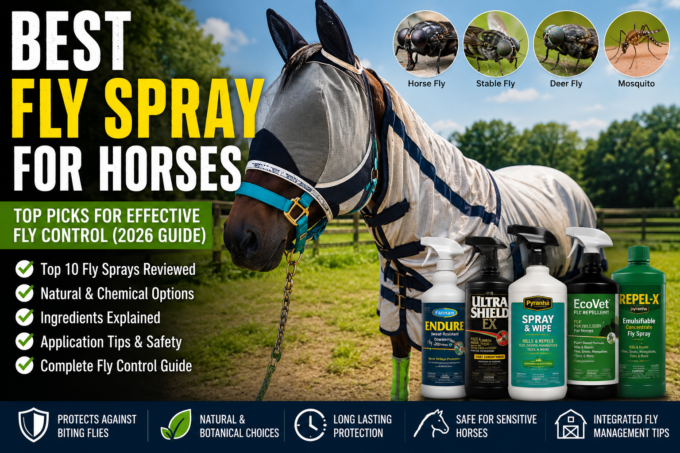
Fly Spray
A quality fly spray is one of the most important tools during fly season.
Using an effective fly spray helps:
- Reduce fly bites
- Prevent flies from landing on wounds
- Lower the risk of additional parasite transmission
- Improve your horse’s comfort
Fly Mask
Fly masks protect your horse’s eyes and face from flies while also reducing exposure to harmful UV rays.
Choose a fly mask that offers:
- Soft edges to prevent rubbing
- UV protection
- Durable mesh material
- Comfortable fit
Fly Sheet
For horses that spend long hours outdoors, a lightweight fly sheet provides extra protection against flies and biting insects.
Look for features such as:
- Breathable fabric
- UV protection
- Adjustable straps
- Durable stitching
Wound Cleanser
Keeping a wound clean is an important part of recovery.
A veterinarian-approved wound cleanser helps remove dirt and debris while supporting healthy healing.
Avoid using harsh disinfectants unless specifically recommended by your veterinarian.
Horse First Aid Kit
Every horse owner should keep a well-stocked first aid kit on hand, especially during fly season.
Essential items include:
- Sterile saline solution
- Gauze pads
- Non-stick dressings
- Bandages
- Vet wrap
- Disposable gloves
- Digital thermometer
- Hoof pick
- Antiseptic wound spray
Having these supplies ready allows you to respond quickly when minor injuries occur.
Frequently Asked Questions About Summer Sores in Horses
Are summer sores contagious?
No. Summer sores cannot spread directly from one horse to another.
However, multiple horses living in the same environment may develop summer sores if flies carrying Habronema larvae are present.
Can horses get summer sores every year?
Yes.
Horses living in areas with heavy fly populations may develop recurring summer sores if effective fly control and parasite management are not maintained.
How long do summer sores take to heal?
Healing time depends on:
- The size of the lesion
- How quickly treatment begins
- Fly exposure
- The horse’s overall health
Many horses improve within a few weeks after proper treatment, although larger wounds may require several months to heal completely.
Are summer sores painful?
Yes.
Many horses experience discomfort, itching, swelling, and irritation. Some become lame if the sore develops on the lower limb or near a joint.
Can I treat summer sores at home?
Basic wound cleaning and fly control are helpful, but true summer sores usually require veterinary diagnosis and treatment because parasite larvae are involved.
Delaying treatment often allows the lesion to become larger and more difficult to manage.
What causes summer sores in horses?
Summer sores in horses are caused by the larvae of Habronema stomach worms. Flies pick up these larvae from horse manure and deposit them onto open wounds, cuts, or moist areas of the skin. The larvae cannot complete their life cycle in the skin, so they trigger an intense inflammatory reaction, leading to painful, slow-healing sores.
Can summer sores heal on their own?
Small summer sores may improve after fly season ends, but most cases require veterinary treatment. Without proper care, the sores often continue to grow, develop excessive proud flesh, and become infected. Early treatment usually leads to faster healing and reduces the risk of complications.
Are summer sores contagious?
No, summer sores are not contagious and cannot spread directly from one horse to another. However, horses living in the same environment may develop summer sores if flies carrying Habronema larvae are present. Effective fly control and proper wound management help reduce the risk.
How do veterinarians treat summer sores in horses?
Veterinarians typically treat summer sores by eliminating the parasite with appropriate deworming medication, cleaning the wound, reducing inflammation, and controlling flies. In severe cases, they may also remove excessive proud flesh or recommend additional wound care to promote healing.
How can I prevent summer sores during the summer?
The best way to prevent summer sores is to control flies, clean and protect wounds immediately, follow a veterinarian-recommended deworming program, and maintain a clean stable environment. Using fly masks, fly sprays, fly sheets, and removing manure regularly can greatly reduce the risk of summer sores developing.
In Short:-
Summer sores in horses are a frustrating but preventable condition that affects many horses during the warmer months. Although they often begin as small wounds, they can quickly develop into painful, slow-healing lesions when flies introduce parasite larvae into damaged skin.
The best defense is a combination of early wound care, effective fly control, good stable management, and a veterinarian-guided parasite control program. Checking your horse daily for cuts, swelling, or unusual skin changes allows you to catch problems before they become serious.
If you notice a wound that refuses to heal, develops excessive proud flesh, or attracts large numbers of flies, don’t wait. Early veterinary treatment greatly improves the chances of a full recovery and helps your horse stay comfortable throughout the summer.
With a proactive approach, most horses can avoid summer sores and enjoy a healthier, more comfortable fly season.
You may also read:-
- Summer Horse Care Checklist for USA Horse Owners
- Best Fly Sprays for Horses
- Best Fly Masks for Horses
- Horse First Aid Kit Essentials
- Horse Thrush Treatment
- White Line Disease in Horses
- Cracked Hooves in Horses
- Horse Hoof Care Essentials for New Owners








Leave a comment