

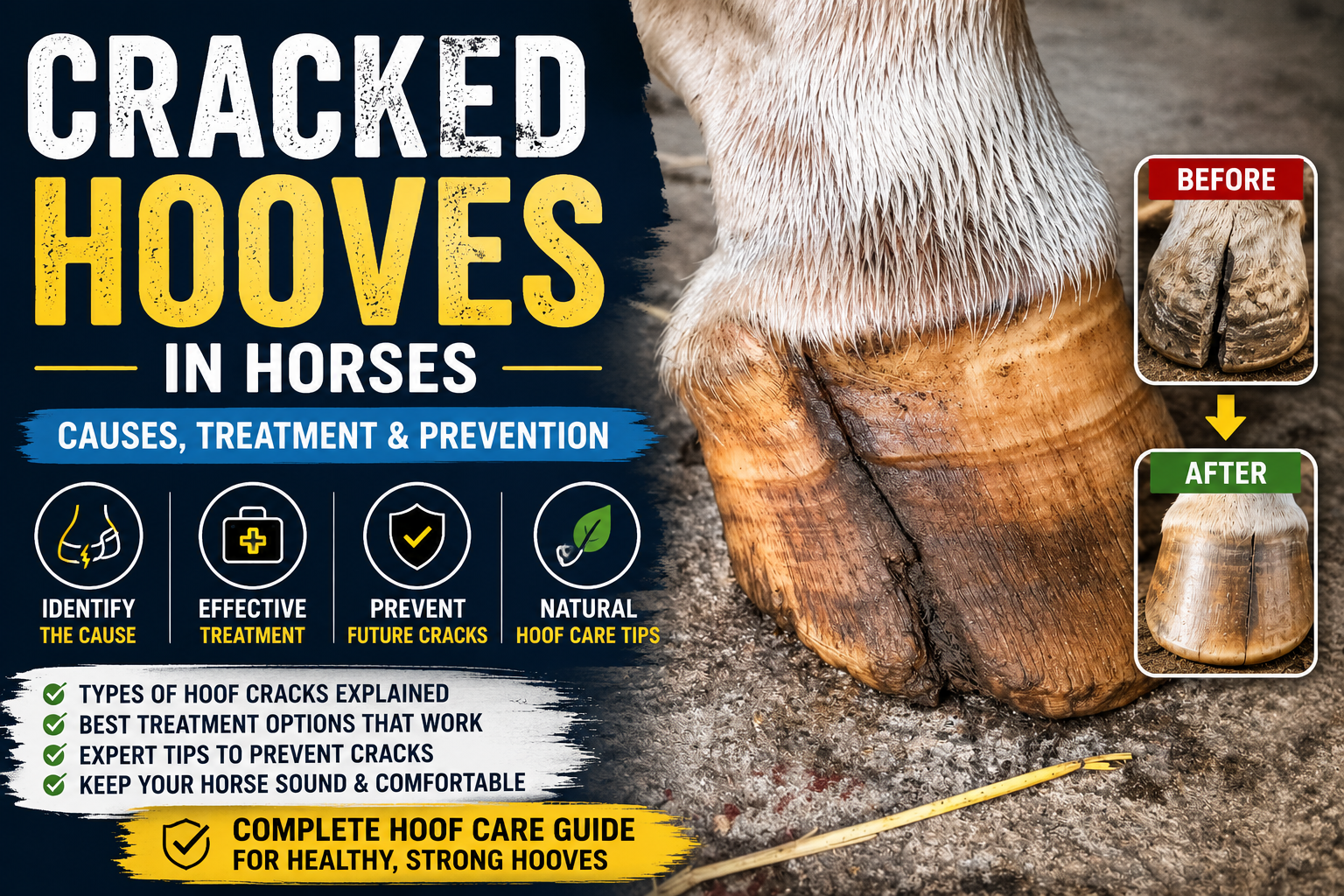
Cracked Hooves in Horses: Complete Guide for Horse Owners
A healthy hoof is the foundation of every sound horse. Whether your horse is a pleasure companion, trail partner, or performance athlete, strong hooves are essential for comfort and movement. Unfortunately, cracked hooves in horses are one of the most common hoof problems horse owners face.
While a small crack may look harmless, ignoring it can lead to pain, lameness, infection, and expensive veterinary care. The good news is that many hoof cracks can be managed successfully when they are identified early and treated correctly.
In my experience, hoof cracks rarely develop because of one single issue. More often, they result from a combination of delayed trimming, hoof imbalance, environmental conditions, and nutrition. Small cracks are usually much easier to manage than deep structural cracks, which is why regular hoof inspections and consistent farrier care are so important. Early intervention often prevents minor problems from becoming major ones.
This guide explains everything you need to know about cracked hooves in horses, including the different types of cracks, common causes, treatment options, prevention tips, and when it’s time to involve a farrier or veterinarian.
What Is a Cracked Horse Hoof?
A cracked horse hoof is a split or separation in the hoof wall that develops due to factors such as poor hoof balance, delayed trimming, dry weather, excessive moisture, trauma, or nutritional deficiencies. While small surface cracks are often cosmetic, deeper cracks can cause pain, lameness, infection, and structural damage if left untreated. Early diagnosis and proper hoof care are essential for successful recovery.
What Are Cracked Hooves in Horses?
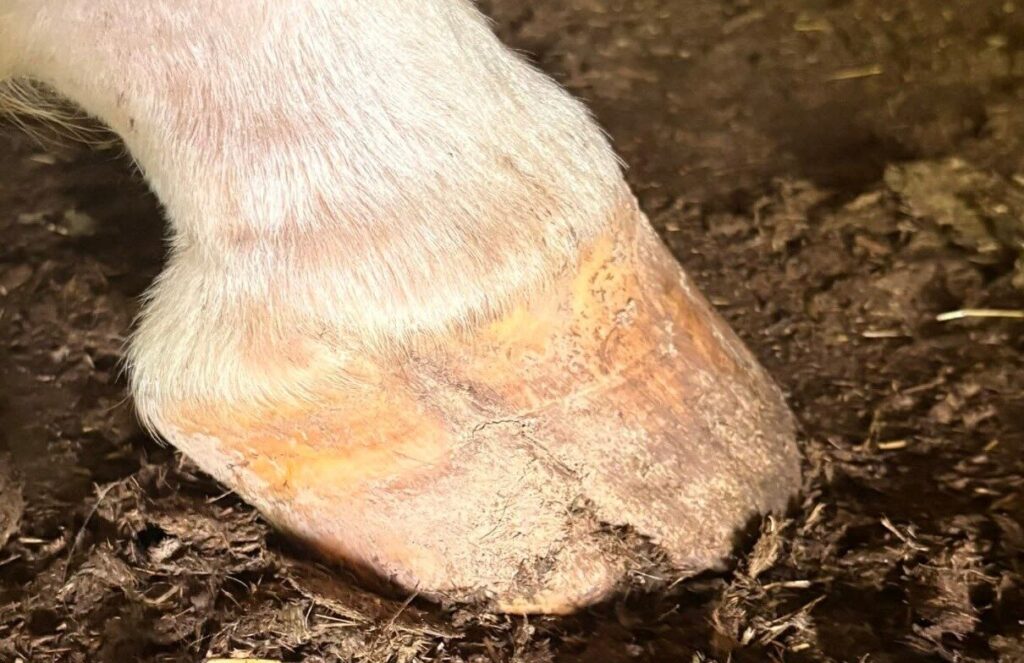
A hoof crack is a split or separation in the hard outer hoof wall. Cracks may appear as fine surface lines or deep splits that extend toward the sensitive inner structures of the hoof.
Some cracks remain cosmetic and cause no discomfort. Others become serious enough to destabilize the hoof capsule, allowing bacteria to enter and causing pain or lameness.
The severity depends on several factors, including:
- The depth of the crack
- Its location on the hoof wall
- Whether it reaches sensitive tissue
- The horse’s workload
- The quality of hoof care
Even minor cracks should be monitored because they can worsen if the underlying cause is not corrected.
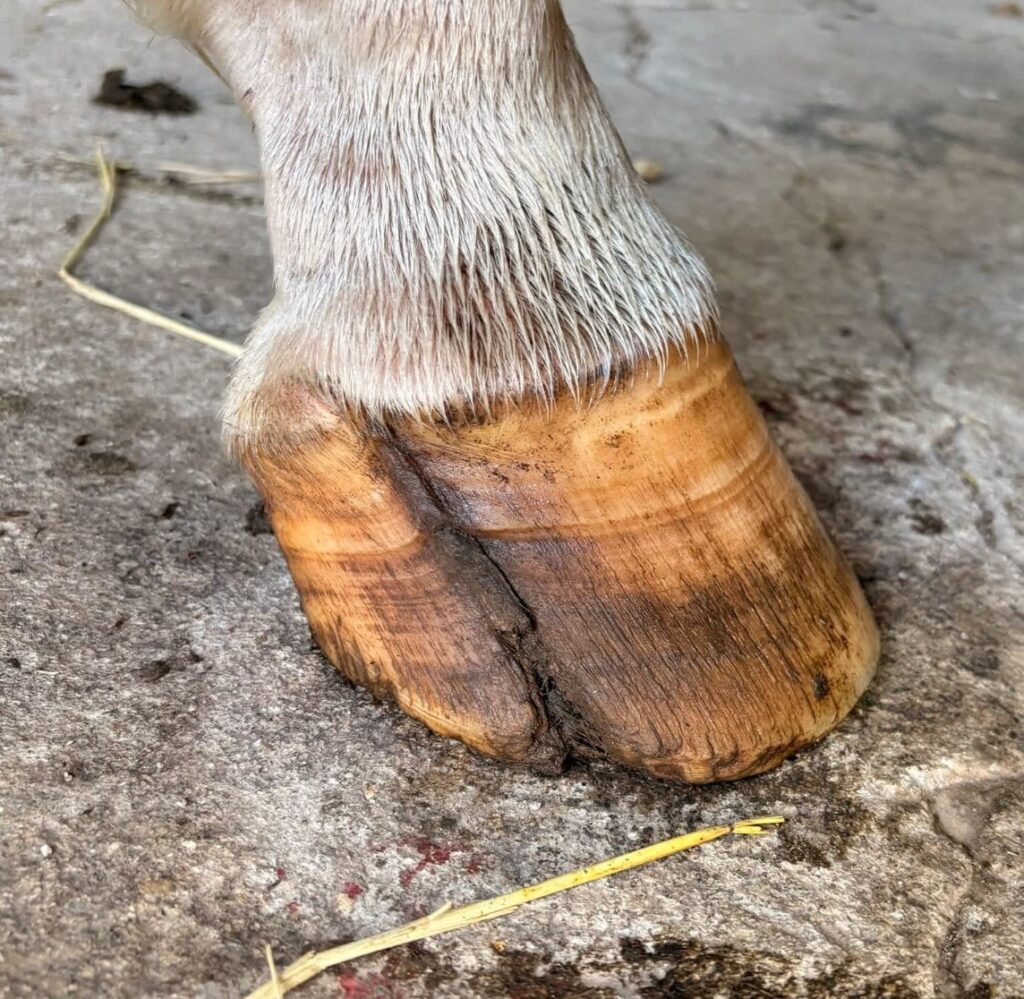
Before learning about different types of hoof cracks, it’s helpful to understand the main parts of a horse’s hoof. The diagram below identifies the key structures that are commonly involved in hoof injuries and cracks.
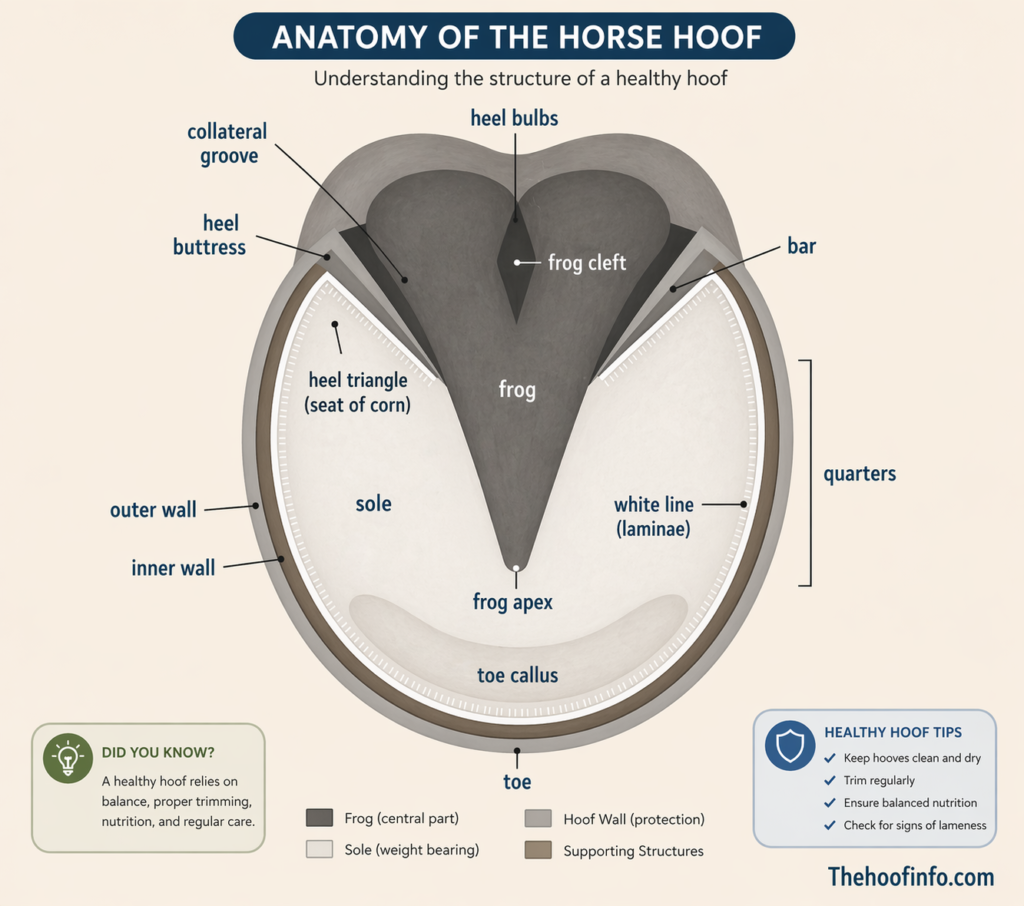
Understanding Horse Hoof Anatomy
Knowing the basic anatomy of a horse’s hoof makes it easier to understand where cracks develop and why some are more serious than others.
- Coronary Band – The soft tissue at the top of the hoof that produces new hoof wall growth. Damage here can affect the entire hoof as it grows.
- Toe – The front portion of the hoof that bears significant impact during movement. Toe cracks commonly occur in this area.
- Quarters – The sides of the hoof wall between the toe and heels. Quarter cracks are often associated with hoof imbalance and uneven weight bearing.
- Heels – The back portion of the hoof that helps absorb shock and allows the hoof to expand naturally.
- Sole – The slightly concave underside of the hoof that protects the internal structures from injury.
- Frog – The V-shaped structure in the center of the hoof that improves traction, supports circulation, and helps absorb concussion.
- White Line – The junction between the hoof wall and the sole. This area is vulnerable to conditions such as white line disease, which can weaken the hoof and contribute to cracking.
Understanding these structures will help you recognize where a crack is located and why prompt treatment is important.
Types of Hoof Cracks
Understanding the type of crack helps determine the best treatment plan.
Toe Cracks
Toe cracks develop at the front of the hoof.
Common causes include:
- Long trimming intervals
- Excessive toe length
- Poor hoof balance
- Trauma
Mild toe cracks often improve with regular trimming and proper hoof support.
Quarter Cracks
Quarter cracks form on the sides of the hoof wall.
These cracks are often more serious because they occur in areas that carry significant weight during movement.
Quarter cracks may result from:
- Uneven hoof balance
- Conformation issues
- Previous hoof injuries
- Chronic stress on one side of the hoof
Deep quarter cracks frequently require corrective trimming and specialized farrier care.
Heel Cracks
Heel cracks appear near the back of the hoof.
Although less common, they may indicate:
- Contracted heels
- Poor hoof balance
- Soft, weakened hoof walls
Without treatment, heel cracks can interfere with normal hoof expansion.
Grass Cracks
Grass cracks are shallow vertical cracks that usually affect only the outer hoof wall.
These cracks rarely cause lameness but should still be monitored because they may deepen if hoof quality continues to decline.
Sand Cracks
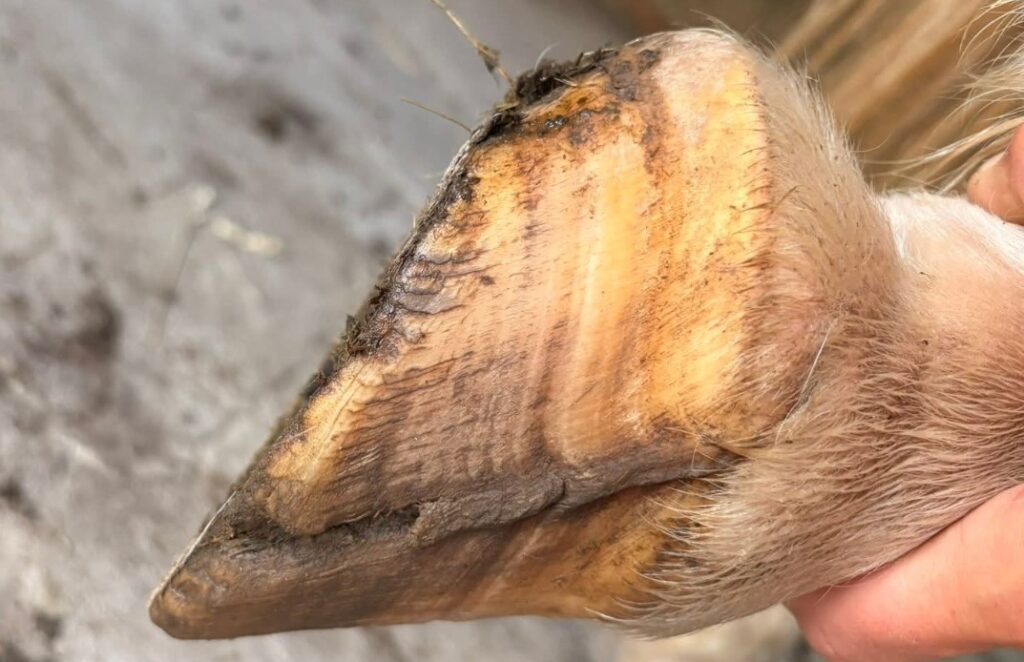
Sand cracks extend vertically from the coronary band toward the ground.
They are among the more serious hoof cracks because they often involve structural weakness within the hoof wall.
Depending on their depth, sand cracks may require stabilization, corrective trimming, and a temporary reduction in exercise.
What Causes Cracked Hooves in Horses?
Cracked hooves are usually caused by a combination of environmental, nutritional, and management factors.
1. Delayed Hoof Trimming
One of the leading causes of hoof cracks is allowing the hoof to grow too long between trims.
As the hoof wall becomes overgrown, it experiences increased leverage with every step. Over time, this extra stress causes the wall to split.
Most horses benefit from trimming every 6 to 8 weeks, although the ideal schedule varies depending on growth rate and workload.
2. Dry Weather
Hot, dry conditions remove natural moisture from the hoof wall.
As the hoof becomes brittle, it loses flexibility and becomes more likely to crack.
This is especially common during summer when horses spend long hours on dry ground.
3. Constant Wet Conditions
Surprisingly, excessive moisture can be just as damaging as dry weather.
Standing in muddy paddocks or wet stalls softens the hoof wall, reducing its strength.
Repeated cycles of wet and dry conditions often increase cracking.
4. Poor Nutrition
Strong hooves begin from the inside out. Even the best trimming schedule cannot compensate for poor hoof quality caused by nutritional deficiencies.
A horse’s hoof is made primarily of keratin, a tough protein that requires the right balance of nutrients to grow strong and resilient. When these nutrients are lacking, the hoof wall may become brittle, weak, and prone to cracking.
Nutrients that play an important role in hoof health include:
- Biotin
- Methionine
- Zinc
- Copper
- High-quality protein
- Essential amino acids
If your horse has slow hoof growth or recurring cracks despite regular farrier visits, discuss its diet with your veterinarian or an equine nutritionist. A quality hoof supplement may help improve hoof strength over time, but remember that healthy hoof growth takes several months because the hoof grows slowly.
5. Poor Hoof Balance
Hoof balance is one of the most overlooked causes of cracked hooves in horses.
When one side of the hoof bears more weight than the other, excessive stress develops in certain areas of the hoof wall. Over time, that constant pressure can lead to cracks.
Common causes of poor hoof balance include:
- Uneven trimming
- Long toes
- Underrun heels
- Club feet
- Limb conformation issues
Corrective trimming by an experienced farrier can redistribute weight more evenly and reduce stress on the hoof wall.
6. White Line Disease
White line disease weakens the connection between the hoof wall and the inner hoof structures.
As bacteria or fungi invade the white line, the hoof wall begins to separate. This loss of support makes the hoof more susceptible to cracks and breaks.
Signs may include:
- Hoof wall separation
- Powdery or crumbly horn
- Hollow sound when tapping the hoof
- Progressive cracks
Treating the infection early helps prevent further structural damage.
7. Trauma and Injury
A sudden injury can also cause hoof cracks.
Examples include:
- Stepping on rocks
- Kicking solid objects
- Landing awkwardly
- Repeated work on hard ground
Even a healthy hoof can crack if it experiences enough force.
Why Are My Horse’s Feet Cracking?
Many horse owners notice cracks in their horse’s feet and immediately wonder if something is seriously wrong. In reality, hoof cracks usually develop gradually rather than overnight.
Your horse’s feet may be cracking because of one or more of the following:
- Hooves have gone too long between trims.
- The hoof wall has become dry and brittle during hot weather.
- Constant exposure to mud has weakened the hoof horn.
- The horse has poor hoof balance, causing uneven weight distribution.
- Nutritional deficiencies have reduced hoof quality.
- Previous injuries have weakened the hoof wall.
- Conditions such as white line disease or laminitis have affected hoof strength.
In many cases, several of these factors work together. Identifying the underlying cause is the key to preventing the crack from worsening.
Signs Your Horse’s Hoof Crack Needs Immediate Attention
Not every hoof crack is an emergency, but some require prompt treatment.
Contact your farrier or veterinarian if you notice:
- The crack reaches the coronary band.
- Blood or drainage is present.
- The horse becomes lame.
- Heat develops in the hoof.
- The crack continues to widen.
- A foul smell develops.
- Part of the hoof wall begins separating.
Ignoring these warning signs can allow the crack to worsen and increase the risk of infection.
Hoof Crack Severity Guide
Not every hoof crack requires emergency treatment. The table below provides a general guide to help horse owners understand when professional attention may be needed.
| Crack Type | Severity | Can the Horse Be Ridden? |
|---|---|---|
| Small surface crack | Low | Usually yes, if no pain is present |
| Toe crack | Moderate | Depends on depth and location |
| Quarter crack | High | Often no until evaluated |
| Heel crack | Moderate | Light work may be possible |
| Crack reaching the coronary band | Severe | No – immediate farrier or veterinary care |
| Crack with bleeding or infection | Emergency | Do not ride |
This guide should not replace a professional examination. If your horse is lame or the crack continues to widen, contact your farrier or veterinarian.
How to Treat Cracked Hooves in Horses
Successful treatment focuses on correcting the underlying cause-not simply hiding the crack.
Schedule a Farrier Visit
The first step is to have your horse evaluated by a qualified farrier.
The farrier will:
- Balance the hoof.
- Remove excess leverage.
- Prevent the crack from spreading.
- Develop a trimming schedule that supports healthy hoof growth.
Trying to trim or repair a significant crack yourself may make the problem worse.
Keep the Hoof Clean
Clean the hoof daily using a hoof pick.
Removing packed mud, manure, and stones helps reduce bacterial growth and allows you to monitor changes in the crack.
Daily cleaning also makes it easier to spot early signs of infection.
Manage Moisture
Healthy hooves need a balanced environment.
Avoid extremes by:
- Keeping stalls clean and dry.
- Avoiding prolonged exposure to mud.
- Providing shade during hot weather.
- Ensuring access to dry footing after heavy rain.
Consistent conditions are better than repeated wet-and-dry cycles.
Correct the Horse’s Diet
If hoof quality is poor, improving nutrition should be part of the treatment plan.
A balanced diet supports stronger hoof growth over time.
Remember that hoof repair is slow. Since a hoof grows only about ¼ to ⅜ inch per month, it may take 9 to 12 months for a severely damaged hoof wall to grow out completely.
Reduce Workload if Necessary
Deep or painful cracks should not be ignored while continuing normal work.
Your farrier or veterinarian may recommend reducing riding until the hoof becomes more stable.
Continuing intense exercise on a weakened hoof increases the risk of the crack worsening.
Corrective Shoes or Hoof Boots
Some horses benefit from additional support while the hoof heals.
Depending on the severity of the crack, your farrier may recommend:
- Corrective horseshoes
- Glue-on shoes
- Hoof boots
- Hoof repair materials
- Stabilization techniques
The appropriate option depends on the location and depth of the crack, as well as the horse’s workload and overall hoof condition.
How a Farrier Repairs a Hoof Crack
Repairing a hoof crack involves much more than simply trimming the hoof shorter. The goal is to remove excessive stress from the damaged area while encouraging healthy hoof growth.
Depending on the type and severity of the crack, your farrier may:
- Restore proper hoof balance.
- Shorten an overgrown toe.
- Correct uneven weight distribution.
- Stabilize the crack using specialized repair materials.
- Apply glue-on patches or lacing techniques.
- Recommend therapeutic or corrective shoes.
- Suggest temporary hoof boots for protection.
Every crack is different, so treatment should always be tailored to the individual horse rather than using a one-size-fits-all approach.
Can You Ride a Horse With a Cracked Hoof?
Whether a horse can be ridden depends on the severity of the crack.
Small, superficial cracks that do not cause pain or instability often allow the horse to continue light work while the hoof grows out. However, deep cracks that extend into sensitive tissue, cause bleeding, or result in lameness should never be ignored.
Avoid riding your horse if:
- The horse is lame.
- The crack reaches the coronary band.
- The crack is widening.
- Blood or drainage is present.
- The hoof feels hot or painful.
- Your farrier recommends rest.
Continuing to ride on a serious hoof crack may increase structural damage and delay healing.
How to Prevent Cracked Hooves in Horses
Preventing cracked hooves is much easier-and less expensive-than treating them. A consistent hoof care routine keeps the hoof wall strong and reduces the risk of painful cracks.
1. Maintain a Regular Trimming Schedule
Routine trimming is the most effective way to prevent hoof cracks.
Most horses should be trimmed every 6 to 8 weeks, although some horses with faster hoof growth or heavy workloads may need more frequent visits.
Regular trimming helps:
- Maintain proper hoof balance
- Reduce excessive leverage on the hoof wall
- Prevent flares and chips
- Support healthy hoof growth
Work with a qualified farrier to determine the ideal schedule for your horse.
2. Feed a Balanced Diet
Healthy hooves start with proper nutrition.
Feed high-quality forage and ensure your horse receives the vitamins and minerals needed for strong hoof growth. If recommended by your veterinarian, consider a hoof supplement containing:
- Biotin
- Methionine
- Zinc
- Copper
- Essential amino acids
Keep in mind that supplements are not a quick fix. Improvements usually become noticeable only after several months of consistent use.
3. Keep Hooves Clean
Pick out your horse’s hooves every day.
This simple habit helps:
- Remove mud, manure, and stones
- Reduce the risk of thrush and white line disease
- Identify cracks before they become severe
- Monitor hoof condition between farrier visits
Daily hoof cleaning takes only a few minutes but can prevent much larger problems.
4. Avoid Extreme Moisture Changes
Repeated cycles of soaking wet and extremely dry conditions weaken the hoof wall.
Whenever possible:
- Provide dry turnout areas.
- Keep stalls clean.
- Avoid prolonged standing in mud.
- Offer shade during hot summer weather.
A consistent environment helps maintain hoof strength.
5. Exercise Regularly
Regular movement improves blood circulation within the hoof, supporting healthy growth.
Horses that spend long periods confined to stalls may have slower hoof growth and poorer hoof quality than those with regular turnout and exercise.
Always increase exercise gradually, especially if your horse is recovering from a hoof problem.
Best Products for Horses with Cracked Hooves
The right products can support your horse’s hoof health, but they work best when combined with proper trimming and nutrition.
Hoof Supplements
A quality hoof supplement may help strengthen weak or brittle hooves over time.
Look for formulas containing:
- Biotin
- Zinc
- Copper
- Methionine
- Essential amino acids
Affiliate Opportunity: Recommend your favorite hoof supplement and explain who it is best suited for.
Hoof Conditioner
A hoof conditioner can help maintain the hoof wall’s moisture balance in dry climates.
Use it according to the manufacturer’s instructions and avoid overapplying products, as excessive use may trap moisture or dirt.
Affiliate Opportunity: Review a trusted hoof conditioner and discuss its pros and cons.
Hoof Pick
Every horse owner should own a durable hoof pick.
Daily use helps prevent packed debris, supports hoof hygiene, and allows you to inspect for new cracks.
Affiliate Opportunity: Recommend a sturdy hoof pick with a comfortable grip.
Hoof Boots
For horses recovering from painful hoof cracks, hoof boots may provide temporary protection and comfort during turnout or light exercise.
Affiliate Opportunity: Compare popular hoof boot brands and explain when each type is most useful.
How Long Does It Take a Hoof Crack to Heal?
Hoof cracks heal as new hoof wall grows from the coronary band toward the ground. Because horse hooves grow slowly, complete recovery often takes several months.
| Crack Type | Approximate Recovery Time |
|---|---|
| Surface crack | 2–4 months |
| Toe crack | 6–9 months |
| Quarter crack | 9–12 months |
| Severe coronary band crack | 12 months or longer |
Several factors influence healing time, including:
- The horse’s age
- Overall hoof quality
- Nutrition
- Trimming schedule
- Workload
- Severity of the crack
Patience is essential. Even after the crack appears smaller, healthy hoof wall still needs time to grow down completely.
Can a Cracked Hoof Become Infected?
Yes. Deep hoof cracks can allow bacteria, fungi, and debris to enter the hoof wall, increasing the risk of infection.
Warning signs include:
- Foul odor
- Drainage or pus
- Heat in the hoof
- Swelling above the hoof
- Increased lameness
- Widening of the crack
Prompt treatment helps prevent complications such as hoof abscesses or white line disease.
Common Hoof Problems That Look Similar
Not every defect in the hoof wall is a true hoof crack. The table below highlights some common conditions that horse owners often confuse.
| Condition | Appearance | Requires Professional Attention? |
|---|---|---|
| Hoof crack | Vertical split in the hoof wall | Yes, if deep or painful |
| Hoof chip | Small piece broken from the hoof edge | Usually not |
| White line disease | Separation between hoof wall and sole | Yes |
| Hoof abscess | Sudden severe lameness with heat | Yes |
| Thrush | Black discharge with foul odor around the frog | Yes |
Correct identification helps ensure your horse receives the appropriate treatment.
Frequently Asked Questions
Can a horse hoof crack heal on its own?
Minor superficial cracks may grow out naturally with proper trimming and hoof care. However, deeper cracks usually require evaluation by a farrier to prevent them from worsening.
How long does it take for a hoof crack to heal?
Hoof cracks don’t “heal” like skin. Instead, healthy hoof wall must grow down from the coronary band.
Depending on the location and severity of the crack, complete recovery may take 9 to 12 months.
Should I ride a horse with a cracked hoof?
It depends on the severity.
Small cosmetic cracks often do not limit activity, but horses with deep cracks, lameness, bleeding, or infection should not be ridden until evaluated by a farrier or veterinarian.
Can dry weather cause hoof cracks?
Yes. Extended periods of hot, dry weather can make the hoof wall brittle, increasing the likelihood of cracking.
Maintaining a regular trimming schedule and proper hoof care helps reduce this risk.
Do hoof supplements really work?
Quality hoof supplements can improve hoof growth and strength when nutritional deficiencies are present. However, they are most effective when combined with balanced nutrition, regular trimming, and good hoof management.
Common Mistakes That Make Hoof Cracks Worse
Many hoof cracks become more severe because the underlying problem is not addressed. Avoid these common mistakes:
- Waiting too long between farrier appointments.
- Ignoring small cracks until they become deep.
- Riding a lame horse.
- Keeping horses in muddy paddocks for extended periods.
- Allowing repeated wet-and-dry cycles.
- Feeding an unbalanced diet.
- Attempting to trim serious cracks without professional guidance.
- Assuming hoof conditioners alone will repair damaged hoof walls.
Consistent hoof care is far more effective than relying on quick fixes.
Summary:-
Cracked hooves in horses are a common problem, but they should never be ignored. While some cracks are only cosmetic, others can lead to pain, lameness, and long-term hoof damage if left untreated.
The best approach is prevention. Regular farrier visits, a balanced diet, daily hoof cleaning, and consistent environmental management all play a key role in maintaining strong, healthy hooves.
If you notice a crack that extends toward the coronary band, causes lameness, or shows signs of infection, contact your farrier or veterinarian promptly. Early treatment is often the difference between a simple repair and a lengthy recovery.
With the right care and attention, most horses can develop healthier hoof walls over time and return to comfortable, sound movement.








Leave a comment