

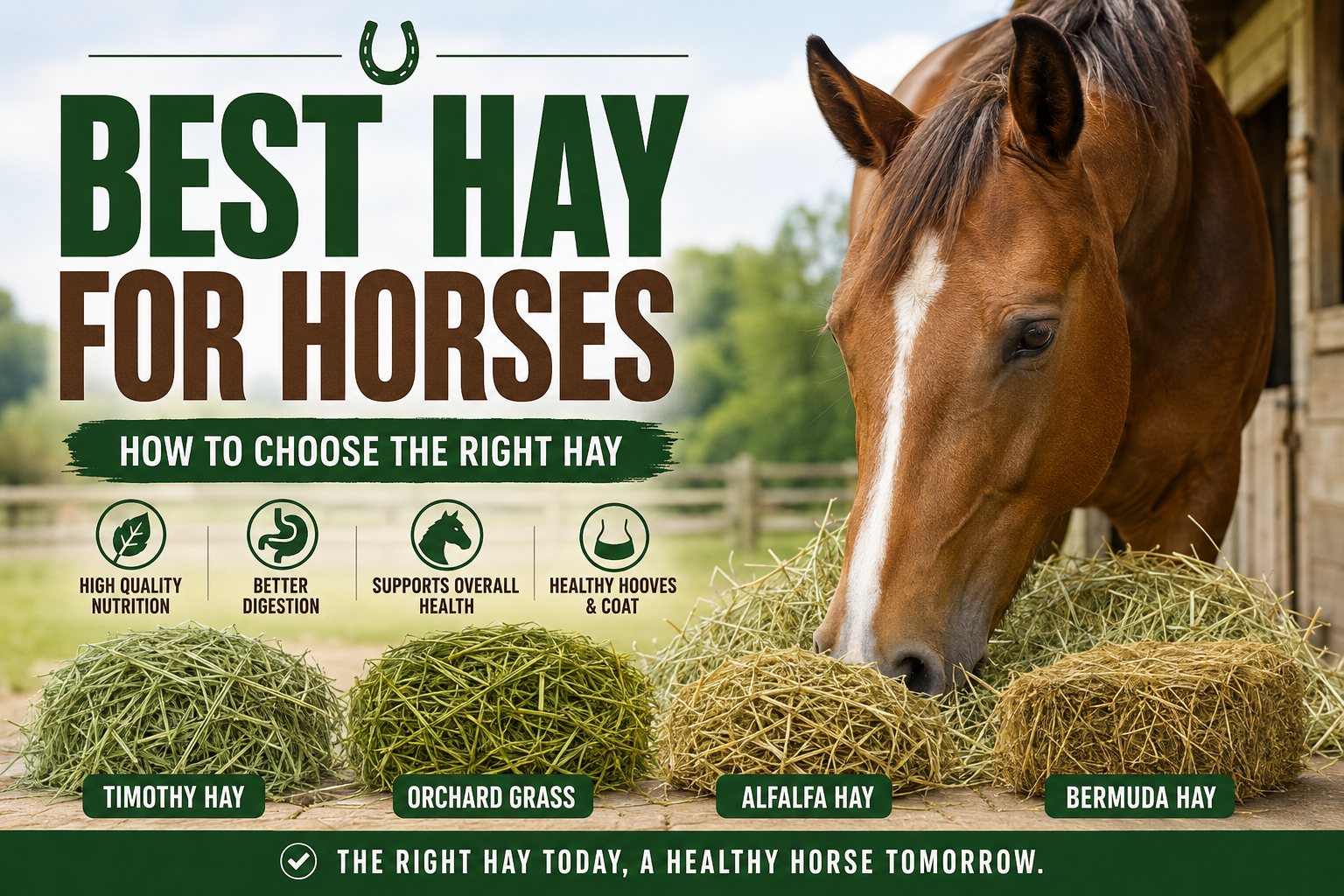
Best Hay for Horses: How to Choose the Right Hay for a Healthy Horse
Hay is the foundation of every healthy horse’s diet. Whether you own a backyard companion, a performance horse, or a retired senior, choosing the right hay directly affects digestion, weight, hoof quality, and overall health.
As someone who has spent years around horses and hoof care, I’ve seen how poor-quality hay can contribute to weight loss, digestive problems, and even increase the risk of conditions like laminitis. On the other hand, clean, high-quality forage helps keep horses healthy from the inside out.
In this guide, you’ll learn which types of hay are best for horses, how to recognize quality hay, and how to choose the right option based on your horse’s needs.
Quick Answer
Timothy hay and orchard grass hay are the best choices for most adult horses because they provide high fiber, moderate protein, and support healthy digestion. Horses with higher nutritional needs may benefit from alfalfa, while horses with laminitis or insulin resistance often require tested low-NSC grass hay recommended by a veterinarian.
What Is the Best Hay for Horses?
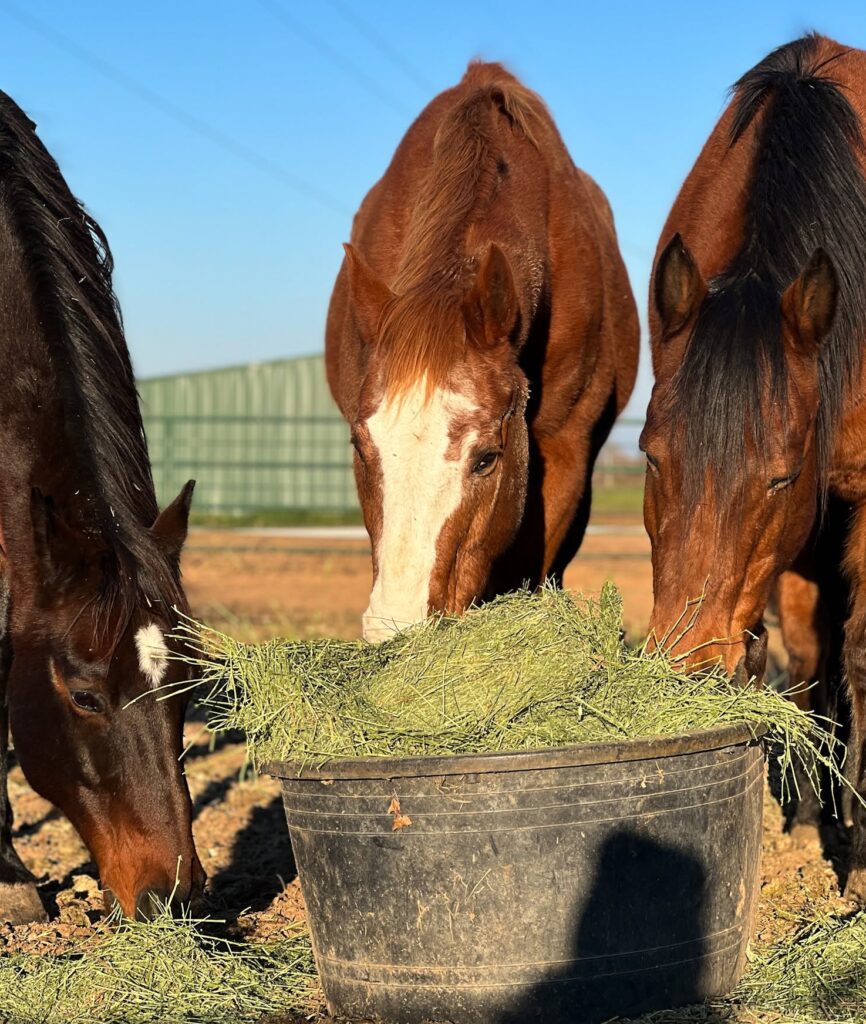
For most adult horses, high-quality Timothy hay or orchard grass hay is the best choice.
These grass hays provide plenty of fiber, support healthy digestion, and help maintain a healthy body condition without supplying excessive calories.
The best hay should be:
- Green in color
- Leafy rather than stemmy
- Pleasant, fresh smell
- Free from mold and dust
- Free of weeds and foreign objects
Clean, well-cured hay is often more important than choosing a specific grass variety.
According to the American Association of Equine Practitioners (AAEP), forage should make up the majority of a horse’s diet, with clean, high-quality hay serving as the primary fiber source.
Types of Hay for Horses
Not every type of hay provides the same nutrition. Understanding the differences helps you choose the best forage for your horse’s age, workload, and health.
Timothy Hay
Timothy hay is one of the most widely recommended grass hays for horses in North America. It contains moderate protein, excellent fiber, and is suitable for most healthy adult horses.
Best for
- Adult horses
- Pleasure horses
- Easy keepers
- Horses prone to obesity
- Horses needing a balanced forage
Advantages
✓ Excellent fiber
✓ Moderate calories
✓ Highly digestible
✓ Supports healthy gut function
Orchard Grass Hay
Orchard grass is another premium grass hay that many horses readily accept because of its soft texture and sweet aroma.
It offers nutrition similar to Timothy hay but is often leafier and more palatable.
Best for
- Senior horses
- Picky eaters
- Horses with dental issues
Alfalfa Hay
Unlike Timothy or orchard grass, alfalfa is a legume rather than a grass. It contains significantly more protein, calcium, and calories.
For horses with higher nutritional demands, alfalfa can be an excellent forage.
Best for
- Growing foals
- Lactating mares
- Performance horses
- Underweight horses
Because of its higher calorie content, alfalfa isn’t always the best option for easy keepers or horses with metabolic disorders unless recommended by a veterinarian or equine nutritionist.
Bermuda Grass Hay
Bermuda grass hay is commonly fed in the southern United States.
When harvested correctly, it provides good fiber and moderate nutrition.
Choose leafy Bermuda hay that is free from excessive stems and dust.
Mixed Grass Hay
Mixed grass hay combines two or more grass species, such as Timothy, orchard grass, or fescue.
Its nutritional value depends on the grasses included and the stage of harvest.
Many horse owners successfully feed high-quality mixed grass hay as a cost-effective forage option.
Horse Hay Nutrition Comparison Table
| Hay Type | Protein | Sugar | Calories | Best For |
|---|---|---|---|---|
| Timothy | Moderate | Low | Moderate | Most horses |
| Orchard Grass | Moderate | Moderate | Moderate | Senior horses |
| Alfalfa | High | Low | High | Performance horses |
| Bermuda | Moderate | Low | Moderate | Warm climates |
| Teff | Low | Low | Low | Laminitic horses |
| Mixed Grass | Varies | Varies | Moderate | General feeding |
Timothy Hay vs Alfalfa – Which Is Better?
This is one of the most common questions horse owners ask.
The answer depends on your horse-not the hay itself.
| Feature | Timothy Hay | Alfalfa Hay |
|---|---|---|
| Type | Grass | Legume |
| Protein | Moderate | High |
| Calories | Moderate | High |
| Calcium | Moderate | High |
| Fiber | Excellent | Very Good |
| Best For | Most adult horses | Horses needing extra nutrition |
Choose Timothy Hay if:
- Your horse maintains weight easily.
- Your horse gets limited exercise.
- You want an everyday forage.
- Your horse is prone to obesity.
Choose Alfalfa if:
- Your horse struggles to maintain weight.
- Your horse is in heavy work.
- You have a growing foal.
- Your veterinarian recommends additional calories or protein.
Many horse owners also feed a mixture of Timothy and alfalfa to balance fiber intake with increased nutritional needs.
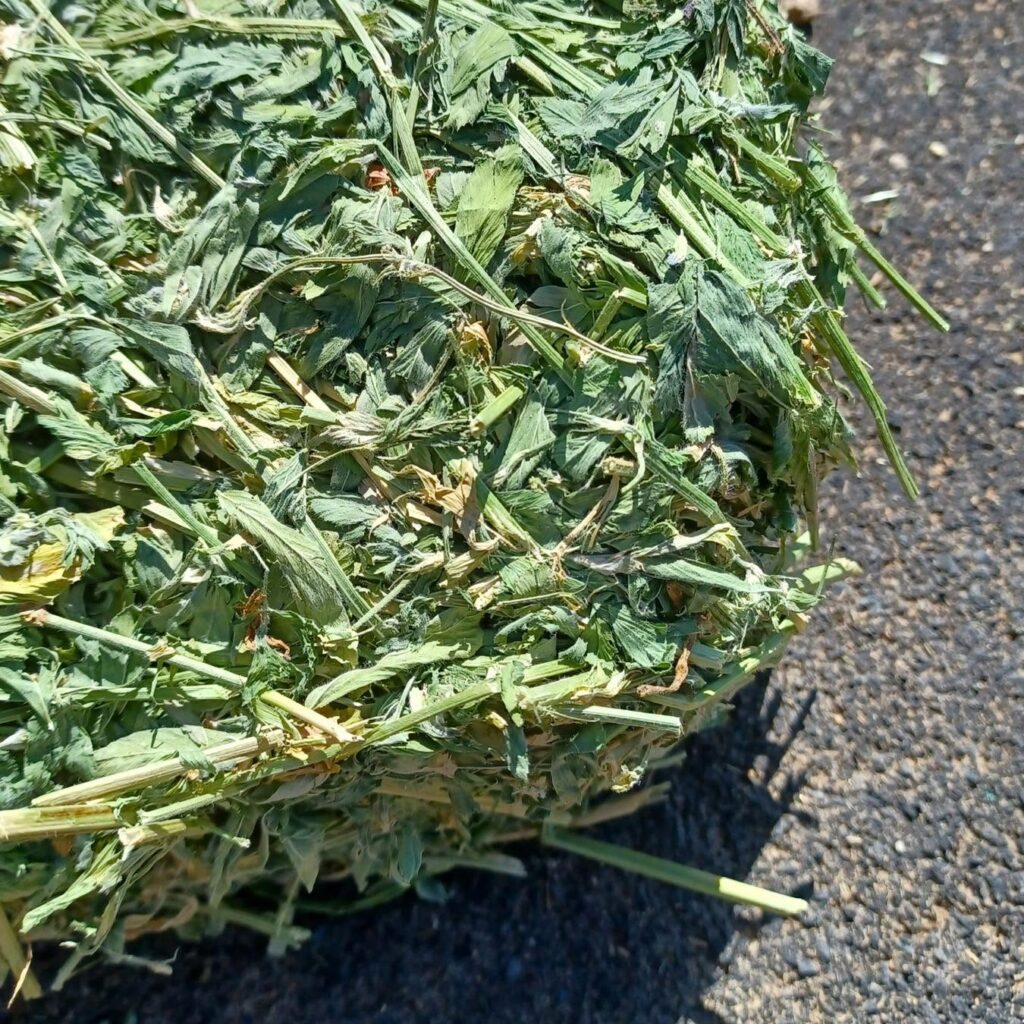
Many horse owners also feed a combination of Timothy and alfalfa to create a balanced diet.
How to Identify Good-Quality Hay
Buying good hay can save money and help prevent many health problems.
Before purchasing a bale, inspect it carefully.
Look for:
✅ Bright green color
✅ Plenty of leafy material
✅ Fresh, sweet smell
✅ Fine stems
✅ Minimal dust
✅ Uniform texture
Avoid Hay That Is:
❌ Moldy
❌ Brown or black
❌ Damp
❌ Musty smelling
❌ Full of weeds
❌ Extremely coarse
❌ Heating inside the bale
Poor-quality hay may contribute to digestive problems, reduced feed intake, respiratory irritation, and poor body condition.
Many U.S. university extension programs recommend selecting hay that is leafy, free from mold and dust, and harvested at the proper stage of maturity to maximize nutritional value.
First Cut vs Second Cut vs Third Cut Hay
Horse owners often wonder whether the first, second, or third cutting is best.
The answer depends on the horse and the quality of the harvest.
First Cut
First-cut hay usually has:
- Longer stems
- More fiber
- Lower protein
- Lower sugar
Best for:
- Easy keepers
- Overweight horses
- Horses needing more chewing time
Second Cut
Second-cut hay is often considered the ideal balance.
It generally contains:
- Softer leaves
- Better digestibility
- Higher nutrition
- Excellent palatability
For many healthy adult horses, high-quality second-cut Timothy hay is an excellent everyday choice.
Third Cut
Third-cut hay is typically:
- Very soft
- Extremely leafy
- Higher in calories
- Lower in fiber
It may suit horses needing extra nutrition but isn’t always necessary for horses that maintain weight easily.
The overall quality of the hay is more important than the cutting number. Weather, harvesting practices, and storage conditions all influence nutritional value.
Signs Your Horse Is Not Getting Enough Forage
- Weight loss
- Dull coat
- Slow hoof growth
- Wood chewing
- Stall weaving
- Gastric ulcers
- Frequent colic
- Poor manure consistency
How to Transition to New Hay
Suggested transition schedule:
- Days 1–2: 75% old hay, 25% new
- Days 3–4: 50% old, 50% new
- Days 5–6: 25% old, 75% new
- Day 7+: 100% new hay
What Hay Should Horses Avoid?
Even the best feeding program can be undermined by poor-quality hay.
Never feed hay that shows signs of:
- Mold
- Excessive dust
- Rot
- Heating
- Water damage
- Toxic weeds
- Foreign objects such as plastic or wire
If a bale smells musty or feels warm inside, it’s safer to discard it than risk your horse’s health.
Can Horses Eat Moldy or Wet Hay?
The short answer is no. Horses should never be fed moldy hay, and wet or improperly stored hay should also be avoided unless it has been intentionally soaked as part of a veterinarian-recommended feeding plan.
Poor-quality hay can expose horses to mold spores, bacteria, toxins, and dust, increasing the risk of digestive problems, respiratory disease, and other serious health issues. Even if a horse appears willing to eat it, feeding spoiled hay is not worth the risk.
Why Moldy Hay Is Dangerous
Mold develops when hay is baled with too much moisture or stored in damp conditions. While some mold is easy to see, harmful mold spores can also be present without obvious discoloration.
Feeding moldy hay may increase the risk of:
- Respiratory irritation and chronic coughing
- Allergic airway disease (equine asthma)
- Reduced appetite
- Colic
- Digestive upset
- Exposure to harmful mycotoxins produced by certain molds
If you notice a musty smell, visible white, gray, or black mold, or a cloud of spores when opening a bale, do not feed it to your horse.
Is Wet Hay Safe for Horses?
Not all wet hay is the same.
Hay that has become wet from rain, flooding, or poor storage can quickly lose nutritional value and develop mold or bacterial growth. This type of hay should generally be discarded.
However, hay that is intentionally soaked before feeding is different. Veterinarians may recommend soaking certain grass hays for horses with conditions such as laminitis or insulin dysregulation to help reduce water-soluble sugars. Because soaking also removes some nutrients and can encourage bacterial growth if left standing, it should only be done according to veterinary guidance and fed promptly after soaking.
What About Dusty Hay?
Excessively dusty hay should not be fed, particularly to horses with respiratory conditions.
Dust can irritate the airways and may contribute to chronic respiratory problems, including equine asthma. While lightly steaming or soaking hay may help reduce dust in some situations, hay that is moldy or heavily contaminated should never be made “safe” simply by wetting it.
Fresh, clean, dust-free hay is always the better choice.
Can Heated Hay Be Dangerous?
Yes. Hay that feels unusually warm inside the bale may have been baled before it was fully cured.
Heating occurs when excess moisture allows microbial activity to continue after baling. Besides reducing forage quality, overheating can encourage mold growth and, in extreme cases, create a fire hazard during storage.
Avoid feeding hay that feels hot, has a burnt or caramel-like smell, or shows signs of internal spoilage.
Signs That Hay Should Be Discarded
Do not feed hay if you notice:
- Visible mold or mildew
- A musty, sour, or rotten odor
- Heavy dust clouds when the bale is opened
- Damp or water-damaged sections
- Heating inside the bale
- Toxic weeds or foreign objects such as plastic, wire, or trash
When in doubt, it’s safer to replace a questionable bale than risk your horse’s health.
Expert Tip
Farrier’s Experience: Over the years, I’ve found that many hoof and body condition problems begin with poor-quality forage. Horses often continue eating moldy or dusty hay if no better option is available, but that doesn’t mean it’s safe. Consistently feeding clean, well-cured hay is one of the simplest ways to support digestive health, maintain healthy body condition, and provide the nutrients needed for strong hoof growth.
Best Hay for Horses Based on Their Needs
The best hay isn’t the same for every horse. Age, workload, body condition, and health all influence which forage is most appropriate. Choosing hay based on your horse’s individual needs can improve digestion, support healthy weight, and reduce the risk of nutrition-related problems.
Best Hay for Senior Horses
As horses age, chewing long, coarse stems becomes more difficult. Dental wear or missing teeth may prevent older horses from breaking down hay efficiently.
For many senior horses, softer grass hays are easier to chew while still providing the fiber needed for digestive health.
Good options include:
- Soft second-cut Timothy hay
- Orchard grass hay
- High-quality mixed grass hay
If a senior horse struggles to maintain weight or has significant dental problems, soaked hay cubes or complete senior feeds may be recommended by your veterinarian.
Practical Tip: Watch for hay dropping from the mouth (called “quidding”), unexplained weight loss, or long fibers in manure. These can indicate your horse is no longer chewing hay effectively.
Best Hay for Horses With Laminitis
Laminitis requires careful forage management. Many horses with laminitis benefit from grass hay that is lower in non-structural carbohydrates (NSC), but the exact diet depends on the underlying cause and should be developed with your veterinarian.
Many veterinarians recommend:
- Mature Timothy hay
- Orchard grass hay
- Teff hay (where available)
- Hay tested for lower NSC levels
In some cases, soaking hay before feeding may help reduce water-soluble sugars. However, soaking also removes some nutrients, so it should only be used when appropriate.
Avoid making major dietary changes without veterinary guidance, especially during an active laminitis episode.
Best Hay for Horses With Insulin Resistance or EMS
Horses with insulin resistance or Equine Metabolic Syndrome (EMS) often require careful control of sugar and starch intake.
Many owners choose:
- Tested low-NSC grass hay
- Mature Timothy hay
- Orchard grass hay
- Teff hay
Body condition is just as important as hay selection. Regular exercise (when appropriate), controlled calorie intake, and routine veterinary monitoring all play important roles in long-term management.
Best Hay for Horses With Cushing’s Disease (PPID)
Many horses with PPID also develop insulin dysregulation, making forage selection especially important.
Rather than choosing hay based on appearance alone, many veterinarians recommend laboratory hay analysis whenever possible.
This provides information on:
- Sugar content
- Protein
- Digestible energy
- Mineral levels
A hay analysis allows you to match the forage to your horse’s medical needs instead of relying on guesswork.
Best Hay for Performance Horses
Performance horses burn significantly more calories than horses used for light pleasure riding.
Many owners successfully feed:
- Timothy hay
- Orchard grass
- Timothy-Alfalfa mix
- Premium alfalfa
The goal is to provide enough fiber while meeting increased energy requirements without causing digestive upset.
Best Hay for Pregnant or Lactating Mares
Broodmares require more nutrients during late pregnancy and while nursing a foal.
High-quality forage becomes even more important during this stage.
Many broodmare diets include:
- Premium alfalfa
- Timothy-Alfalfa blends
- High-quality orchard grass
Additional vitamins, minerals, and concentrates may also be required depending on the mare’s body condition and stage of production.
Best Hay for Easy Keepers
Some horses maintain weight very easily.
These horses generally do well on:
- Mature Timothy hay
- Grass hay
- Lower-calorie mixed grass hay
Avoid overfeeding rich alfalfa unless additional calories are genuinely needed.
Using slow-feeder hay nets may also help extend eating time while reducing boredom.
Hay Cubes vs. Hay Pellets
Hay cubes and hay pellets are convenient alternatives when long-stem hay is limited, but they are not identical.
| Feature | Hay Cubes | Hay Pellets |
|---|---|---|
| Fiber Length | Longer | Shorter |
| Chewing Time | Longer | Shorter |
| Digestive Health | Excellent | Good |
| Dust | Low | Very Low |
| Soaking | Recommended for seniors | Often recommended |
Hay cubes generally retain longer fiber than pellets, making them a better replacement for traditional hay in many situations.
Senior horses often benefit from soaked cubes because they are easier to chew.
How Much Hay Should a Horse Eat Each Day?
Most healthy horses should consume approximately 1.5% to 2% of their body weight in forage daily, although exact requirements vary depending on age, workload, body condition, and health.
Daily Hay Intake Guide
| Horse Weight | Approximate Hay Per Day |
|---|---|
| 500 lb (227 kg) | 7.5–10 lb |
| 750 lb (340 kg) | 11–15 lb |
| 1,000 lb (454 kg) | 15–20 lb |
| 1,200 lb (544 kg) | 18–24 lb |
These are general guidelines. Growing horses, broodmares, performance horses, and horses with certain medical conditions may require different feeding programs.
How to Read a Hay Analysis Report
| Nutrient | Good Range | Why It Matters |
|---|---|---|
| Crude Protein | 8–14% | Muscle and growth |
| NSC | Below veterinarian-recommended targets for susceptible horses | Metabolic health |
| Calcium | Balanced | Bone health |
| Phosphorus | Balanced | Mineral balance |
| Moisture | Properly cured | Storage quality |
Common Mistakes Horse Owners Make When Buying Hay
Even experienced horse owners occasionally purchase hay based only on price.
Some of the most common mistakes include:
- Buying hay without smelling it
- Ignoring mold or dust
- Assuming greener hay is always better
- Feeding the same hay to every horse
- Purchasing hay without asking when it was harvested
- Storing hay where moisture can enter
- Switching hay suddenly instead of making gradual changes
Taking a few extra minutes to inspect each load can help prevent costly health problems later.
Hay Storage Tips
Proper storage protects hay quality and reduces waste.
For best results:
- Store hay in a dry, well-ventilated building.
- Keep bales off the ground using pallets.
- Protect hay from rain and snow.
- Allow airflow around stacked bales.
- Never stack damp hay, as it can mold or generate excessive heat.
Good storage preserves nutritional value and helps prevent spoilage.
How to Choose the Best Hay for Your Horse
Choosing the right hay doesn’t have to be overwhelming. Instead of buying the same hay for every horse, consider your horse’s age, workload, body condition, and any existing health conditions. The best hay is one that meets nutritional needs while supporting long-term digestive and overall health.
Use the table below as a quick reference.
| If Your Horse Is… | Best Hay Choice | Notes |
|---|---|---|
| Healthy Adult Horse | Timothy Hay | Balanced nutrition for most horses. |
| Senior Horse | Orchard Grass or Soft Second-Cut Timothy | Easier to chew and digest. |
| Performance Horse | Timothy-Alfalfa Mix | Higher energy and protein. |
| Growing Foal | Premium Alfalfa | Supports growth and development. |
| Pregnant or Lactating Mare | Alfalfa or Timothy-Alfalfa Blend | Increased nutrient requirements. |
| Easy Keeper | Mature Timothy Hay | Lower calorie option. |
| Overweight Horse | Mature Grass Hay | Helps control calorie intake. |
| Laminitic Horse | Tested Low-NSC Grass Hay | Consult your veterinarian. |
| Insulin Resistant Horse | Low-NSC Timothy or Teff Hay | Hay testing is recommended. |
Key Takeaway: There isn’t one “perfect” hay for every horse. The best choice depends on your horse’s individual needs and the quality of the forage available.
Seasonal Horse Hay Feeding Guide
A horse’s nutritional needs change throughout the year. Adjusting your hay feeding program based on the season can help maintain healthy body condition and digestive function.
Spring
Spring brings lush pasture growth, but sudden access to rich grass can increase the risk of digestive upset and, for susceptible horses, laminitis.
Spring Tips
- Introduce pasture gradually.
- Continue feeding hay during the transition.
- Monitor horses prone to metabolic disorders.
Summer
Hot, dry weather often reduces pasture quality, making hay an important source of fiber again.
Summer Tips
- Store hay away from moisture.
- Ensure unlimited access to fresh water.
- Monitor weight in working horses.
Fall
Fall is the ideal time to evaluate body condition before winter.
Fall Tips
- Adjust hay intake based on body condition.
- Inspect stored hay for mold or moisture.
- Prepare winter forage supplies early.
Winter
For many horses, hay becomes the primary feed source during winter.
Because horses generate body heat through fiber fermentation, adequate forage is especially important during cold weather.
Winter Tips
- Increase hay if recommended for horses exposed to severe cold.
- Prevent hay from becoming wet or frozen.
- Ensure access to unfrozen drinking water.
You may also read;
- Horse Feeding Guide for Beginners
- Best Hay for Horses With Laminitis
- Horse Dehydration Signs and Prevention
- Best Hoof Supplements for Horses
- Summer Horse Care Checklist
Horse Hay Buying Checklist
Buying quality hay starts before you load the first bale.
Color
Choose hay that is:
- Bright green
- Light green
- Evenly cured
Avoid hay that is:
- Brown
- Black
- Yellow from weather damage
Smell
Good hay should smell:
- Fresh
- Sweet
- Clean
Avoid hay with:
- Musty odor
- Mold smell
- Sour smell
Texture
Quality hay should be:
- Leafy
- Soft
- Fine-stemmed
Avoid:
- Thick woody stems
- Excessive seed heads
- Brittle, overly dry leaves
Dust and Mold
A small amount of dust during handling is normal, but heavy dust clouds or visible mold are signs that the hay should not be fed.
Moisture
Hay should feel dry but not brittle.
Damp hay can mold quickly and, in severe cases, may even heat internally during storage.
Why Hay Is the Most Important Part of a Horse’s Diet
Hay isn’t just something horses eat when pasture is unavailable-it’s the foundation of a healthy digestive system. In fact, forage should make up the majority of a horse’s daily diet because horses are designed to graze for many hours throughout the day.
A horse’s digestive tract relies on a steady supply of fiber to keep food moving through the gut. Long-stem forage also encourages chewing, which increases saliva production. Saliva naturally helps buffer stomach acid and may reduce the risk of gastric ulcers in some horses.
From my experience working around horses and hoof care, I’ve noticed that horses receiving consistent access to clean, high-quality hay often maintain better body condition and healthier hoof growth than horses fed inconsistent or poor-quality forage.
High-quality hay supports:
- Healthy digestion
- Strong hoof growth
- Better weight management
- Reduced boredom and stable vices
- Improved gut health
- Consistent energy levels
According to the American Association of Equine Practitioners (AAEP), forage should remain the primary component of a horse’s diet, with concentrates added only when necessary to meet additional energy requirements.
Horse Hay Buying Checklist
☐ Green color
☐ Fresh smell
☐ Leafy
☐ No mold
☐ No dust
☐ Fine stems
☐ Proper storage
☐ No weeds
☐ Ask harvest date
Common Myths About Horse Hay
Horse owners often hear conflicting advice about hay. Here are some common myths and the facts behind them.
Myth 1: Green Hay Is Always Better
Not necessarily.
While green color often indicates good curing, nutritional quality also depends on plant maturity, harvesting conditions, and storage.
Myth 2: Alfalfa Is Bad for Every Horse
False.
Alfalfa is an excellent forage for many horses, including growing foals, lactating mares, and some performance horses. It simply isn’t the best choice for every horse.
Myth 3: Dusty Hay Is Safe if Horses Still Eat It
False.
Dusty hay can irritate the respiratory system and may contribute to chronic breathing problems.
Myth 4: Horses Can Eat Any Type of Hay
False.
Poor-quality hay, moldy hay, or hay containing toxic weeds can lead to serious health problems.
Myth 5: Expensive Hay Is Always Better
Not always.
Well-harvested, properly stored hay from a reliable local producer may be a better choice than a more expensive product that has been stored poorly.
Should You Test Your Hay?
Laboratory hay analysis is one of the best investments for horse owners who purchase large quantities of forage or manage horses with special dietary needs.
A hay test measures important nutritional values such as:
- Crude protein
- Digestible energy
- Fiber
- Calcium
- Phosphorus
- Non-Structural Carbohydrates (NSC)
Testing removes much of the guesswork from feeding and allows you to build a more accurate nutrition program.
This is particularly valuable for horses with laminitis, insulin resistance, Equine Metabolic Syndrome (EMS), or PPID (Cushing’s disease).
Expert Tips From Experience
Over the years, I’ve learned that successful feeding starts with consistency rather than chasing the “perfect” bale of hay.
A few habits make a noticeable difference:
- Buy hay from trusted suppliers with consistent quality.
- Inspect every new load, even from familiar sources.
- Introduce new hay gradually over 7 to 10 days.
- Store hay in a dry, well-ventilated location.
- Base feeding decisions on your horse’s body condition instead of assumptions.
One of the biggest mistakes I see is focusing only on concentrates while overlooking forage quality. In many cases, improving hay quality has a greater impact on a horse’s overall condition than adding extra supplements.
Frequently Asked Questions
Is Timothy or alfalfa better for horses?
For most healthy adult horses, Timothy hay is an excellent everyday forage. Alfalfa is often reserved for horses with higher nutritional demands.
What hay should horses avoid?
Avoid hay that is moldy, dusty, damp, spoiled, or contaminated with weeds or foreign materials.
Which cut of hay is best?
Second-cut Timothy hay is often preferred because it usually offers a good balance of softness, nutrition, and digestibility. However, the overall quality of the hay is more important than the cut alone.
Is Timothy hay better than orchard grass?
Both are excellent choices for most horses. Timothy hay is often slightly higher in fiber, while orchard grass is softer and very palatable. The quality of the hay is usually more important than the specific grass species.
Can horses eat alfalfa every day?
Many horses can safely eat alfalfa every day, but it is not necessary for every horse. Because alfalfa is higher in protein and calories than most grass hays, it is generally better suited to horses with greater nutritional needs.
What color should good hay be?
Good-quality hay is usually green to light green, smells fresh and sweet, and contains plenty of leafy material. Brown, musty, or moldy hay should be avoided.
Is dusty hay safe?
No. Dusty hay may irritate the respiratory tract and should not be fed, especially to horses with respiratory conditions.
Summary:-
The best hay for horses is not determined by one specific grass species but by its quality and how well it meets an individual horse’s needs.
For most healthy adult horses, premium Timothy hay or orchard grass provides an excellent foundation for a balanced diet. Horses with higher nutritional demands may benefit from alfalfa, while those with conditions such as laminitis or insulin dysregulation often require carefully selected, lower-NSC forage under veterinary guidance.
By choosing clean, leafy, mold-free hay, storing it correctly, and adjusting forage based on your horse’s age, workload, and health, you can support digestive function, maintain healthy body condition, and promote long-term hoof and overall wellness.
About the Author
James Lilli is an equine hoof care specialist, farrier, and horse care researcher with more than 20 years of hands-on experience working with horses. Throughout his career, he has helped horse owners improve hoof health, prevent common foot problems, and better understand the connection between nutrition, management, and overall equine well-being.
At TheHoofInfo.com, James shares practical, evidence-based horse care advice that combines real-world experience with information from trusted veterinary and equine nutrition resources. His goal is to make horse care simple, accurate, and useful for owners of every experience level.
Expert Review
This article has been carefully reviewed for accuracy and practicality by James Lilli, an experienced farrier and horse care researcher with over 20 years of experience in equine hoof care and horse management.
The information provided is based on current equine nutrition recommendations, practical field experience, and guidance from trusted organizations, including veterinary and university extension resources. Every effort is made to ensure the content is accurate, up to date, and easy for horse owners to understand.
Last Reviewed: July 2026
Medical Disclaimer
The information published on TheHoofInfo.com is intended for educational and informational purposes only. It is not a substitute for professional veterinary diagnosis, treatment, or individualized nutritional advice.
Every horse has unique health, nutritional, and management needs. Before making significant changes to your horse’s diet, feeding program, supplements, or medical treatment, consult a licensed veterinarian or qualified equine nutritionist.
If your horse shows signs of illness, severe weight loss, colic, laminitis, lameness, or any other medical emergency, seek immediate veterinary care.
While we strive to provide accurate and up-to-date information, TheHoofInfo.com makes no guarantees regarding the completeness or suitability of the content for every individual situation. Your use of this website and its information is at your own discretion.
References
- American Association of Equine Practitioners (AAEP) – Equine Nutrition Resources
- National Research Council (NRC). Nutrient Requirements of Horses.
- University of Kentucky Cooperative Extension – Equine Nutrition
- Penn State Extension – Horse Feeding and Hay Quality
- Michigan State University Extension – Hay Selection for Horses



Leave a comment