

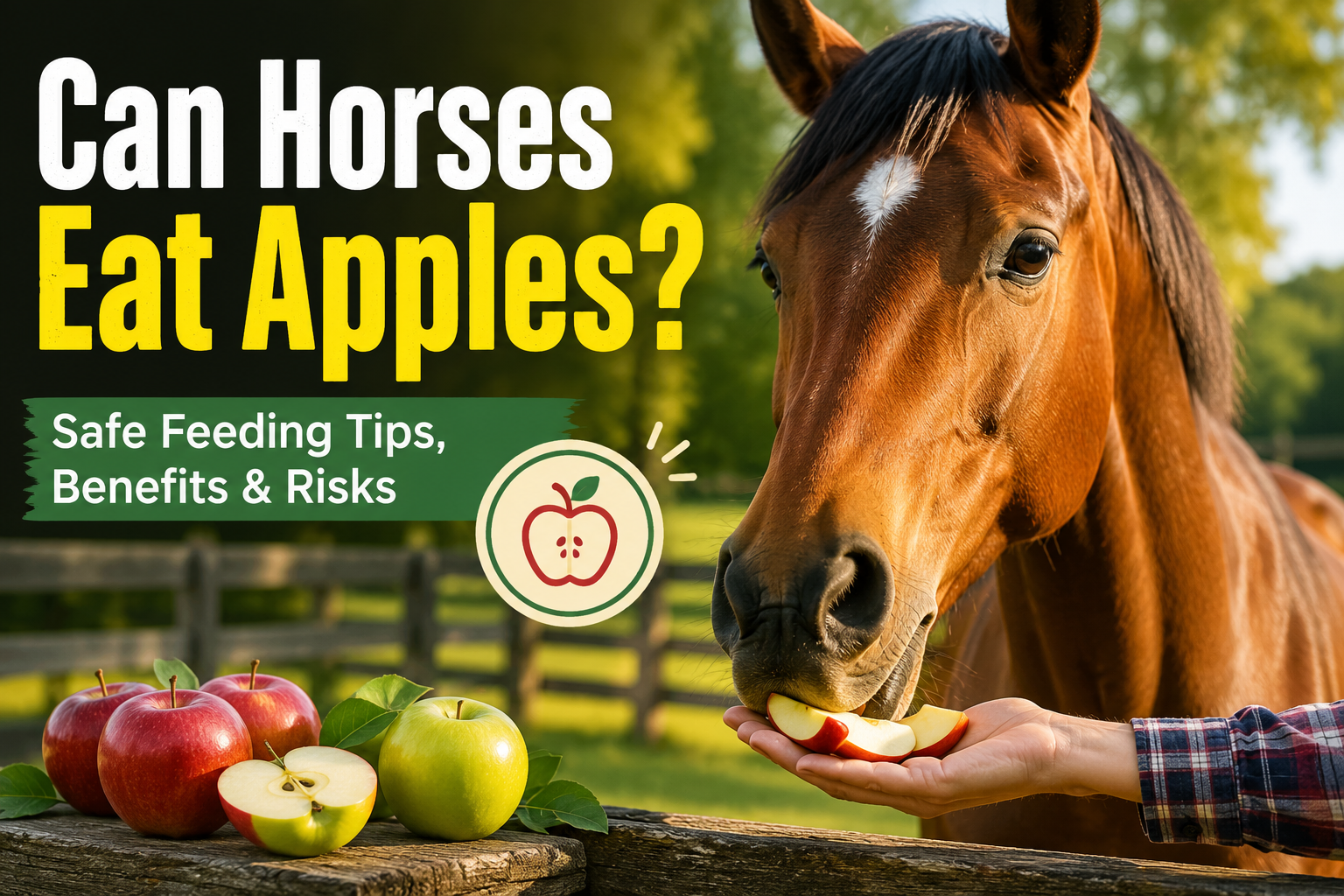
Can Horses Eat Apples?
Yes, horses can eat apples, and for most healthy horses, apples are a safe and enjoyable treat when fed in moderation. They provide fibre, vitamins, and moisture, making them a popular reward among horse owners.
However, apples should never replace a balanced diet. Feeding too many apples or offering them incorrectly can increase the risk of choking or digestive upset. Horses with metabolic conditions, such as laminitis or Equine Metabolic Syndrome (EMS), also need extra care because apples contain natural sugars.
Knowing how to prepare apples properly and how much to feed can help you keep your horse healthy while still giving them a treat they’ll enjoy.
Are Apples Good for Horses?
Apples are more than just a tasty snack. They contain several nutrients that can benefit horses when offered occasionally.
Some of the nutritional benefits include:
- Dietary fibre that supports healthy digestion
- Vitamin C, which supports normal body functions
- Potassium for muscle and nerve function
- High water content that helps with hydration
- Natural antioxidants
Although apples contain useful nutrients, the amount is relatively small compared to a horse’s daily forage and feed. Think of apples as an occasional reward rather than a nutritional supplement.
For most horses, treats-including apples-should make up only a small portion of the overall diet.
How Many Apples Can a Horse Eat Each Day?
Moderation is the key.
A healthy adult horse can usually enjoy one to two medium apples per day as treats, provided they are part of an otherwise balanced diet.
General guidelines include:
- Adult horses: 1–2 medium apples
- Ponies: Half to one small apple
- Miniature horses: Small pieces only
If your horse has never eaten apples before, introduce them gradually and observe for any signs of digestive discomfort.
Remember that treats should never replace hay, pasture, or a balanced concentrate feed.
Can Horses Eat Whole Apples?
Technically, they can, but feeding whole apples is not recommended.
Whole apples may become lodged in the horse’s throat, creating a choking hazard. Although horses chew food thoroughly, some horses become excited during feeding and may swallow large pieces without adequate chewing.
A safer option is to:
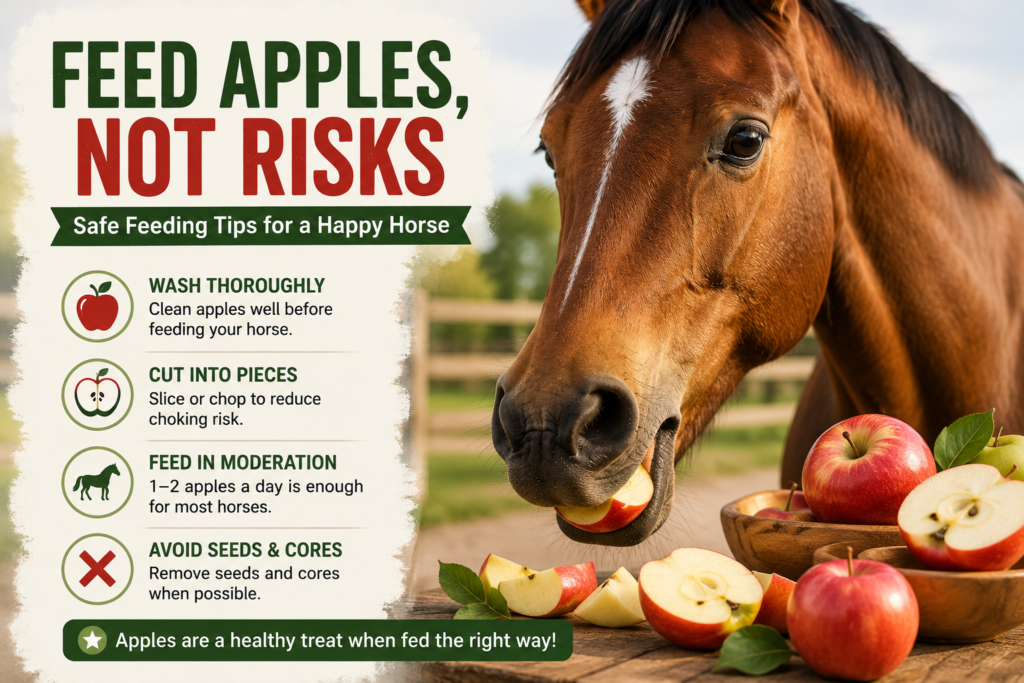
- Wash the apple thoroughly.
- Cut it into slices or bite-sized chunks.
- Feed a few pieces at a time.
This simple step greatly reduces the risk of choking and makes feeding much safer.
Can Horses Eat Apple Cores?
Yes, horses can usually eat small amounts of apple core without problems.
The core itself is not considered toxic, but it contains the seeds, which many owners prefer to remove before feeding.
Removing the core also makes the apple easier to cut into safe, bite-sized pieces.
For convenience and safety, many horse owners simply discard the core before feeding.
Can Horses Eat Apple Seeds?
This is one of the most common questions horse owners ask.
Apple seeds contain a naturally occurring compound that can release small amounts of cyanide when crushed during digestion. However, the quantity found in a few seeds is extremely low.
Accidentally eating the seeds from one or two apples is unlikely to harm a healthy horse.
The concern arises only if a horse regularly consumes very large numbers of crushed apple seeds over time.
To be safe, many owners remove the seeds before feeding apples. Since it only takes a few extra seconds, it’s a sensible precaution.
Can Horses Eat Green Apples?
Yes.
Green apples are generally safe for healthy horses and provide similar nutrients to red apples.
The main difference is that green apples often have a slightly more tart flavour.
Whether you choose green or red apples, always feed them in moderation and prepare them properly before offering them to your horse.
Can Horses Eat Apples Every Day?
They can, but it isn’t always necessary.
Offering a small amount of apple each day is generally safe for a healthy horse, provided it doesn’t replace essential nutrients from forage and balanced feed.
Many owners choose to vary treats by rotating between:
- Apples
- Carrots
- Small pieces of banana
- Watermelon (without rind)
- Commercial horse treats
Providing variety can make treats more interesting while avoiding excessive sugar from a single source.
Can Horses with Laminitis Eat Apples?
This is where extra caution is needed.
Horses affected by laminitis often have problems processing sugars and starches. Although apples contain natural sugars rather than added sugar, they can still contribute to the horse’s total sugar intake.
If your horse has:
- Laminitis
- Equine Metabolic Syndrome (EMS)
- Insulin resistance
- A history of founder
consult your veterinarian before feeding apples.
In many cases, owners choose lower-sugar treats instead, such as a small piece of celery or specially formulated low-sugar horse treats.
Managing the overall diet is far more important than offering occasional fruit.
Low-Sugar Horse Treats
For horses with laminitis or insulin resistance, many veterinarians recommend choosing specially formulated low-sugar horse treats instead of sugary fruits.
Recommended Products
- Standlee Smart Treats
- Manna Pro Bite-Size Nuggets (Low Sugar options)
- Hilton Herbs Healthy Horse Treats
Recommended Apple Cutter for Horse Owners
If you regularly feed apples to your horse, an apple slicer and corer makes preparation much quicker while reducing the risk of choking by creating evenly sized slices.
👉 Recommended Product:
Amazon Button
Can Horses with Equine Metabolic Syndrome Eat Apples?
Horses diagnosed with Equine Metabolic Syndrome (EMS) require careful dietary management.
Because apples contain natural sugars, they may not be suitable for every EMS horse.
Some horses with well-controlled EMS may tolerate a very small amount as an occasional treat, while others should avoid sugary fruits altogether.
Your veterinarian can recommend the safest feeding plan based on your horse’s individual condition.
Can Horses Eat Apples and Carrots Together?
Yes.
Healthy horses can enjoy apples and carrots together as occasional treats.
Both provide fibre and moisture while remaining relatively low in calories compared with many processed treats.
Even so, moderation remains important.
Large quantities of any treat can upset the digestive system or encourage undesirable feeding behaviour.
Do Horses Prefer Apples or Carrots?
Every horse has its own preferences.
Some horses eagerly search for apples because of their sweet taste, while others become more excited when offered crunchy carrots.
There is no “better” choice between the two.
As long as both are fed responsibly, either can be an excellent reward during training or routine handling.
What Fruits Should Horses Not Eat?
Although many fruits are safe, some should be avoided.
Do not feed:
- Avocados
- Rhubarb
- Rotten or mouldy fruit
- Large quantities of stone fruit with pits
- Fermented fruit
Always remove spoiled fruit immediately, as mould can produce toxins that may seriously affect horses.
When introducing any new fruit, start with a small amount and observe your horse for any unusual reactions.
Safe Tips for Feeding Apples
Following a few simple precautions can make feeding apples much safer.
Always:
- Wash apples before feeding.
- Cut apples into small pieces.
- Feed only fresh apples.
- Remove rotten portions.
- Offer apples as treats, not meals.
- Introduce new foods gradually.
- Store apples in a cool, dry place.
These simple habits reduce the risk of choking and digestive upset.
Common Mistakes Horse Owners Make
Even experienced owners occasionally make mistakes.
Some of the most common include:
Feeding Too Many Apples
Too much fruit can add unnecessary sugar and calories to the diet.
Offering Whole Apples
Whole apples increase the risk of choking, especially in horses that eat quickly.
Feeding Rotten Fruit
Spoiled fruit can upset digestion and may contain harmful mould.
Ignoring Medical Conditions
Horses with laminitis, insulin resistance, or EMS often require stricter control of sugary treats.
Replacing Proper Nutrition
Apples should always remain a treat, not a substitute for quality forage or balanced feed.
Frequently Asked Questions
Can horses eat apples with the skin on?
Yes. The skin is safe and contains additional fibre. Wash the apple thoroughly before feeding.
Can foals eat apples?
Foals should primarily consume milk and age-appropriate feed. Apples should only be introduced carefully once they are older and able to chew safely.
Can horses eat dried apples?
Yes, but only in small amounts. Dried apples contain less water and a higher concentration of natural sugars than fresh apples.
Can horses choke on apples?
Yes. Feeding whole apples increases the risk. Cutting apples into small pieces makes them much safer.
Are red or green apples better?
Both are suitable for healthy horses. The choice comes down to availability and your horse’s preference.
Summary:-
So, can horses eat apples? Absolutely. For healthy horses, apples can be a safe, enjoyable treat when fed in moderation. Cutting them into small pieces, avoiding excessive amounts, and considering your horse’s overall health are the keys to safe feeding.
If your horse has laminitis, Equine Metabolic Syndrome, or insulin resistance, it’s important to speak with your veterinarian before offering apples or other sugary treats.
Used responsibly, apples can be a simple way to reward your horse while adding a little variety to its routine—without compromising good nutrition.







Leave a comment