

7 Essential Tips for Healthy Hooves for Horses
A horse’s hooves are the foundation of its health, comfort, and performance. No matter whether your horse is a pleasure companion, trail partner, or competitive athlete, healthy hooves are essential for sound movement and long-term well-being. As the old saying goes, “No hoof, no horse,” and there is a lot of truth behind those words.
Hooves constantly grow and adapt to the environment, but they also face daily stress from hard ground, moisture, nutrition issues, and normal wear. Without proper care, hoof problems such as cracks, thrush, white line disease, and lameness can develop quickly.
The good news is that maintaining healthy hooves for horses does not have to be complicated. Consistent care and attention can make a significant difference in hoof quality and overall soundness.
In this guide, we’ll cover seven essential tips that every horse owner should follow to support strong, healthy hooves.
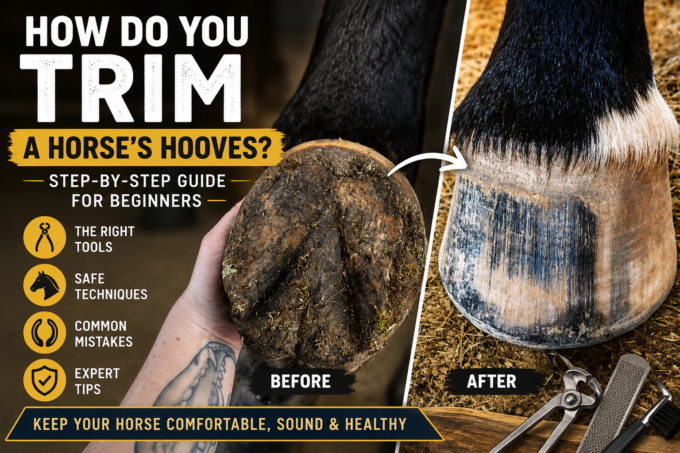
1. Schedule Regular Hoof Trimming
Regular trimming is one of the most important aspects of hoof care. Hooves grow continuously, and if they become too long or uneven, they can place abnormal stress on the horse’s joints, tendons, and ligaments.
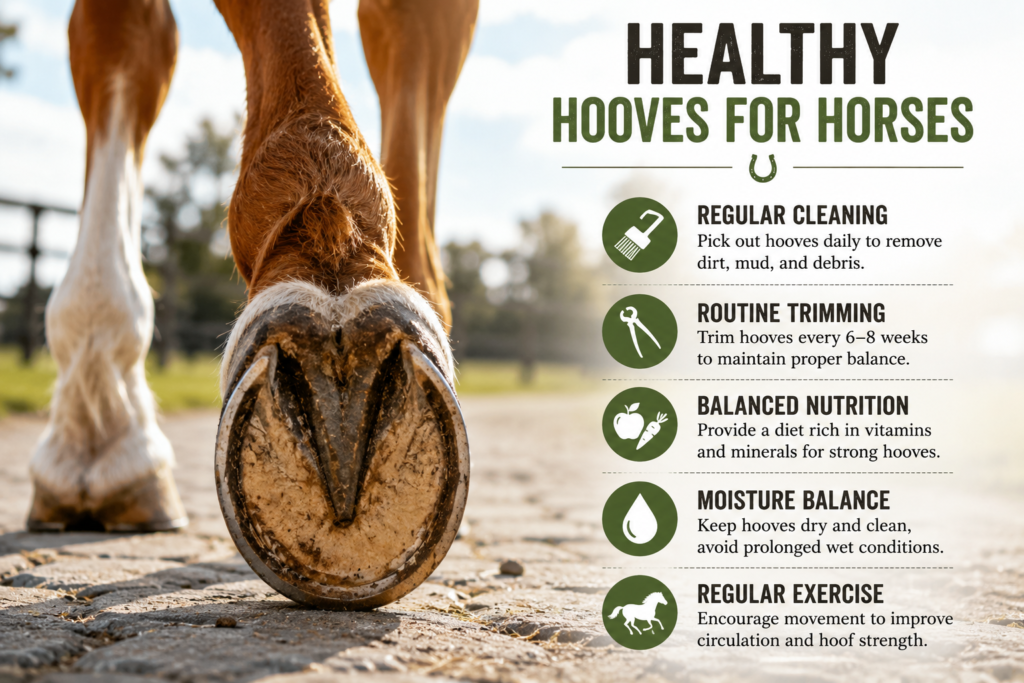
Most horses require trimming every 4 to 8 weeks, although the exact schedule depends on factors such as:
- Age
- Activity level
- Genetics
- Hoof growth rate
- Climate and environment
In my experience, many hoof problems begin when owners wait too long between trims. Overgrown hooves can crack more easily, become imbalanced, and increase the risk of lameness.
A qualified farrier can evaluate hoof balance and ensure proper trimming that supports natural movement. Even horses that go barefoot benefit from routine trimming.
Signs Your Horse May Need a Trim
- Long or flared hoof walls
- Chipped or cracked hooves
- Uneven wear patterns
- Changes in gait
- Difficulty turning or moving comfortably
Keeping a regular trimming schedule is one of the simplest ways to maintain healthy hooves for horses.
2. Provide Proper Nutrition
Strong hooves begin from the inside out. The quality of hoof horn produced by the horse depends heavily on nutrition.
Hooves are made primarily of keratin, a protein that requires adequate nutrients for healthy growth. Horses receiving poor-quality diets may develop weak, brittle, or slow-growing hooves.
A balanced diet should include:
- High-quality forage
- Adequate protein
- Essential vitamins
- Trace minerals
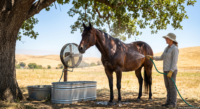
- Fresh water
Several nutrients play an important role in hoof health:
Biotin
Biotin is one of the most researched nutrients for hoof growth. It may help improve hoof strength and quality when provided consistently over several months.
Zinc
Zinc supports healthy keratin production and hoof wall integrity.
Copper
Copper contributes to connective tissue development and overall hoof strength.
Methionine
This amino acid supports hoof horn formation and growth.
Remember that hoof growth is slow. It can take 9 to 12 months for an entirely new hoof wall to grow from the coronary band to the ground.
3. Keep Hooves Clean and Dry
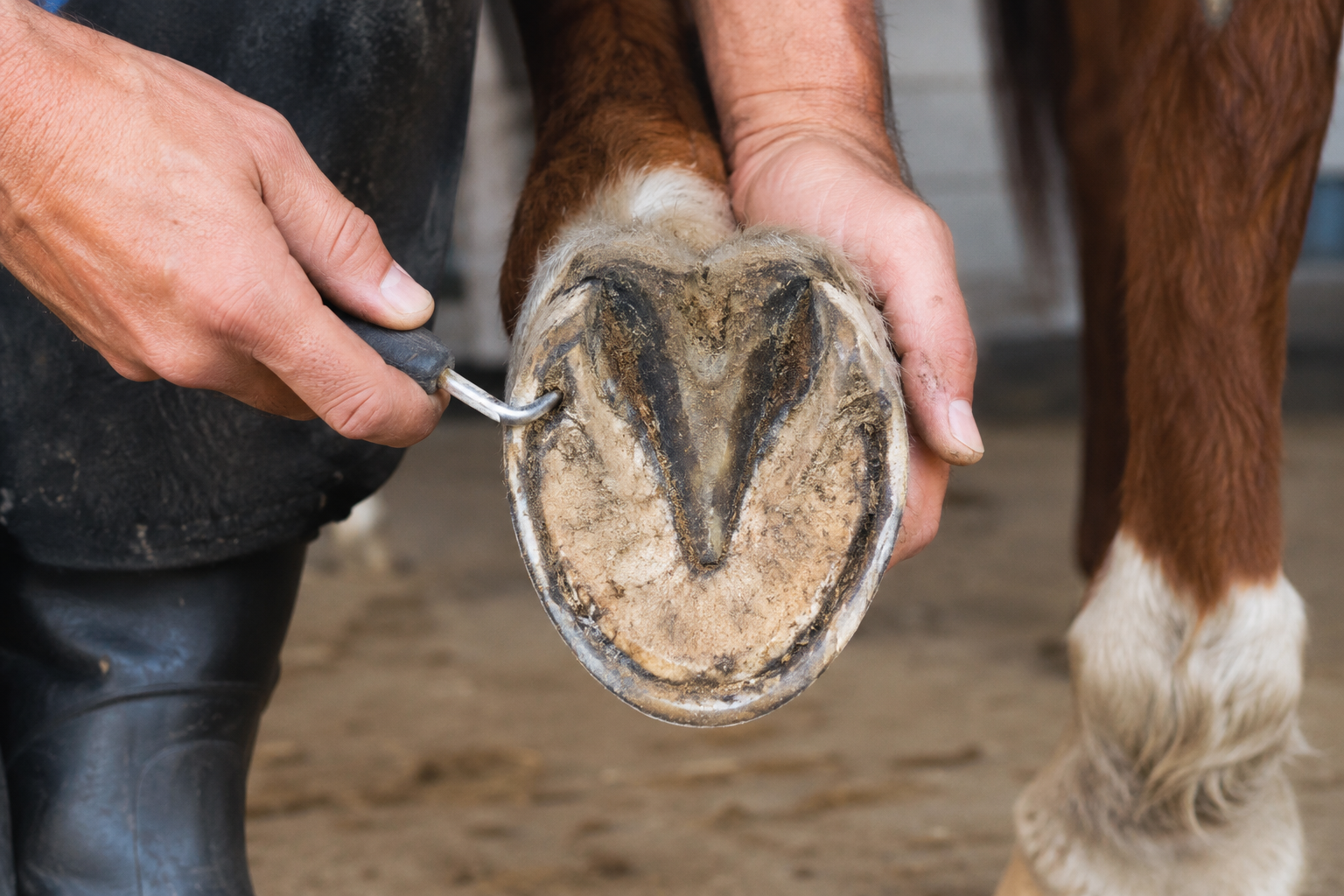
Daily hoof cleaning is a simple habit that can prevent many common hoof problems.
Use a hoof pick to remove:
- Mud
- Manure
- Small stones
- Packed dirt
- Debris around the frog
Cleaning allows you to inspect the hoof for early signs of trouble before they become serious.
While horses naturally encounter moisture, prolonged exposure to wet conditions can soften hoof walls and encourage bacterial or fungal infections. On the other hand, extremely dry conditions may contribute to cracking.
The goal is consistency rather than keeping hooves perfectly dry.
Watch for These Warning Signs
- Black discharge
- Foul odor
- Deep cracks
- Soft frog tissue
- White powdery areas
These symptoms may indicate infections such as thrush or white line disease.
A few minutes spent cleaning hooves each day can save weeks or months of treatment later.
4. Encourage Regular Exercise
Movement plays a major role in hoof health.
When a horse moves, blood circulation within the hoof increases. Improved circulation helps deliver nutrients to hoof tissues and supports healthy growth.
Horses that spend excessive time standing in stalls often experience slower hoof development and reduced natural wear.
Regular exercise can include:
- Turnout
- Trail riding
- Arena work
- Hand walking
- Light conditioning sessions
Even horses that are not actively ridden benefit from daily movement.
In many cases, owners notice better hoof quality after increasing turnout time because horses move more naturally throughout the day.
Benefits of Exercise for Hooves
- Improved circulation
- Stronger hoof structures
- Better hoof growth
- Natural wear patterns
- Reduced risk of certain hoof problems
Always adjust exercise levels according to your horse’s age, fitness, and health condition.
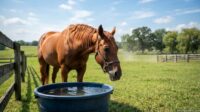
5. Manage Moisture Levels
One of the biggest challenges in hoof care is maintaining proper moisture balance.
Hooves naturally expand and contract as moisture levels change. Extreme fluctuations can weaken the hoof wall and contribute to cracks.
During wet seasons, horses may stand in muddy conditions for extended periods. This can soften hooves and create an environment where bacteria thrive.
During drought conditions, hooves may become excessively dry and brittle.
Tips for Managing Moisture
- Provide dry turnout areas
- Remove wet bedding regularly
- Improve drainage around paddocks
- Avoid standing water
- Maintain clean stalls
- Use hoof conditioners when recommended by your farrier
It’s important to remember that not all hoof products are necessary. Many healthy hooves maintain themselves well when horses receive proper nutrition and live in a balanced environment.
6. Monitor for Common Hoof Problems
Early detection often determines whether a hoof issue remains minor or becomes a major setback.
Make hoof inspections part of your daily routine.
Look carefully for:
Hoof Cracks
Small cracks may seem harmless but can worsen if ignored.
Thrush
Thrush is a bacterial infection that affects the frog and often produces a strong odor.
White Line Disease
This condition affects the inner hoof wall and can lead to structural weakness.
Abscesses
Hoof abscesses can cause sudden and severe lameness.
Laminitis
Laminitis is a serious condition involving inflammation within the hoof structures and requires immediate veterinary attention.
Sole Bruising
Bruising may occur after travel on rocky or hard terrain.
By catching problems early, treatment is usually simpler, less expensive, and more successful.
7. Work Closely With Your Farrier and Veterinarian
Healthy hooves for horses require teamwork.
A skilled farrier and knowledgeable veterinarian can help identify issues before they become serious.
Your farrier evaluates:
- Hoof balance
- Growth patterns
- Wear patterns
- Structural changes
- Trimming needs
Your veterinarian can assist with:
- Lameness evaluations
- Diagnostic imaging
- Medical treatment
- Nutritional recommendations
- Disease management
The best results occur when horse owners, farriers, and veterinarians communicate regularly.
If your horse develops recurring hoof problems, don’t wait for the issue to worsen. Seeking professional advice early often prevents long-term damage.
Additional Hoof Care Tips
Beyond the seven essentials, a few extra practices can support hoof health:
- Maintain a healthy body weight.
- Avoid sudden dietary changes.
- Provide clean drinking water.
- Inspect shoes regularly if your horse is shod.
- Address lameness promptly.
- Keep vaccination and deworming programs current.
- Monitor pasture conditions throughout the year.
Small daily habits often have the greatest long-term impact on hoof quality.
Frequently Asked Questions
How often should horse hooves be trimmed?
Most horses require trimming every 4 to 8 weeks. However, growth rates vary depending on age, nutrition, activity level, and environmental conditions.
What helps improve hoof growth?
A balanced diet, proper trimming, regular exercise, and adequate mineral intake all contribute to healthy hoof growth.
Can horses have healthy hooves without shoes?
Yes. Many horses maintain excellent hoof health while barefoot. The decision depends on workload, terrain, hoof quality, and individual needs.
What causes cracked hooves in horses?
Cracks may result from poor hoof balance, nutritional deficiencies, environmental stress, trauma, or inconsistent trimming schedules.
How can I tell if my horse has thrush?
Common signs include a foul odor, black discharge, and soft frog tissue. Early treatment usually produces the best results.
In Short:-
Healthy hooves for horses don’t happen by accident. They are the result of consistent trimming, proper nutrition, daily cleaning, regular exercise, moisture management, and early attention to potential problems.
Horse owners who invest time in hoof care often see fewer soundness issues, better performance, and improved overall health. While every horse is different, the principles remain the same: provide good nutrition, maintain a regular hoof-care routine, and work closely with qualified professionals.
By following these seven essential tips, you can help your horse develop stronger, healthier hooves that support a lifetime of comfort and movement.
White Line Disease Treatment in Horses (Complete Guide from First Signs to Full Recovery)
How to Trim Hooves for Laminitis Horses (Step-by-Step Guide for Safe Recovery)






Leave a comment