

Laminitis vs founder in horses: Understanding the Difference Every Horse Owner Should Know
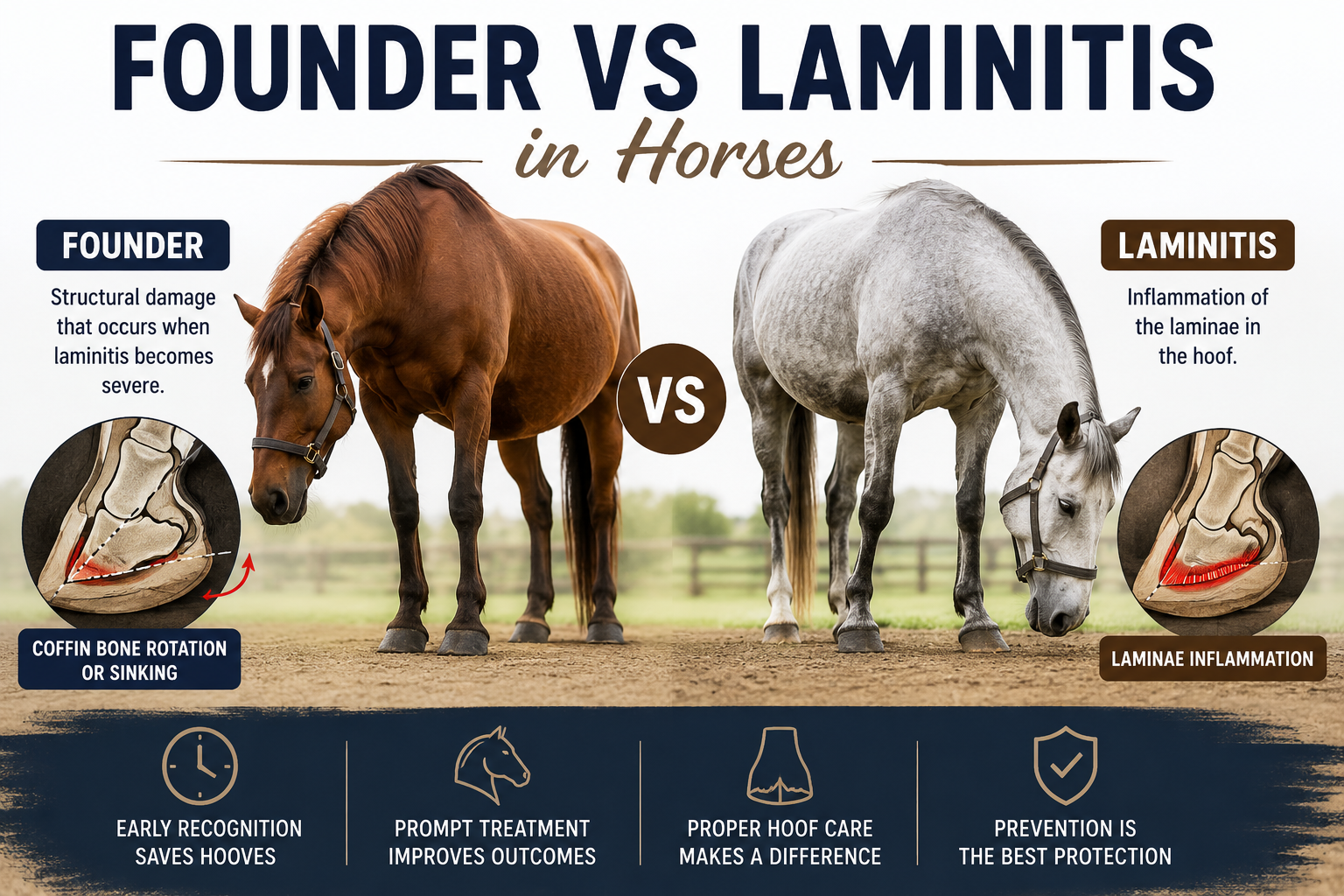
Laminitis vs founder in horses is a topic that causes confusion for many horse owners. The two terms are often used interchangeably, but they do not mean exactly the same thing. Laminitis is the inflammatory condition that affects the sensitive laminae inside the hoof, while founder refers to the structural damage that can occur when laminitis progresses. Understanding the difference is important because early recognition and proper treatment can make a significant difference in a horse’s recovery and long-term hoof health.
As a farrier, I’ve met many owners who believed their horse had founder when it was actually experiencing an active case of laminitis. Others were surprised to learn that a horse can recover from laminitis without developing founder. Knowing how these conditions are connected can help you make better decisions for your horse’s care.
What Is Laminitis?
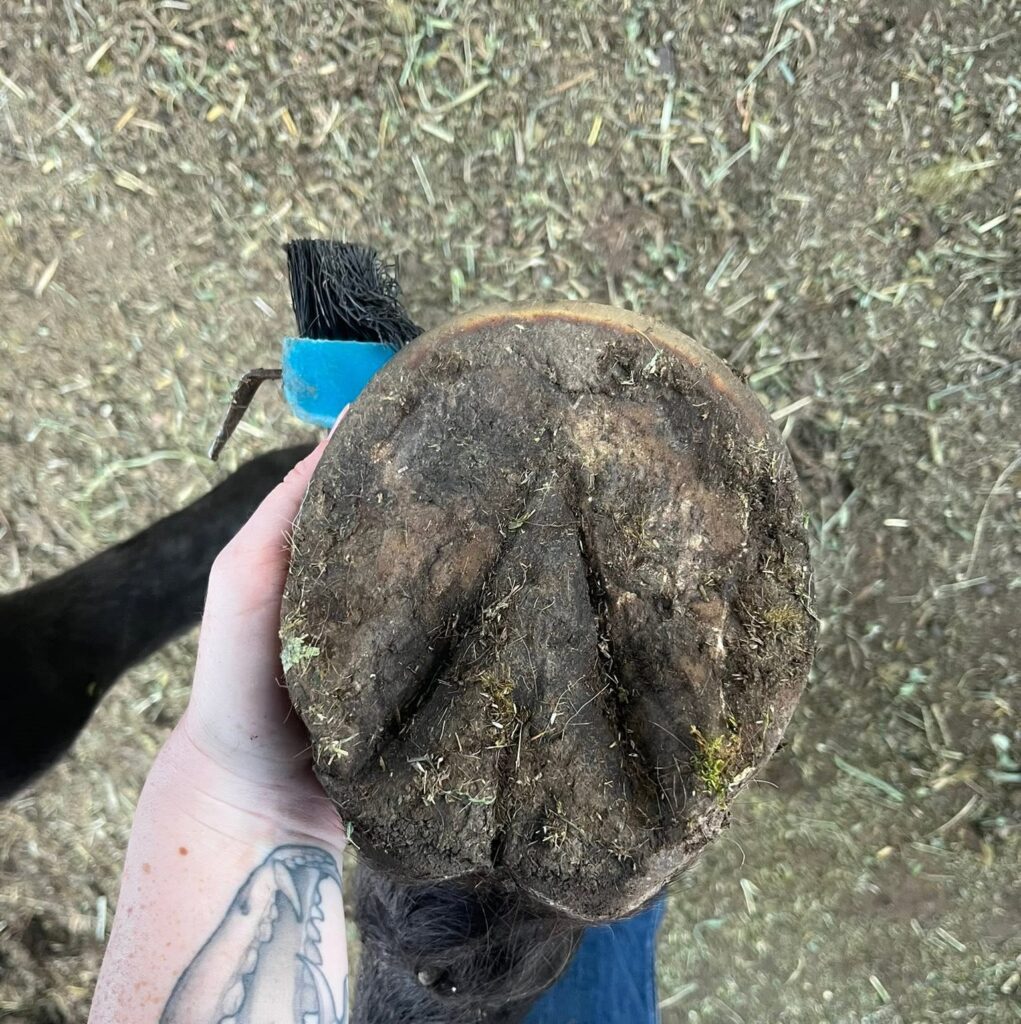
Laminitis is an inflammatory condition affecting the sensitive laminae inside the hoof. The laminae are tiny structures that connect the hoof wall to the coffin bone (pedal bone) within the hoof capsule.
When these tissues become inflamed or damaged, the bond between the hoof wall and the coffin bone weakens. This process can be extremely painful and may develop rapidly.
Laminitis is considered a medical emergency. The earlier treatment begins, the better the chances of preventing permanent damage.
Common signs of laminitis include:
- Reluctance to walk
- Increased digital pulse
- Heat in the hooves
- Shifting weight from foot to foot
- Standing with front feet stretched forward
- Short, painful strides
- Difficulty turning
Some horses show only mild discomfort in the early stages, while others become severely lame within hours.
What Is Founder?
Founder is the result of severe or prolonged laminitis.
When inflammation damages the laminae enough to weaken their attachment, the coffin bone can begin to rotate, sink, or both. Once this structural damage occurs, the horse is considered founded.
In simple terms:
Laminitis is the disease process. Founder is the physical damage that can result from laminitis.
Not every horse with laminitis becomes founded. However, every founded horse has experienced laminitis at some point.
Founder can lead to permanent changes inside the hoof and often requires lifelong management.
Difference between laminitis and founder
Founder vs Laminitis in Horses: What Is the Difference?
The easiest way to understand founder vs laminitis is to think of them as different stages of the same problem.
| Laminitis | Founder |
|---|---|
| Inflammation of the laminae | Structural damage inside the hoof |
| May be reversible | Often causes permanent changes |
| Early stage condition | Advanced stage condition |
| Coffin bone remains stable | Coffin bone rotates or sinks |
| Medical emergency | Chronic management issue |
A horse can have laminitis without founder, but founder cannot occur without laminitis first.
What Causes Laminitis?
Several factors can trigger laminitis. Some horses are at greater risk than others.
Common causes include:
Excess Sugar and Starch Intake
One of the most common causes is consuming too much sugar-rich pasture grass or grain.
Risk factors include:
- Spring pasture growth
- Frosted grass
- Grain overload
- Sudden dietary changes
Equine Metabolic Syndrome
Horses with insulin resistance often develop laminitis even when they appear healthy.
Easy keepers, ponies, and overweight horses are especially vulnerable.
Cushing’s Disease (PPID)
Older horses diagnosed with PPID have a significantly higher risk of recurring laminitis episodes.
Obesity
Extra body weight increases stress on the feet and contributes to metabolic problems.
Illness and Infection
Serious infections, retained placenta in mares, and systemic inflammation can trigger acute laminitis.
Excessive Concussion
Working on hard surfaces for long periods may contribute to laminitis in some horses.
How Founder Develops
If laminitis is not controlled quickly, the damaged laminae can no longer support the coffin bone properly.
As weight-bearing continues:
- The laminae weaken.
- The coffin bone loses support.
- The bone begins rotating downward.
- In severe cases, the bone sinks within the hoof capsule.
This process creates the structural changes associated with founder.
Once rotation or sinking occurs, hoof growth patterns change, and long-term hoof management becomes necessary.
Signs of Founder
The symptoms of founder often look similar to laminitis, especially in the early stages.
However, chronic founder may produce additional signs such as:
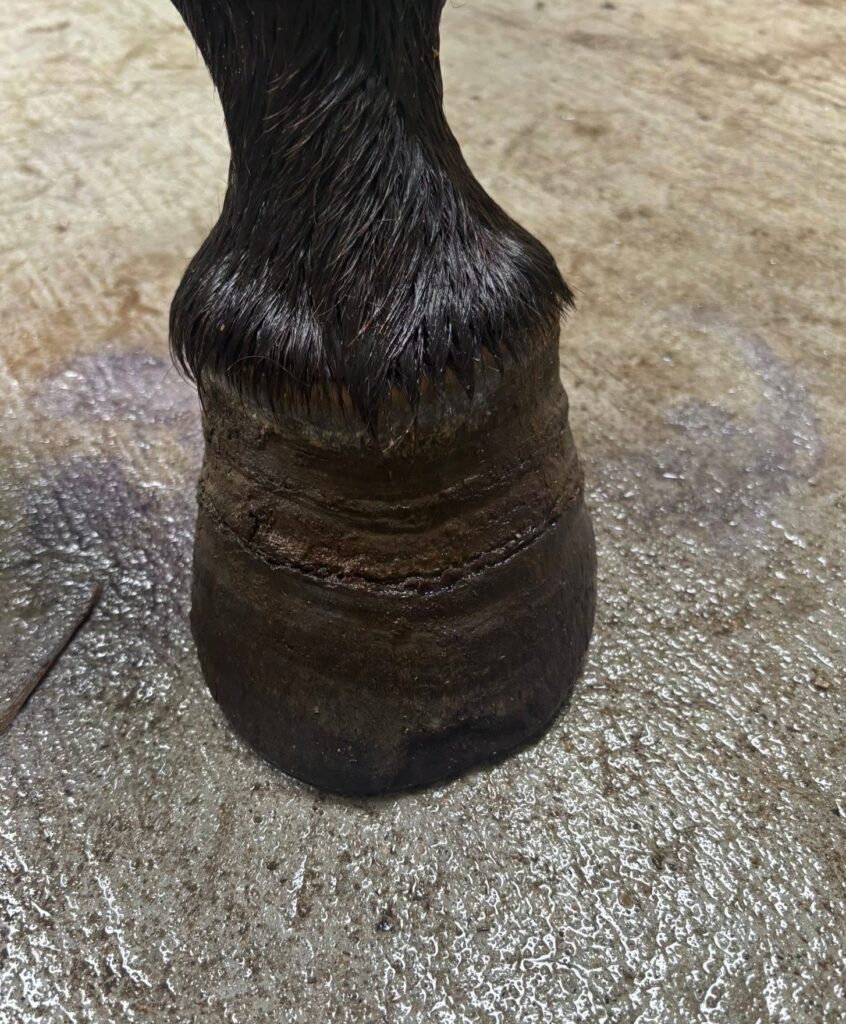
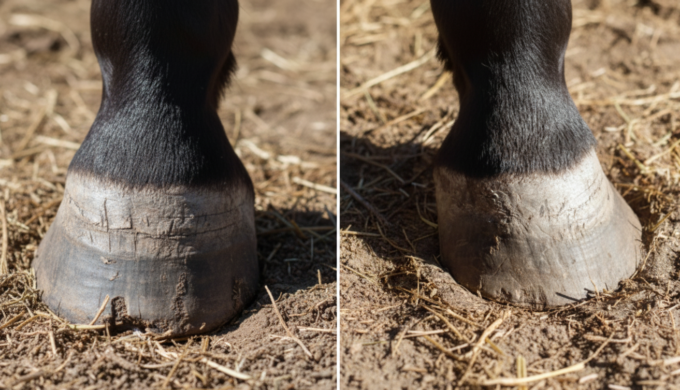
Hoof Rings
Horizontal rings around the hoof wall often become wider at the heel than at the toe.
Long Toes and Low Heels
The hoof capsule gradually changes shape as abnormal growth patterns develop.
Persistent Lameness
Some horses remain uncomfortable even after inflammation subsides.
White Line Separation
The connection between the hoof wall and sole may weaken, creating gaps or stretching.
Flat or Convex Soles
Advanced cases may show sole distortion due to coffin bone movement.
Radiographs are usually required to confirm the degree of rotation or sinking.
Diagnosing Laminitis and Founder
A veterinarian will typically combine clinical signs with diagnostic imaging.
Diagnosis may include:
- Physical examination
- Digital pulse assessment
- Hoof tester evaluation
- Blood testing
- Radiographs (X-rays)
Radiographs are especially important when founder is suspected because they reveal the position of the coffin bone.
Without X-rays, it can be difficult to determine how much internal damage has occurred.
Treatment for Laminitis
Successful treatment depends on addressing the underlying cause while supporting the feet.
Treatment may include:
Immediate Veterinary Care
Prompt intervention can prevent permanent damage.
Veterinarians may recommend:
- Anti-inflammatory medications
- Pain management
- Cryotherapy (icing the feet)
- Dietary adjustments
Stall Rest
Limiting movement helps reduce stress on damaged laminae.
Hoof Support
Supportive pads, boots, or specialized shoeing may help stabilize the foot during recovery.
Diet Management
Removing high-sugar feeds is often essential.
Many horses benefit from:
- Low-NSC hay
- Controlled grazing
- Weight management plans
Managing a Horse With Founder
Founder often becomes a long-term condition requiring ongoing care.
The goal shifts from preventing damage to managing existing damage.
Regular Farrier Care
Frequent trimming helps improve hoof balance and reduce leverage on the damaged structures.
Most founded horses require shorter trimming intervals than healthy horses.
Radiograph-Guided Trimming
Working alongside a veterinarian allows the farrier to trim according to the actual position of the coffin bone.
Weight Control
Maintaining a healthy body condition remains one of the most important management strategies.
Appropriate Exercise
Exercise should only be introduced when approved by a veterinarian and based on the horse’s comfort level.
Can a Horse Recover From Founder?
Recovery depends on several factors:
- Severity of rotation
- Degree of sinking
- Speed of treatment
- Underlying cause
- Quality of ongoing hoof care
Some horses return to riding after founder, especially when caught early.
Others remain pasture sound but require lifelong management.
Unfortunately, severe cases involving extensive coffin bone displacement may carry a guarded prognosis.
How to Prevent Laminitis vs Founder in Horses
Prevention is always easier than treatment.
Horse owners can reduce risk by:
- Maintaining proper weight
- Limiting access to rich pasture
- Feeding low-sugar diets
- Monitoring insulin-resistant horses
- Testing older horses for PPID
- Scheduling regular hoof care
- Addressing lameness quickly
Routine hoof inspections often reveal subtle warning signs before major problems develop.
In Short:-
When comparing laminitis vs founder, the most important thing to remember is that laminitis is the disease process, while founder is the structural damage that can occur if that disease progresses.
Early recognition and prompt treatment can often stop laminitis before permanent damage develops. Once founder occurs, management becomes focused on maintaining comfort, supporting hoof function, and preventing further deterioration.
For horse owners, veterinarians, and farriers, working together is the best way to protect the horse’s feet and improve long-term outcomes.
How to Trim Hooves for Laminitis Horses (Step-by-Step Guide for Safe Recovery)









Leave a comment