

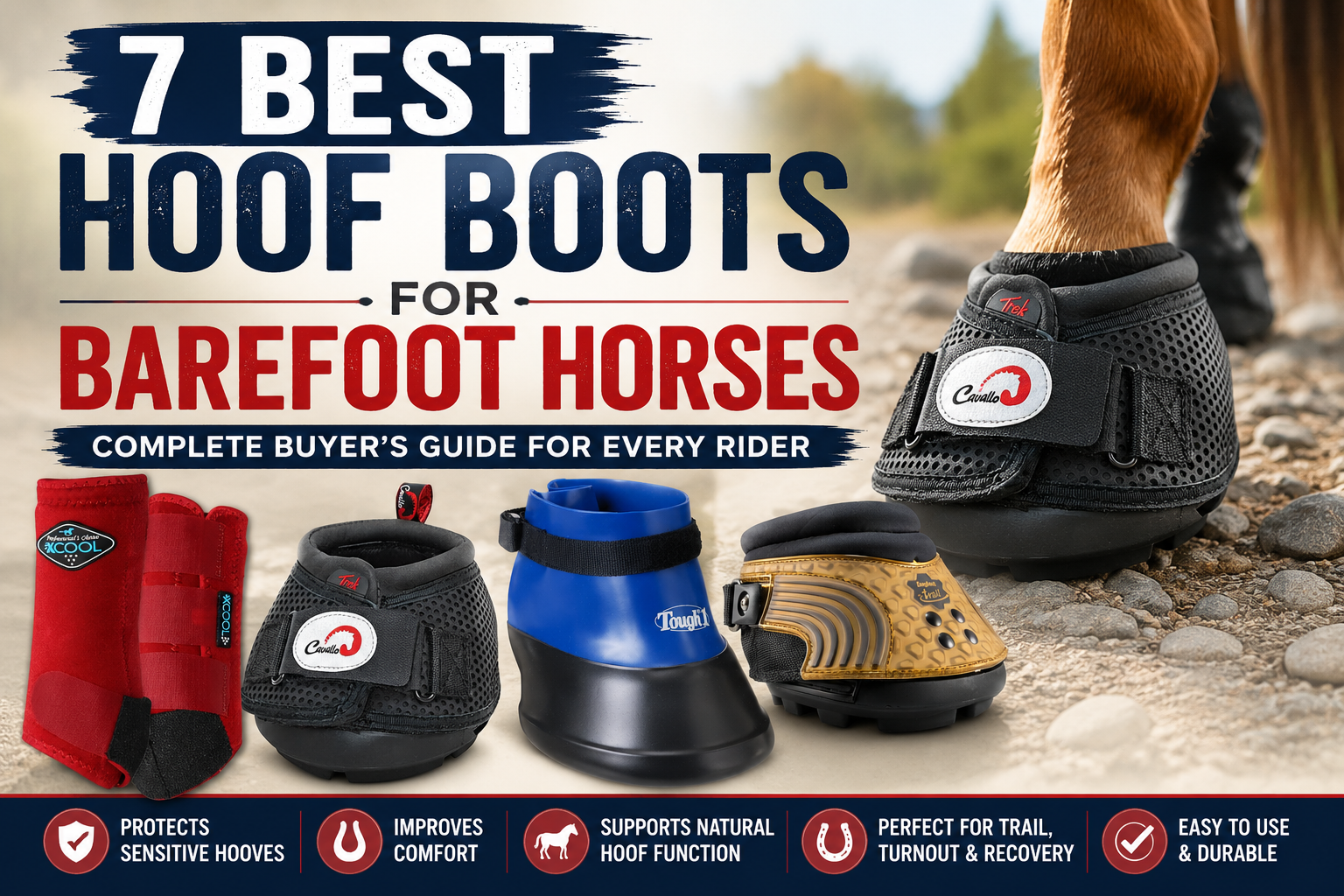
Best Hoof Boots for Trail Riding
Many horse owners choose to keep their horses barefoot because it allows the hoof to function naturally. A healthy barefoot hoof can expand, contract, and absorb shock better than one fitted with traditional horseshoes. However, even a well-maintained barefoot horse may occasionally need extra protection.
That’s where hoof boots for barefoot horses become valuable.
Whether you’re riding on rocky trails, rehabilitating a horse after an injury, or simply giving sensitive hooves extra support, the right hoof boots can make a significant difference in your horse’s comfort and performance.
In my experience, hoof boots work best when they’re used for specific situations rather than worn continuously. The key is selecting a boot that fits properly and suits your horse’s workload.
Recommended Hoof Boots for Barefoot Horses
Looking for a reliable hoof boot? Here are some popular choices trusted by many horse owners:
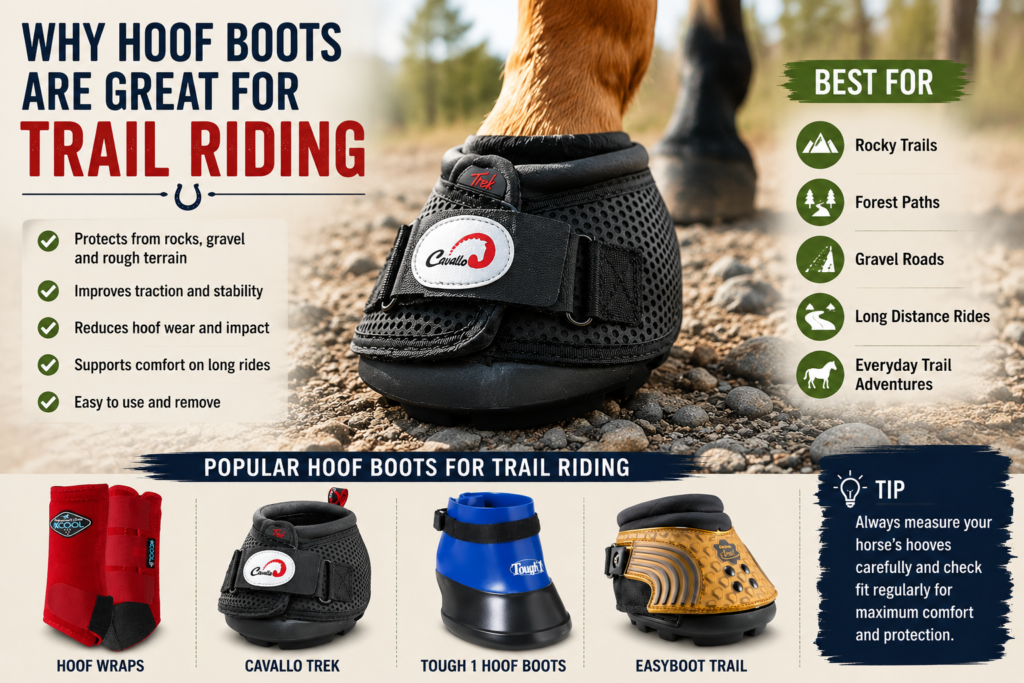
Why Barefoot Horses Sometimes Need Hoof Boots
Many owners assume that barefoot horses never require additional protection. In reality, there are several situations where hoof boots can help.
A horse may benefit from hoof boots if it:
- Walks on rocky or gravel roads
- Rides long distances on hard ground
- Has recently transitioned from shoes to barefoot
- Has thin soles or sensitive feet
- Is recovering from hoof problems
- Needs temporary protection during rehabilitation
Hoof boots act like hiking boots for horses. They protect the hoof while still allowing natural movement.
Protect Sensitive Hooves
Rough surfaces can bruise even healthy hooves. Boots reduce impact and minimise excessive wear.
Improve Comfort
Many horses become noticeably more confident when walking over stones or uneven terrain while wearing properly fitted boots.
Support Natural Hoof Function
Unlike permanent shoes, hoof boots are removable. This allows the hoof to function naturally while providing protection only when needed.
Ideal During Barefoot Transition
When shoes are removed, some horses become temporarily sensitive.
Hoof boots allow the horse to stay comfortable while healthier hoof growth develops.
Helpful for Rehabilitation
Veterinarians and farriers often recommend hoof boots for horses recovering from:
- Laminitis
- Sole bruising
- Hoof abscesses
- White line disease
- Minor hoof wall injuries
Always follow your veterinarian’s treatment plan when using boots for medical conditions.
When Does a Barefoot Horse Need Hoof Boots?
Not every barefoot horse requires boots every day.
They are most useful for:
Trail Riding
Rocky trails can quickly wear down the hoof.
Endurance Riding
Long distances increase hoof fatigue.
Mountain Terrain
Sharp rocks create constant concussion.
Gravel Roads
Loose gravel often causes tenderness.
Horse Camping Trips
Multiple days of riding place extra stress on the feet.
Rehabilitation
Temporary protection helps injured hooves recover.
Signs Your Horse May Need Hoof Boots
Watch for these common signs:
- Walking carefully over stones
- Shortened stride
- Reluctance to move forward
- Hoof tenderness after rides
- Frequent sole bruising
- Excessive hoof wear
- Recovering from hoof injuries
These signs don’t always mean boots are necessary, but they are worth discussing with your farrier or veterinarian.
How to Choose the Best Hoof Boots for Barefoot Horses
Choosing the right hoof boot isn’t just about the brand. Proper fit matters far more than the logo.
Consider these factors.
Correct Size
Always measure freshly trimmed hooves.
A boot that’s too loose may twist or rub.
One that’s too tight can create pressure points.
Terrain
Think about where you ride most often.
- Rocky trails
- Gravel roads
- Forest tracks
- Pavement
- Soft pasture
Different tread patterns suit different surfaces.
Riding Frequency
Occasional weekend riders may need a simple boot.
Competitive endurance riders often benefit from lightweight designs built for long-distance use.
Easy to Put On
Some boots fasten with straps.
Others use cables or buckles.
Choose one you can fit securely without struggling.
Durability
Quality hoof boots should withstand:
- Mud
- Water
- Sand
- Gravel
- Daily trail riding
Replacing cheap boots frequently often costs more in the long run.
Popular Types of Hoof Boots
Rather than focusing on a single brand, it’s helpful to understand the main categories available.
Trail Riding Boots
Designed for comfort and durability on varied terrain.
Rehabilitation Boots
Provide additional cushioning and can accommodate therapeutic pads.
Endurance Boots
Lightweight and designed to stay secure over long distances.
Turnout Boots
Offer temporary protection while horses are in the paddock or recovering from hoof issues.
Each style serves a different purpose, so match the boot to your horse’s needs.
Best Hoof Boots for Trail Riding
Trail riders generally need boots that provide:
- Excellent grip
- Secure fastening
- Comfortable fit
- Water resistance
- Durable soles
A quality trail boot helps reduce slipping while protecting the hoof from repeated impact.
Hoof Boots for Turnout
Some horses recovering from hoof injuries benefit from wearing turnout boots for limited periods.
These boots help:
- Protect damaged hooves
- Reduce excessive wear
- Keep therapeutic pads in place
- Improve comfort during recovery
Always remove turnout boots regularly to inspect the hoof and clean the boot. Prolonged wear without maintenance can increase the risk of rubbing or trapped moisture.
How to Measure Your Horse’s Hooves
Accurate measurements are essential.
Measure immediately after a fresh trim.
Record:
- Hoof width
- Hoof length
Use the manufacturer’s sizing chart before purchasing.
Never estimate by eye.
Even small differences can affect fit.
Common Hoof Boot Fitting Mistakes
Many boot problems result from incorrect sizing rather than poor-quality products.
Avoid these mistakes:
- Measuring before trimming
- Choosing boots that are too large
- Ignoring the manufacturer’s sizing guide
- Leaving boots on continuously
- Failing to clean boots after rides
- Not checking for rubbing
A well-fitted boot should stay secure without restricting natural movement.
Caring for Your Hoof Boots
Proper maintenance extends the life of your boots.
After each ride:
- Remove dirt and stones.
- Rinse with clean water if needed.
- Allow boots to air dry completely.
- Check straps and fasteners for wear.
- Inspect the sole for excessive damage.
Regular cleaning also helps prevent irritation caused by trapped grit.
Frequently Asked Questions
Can horses wear hoof boots every day?
Some horses can wear hoof boots daily for work, but they should be removed afterwards to inspect the hoof and prevent rubbing. Continuous wear is generally not recommended unless advised by a veterinarian.
Are hoof boots better than shoes?
Neither option is universally better. Hoof boots provide temporary protection while allowing the horse to remain barefoot most of the time. Traditional shoes may be more suitable for certain disciplines or medical conditions.
How long do hoof boots last?
With proper care, quality hoof boots can last several seasons. Lifespan depends on riding frequency, terrain, and maintenance.
Can hoof boots help horses with laminitis?
They can provide additional comfort and protection when used as part of a veterinary treatment plan, often alongside therapeutic pads. Always seek professional guidance for laminitis cases.
Should hoof boots be used in wet conditions?
Many modern boots perform well in mud and water, but they should be cleaned and dried after use to prevent wear and skin irritation.
Summary:-
Keeping a horse barefoot doesn’t mean it has to go without protection. Hoof boots for barefoot horses offer a practical solution for trail riding, rehabilitation, and temporary support on challenging terrain.
The most important factor is fit. Even the highest-rated hoof boot won’t perform well if it’s the wrong size or used for the wrong purpose. Measure carefully after trimming, choose a boot that matches your riding conditions, and inspect your horse’s feet regularly.
Used correctly, hoof boots can improve comfort, protect healthy hooves, and help many barefoot horses stay active without compromising their natural hoof function.
You may also read:-
- Barefoot Horse Hoof Care: Complete Guide
- Horse Hoof Trimming Basics
- White Line Disease Treatment in Horses
- Laminitis Recovery Stories
- Best Hoof Oil for Horses
- Horse Hoof Cracks: Causes and Treatment
- Thrush Treatment for Horses
- Best Fly Spray for Horses: What Actually Works?
- Your Horse Isn’t Lazy – It Might Be Showing Pain









Leave a comment