

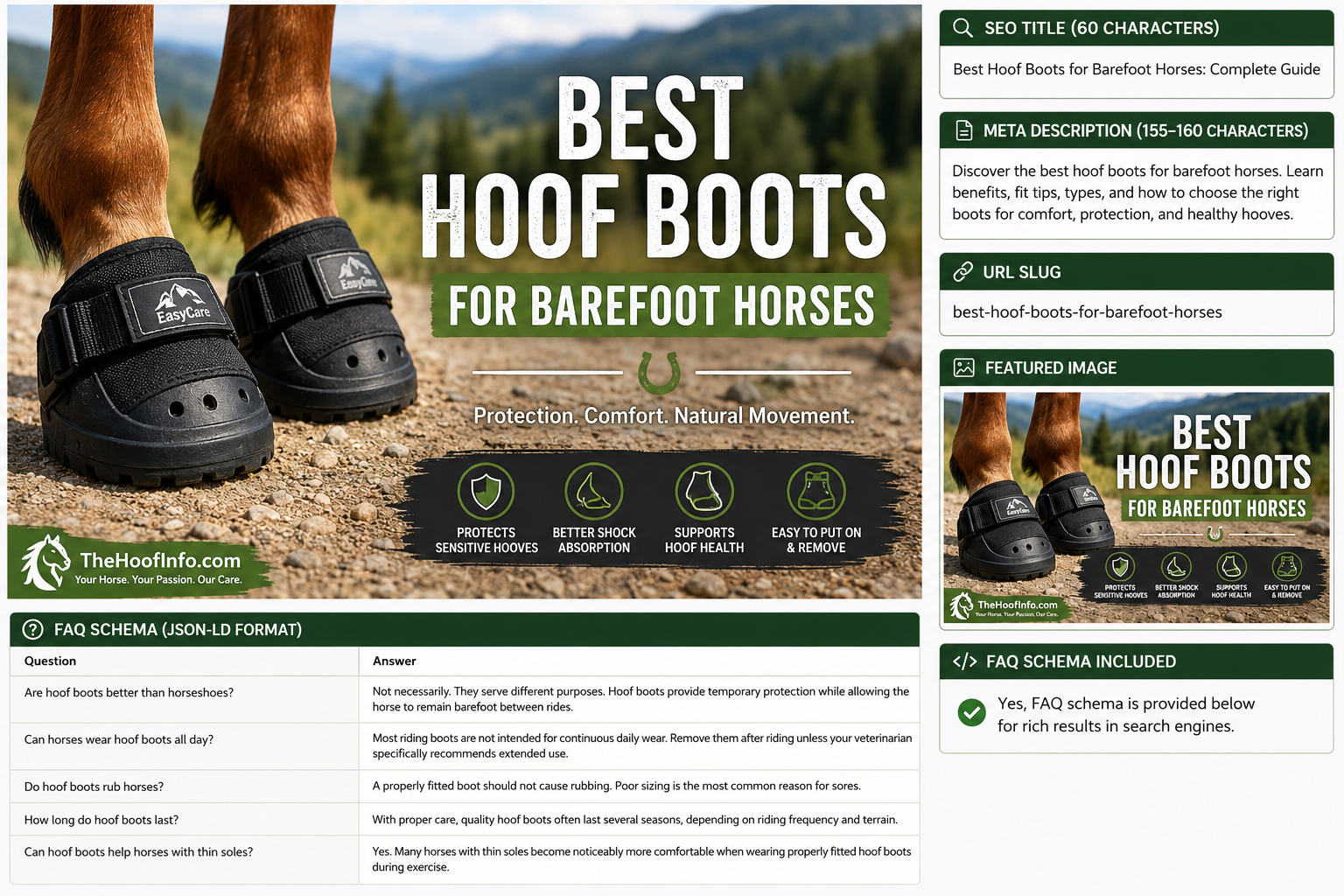
Best Hoof Boots for Barefoot Horses: A Complete Buyer’s Guide
Barefoot horses can thrive with the right hoof care, but there are times when they need extra protection. Rocky trails, gravel roads, long-distance riding, and hoof rehabilitation can all place additional stress on bare hooves. That’s where hoof boots become a valuable piece of equipment.
The best hoof boots for barefoot horses protect the hoof without interfering with natural movement. A well-fitted boot allows your horse to stay comfortable while encouraging healthy hoof function instead of replacing it.
Whether you ride occasionally or spend several days a week on the trail, choosing the right hoof boots can make a significant difference in your horse’s comfort and performance.
Why Barefoot Horses Need Hoof Boots
Many horses perform well without traditional horseshoes. Healthy trimming, balanced nutrition, and proper exercise often produce strong hooves.
However, even horses with excellent feet may benefit from hoof boots in certain situations.
Common reasons include:
- Riding on rocky terrain
- Long trail rides
- Gravel driveways
- Hoof bruising
- Thin soles
- Transitioning from shoes to barefoot
- Recovering from hoof injuries
- Endurance riding
Think of hoof boots like hiking boots for people. You may walk barefoot on grass, but rough mountain trails require additional protection.
Benefits of Hoof Boots
Quality hoof boots offer several advantages over permanent shoes.
Protect Sensitive Hooves
Sharp rocks and uneven terrain can cause soreness. Hoof boots provide a protective barrier while allowing the hoof to function naturally.
Better Shock Absorption
Many hoof boots include cushioned soles that reduce concussion on hard ground. This helps improve comfort, especially during longer rides.
Support During Rehabilitation
Veterinarians and farriers often recommend hoof boots for horses recovering from:
- Sole bruises
- Hoof abscesses
- Laminitis
- White line disease
- Tender feet after trimming
Easy to Remove
Unlike metal shoes, hoof boots are only worn when needed. Once the ride is over, they come off, allowing the hoof to expand and contract naturally.
What to Look for in the Best Hoof Boots
Not every hoof boot fits every horse. Before purchasing, consider these important factors.
Correct Fit
Proper sizing is the most important factor.
Measure your horse’s hooves immediately after a fresh trim for the most accurate measurements.
A boot that is too loose may twist or fall off. One that is too tight can create pressure points.
Riding Style
Different riding disciplines require different boot designs.
Choose boots based on:
- Trail riding
- Endurance riding
- Pleasure riding
- Rehabilitation
- Everyday exercise
Durable Sole
Look for thick rubber soles that resist wear while providing good traction on:
- Gravel
- Mud
- Pavement
- Wet grass
- Rocky trails
Secure Closure
Modern hoof boots use:
- Velcro straps
- Buckles
- Cable systems
- Dial closures
A secure fastening system helps prevent the boot from slipping during movement.
Easy Cleaning
Mud and sand accumulate quickly inside hoof boots. Models with simple designs are easier to clean after each ride.
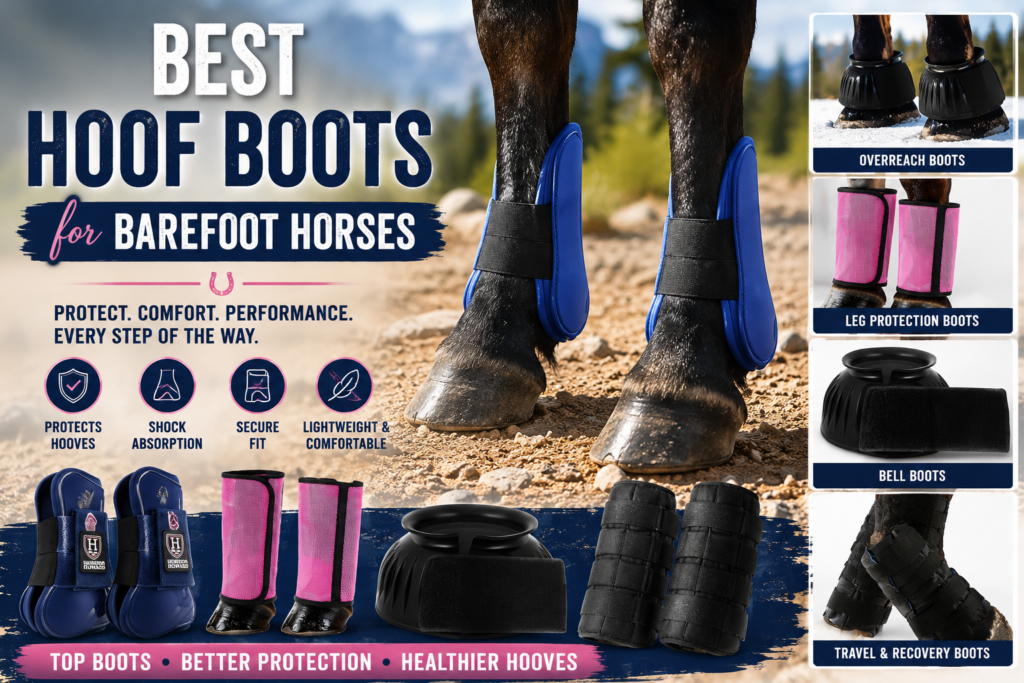
Best Types of Hoof Boots for Barefoot Horses
Several styles are available depending on your horse’s needs.
Trail Riding Boots
Designed for recreational riders, these boots emphasize comfort, durability, and easy application.
Ideal for:
- Weekend trail rides
- Gravel roads
- Forest trails
Endurance Boots
Lightweight construction helps reduce fatigue during long-distance rides.
These boots often feature:
- Flexible shells
- Excellent drainage
- Breathable materials
- Low weight
Therapy Boots
Therapy boots are designed for horses recovering from hoof problems rather than riding.
They often include padded inserts and extra room for bandages.
All-Purpose Boots
These versatile boots work well for most recreational riders and everyday hoof protection.
How to Measure Your Horse for Hoof Boots
Proper measurement dramatically improves boot performance.
Follow these simple steps:
- Trim the hoof first.
- Measure the widest part of the hoof.
- Measure from toe to heel.
- Compare measurements with the manufacturer’s sizing chart.
- Measure every hoof separately.
Front and hind hooves often require different sizes.
Common Mistakes When Buying Hoof Boots
Many boot problems result from incorrect sizing rather than poor quality.
Avoid these common mistakes.
Guessing the Size
Never estimate hoof size.
Always measure after trimming.
Buying Too Large
A loose boot may:
- Twist sideways
- Rub the heel bulbs
- Fall off during riding
Ignoring Hoof Shape
Some horses have:
- Round hooves
- Oval hooves
- Narrow hooves
- Wide hooves
Choose boots designed for your horse’s hoof shape.
Using Worn-Out Boots
Old boots lose traction and structural support.
Replace worn boots before they become unsafe.
How to Introduce Hoof Boots
Some horses accept hoof boots immediately.
Others need a short adjustment period.
Start with:
- Short walks
- Twenty-minute rides
- Smooth footing
- Frequent fit checks
Increase riding time gradually over several rides.
Hoof Boot Maintenance Tips
Good maintenance extends the life of your boots.
After each ride:
- Remove dirt and stones
- Rinse with clean water
- Allow boots to air dry
- Inspect straps
- Check soles for wear
Avoid storing damp boots in closed containers.
Affiliate Products to Recommend
If you’re looking for reliable hoof boots, many experienced horse owners and endurance riders trust brands known for durability, comfort, and secure fit. Choosing a boot that matches your horse’s hoof shape and riding style is more important than simply buying the most expensive option. Compare features, sizing guides, customer reviews, and replacement parts before making your purchase through your preferred equestrian retailer.
Frequently Asked Questions
Are hoof boots better than horseshoes?
Not necessarily. They serve different purposes. Hoof boots provide temporary protection while allowing the horse to remain barefoot between rides.
Can horses wear hoof boots all day?
Most riding boots are not intended for continuous daily wear. Remove them after riding unless your veterinarian specifically recommends extended use.
Do hoof boots rub horses?
A properly fitted boot should not cause rubbing. Poor sizing is the most common reason for sores.
How long do hoof boots last?
With proper care, quality hoof boots often last several seasons, depending on riding frequency and terrain.
Can hoof boots help horses with thin soles?
Yes. Many horses with thin soles become noticeably more comfortable when wearing properly fitted hoof boots during exercise.
In Short:-
The best hoof boots for barefoot horses provide protection without sacrificing natural hoof function. They help horses stay comfortable on rough terrain, support recovery from hoof problems, and make longer rides more enjoyable.
The key to success is choosing the correct size, matching the boot to your riding style, and maintaining it properly. A well-fitted hoof boot can improve your horse’s confidence, reduce hoof soreness, and extend the distance you can comfortably ride.
Remember that hoof boots work best alongside regular trimming, balanced nutrition, and consistent hoof care. Healthy hooves remain the foundation of every sound horse, and hoof boots simply provide additional protection when nature needs a helping hand.
Most of the Horse owners read these articles, you may Read:-
- Horse Care Essentials for New Owners
- Best Horse Grooming Kits
- Horse Hoof Care Tips in Summer
- Horse Hoof Wall Separation Treatment
- White Line Disease Treatment in Horses
- Homemade Thrush Treatment for Horses
- Horse Hoof Fungus Treatment
- Summer Horse Care Checklist for USA Horse Owners









Leave a comment