

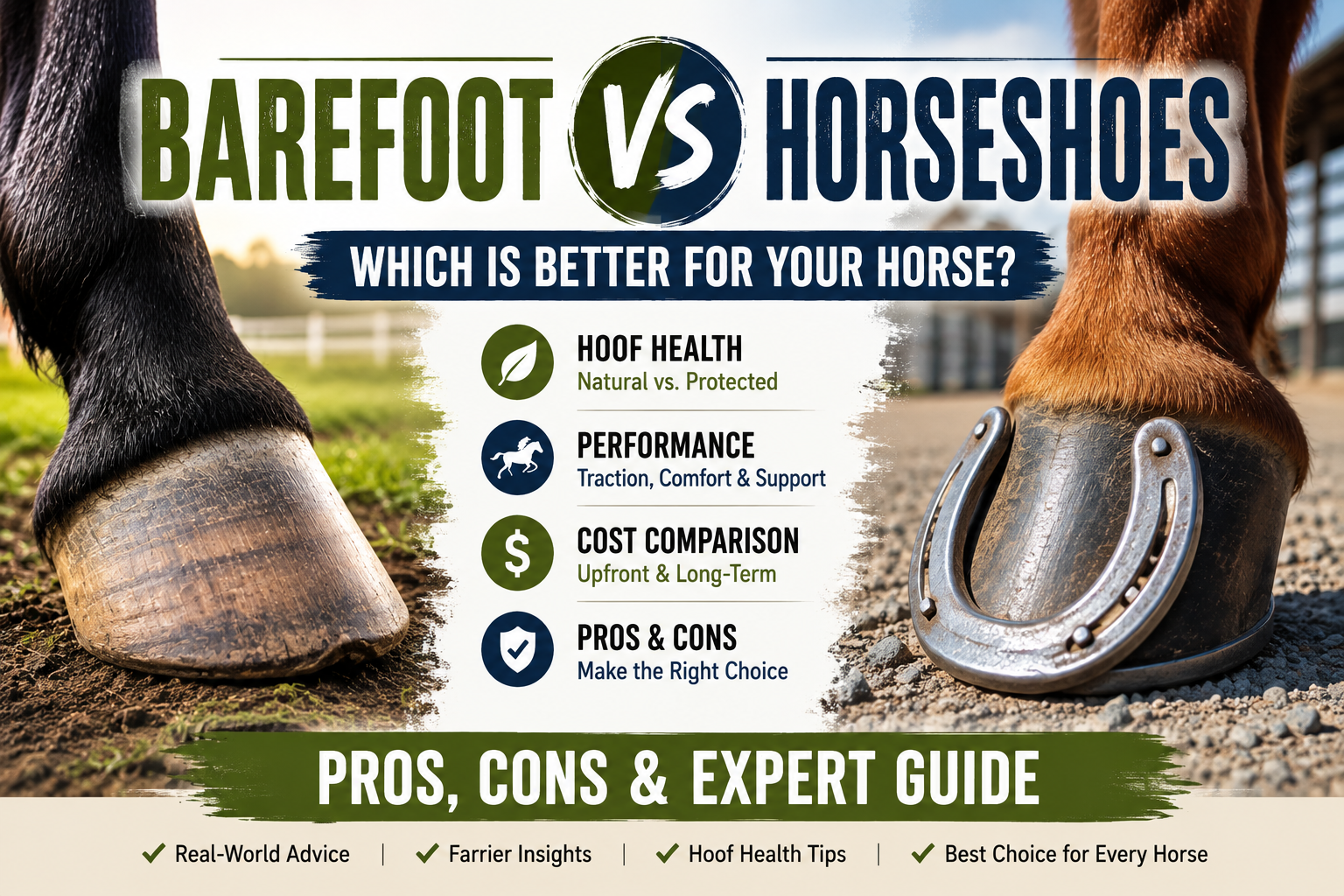
Barefoot vs. Horseshoes: Which Is Better for Your Horse?
One of the most common questions horse owners ask is whether their horse should stay barefoot or wear horseshoes. Opinions vary widely, and it’s easy to find passionate arguments on both sides.
The truth is that there isn’t a single answer that works for every horse. The right choice depends on several factors, including your horse’s workload, hoof quality, terrain, age, discipline, and overall health.
Some horses thrive without shoes and develop strong, healthy hooves naturally. Others need shoes to protect their feet, improve traction, or support medical conditions. Choosing the wrong option can lead to discomfort, poor performance, or even lameness.
In this guide, we’ll explain the advantages and disadvantages of both barefoot and shod horses, helping you make an informed decision with your veterinarian or farrier.
Barefoot vs Horseshoes: Which Is Better for your horse ?
At first glance, the choice between barefoot vs horseshoes may seem straightforward, but the best option depends on your horse’s workload, hoof quality, terrain, and overall health. Both approaches have advantages and disadvantages, and understanding them will help you make the right decision for your horse.
What Does It Mean for a Horse to Be Barefoot?
A barefoot horse simply doesn’t wear metal or synthetic horseshoes. Instead, the hoof functions naturally, expanding and contracting with each step while wearing down gradually through normal movement.
Being barefoot doesn’t mean neglecting hoof care. In fact, barefoot horses still need:
- Regular hoof trimming
- Daily hoof cleaning
- Balanced nutrition
- Dry, clean living conditions
- Routine hoof inspections
Many horse owners mistakenly assume barefoot horses require less maintenance. In reality, proper hoof management becomes even more important because the hoof itself provides all the protection.
When managed correctly, many horses maintain healthy, durable hooves without ever wearing shoes.
What Do Horseshoes Do?
Horseshoes are designed to protect the hoof from excessive wear while providing additional support and traction.
Modern horses often work in ways that wild horses never did. They may travel on asphalt, gravel roads, rocky trails, hard arenas, or compete in demanding sports that place extra stress on the feet.
A properly fitted horseshoe can help by:
- Reducing hoof wear
- Improving grip on certain surfaces
- Supporting weak or damaged hooves
- Correcting hoof imbalances
- Helping manage some hoof diseases
- Increasing comfort during heavy work
It’s important to remember that horseshoes are tools-not necessities for every horse. They’re most beneficial when matched to a horse’s individual needs.
Barefoot vs. Horseshoes: Quick Comparison
| Feature | Barefoot | Horseshoes |
|---|---|---|
| Natural hoof movement | Excellent | Slightly restricted |
| Hoof protection | Moderate | Excellent |
| Grip on soft ground | Good | Good |
| Grip on slippery surfaces | Variable | Often improved with specialized shoes |
| Cost | Lower | Higher |
| Regular trimming | Yes | Yes |
| Performance support | Moderate | Excellent for many disciplines |
| Best for | Light work, healthy hooves | Heavy work, rocky terrain, corrective care |
Neither option is automatically better. The horse’s lifestyle should guide the decision.
Benefits of Keeping a Horse Barefoot
Many horses perform extremely well without shoes, particularly when their hooves are naturally strong and they aren’t exposed to demanding terrain.
1. Natural Hoof Expansion
Each time a barefoot horse lands, the hoof expands slightly and then contracts during movement.
This natural flexibility helps absorb impact and may contribute to healthier hoof function.
2. Better Circulation
Some farriers believe natural hoof expansion supports healthy blood circulation inside the hoof capsule.
Good circulation helps nourish the hoof tissues responsible for growth and repair.
3. Lower Maintenance Costs
Without shoes, owners avoid the cost of shoe replacement every few weeks.
Regular trims remain essential, but overall hoof care expenses are often lower.
4. Reduced Risk of Losing Shoes
Horses occasionally pull shoes off while playing, rolling, or working.
A lost shoe can damage the hoof wall or create an uneven gait until the farrier replaces it.
Barefoot horses don’t face this issue.
5. Stronger Hoof Development
When managed properly, barefoot horses often develop:
- Stronger hoof walls
- Healthier frogs
- Better sole thickness
- Improved natural balance
This process takes time and depends on nutrition, trimming, genetics, and environment.
Potential Drawbacks of Barefoot Horses
Barefoot management isn’t perfect for every horse.
Some horses simply need additional protection.
Increased Hoof Wear
Horses that travel long distances on hard or abrasive surfaces may wear their hooves faster than they can grow.
Over time, this can lead to soreness.
Sensitivity on Rocky Ground
Not every barefoot horse handles gravel or rocky trails comfortably.
Some horses become tender-footed, especially during the transition from shoes.
Longer Transition Period
Removing shoes isn’t always an overnight success.
Some horses need weeks or months before their hooves fully adapt.
During this period, your farrier may recommend:
- Shorter rides
- Hoof boots
- Frequent trimming
- Careful monitoring
Not Ideal for Every Discipline
Competitive horses participating in disciplines such as:
- Show jumping
- Eventing
- Reining
- Barrel racing
- Carriage driving
often benefit from the added traction or protection provided by specialized shoes.
Benefits of Horseshoes
While barefoot advocates often highlight natural hoof function, horseshoes remain an important part of modern horse care.
For many horses, shoes improve comfort rather than reduce it.
1. Excellent Hoof Protection
Continuous work on hard surfaces gradually wears away the hoof wall.
Shoes act as a protective barrier, allowing the hoof to grow without excessive wear.
2. Improved Traction
Different shoe designs can improve grip on:
- Wet grass
- Mud
- Arena footing
- Ice (with appropriate traction devices)
- Rocky trails
Better traction may reduce slips during athletic performance.
3. Support for Medical Conditions
Therapeutic shoeing plays an important role in managing certain hoof conditions.
Examples include:
- Laminitis
- Navicular disease
- Thin soles
- Hoof cracks
- Tendon injuries
- Certain conformational issues
These specialized shoes are designed to reduce strain while supporting healing.
4. Better Performance
Performance horses often work harder than horses used only for pleasure riding.
Shoes can improve comfort during:
- Endurance riding
- Ranch work
- Competitive trail riding
- Dressage
- Show jumping
- Driving
The goal isn’t simply speed-it’s maintaining hoof health under increased workload.
5. Corrective Shoeing
Some horses naturally develop uneven hoof growth or poor limb alignment.
Corrective shoeing, when recommended by a veterinarian or experienced farrier, can help improve balance and reduce stress on joints and soft tissues.
Potential Drawbacks of Horseshoes
Shoes aren’t perfect either.
Like any management tool, they have advantages and limitations.
Higher Cost
Shoeing requires:
- Skilled labor
- Materials
- Regular replacement
Most horses need their shoes reset or replaced every four to eight weeks, depending on hoof growth and workload.
Lost Shoes
Active horses sometimes loosen or pull shoes.
A missing shoe should be addressed promptly to avoid uneven hoof wear or hoof wall damage.
Nail Holes
Traditional horseshoes are attached using nails driven into the hoof wall.
When done correctly, this doesn’t hurt the horse because the outer hoof wall contains no nerves.
However, repeated nailing can weaken poor-quality hoof walls over time in some horses.
More Frequent Monitoring
Loose nails, shifted shoes, or worn shoes should never be ignored.
Routine farrier visits remain essential for maintaining hoof balance and preventing problems before they become serious.
When Is a Barefoot Horse the Better Choice?
Many horses do very well without shoes if they meet several of these conditions:
- They have naturally strong hoof walls.
- They are ridden only occasionally.
- Most travel is on soft footing.
- They live in environments that encourage healthy hoof growth.
- They receive routine trims.
- Their hooves wear evenly.
- They remain comfortable on the surfaces they encounter.
Pleasure horses, some pasture companions, and lightly ridden trail horses often succeed as barefoot horses when their hoof quality is good.
When Does a Horse Need Shoes?
While many horses can remain barefoot successfully, others genuinely benefit from wearing shoes. The decision shouldn’t be based on trends or opinions alone. Instead, it should be based on the horse’s individual needs.
Here are situations where horseshoes are often recommended.
Horses That Work on Hard Surfaces
Road riding, gravel paths, rocky mountain trails, and paved areas can wear hooves faster than they grow.
When excessive wear occurs, horses may become sore or develop bruises. Shoes provide a protective barrier that reduces this wear.
Performance Horses
Athletic horses place much greater stress on their feet than pasture horses.
Shoes may improve comfort and performance for horses involved in:
- Barrel racing
- Show jumping
- Eventing
- Dressage
- Reining
- Endurance riding
- Ranch work
- Driving competitions
Some disciplines also require specialized shoes to improve traction and reduce slipping.
Horses with Weak Hooves
Not every horse grows thick, durable hoof walls.
Some horses naturally have:
- Thin soles
- Brittle hoof walls
- Slow hoof growth
- Frequent hoof cracks
For these horses, shoes may provide valuable protection while allowing healthier hoof growth.
Horses Recovering from Injury
Therapeutic shoeing is commonly used alongside veterinary treatment.
Conditions that may require special shoes include:
- Laminitis
- Navicular syndrome
- Tendon injuries
- Ligament injuries
- White line disease (during some stages)
- Severe hoof cracks
- Certain conformational problems
Specialized shoes are designed to support healing, not simply protect the hoof.
Do Horseshoes Hurt Horses?
This is one of the most searched questions online.
The short answer is no-when applied correctly, horseshoes do not hurt horses.
Many people worry because horseshoes are attached using nails. However, the nails pass through the outer hoof wall, which is made of keratin-the same material as human fingernails. This part of the hoof has no nerve endings.
An experienced farrier carefully places each nail in the correct location. The horse should not feel pain during normal shoeing.
When Can Shoeing Cause Pain?
Problems usually occur when:
- Shoes are poorly fitted
- Nails are placed incorrectly
- Shoes stay on too long
- Hooves become unbalanced
- Underlying hoof disease is ignored
This is why regular visits from a qualified farrier are essential.
Do Horses Need Horseshoes in the Wild?
Wild horses do not wear shoes.
So why do domestic horses sometimes need them?
The answer lies in lifestyle.
Wild horses typically:
- Walk many miles every day.
- Move across varied terrain.
- Naturally wear down their hooves.
- Select comfortable footing.
- Maintain excellent circulation through constant movement.
Domestic horses live very differently.
Many spend hours in stalls or small paddocks and may only be exercised a few times each week. They also carry riders, pull equipment, compete in demanding sports, and often travel on artificial surfaces.
Because of these differences, some domestic horses benefit from shoes while others do not.
The fact that wild horses don’t wear shoes doesn’t automatically mean every domestic horse should go barefoot.
How Do Horseshoes Work?
A horseshoe works by protecting the hoof wall from excessive wear while helping distribute weight more evenly across the foot.
Depending on the design, shoes can also:
- Improve traction
- Reduce slipping
- Support injured structures
- Relieve pressure on painful areas
- Stabilize hoof cracks
- Improve balance
Modern farriers have access to many different types of shoes, including:
- Steel shoes
- Aluminum shoes
- Glue-on shoes
- Plastic shoes
- Therapeutic shoes
- Heart bar shoes
- Egg bar shoes
Each serves a different purpose.
How Often Should Horseshoes Be Replaced?
Most horses need their shoes reset or replaced every 4 to 8 weeks.
The exact schedule depends on:
- Hoof growth rate
- Age
- Nutrition
- Workload
- Time of year
- Hoof quality
Waiting too long can create several problems.
Overgrown hooves may:
- Become unbalanced
- Increase stress on joints
- Loosen nails
- Cause shoes to shift
- Lead to cracks or bruising
Even horses that remain barefoot usually require routine trimming every 6 to 8 weeks.
Can a Horse Transition from Shoes to Barefoot?
Yes-but patience is important.
Some horses transition smoothly, while others require several months before becoming completely comfortable.
Factors influencing success include:
- Hoof quality
- Previous shoeing history
- Terrain
- Nutrition
- Exercise level
- Genetics
- Trimming schedule
During the transition period, many owners use hoof boots when riding over rocky or hard ground.
Working closely with your farrier helps ensure the hoof adapts gradually rather than becoming sore.
Common Myths About Barefoot Horses and Horseshoes
Myth 1: Every Horse Needs Shoes
False.
Many horses live healthy, comfortable lives without shoes.
Myth 2: Barefoot Is Always Better
Also false.
Some horses genuinely require shoes for comfort, protection, or medical reasons.
Myth 3: Horseshoes Hurt Every Horse
False.
Correctly applied shoes should not cause pain.
Myth 4: Wild Horses Never Have Hoof Problems
False.
Wild horses can develop cracks, abscesses, infections, and injuries. The difference is that natural selection removes horses that cannot survive with severe hoof problems.
Myth 5: Shoes Last Forever
False.
Shoes wear down and must be replaced regularly to maintain proper hoof balance.
Signs Your Horse May Need Shoes
Consider discussing shoeing with your farrier if your horse:
- Becomes sore after riding
- Wears hooves excessively
- Frequently bruises its feet
- Has thin soles
- Works on rocky terrain
- Slips regularly
- Develops recurring hoof cracks
- Needs therapeutic support
Only a qualified farrier or veterinarian can determine whether shoes are appropriate.
Signs Your Horse Can Often Stay Barefoot
Many horses remain comfortable barefoot when they:
- Have strong hoof walls
- Travel mainly on soft footing
- Perform light to moderate work
- Show no signs of soreness
- Maintain good hoof balance
- Receive regular trimming
- Have healthy nutrition
Comfort should always guide the decision-not personal preference.
Tips for Maintaining Healthy Hooves
Whether your horse wears shoes or remains barefoot, these habits support long-term hoof health:
- Pick out hooves every day.
- Schedule regular farrier visits.
- Feed a balanced diet with adequate minerals.
- Avoid standing in wet mud for long periods.
- Treat hoof infections early.
- Watch for changes in movement.
- Keep stalls clean and dry.
- Encourage regular exercise.
Healthy hooves result from consistent management, not simply from wearing or avoiding shoes.
Frequently Asked Questions
Is it better for a horse to be barefoot or shod?
Neither option is universally better. Horses with strong hooves and light workloads often do well barefoot, while horses performing demanding work or needing therapeutic support may benefit from shoes.
Do all horses need horseshoes?
No. Many horses never wear shoes and remain perfectly healthy with regular trimming and proper hoof care.
Can horses feel the nails?
No. Properly placed nails pass through the insensitive hoof wall and should not cause pain.
How long do horseshoes last?
Most horses require shoe replacement or resetting every four to eight weeks.
Are barefoot horses healthier?
Not necessarily. A healthy horse can be barefoot or shod. Overall hoof care, nutrition, trimming, and management have a much greater impact than the presence or absence of shoes.
Can horses walk on rocks without shoes?
Some horses can, while others become uncomfortable. Hoof quality, conditioning, and terrain all influence comfort.
Do older horses need shoes?
Age alone doesn’t determine whether a horse needs shoes. Some senior horses remain comfortably barefoot, while others benefit from therapeutic shoeing.
Can horses switch back to shoes after going barefoot?
Yes. If a horse becomes uncomfortable or its workload changes, shoes can be reapplied after consulting a farrier.
You may also read:-
- Horse Hoof Trimming Guide
- White Line Disease in Horses
- Thrush in Horses: Symptoms and Treatment
- Hoof Cracks: Causes and Prevention
- Laminitis in Horses
- Summer Hoof Care Tips
- Best Hoof Supplements for Horses
- Hoof Boots: When and Why to Use Them
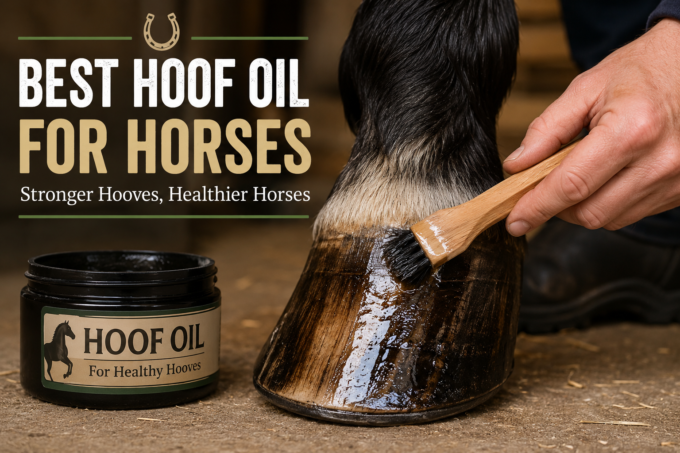
- Best Hoof Oil for Horses That Prevent Dry, Cracked Hooves
Summary:-
The debate between barefoot horses and horseshoes has no universal winner because every horse is different.
A horse with strong, healthy hooves that performs light work on forgiving terrain may thrive barefoot for its entire life. Another horse competing in demanding events or working on rocky ground may stay sound and comfortable only with properly fitted shoes.
Rather than asking whether barefoot or shoes are better, ask a more practical question:
“What does my individual horse need to stay healthy, comfortable, and capable of doing its job?”
The best decision comes from considering your horse’s workload, hoof quality, environment, and overall health-along with guidance from an experienced farrier and veterinarian.
With regular hoof care, balanced nutrition, and attentive management, both barefoot and shod horses can enjoy long, active, and healthy lives.









Leave a comment