

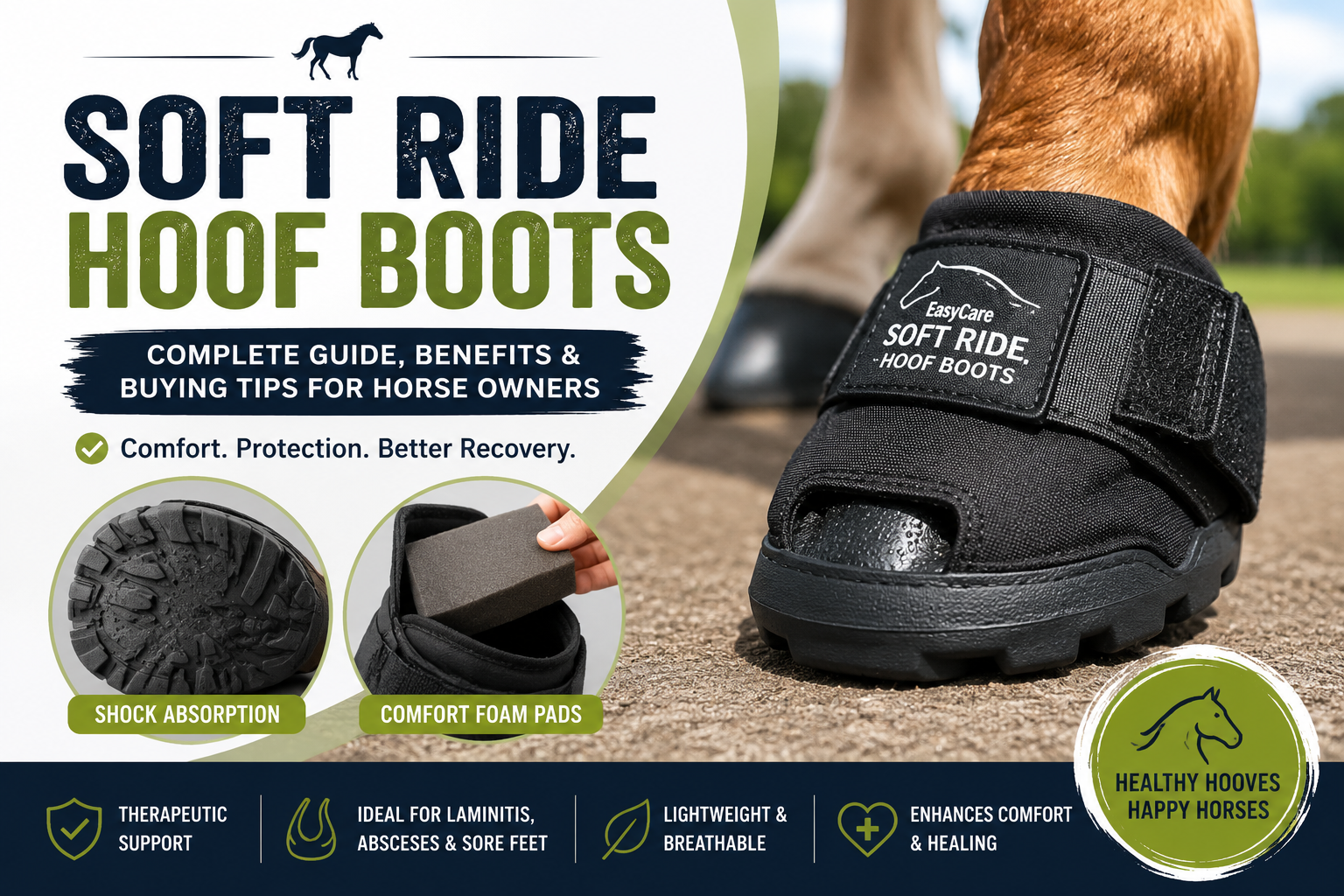
Soft Ride Hoof Boots: Are They Worth It? Complete Buyer’s Guide (2026)
Horse owners know that keeping an injured or sore horse comfortable is never easy. Whether your horse is recovering from laminitis, an abscess, bruised soles, or a hoof injury, choosing the right therapeutic hoof boot can make a significant difference.
Among the most recommended recovery boots are Soft Ride Hoof Boots. They are designed primarily for comfort, shock absorption, and rehabilitation rather than riding or trail use.
In this guide, I’ll explain how Soft Ride Hoof Boots work, their advantages and disadvantages, when they should be used, and whether they’re the right choice for your horse.
What Are Soft Ride Hoof Boots?
Soft Ride Hoof Boots are therapeutic boots designed to reduce concussion and provide extra cushioning for horses suffering from hoof pain or recovering from injury.
Unlike traditional riding boots, these boots feature:
- Thick EVA foam inserts
- Shock-absorbing soles
- Lightweight construction
- Breathable upper materials
- Replaceable comfort pads
Their primary goal is simple: make painful horses more comfortable while supporting natural healing.
Veterinarians and farriers frequently recommend them during recovery from hoof-related conditions.
Who Should Use Soft Ride Hoof Boots?
These boots are suitable for horses experiencing:
- Laminitis
- Founder recovery
- Hoof abscesses
- Sole bruising
- Thin soles
- Hoof wall cracks
- White line disease recovery
- Navicular discomfort
- Post-surgical hoof care
- Tendon and ligament rehabilitation
They are also useful for older horses that become sore when standing on hard surfaces.
How Do Soft Ride Hoof Boots Work?
The secret lies in their foam comfort pads.
Instead of allowing the horse’s weight to concentrate on painful areas, the pads distribute pressure more evenly across the hoof.
Benefits include:
- Reduces concussion
- Minimizes pressure points
- Improves comfort while standing
- Encourages natural movement
- Helps horses rest more comfortably
Many horses begin walking more willingly shortly after the boots are fitted because the additional cushioning reduces discomfort.
Key Features of Soft Ride Hoof Boots
1. Thick EVA Comfort Pads
One of the biggest reasons owners choose Soft Ride boots is the removable EVA foam pad.
These pads:
- Absorb impact
- Reduce sole pressure
- Improve comfort
- Can be replaced when worn
Different pad densities are available depending on the horse’s condition.
2. Lightweight Design
Unlike some therapeutic boots that feel bulky, Soft Ride boots are surprisingly lightweight.
This makes it easier for horses with painful feet to move naturally.
3. Easy Velcro Closure
The wide Velcro straps make putting the boots on simple.
Even first-time horse owners usually find installation straightforward.
4. Breathable Materials
The upper portion allows airflow while helping keep debris out.
This reduces heat buildup during extended wear.
5. Durable Sole
Although primarily designed for recovery, the sole provides enough durability for turnout and light movement.
However, they’re not intended for regular trail riding.
Benefits of Soft Ride Hoof Boots
Excellent Cushioning
The foam inserts provide one of the softest landing surfaces available in therapeutic hoof boots.
This is especially beneficial for:
- Laminitis
- Founder
- Bruised soles
Helps Reduce Pain
Less concussion means less pain.
Many horses become noticeably more comfortable after wearing properly fitted therapeutic boots.
Encourages Healing
When horses move comfortably, circulation improves.
Better circulation supports healthier hoof growth during recovery.
Easy to Clean
Most dirt can be brushed off.
Foam inserts are removable for cleaning or replacement.
Comfortable for Stall Rest
Horses on extended stall rest often spend many hours standing.
Soft Ride boots reduce fatigue by cushioning every step.
Potential Drawbacks
No hoof boot is perfect.
Here are a few limitations.
Not Designed for Riding
These are therapeutic boots.
If you plan to ride regularly, other hoof boots are better suited for trail work.
Foam Pads Wear Over Time
The comfort inserts gradually compress.
Depending on use, replacement pads may eventually be needed.
Higher Price
Soft Ride boots generally cost more than basic hoof boots.
However, many owners feel the comfort justifies the investment during rehabilitation.
Fit Is Important
Incorrect sizing can reduce effectiveness.
Always measure the hoof carefully before purchasing.
Conditions That Benefit Most
Laminitis
This is where Soft Ride boots truly shine.
The thick foam reduces pressure on damaged laminae while supporting the sole.
Many veterinarians recommend them during acute and chronic laminitis recovery.
Hoof Abscesses
After drainage, horses often remain sore for several days.
The soft cushioning helps reduce discomfort while the hoof heals.
Thin Soles
Some horses naturally have thin soles that bruise easily.
Extra padding helps reduce concussion on hard ground.
White Line Disease Recovery
Following hoof trimming or treatment, additional protection often makes horses more comfortable.
Senior Horses
Older horses frequently develop arthritic joints and sore feet.
Shock-absorbing boots can improve daily comfort.
How to Measure for Soft Ride Hoof Boots
Accurate measurements are essential.
Measure:
- Hoof width at the widest point
- Hoof length from toe to heel
Always measure after a fresh trim.
A recently trimmed hoof provides the most accurate sizing.
If your horse falls between sizes, consult the manufacturer’s sizing chart before ordering.
How Long Can Horses Wear Soft Ride Hoof Boots?
Many horses safely wear them for extended periods during recovery.
However, owners should:
- Remove boots daily if possible
- Check for rubbing
- Clean the hoof
- Inspect the frog
- Replace wet pads
- Ensure the hoof stays dry
Daily inspection helps prevent moisture-related problems.
Cleaning and Maintenance
Proper care extends boot life.
Cleaning Tips
- Remove dirt with a soft brush
- Wash with mild soap
- Air dry completely
- Avoid direct heat
- Replace worn foam inserts
Never store damp boots in a closed container.
Are Soft Ride Hoof Boots Worth the Money?
For horses recovering from painful hoof conditions, many owners believe they are.
They offer:
- Outstanding cushioning
- Excellent shock absorption
- Easy application
- Reliable comfort
- Veterinary approval for many rehabilitation situations
While they are more expensive than some alternatives, the added comfort during recovery can be well worth the cost.
Soft Ride Hoof Boots vs Traditional Hoof Boots
| Feature | Soft Ride Boots | Standard Riding Boots |
|---|---|---|
| Purpose | Therapy & recovery | Riding & trail protection |
| Cushioning | Excellent | Moderate |
| Shock Absorption | Outstanding | Good |
| Riding Use | Not recommended | Yes |
| Laminitis Support | Excellent | Fair |
| Sole Padding | Thick EVA foam | Standard rubber |
| Comfort | Exceptional | Moderate |
Recommended Products:-
- Soft Ride Hoof Boots
- Replacement EVA Comfort Pads
- Hoof Pick with Brush
- Antimicrobial Hoof Cleaner
- Thrush Treatment Solution
- Hoof Moisturizer/Conditioner
- Digital Hoof Tester
- Poultice Pads for Hoof Abscess Recovery
Buying Tips
Before purchasing:
- Measure after trimming.
- Choose the correct size.
- Consider replacement foam inserts.
- Follow your veterinarian or farrier’s recommendations.
- Inspect the boots regularly for wear.
- Keep the boots clean and dry.
Selecting the correct size and using the boots as intended will provide the best results.
Frequently Asked Questions
Are Soft Ride Hoof Boots good for laminitis?
Yes. They are widely used for horses with laminitis because their foam inserts reduce pressure, absorb shock, and improve comfort during recovery.
Can horses wear Soft Ride Hoof Boots overnight?
Many horses do during rehabilitation, but it’s best to check the boots daily, inspect the hooves, and follow your veterinarian’s guidance.
Can you ride in Soft Ride Hoof Boots?
They are designed for therapy and recovery, not regular riding. For trail or performance riding, choose boots specifically made for that purpose.
How long do the foam inserts last?
It depends on how often the boots are used and the horse’s weight and activity. Inspect the inserts regularly and replace them when they become compressed or worn.
Are Soft Ride Hoof Boots waterproof?
They offer protection in damp conditions, but prolonged exposure to water can saturate the foam. Remove, dry, and clean the boots after they become wet.
In Short:-
Soft Ride Hoof Boots are among the best therapeutic hoof boots available for horses recovering from painful hoof conditions. Their thick EVA foam inserts, excellent shock absorption, and comfortable design make them a popular choice for laminitis, sole bruising, hoof abscesses, and post-treatment rehabilitation.
They are not intended for trail riding or everyday performance work, but for comfort and recovery they perform exceptionally well. When fitted correctly and maintained properly, they can help reduce pain, encourage movement, and support the healing process.
If your horse is dealing with hoof soreness or a veterinary-recommended rehabilitation program, Soft Ride Hoof Boots are a strong option worth considering.









Leave a comment